
Carprofen vs meloxicam is one of the most common comparisons in dogs needing pain relief, especially for arthritis, inflammation, and post-surgical recovery.
Quick Answer
Carprofen and meloxicam are both NSAIDs used for pain and inflammation in dogs, but carprofen is often preferred for long-term use, while meloxicam may be used for short-term or specific cases. Both can be effective, but safety depends on proper dosing and monitoring.
Introduction
When your dog is in pain, choosing the right medication can make a huge difference in comfort and recovery.
Two of the most commonly prescribed NSAIDs (non-steroidal anti-inflammatory drugs) are:
- carprofen
- meloxicam
Both are used to treat:
- arthritis
- inflammation
- post-surgical pain
👉 Learn more about pain causes:
👉 Why Is My Dog in Pain? Signs, Causes & When to Go to the Vet (Vet-Backed Guide)
👉 Full overview:
👉 Dog Pain Medications Explained: Safety, Dosage & Side Effects
Carprofen vs Meloxicam for Dogs
What Is Carprofen for Dogs?
👉 Carprofen for Dogs: Uses, Dosage & Side Effects
Carprofen is:
- a widely used NSAID
- commonly prescribed for arthritis
- often used long-term
✔ reduces inflammation
✔ relieves pain
✔ improves mobility
What Is Meloxicam for Dogs?
Meloxicam is:
- another NSAID
- often used short-term
- available in liquid form
✔ anti-inflammatory
✔ effective for acute pain
Carprofen vs Meloxicam: Key Differences
| Feature | Carprofen | Meloxicam |
|---|---|---|
| Use | Long-term | Short-term |
| Form | Tablets | Liquid + tablets |
| Duration | Chronic pain | Acute pain |
| Safety | Good (monitored) | Good (dose-sensitive) |
| Common Use | Arthritis | Post-surgery |
Effectiveness: Which Works Better?
Carprofen
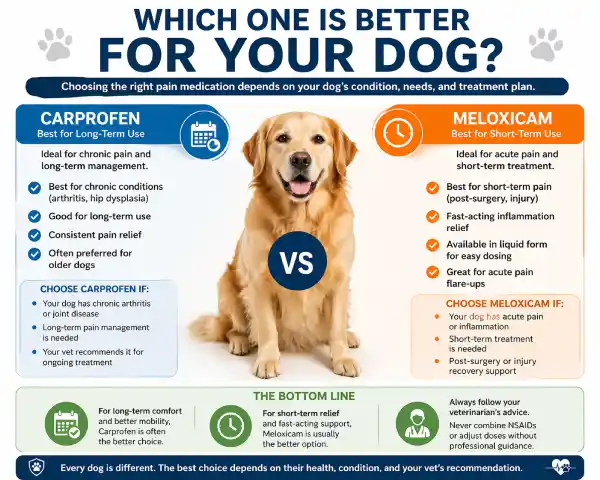
✔ ideal for chronic conditions
✔ consistent long-term relief
✔ widely trusted
Meloxicam
✔ effective for acute pain
✔ fast relief
✔ useful post-surgery
👉 In practice:
- chronic arthritis → carprofen
- short-term pain → meloxicam
Side Effects Comparison
| Side Effect | Carprofen | Meloxicam |
|---|---|---|
| Vomiting | Possible | Possible |
| Diarrhea | Possible | More common |
| Appetite loss | Possible | Possible |
| Liver risk | Moderate | Low–moderate |
| Kidney risk | Possible | Possible |
👉 Learn more:
👉 NSAID Toxicity in Dogs: Signs & What to Do
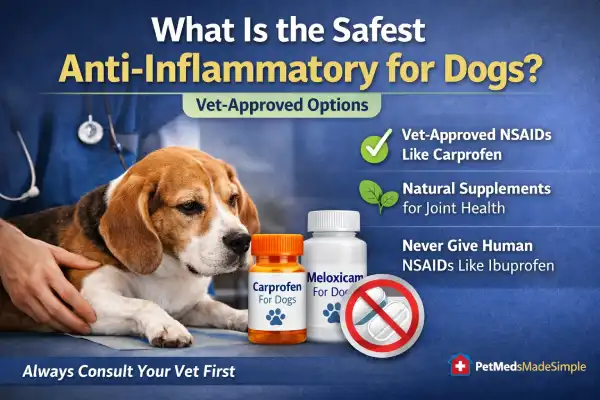
👉 What Is the Safest Anti-Inflammatory for Dogs?
Safety: Which Is Safer?
Carprofen
- better tolerated long-term
- requires monitoring
Meloxicam
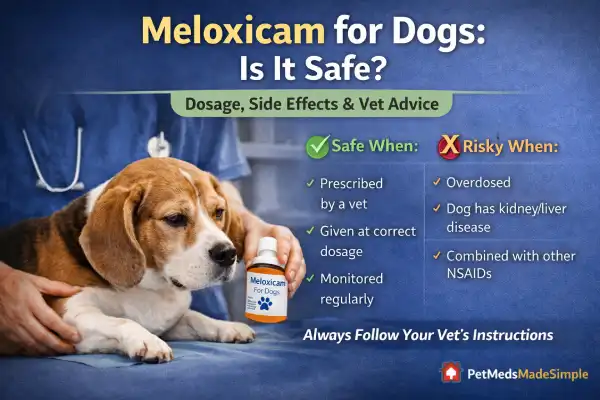
- more dose-sensitive
- higher risk if overdosed
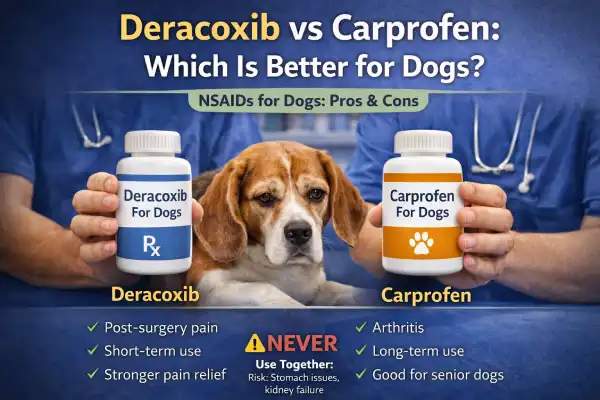
⚠️ NEVER combine NSAIDs.
When Vets Choose Carprofen
✔ chronic arthritis
✔ long-term pain
✔ joint disease
When Vets Choose Meloxicam
✔ post-surgery
✔ acute inflammation
✔ short-term use
Carprofen vs Meloxicam Dosage Comparison
| Medication | Typical Dose |
|---|---|
| Carprofen | 2–4 mg/kg/day |
| Meloxicam | 0.1 mg/kg then 0.05 mg/kg |
⚠️ Always follow veterinary instructions.
Pros and Cons
Carprofen
✔ great for long-term use
✔ effective for arthritis
✔ widely used
❌ requires monitoring
❌ potential liver effects
Meloxicam
✔ strong anti-inflammatory
✔ good for short-term use
✔ liquid form easy dosing
❌ overdose risk
❌ not ideal long-term
Which One Is Better for Your Dog?
👉 Choose Carprofen if:
- chronic pain
- arthritis
- long-term treatment
👉 Choose Meloxicam if:
- short-term pain
- post-surgery
- inflammation flare
When to Contact Your Veterinarian
Call your vet if:
- vomiting occurs
- diarrhea persists
- appetite drops
- lethargy develops
Common Mistakes to Avoid
❌ combining NSAIDs
❌ giving human pain meds
❌ incorrect dosing
❌ long-term use without monitoring
FAQ – Carprofen vs Meloxicam
Is carprofen safer than meloxicam?
For long-term use, yes.
Can dogs take both together?
No — never combine NSAIDs.
Which works faster?
Both work quickly.
Is meloxicam stronger?
Not necessarily — depends on case.
Which is better for arthritis?
Carprofen.
Conclusion
Carprofen and meloxicam are both effective NSAIDs, but they serve different roles.
- Carprofen = best for long-term pain
- Meloxicam = best for short-term relief
Choosing the right one depends on your dog’s condition and treatment plan.
Medical Disclaimer
This article is for informational purposes only and does not replace professional veterinary advice.