
Separation anxiety in dogs is a behavioral condition where dogs experience intense stress and panic when left alone, often leading to destructive behavior, barking, or attempts to escape.
Quick Answer
Separation anxiety in dogs occurs when a dog becomes extremely stressed when left alone. Treatment includes behavioral training, routine changes, and medications such as fluoxetine, trazodone, or clomipramine in more severe cases.
Introduction
If your dog becomes anxious, destructive, or panicked when you leave the house, you’re likely dealing with separation anxiety—one of the most common behavioral problems in dogs.
This condition is not just “bad behavior.” It’s a real medical and emotional issue that can significantly impact your dog’s quality of life.
Common signs include:
- Barking or howling
- Destructive chewing
- Scratching doors/windows
- Attempts to escape
- Accidents inside the house
👉 For medication options, start here:
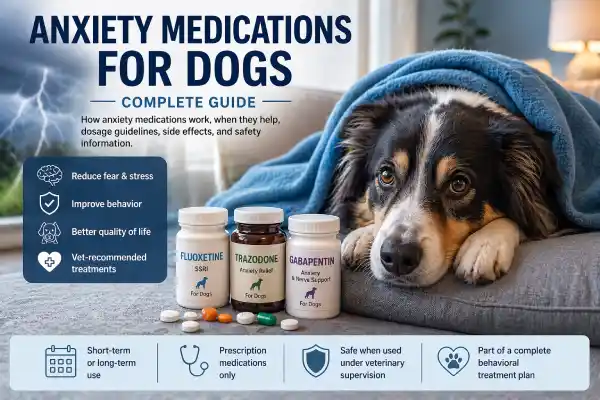
➡️ Anxiety Medications for Dogs: Complete Guide (Uses, Dosage, Side Effects & Safety)
👉 Common medications used:
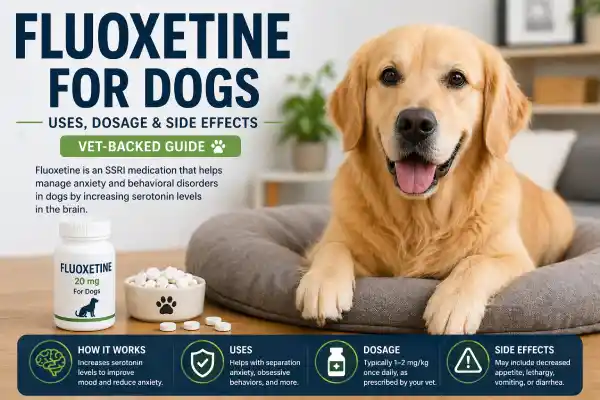
➡️ Fluoxetine for Dogs: Uses, Dosage & Side Effects (Vet-Backed Guide)
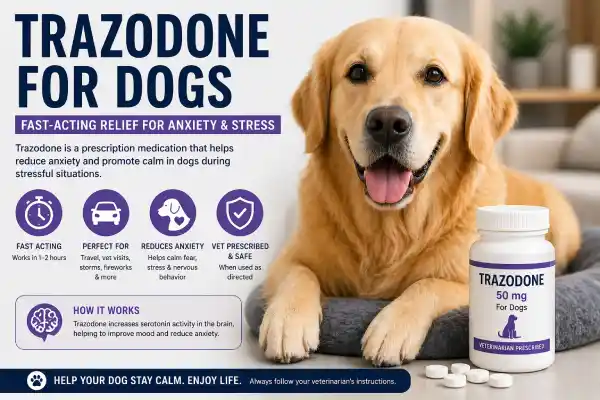
➡️ Trazodone for Dogs: Uses, Dosage & Safety (Vet-Backed Guide)
➡️ Clomipramine for Dogs: Complete Guide (Uses, Dosage, Side Effects & Safety)
Separation anxiety is treatable, but it requires the right approach.
Separation Anxiety in Dogs
What Is Separation Anxiety in Dogs?
Core Definition
Separation anxiety is a condition where a dog:
- Cannot cope with being alone
- Develops panic when separated from their owner
- Shows both behavioral and physical symptoms
Why It Happens
Common causes include:
- Change in routine
- Moving homes
- Loss of an owner or companion
- Lack of independence training
- Over-attachment
Overview of Separation Anxiety
| Feature | Value |
|---|---|
| Type | Behavioral disorder |
| Severity | Mild to severe |
| Trigger | Being left alone |
| Treatment | Training + medication |
| Recovery Time | Weeks to months |
Symptoms of Separation Anxiety in Dogs
Behavioral Symptoms
- Barking or whining
- Destructive chewing
- Digging or scratching
- Escaping attempts
Physical Symptoms
- Panting
- Drooling
- Pacing
- Trembling
Severe Symptoms
- Self-injury
- Breaking doors/windows
- Panic attacks
Causes of Separation Anxiety
Environmental Causes
- New home
- Schedule changes
- Reduced exercise
Emotional Causes
- Over-attachment
- Trauma or abandonment
Medical Factors
- Pain
- Neurological conditions
- Aging-related changes
How Separation Anxiety Is Treated
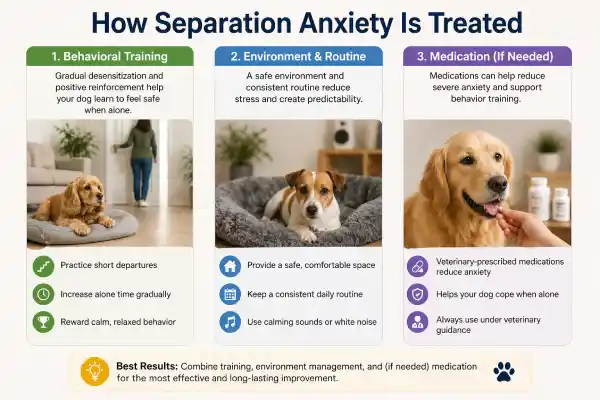
1. Behavioral Training
- Gradual desensitization
- Short absences → longer absences
- Positive reinforcement
2. Routine and Environment
- Predictable schedule
- Safe space (crate or bed)
- Background noise (TV, music)
3. Medication (Moderate to Severe Cases)
👉 Most commonly used:
➡️ Fluoxetine for Dogs: Uses, Dosage & Side Effects (long-term)
➡️ Clomipramine for Dogs: Complete Guide (separation anxiety focus)
➡️ Trazodone for Dogs: Uses, Dosage & Safety (short-term calming)
How Medications Help
Long-Term Medications
- Fluoxetine
- Clomipramine
✔ Stabilize mood
✔ Reduce anxiety baseline
Short-Term Medications
- Trazodone
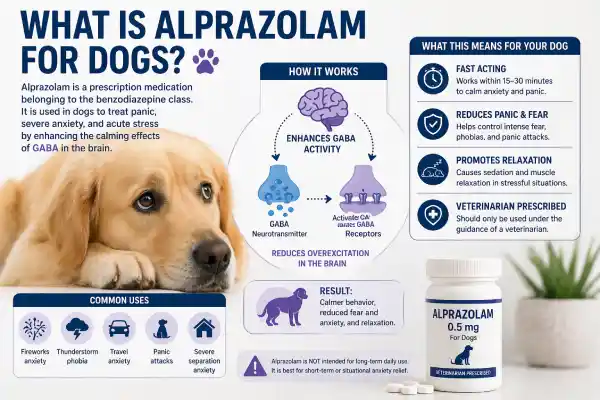
- Alprazolam
✔ Reduce panic during absence
Effectiveness of Treatment
Timeline
- Week 1–2 → small changes
- Week 3–4 → noticeable improvement
- Week 6–8 → strong progress
Success Rate
- Mild cases → 80% improvement
- Severe cases → require combination therapy
When to Contact Your Veterinarian
- Severe destruction
- Self-injury
- Panic attacks
- No improvement after 4–6 weeks
- Symptoms getting worse
Comparison of Treatment Options
| Treatment | Speed | Best For | Effectiveness |
|---|---|---|---|
| Training | Slow | Mild cases | High |
| Fluoxetine | Medium | Chronic anxiety | High |
| Clomipramine | Medium | Separation anxiety | High |
| Trazodone | Fast | Situational anxiety | Moderate |
Common Mistakes Owners Make
- Punishing the dog
- Leaving suddenly without training
- Ignoring early signs
- Expecting quick fixes
- Not using medication when needed
Pro Tips for Success
- Start training early
- Keep departures low-key
- Exercise before leaving
- Use mental stimulation toys
- Be consistent
FAQ – Separation Anxiety in Dogs
Can separation anxiety go away on its own?
No, it usually requires training and sometimes medication.
What is the best medication for separation anxiety in dogs?
Fluoxetine and clomipramine are most commonly used for long-term treatment.
How long does it take to fix separation anxiety?
Most dogs improve within 4–8 weeks with proper treatment.
Should I crate my dog with separation anxiety?
Only if properly trained—otherwise it can worsen anxiety.
Can separation anxiety cause physical symptoms?
Yes, including panting, drooling, and pacing.
Conclusion
Separation anxiety in dogs is a serious but treatable condition. With the right combination of training, routine, and medication, most dogs can improve significantly and live a calmer, happier life.
👉 The key is consistency, patience, and the right strategy.
Medical Disclaimer
This article is for informational purposes only and does not replace professional veterinary advice. Always consult a licensed veterinarian before starting, stopping, or adjusting any medication for your dog.Separation Anxiety in Dogsaaaaaaaaaaaaaaaaaaaaaaaaaaaaaaaaaaaaaaaaaaaaaaaaaaaaaaaaaaaaaaaaaaaaaaaaa