
Fluoxetine side effects in dogs include appetite changes, lethargy, digestive upset, and, in rare cases, more serious reactions like behavioral changes or serotonin syndrome.
Quick Answer
Fluoxetine side effects in dogs are usually mild and include decreased appetite, lethargy, and vomiting. However, serious side effects such as agitation, tremors, or severe behavioral changes require immediate veterinary attention.
Introduction
Fluoxetine is one of the most commonly prescribed medications for dog anxiety, especially for long-term conditions like separation anxiety. While it is generally safe, understanding potential side effects is essential for keeping your dog healthy.
Like all medications that affect brain chemistry, fluoxetine can cause both mild and serious reactions, especially during the first few weeks of treatment.
👉 Start with the full medication guide:
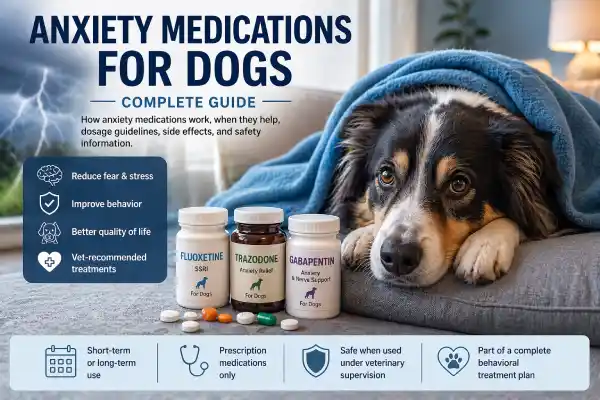
➡️ Anxiety Medications for Dogs: Complete Guide (Uses, Dosage, Side Effects & Safety)
👉 Main article:
➡️ Fluoxetine for Dogs: Uses, Dosage & Side Effects (Vet-Backed Guide)
👉 Alternative option:
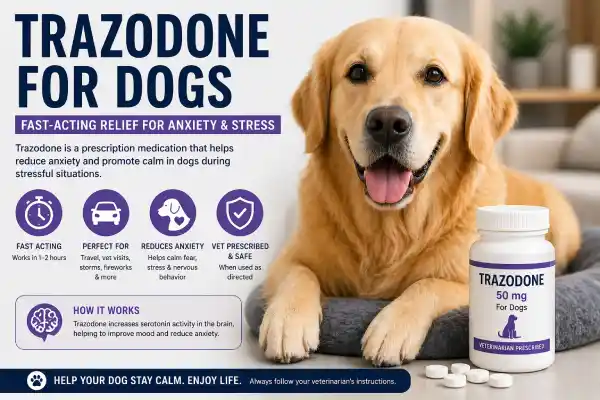
➡️ Trazodone for Dogs: Uses, Dosage & Safety (Vet-Backed Guide)
👉 Another long-term option:
➡️ Clomipramine for Dogs: Complete Guide (Uses, Dosage, Side Effects & Safety)
Most dogs tolerate fluoxetine well—but knowing what to watch for makes all the difference.
Fluoxetine Side Effects in Dogs
What Causes Fluoxetine Side Effects?
Brain Chemistry Changes
Fluoxetine works by increasing serotonin levels, which can affect:
- Appetite
- Sleep
- Behavior
- Digestive system
Adjustment Period
Most side effects occur:
- During the first 1–3 weeks
- When dosage is increased
- When combined with other medications
Overview of Fluoxetine Side Effects
| Category | Severity | Frequency |
|---|---|---|
| Appetite Changes | Mild | Common |
| Lethargy | Mild | Common |
| Vomiting/Diarrhea | Mild | Common |
| Behavioral Changes | Moderate | Less common |
| Serotonin Syndrome | Severe | Rare |
Common Fluoxetine Side Effects in Dogs
Appetite Changes
- Reduced appetite
- Occasional weight loss
Lethargy
- Lower energy levels
- More sleep than usual
Digestive Issues
- Vomiting
- Diarrhea
- Nausea
👉 These are usually temporary and improve over time.
Less Common Side Effects
- Restlessness
- Mild agitation
- Sleep disturbances
- Increased anxiety (initially)
⚠️ These may appear during the first weeks.
Serious Side Effects
Serotonin Syndrome (Rare but Dangerous)
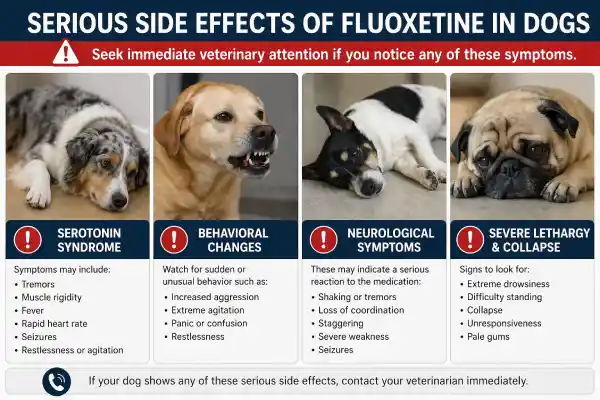
Symptoms include:
- Tremors
- Rapid heart rate
- Fever
- Confusion
- Seizures
Behavioral Changes
- Aggression
- Extreme agitation
- Sudden personality changes
Neurological Symptoms
- Shaking
- Lack of coordination
- Severe weakness
When to Contact Your Veterinarian
Seek immediate help if your dog shows:
- Tremors or seizures
- Severe lethargy
- Refusal to eat for more than 48 hours
- Vomiting that doesn’t stop
- Aggression or unusual behavior
- Signs of serotonin syndrome
Fluoxetine vs Other Medications (Side Effects)
| Medication | Common Side Effects | Sedation | Risk Level |
|---|---|---|---|
| Fluoxetine | Appetite loss, lethargy | Low | Low |
| Trazodone | Sedation, GI upset | Moderate | Low |
| Clomipramine | Dry mouth, constipation | Moderate | Medium |
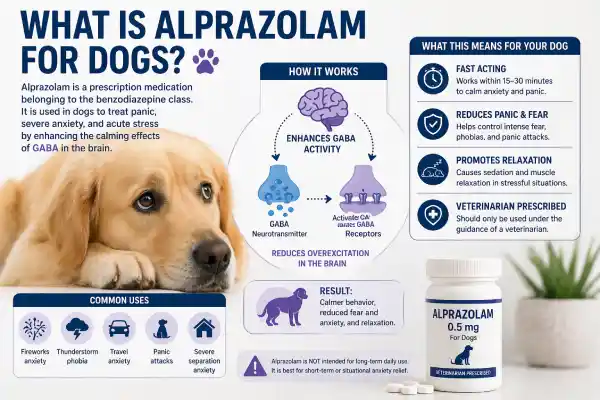
| Alprazolam | Sedation, coordination loss | High | Medium |
How to Reduce Side Effects
- Start with a low dose
- Increase gradually
- Give medication with food
- Monitor behavior closely
- Avoid mixing medications without vet advice
Common Mistakes Owners Make
- Stopping medication suddenly
- Ignoring early warning signs
- Increasing dose without guidance
- Expecting no side effects
- Mixing medications improperly
Pro Tips
- Track symptoms daily
- Be patient during first weeks
- Maintain consistent dosing
- Communicate with your vet
- Combine with behavioral training
FAQ – Fluoxetine Side Effects in Dogs
Are fluoxetine side effects in dogs permanent?
No, most side effects are temporary and improve after the adjustment period.
How long do side effects last?
Typically 1–3 weeks.
Can fluoxetine cause aggression in dogs?
Rarely, but behavioral changes can occur.
What is the most common side effect?
Decreased appetite and lethargy.
Should I stop fluoxetine if side effects appear?
Not immediately—consult your veterinarian first.
Conclusion
Fluoxetine side effects in dogs are usually mild and temporary, but understanding the warning signs is essential for safe treatment. With proper monitoring and veterinary guidance, fluoxetine remains one of the safest long-term anxiety medications for dogs.
Medical Disclaimer
This article is for informational purposes only and does not replace professional veterinary advice. Always consult a licensed veterinarian before starting, stopping, or adjusting any medication for your dog.