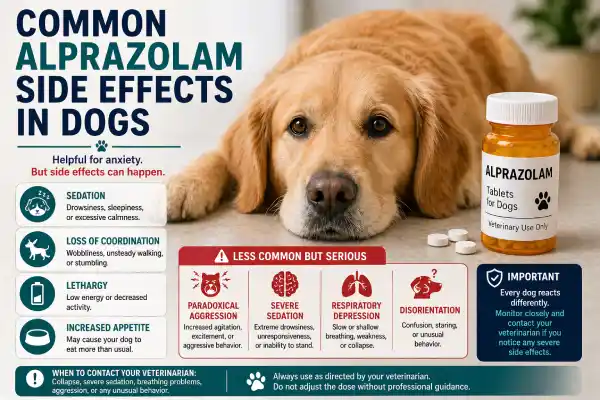
Alprazolam side effects in dogs commonly include sedation, loss of coordination, and behavioral changes, but in some cases may cause serious reactions like extreme weakness, agitation, or paradoxical excitement.
Quick Answer
Alprazolam side effects in dogs are usually mild and include drowsiness and coordination issues. However, serious side effects such as extreme sedation, aggression, or collapse require immediate veterinary attention.
Alprazolam Side Effects in Dogs (Quick List)
Alprazolam side effects in dogs most often include:
- Sedation
- Loss of coordination
- Lethargy
- Increased appetite
⚠️ Rare but serious:
- Paradoxical aggression
- Collapse
- Severe respiratory depression
Introduction
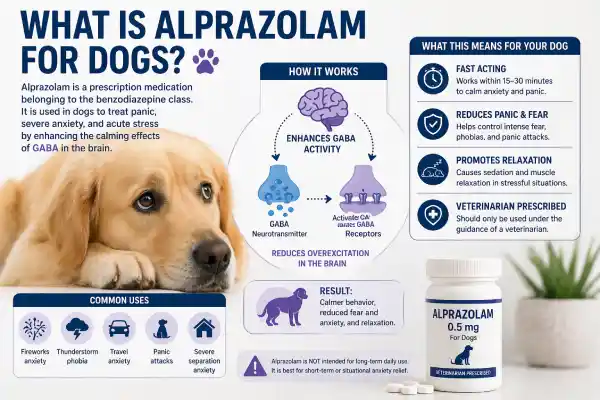
Alprazolam (a benzodiazepine) is commonly used for acute anxiety and panic in dogs, especially during:
- Thunderstorms
- Fireworks
- Travel
It works quickly—but because of its strong central nervous system effects, side effects can occur.
👉 Start here:
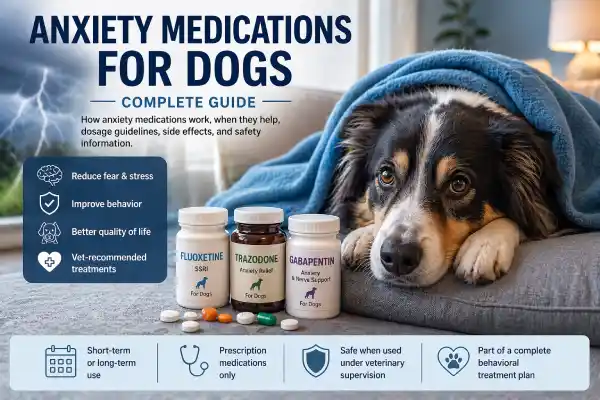
➡️ Anxiety Medications for Dogs: Complete Guide (Uses, Dosage, Side Effects & Safety)
👉 Compare alternatives:
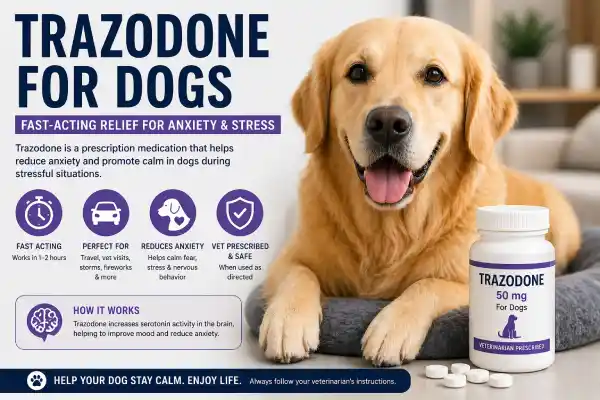
➡️ Trazodone for Dogs: Uses, Dosage & Safety (Vet-Backed Guide)
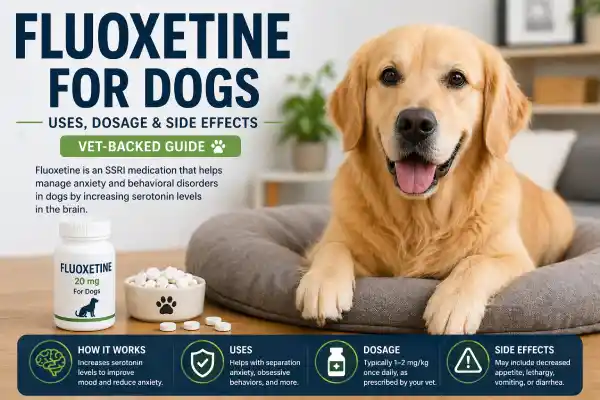
➡️ Fluoxetine for Dogs: Uses, Dosage & Side Effects (Vet-Backed Guide)
➡️ Clomipramine for Dogs: Complete Guide (Uses, Dosage, Side Effects & Safety)
Understanding side effects is critical for safe use.
Alprazolam Side Effects in Dogs
What Causes Alprazolam Side Effects?
CNS Depression
Alprazolam slows down brain activity, affecting:
- Coordination
- Alertness
- Muscle control
Why Side Effects Occur
- High dose
- Sensitivity
- First-time use
- Drug interactions
Overview of Alprazolam Side Effects
| Category | Severity | Frequency |
|---|---|---|
| Sedation | Mild–Moderate | Very Common |
| Coordination Loss | Mild | Common |
| Behavioral Changes | Moderate | Less Common |
| Respiratory Depression | Severe | Rare |
Common Alprazolam Side Effects in Dogs
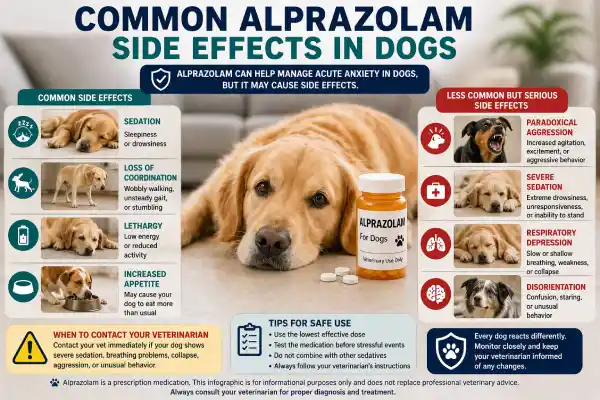
Sedation
- Sleepiness
- Reduced activity
- Calm behavior
Loss of Coordination
- Wobbly walking
- Difficulty standing
Lethargy
- Low energy
- Reduced responsiveness
Increased Appetite
- Eating more than usual
Less Common Side Effects
- Mild confusion
- Restlessness
- Temporary disorientation
Serious Side Effects
Paradoxical Reactions
Instead of calming, the dog may show:
- Agitation
- Hyperactivity
- Aggression
Severe Sedation
- Unresponsiveness
- Inability to stand
Respiratory Depression
- Slow breathing
- Weak breathing
⚠️ This is a medical emergency.
When to Contact Your Veterinarian
Seek immediate help if your dog shows:
- Collapse
- Breathing problems
- Severe sedation
- Aggression
- Tremors
Alprazolam Side Effects by Dose
Low Dose
- Mild calming
- Minimal side effects
Moderate Dose
- Noticeable sedation
- Mild coordination issues
High Dose
- Severe sedation
- Breathing risk
- Increased complications
Alprazolam vs Other Medications (Side Effects)
| Medication | Common Side Effects | Sedation | Risk Level |
|---|---|---|---|
| Alprazolam | Sedation, coordination loss | High | Medium |
| Trazodone | Sedation, GI upset | Moderate | Low |
| Fluoxetine | Appetite loss | Low | Low |
| Clomipramine | Dry mouth, constipation | Moderate | Medium |
How to Reduce Side Effects
- Start with low dose
- Test before stressful event
- Avoid combining medications
- Monitor closely
- Follow vet guidance
Common Mistakes Owners Make
- Giving too high dose initially
- Not testing dose beforehand
- Using without supervision
- Ignoring behavioral changes
- Combining medications
Pro Tips
- Give 30–60 minutes before stress
- Observe first dose carefully
- Use only when needed
- Keep emergency vet contact ready
Related Guides
- Anxiety Medications for Dogs: Complete Guide
- Trazodone Side Effects in Dogs
- Fluoxetine Side Effects in Dogs
FAQ – Alprazolam Side Effects in Dogs
Is alprazolam safe for dogs?
Yes, when used correctly under veterinary supervision.
What is the most common side effect?
Sedation and coordination loss.
Can alprazolam cause aggression?
Yes, paradoxical reactions can occur in some dogs.
How long do side effects last?
Usually a few hours, depending on dose.
What should I do if my dog is too sedated?
Contact your veterinarian immediately.
Conclusion
Alprazolam side effects in dogs are usually manageable but can become serious if dosing is incorrect. Monitoring and proper use are essential.
👉 The key:
✔ Start low
✔ Monitor closely
✔ Use responsibly
Medical Disclaimer
This article is for informational purposes only and does not replace professional veterinary advice. Always consult a licensed veterinarian before starting, stopping, or adjusting any medication for your dog.