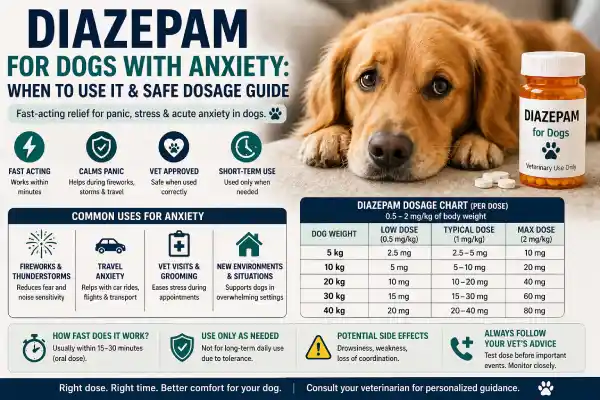
Diazepam for dogs with anxiety is a fast-acting medication used to calm sudden panic, fear, and high-stress reactions during triggering situations like storms, fireworks, or travel.
Quick Answer
Diazepam for dogs with anxiety is used for rapid calming in acute stress situations. It works within minutes but is not suitable for long-term anxiety management due to tolerance and short duration of action.
Diazepam for Dog Anxiety (Quick Overview)
Diazepam is a short-acting benzodiazepine that provides immediate calming effects.
- Fast onset (minutes)
- Short duration
- Used only when needed
- Best for panic situations
Introduction
Not all anxiety in dogs is constant. Some dogs experience sudden, intense panic episodes triggered by specific events.
That’s where diazepam fits in.
Unlike daily medications such as:
👉 Fluoxetine for Dogs: Uses, Dosage & Side Effects (Vet-Backed Guide)
👉 Clomipramine for Dogs: Complete Guide (Uses, Dosage & Safety)
diazepam is used only when immediate calming is required.
For situational anxiety alternatives, see:
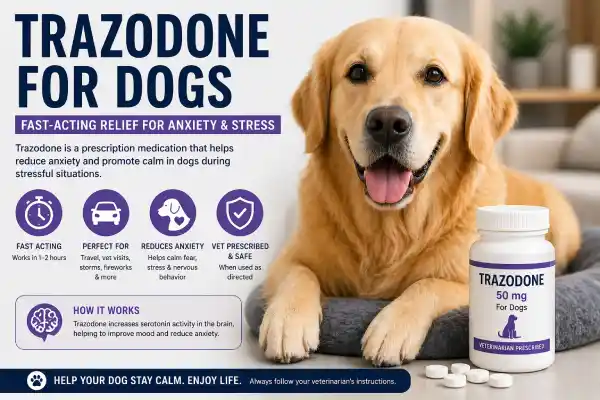
👉 Trazodone for Dogs: Uses, Dosage & Safety (Vet-Backed Guide)
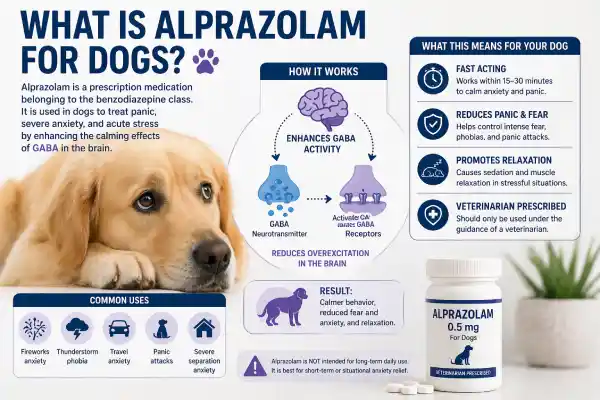
👉 Alprazolam for Dogs: Uses, Dosage & Safety
👉 Important distinction:
➡️ Diazepam for Dogs: Uses, Dosage, Side Effects & Emergency Safety (Seizures)
This article focuses strictly on anxiety use, not seizure control.
Diazepam for Dogs with Anxiety
What Is Diazepam for Dogs with Anxiety?
Diazepam is a central nervous system depressant that:
- Reduces panic responses
- Relaxes muscles
- Produces rapid calming
It is most effective in acute, high-intensity anxiety events.
When to Use Diazepam for Dog Anxiety
Panic Episodes
- Sudden fear reactions
- Uncontrollable stress
Fireworks & Thunderstorms
- Loud noise sensitivity
- Seasonal anxiety triggers
Travel Anxiety
- Car rides
- Vet visits
Short-Term Stressful Events
- Grooming
- New environments
How Diazepam Works
Diazepam enhances the effect of GABA, a calming neurotransmitter.
This leads to:
- Reduced brain activity
- Decreased fear response
- Rapid sedation
Effectiveness for Anxiety
| Feature | Rating |
|---|---|
| Speed | Very Fast |
| Duration | Short |
| Use Type | Acute / situational |
| Long-term suitability | Not recommended |
Diazepam Dosage for Dogs with Anxiety
Diazepam dosage for dogs with anxiety typically ranges:
👉 0.5–2 mg/kg per dose
- Given as needed
- Usually every 8–12 hours if required
⚠️ Always follow veterinary instructions.
Diazepam Dosage Chart for Dogs
The following diazepam dosage chart is based on weight-based veterinary guidelines for anxiety use.
| Dog Weight | Low Dose | Typical Dose | Max Dose |
|---|---|---|---|
| 5 kg | 2.5 mg | 2.5–5 mg | 10 mg |
| 10 kg | 5 mg | 5–10 mg | 20 mg |
| 20 kg | 10 mg | 10–20 mg | 40 mg |
| 30 kg | 15 mg | 15–30 mg | 60 mg |
| 40 kg | 20 mg | 20–40 mg | 80 mg |
Diazepam Dosage by Situation
Fireworks / Storms
- Give before trigger
- Prevents panic escalation
Travel Anxiety
- Administer prior to departure
- Test beforehand
Severe Panic
- Use at onset of symptoms
- Fast relief expected
How to Give Diazepam Safely
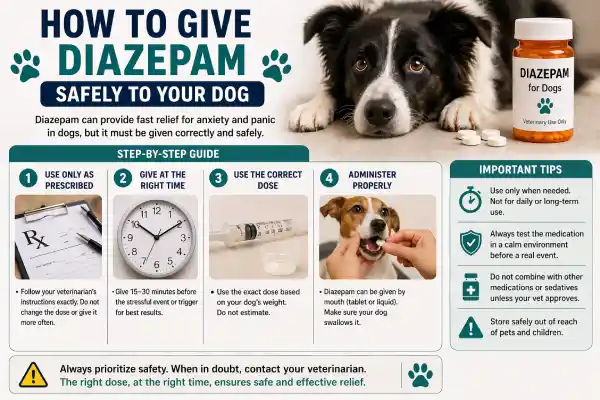
- Give shortly before trigger
- Use lowest effective dose
- Monitor closely after first use
- Avoid combining medications unless advised
How Fast Does Diazepam Work for Anxiety?
| Route | Onset |
|---|---|
| Oral | 15–30 minutes |
| Injectable (vet use) | Minutes |
👉 One of the fastest-acting anxiety medications.
Signs the Dose Is Too Low
- No calming effect
- Continued panic behavior
- Persistent anxiety signs
Signs the Dose Is Too High
- Extreme sedation
- Weakness
- Loss of coordination
- Slow breathing
👉 Seek veterinary help immediately.
Diazepam vs Other Anxiety Medications
| Medication | Speed | Duration | Best Use |
|---|---|---|---|
| Diazepam | Very fast | Short | Panic |
| Alprazolam | Fast | Medium | Acute anxiety |
| Trazodone | Moderate | Medium | Situational |
| Fluoxetine | Slow | Long | Chronic anxiety |
Side Effects of Diazepam in Dogs
Common:
- Drowsiness
- Weakness
- Disorientation
Serious (rare):
- Respiratory depression
- Paradoxical agitation
When to Contact Your Veterinarian
- Breathing problems
- Collapse
- Severe sedation
- Aggression
- No response to medication
Common Mistakes to Avoid
- Using diazepam daily
- Giving incorrect dose
- Not testing before use
- Expecting long-lasting effect
- Combining medications without guidance
Pro Tips
- Use only when needed
- Always test dose before real trigger
- Keep emergency plan ready
- Track response
- Stay consistent with vet advice
Related Guides
- Anxiety Medications for Dogs: Complete Guide
- Alprazolam Dosage for Dogs
- Trazodone Side Effects in Dogs
FAQ – Diazepam for dogs with anxiety
Is diazepam good for dog anxiety?
Yes, but only for short-term or emergency use.
How fast does diazepam calm a dog?
Usually within 15–30 minutes.
Can diazepam be used long-term?
No, tolerance develops quickly.
What is the biggest risk?
Over-sedation and breathing suppression.
Is diazepam better than trazodone?
It is faster, but shorter acting.
Conclusion
Diazepam is a powerful option for rapid anxiety relief in dogs, especially during intense panic situations.
However, it must be used carefully and only when necessary. Diazepam for dogs with anxiety
👉 The key:
✔ Fast action
✔ Short-term use
✔ Close monitoring
Medical Disclaimer
This article is for informational purposes only and does not replace professional veterinary advice.
Sources
- American Veterinary Medical Association (AVMA)
- Veterinary Information Network (VIN)
- Plumb’s Veterinary Drug Handbook