Paroxetine side effects in dogs are usually mild and may include decreased appetite, digestive upset, and behavioral changes, but in rare cases can lead to serious reactions such as agitation or serotonin syndrome.
Quick Answer
Paroxetine side effects in dogs are typically mild and include appetite loss, lethargy, and gastrointestinal upset. However, serious side effects such as tremors, agitation, or serotonin toxicity require immediate veterinary attention.
Paroxetine Side Effects in Dogs (Quick List)
Common:
- Decreased appetite
- Mild sedation
- Digestive upset
- Behavioral changes
⚠️ Rare but serious:
- Agitation
- Tremors
- Serotonin syndrome
Introduction
Paroxetine is a widely used SSRI for long-term anxiety treatment in dogs, known for its effectiveness and relatively low sedation profile.
👉 Main guide:
➡️ Paroxetine for Dogs: Uses & Anxiety Treatment
👉 Full overview:
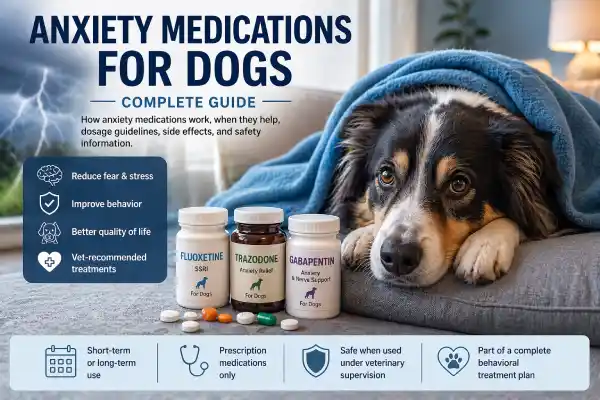
➡️ Anxiety Medications for Dogs: Complete Guide (Uses, Dosage, Side Effects & Safety)
👉 Compare similar medications:
➡️ Sertraline for Dogs: Uses, Dosage & Safety
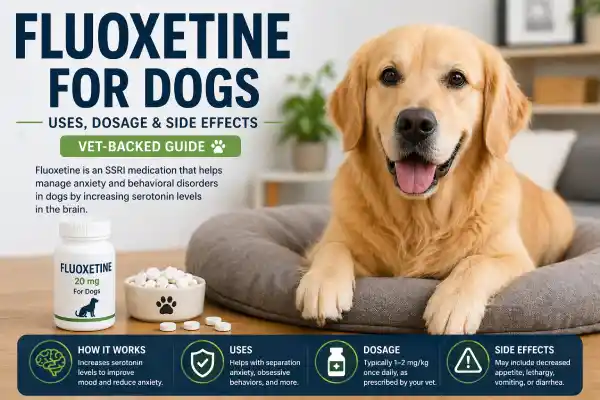
➡️ Fluoxetine for Dogs: Uses, Dosage & Side Effects
👉 For milder options:
➡️ Buspirone for Dogs: Anxiety Treatment Explained
Understanding side effects helps ensure safe and effective use.
Paroxetine Side Effects in Dogs
What Causes Side Effects?
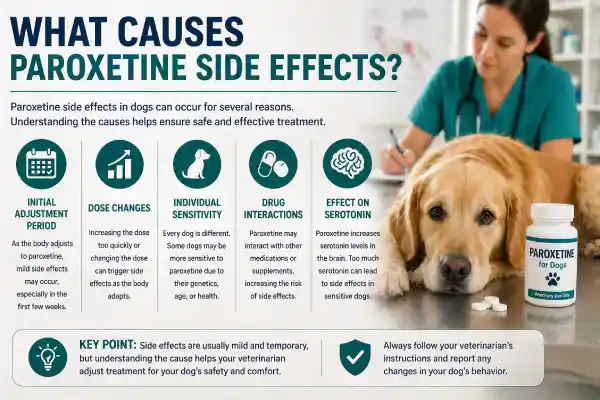
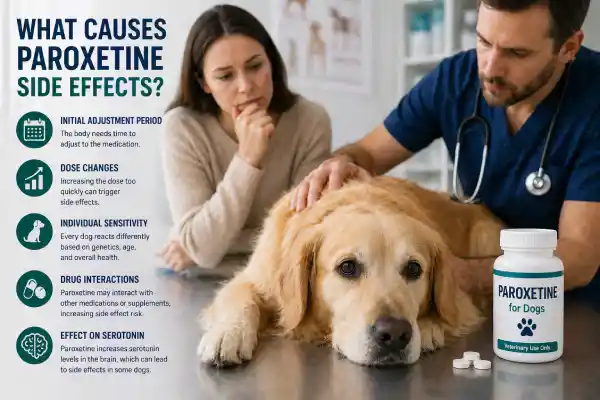
Paroxetine increases serotonin levels in the brain.
Side effects may occur due to:
- Initial adjustment period
- Dose changes
- Individual sensitivity
- Drug interactions
Overview of Paroxetine Side Effects
| Category | Severity | Frequency |
|---|---|---|
| Appetite Changes | Mild | Common |
| GI Upset | Mild | Common |
| Behavioral Changes | Moderate | Less Common |
| Neurological Effects | Severe | Rare |
Common Paroxetine Side Effects in Dogs
Decreased Appetite
- Reduced food intake
- Possible weight loss
Gastrointestinal Upset
- Vomiting
- Diarrhea
- Soft stools
Mild Sedation
- Lower energy levels
- Lethargy
Less Common Side Effects
Behavioral Changes
- Restlessness
- Increased anxiety (early phase)
Sleep Changes
- Increased or decreased sleep
Increased Sensitivity
- Reactivity to stimuli
Serious Side Effects
Serotonin Syndrome
A rare but serious condition that may include:
- Tremors
- Agitation
- Rapid heart rate
- Overheating
Severe Agitation
- Panic-like behavior
- Extreme restlessness
Neurological Symptoms
- Disorientation
- Loss of coordination
When to Contact Your Veterinarian
Seek immediate help if your dog shows:
- Tremors or shaking
- Severe agitation
- Persistent vomiting
- Sudden behavioral changes
- Signs of serotonin toxicity
Paroxetine Side Effects vs Other Medications
| Medication | Sedation | Risk Level | Common Issues |
|---|---|---|---|
| Paroxetine | Low | Low | Appetite, GI upset |
| Sertraline | Low | Low | Appetite, GI upset |
| Fluoxetine | Low | Low | Appetite loss |
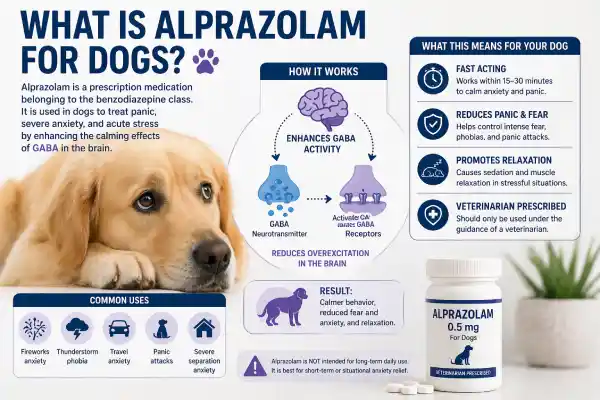
| Alprazolam | High | Medium | Sedation, coordination loss |
👉 Compare further:
➡️ Sertraline Side Effects in Dogs
➡️ Fluoxetine Side Effects in Dogs
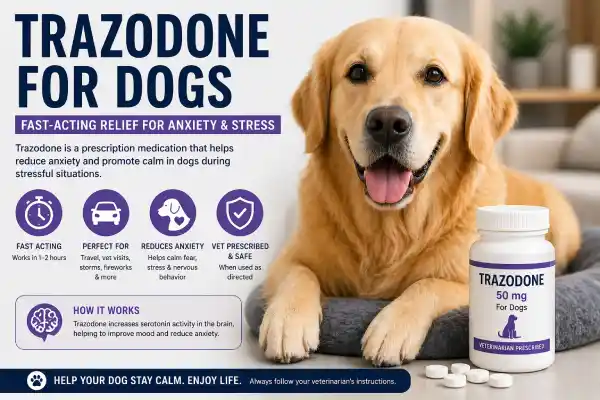
➡️ Trazodone Side Effects in Dogs
How to Reduce Side Effects
- Start with low dose
- Increase gradually
- Give consistently
- Monitor closely
- Avoid sudden changes
Common Mistakes Owners Make
- Expecting immediate results
- Stopping medication too early
- Ignoring early side effects
- Changing dose without vet
- Not monitoring behavior
Pro Tips
- Give at the same time daily
- Track appetite and behavior
- Monitor weekly changes
- Combine with training
- Stay consistent
Related Guides
- Paroxetine for Dogs: Uses & Anxiety Treatment
- Anxiety Medications for Dogs: Complete Guide
- Sertraline for Dogs
- Fluoxetine for Dogs
- Buspirone for Dogs
FAQ
Are paroxetine side effects in dogs common?
Yes, but they are usually mild and temporary.
Can paroxetine make anxiety worse?
Sometimes during early treatment.
What is serotonin syndrome in dogs?
A rare but serious condition caused by excess serotonin.
How long do side effects last?
Typically a few days to weeks.
Should I stop paroxetine if side effects appear?
Consult your veterinarian before stopping.
Conclusion
Paroxetine side effects in dogs are generally mild and manageable. With proper monitoring and consistent use, it remains a safe and effective option for long-term anxiety treatment.
👉 The key:
✔ Monitor closely
✔ Stay consistent
✔ Act early if needed
Medical Disclaimer
This article is for informational purposes only and does not replace professional veterinary advice.