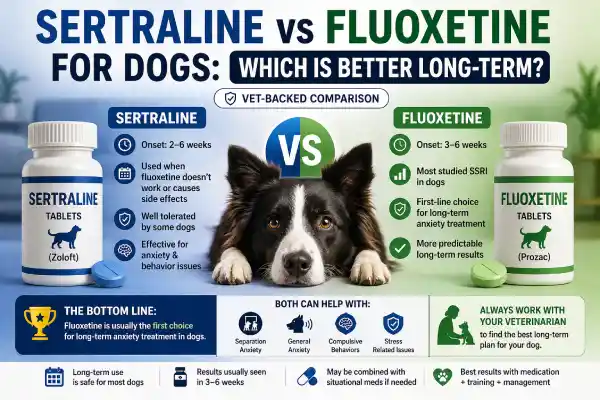
Sertraline vs fluoxetine, both belonging to the SSRI (selective serotonin reuptake inhibitor) class.
When managing chronic anxiety in dogs, choosing the right long-term medication is critical.
But which one is better for long-term use?
Quick Answer
- Best overall long-term option: Fluoxetine
- Best alternative if fluoxetine fails: Sertraline
- Faster adjustment / fewer side effects (sometimes): Sertraline
- Most studied in dogs: Fluoxetine
👉 Fluoxetine is usually the first-line long-term anxiety medication in dogs.
👉 Sertraline is often used when fluoxetine is not effective or causes side effects.
Sertraline vs Fluoxetine for Dogs
What Is the Difference Between Sertraline and Fluoxetine?
| Feature | Sertraline | Fluoxetine |
|---|---|---|
| Drug class | SSRI | SSRI |
| Common brand | Zoloft | Prozac |
| Use in dogs | Off-label | Widely used / more studied |
| Onset | 2–6 weeks | 3–6 weeks |
| Long-term use | Yes | Yes |
| First-line choice | No | Yes |
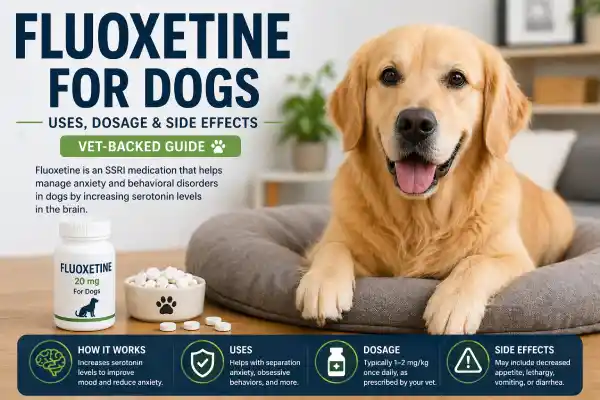
What Is Fluoxetine for Dogs?
Fluoxetine is the most commonly prescribed SSRI for dogs with:
- Separation anxiety
- Chronic anxiety
- Compulsive behaviors
- Aggression linked to anxiety
👉 It is considered the gold standard long-term anxiety medication.
Read full guide:
➡️ Fluoxetine for Dogs: Uses, Dosage & Side Effects (Vet-Backed Guide)
For dosing:
➡️ Fluoxetine Dosage for Dogs: Weight Chart & Safety Guide (Vet-Backed)
Side effects:
➡️ Fluoxetine Side Effects in Dogs: What to Watch For (Vet-Backed Guide)
What Is Sertraline for Dogs?
Sertraline is another SSRI used for similar conditions but less commonly than fluoxetine.
It is typically used when:
- Fluoxetine does not work
- Side effects are too strong
- Dogs need a different SSRI response
Read full guide:
➡️ Sertraline for Dogs: Uses, Dosage & Safety (Vet-Backed Guide)
For dosing:
➡️ Sertraline Dosage for Dogs: Weight Chart & Safety Guide (Vet-Backed)
Side effects:
➡️ Sertraline Side Effects in Dogs: What to Watch For (Vet-Backed Guide)
Which Is Better Long-Term?
🥇 Winner: Fluoxetine (in most cases)
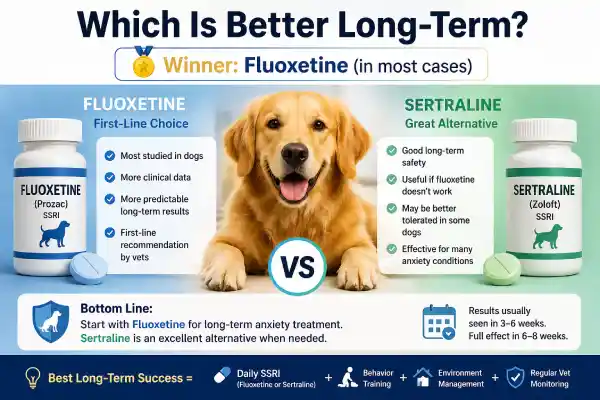
Fluoxetine is usually preferred because:
✔ More clinical data in dogs
✔ More predictable long-term results
✔ First-line recommendation by vets
When Sertraline Can Be Better
Sertraline may be better if:
- Dog does not respond to fluoxetine
- Side effects are too strong
- Appetite suppression is an issue
- You need a slightly different SSRI profile
👉 In practice:
- Fluoxetine = first try
- Sertraline = second option
How Veterinarians Decide Between Sertraline and Fluoxetine
Choosing between Sertraline and Fluoxetine is not just about which medication is “better” overall. In real clinical practice, veterinarians base this decision on several important factors specific to each dog.
Individual Response Matters Most
Even though fluoxetine is usually the first-line choice, not all dogs respond the same way.
Some dogs may:
- Show excellent improvement on fluoxetine
- Experience minimal side effects
- Stabilize within a few weeks
However, others may:
- Develop appetite loss
- Become too lethargic
- Show little to no improvement
👉 In these cases, switching to sertraline is often the next logical step.
Sensitivity to Side Effects
One of the main reasons veterinarians choose sertraline over fluoxetine is tolerability.
Fluoxetine can sometimes cause:
- Reduced appetite
- Increased anxiety during the first weeks
- Gastrointestinal upset
Sertraline, on the other hand, may be:
✔ Better tolerated in some dogs
✔ Less likely to suppress appetite
✔ Easier to adjust in certain cases
👉 This makes sertraline a strong alternative when side effects become a problem.
Behavioral Profile of the Dog
The type of anxiety also influences the decision.
- Dogs with severe separation anxiety → often start with fluoxetine
- Dogs with generalized anxiety or mixed behaviors → may respond well to either
- Dogs with sensitivity or unpredictable reactions → may benefit from sertraline
Trial, Monitoring, and Adjustment
Long-term anxiety treatment is a process, not a one-time decision.
Veterinarians typically:
- Start with fluoxetine
- Monitor for 4–8 weeks
- Adjust dosage if needed
- Switch to sertraline if response is poor
👉 This trial-and-adjust approach is completely normal.
Importance of Consistency
Regardless of which medication is chosen, consistency is critical.
- Give the medication at the same time each day
- Avoid skipping doses
- Do not stop suddenly
👉 Inconsistent use is one of the most common reasons treatment fails.
Key Takeaway
There is no universal “best” medication.
👉 Fluoxetine is the most common starting point
👉 Sertraline is a valuable alternative
✔ The best long-term medication is the one your dog responds to best.
How Long Do They Take to Work?
Both medications are slow-acting.
| Medication | Onset |
|---|---|
| Sertraline | 2–6 weeks |
| Fluoxetine | 3–6 weeks |
👉 Important:
- First effects: 2–3 weeks
- Full effect: 6–8 weeks
What Long-Term Treatment Looks Like
Long-term anxiety treatment is not just medication.
It includes:
- Daily SSRI (fluoxetine or sertraline)
- Behavior training
- Environmental control
- Occasional fast-acting meds
For full strategy:
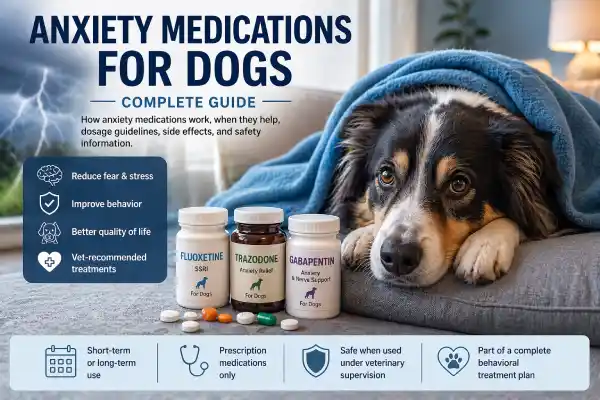
➡️ Anxiety Medications for Dogs: Complete Guide (Uses, Dosage, Side Effects & Safety)
Combination Therapy
In real practice, SSRIs are often combined with:
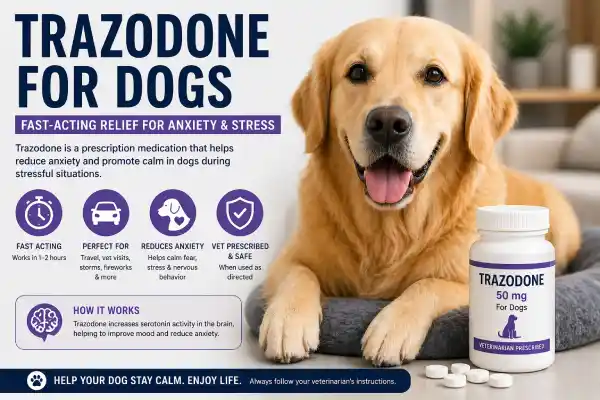
- Trazodone → for events
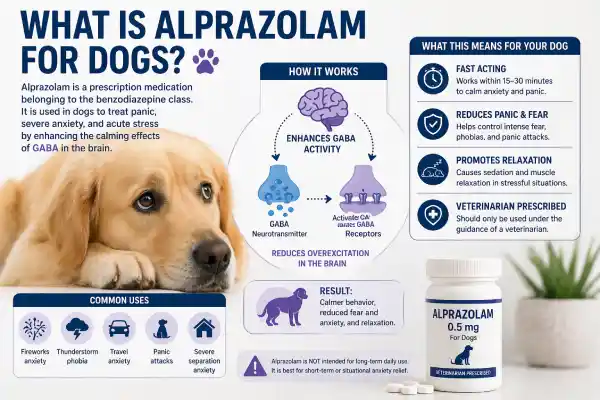
- Alprazolam → for panic
Example:
- Daily: fluoxetine
- Vet visit: trazodone
- Fireworks: alprazolam
Comparison here:
➡️ Trazodone vs Alprazolam for Dogs: Which Works Faster?
Side Effects Comparison
Fluoxetine
Common:
- Decreased appetite
- Lethargy
- GI upset
Sertraline
Common:
- Mild sedation
- GI upset
- Behavior changes
👉 Some dogs tolerate sertraline better.
Safety for Long-Term Use
| Factor | Sertraline | Fluoxetine |
|---|---|---|
| Long-term safety | Good | Excellent |
| Vet preference | Moderate | High |
| Evidence in dogs | Moderate | Strong |
👉 Fluoxetine wins due to stronger evidence base.
Best Use Cases
Separation Anxiety
👉 Best: Fluoxetine
Read:
➡️ Separation Anxiety in Dogs: Complete Treatment Guide (Vet-Backed)
General Anxiety
👉 Start with fluoxetine
👉 Switch to sertraline if needed
Sensitive Dogs
👉 Try sertraline
Signs the Medication Is Working
- Less reactivity
- Improved calm behavior
- Reduced destructive behavior
- Better sleep
- Less vocalization
Signs It’s NOT Working
- No change after 6–8 weeks
- Increased anxiety
- Aggression
- Severe side effects
👉 Then:
- Adjust dose
- Switch medication
Common Mistakes Owners Make
- Stopping too early
- Expecting instant results
- Skipping doses
- Not combining with training
- Switching too quickly
Pro Tips for Success
- Be patient (6–8 weeks)
- Start low, adjust slowly
- Track behavior changes
- Combine with training
- Use situational meds when needed
Can Dogs Switch from Fluoxetine to Sertraline?
Yes, dogs can switch from fluoxetine to sertraline, but this must be done carefully.
Because fluoxetine stays in the body longer, veterinarians usually recommend:
- A washout period (in some cases)
- Gradual transition
- Close monitoring for side effects
👉 Never switch medications without veterinary guidance.
Related Guides
➡️ Anxiety Medications for Dogs: Complete Guide
➡️ Best Anxiety Medication for Dogs: Comparison Guide
➡️ Fluoxetine for Dogs
➡️ Sertraline for Dogs
➡️ Trazodone for Dogs
➡️ Alprazolam for Dogs
FAQ – Sertraline vs Fluoxetine
Which is better for long-term anxiety in dogs?
Fluoxetine is usually the first choice.
Can sertraline replace fluoxetine?
Yes, if fluoxetine does not work or causes side effects.
How long should dogs stay on SSRIs?
Often months to years, depending on condition.
Are SSRIs safe for dogs long-term?
Yes, under veterinary supervision.
Conclusion – Sertraline vs Fluoxetine
When comparing sertraline vs fluoxetine for dogs:
👉 Fluoxetine is the first-line, best-studied long-term option
👉 Sertraline is a valuable alternative when needed
✔ The best choice depends on your dog’s response, not just the medication.
Medical Disclaimer
This article is for informational purposes only and does not replace veterinary advice.