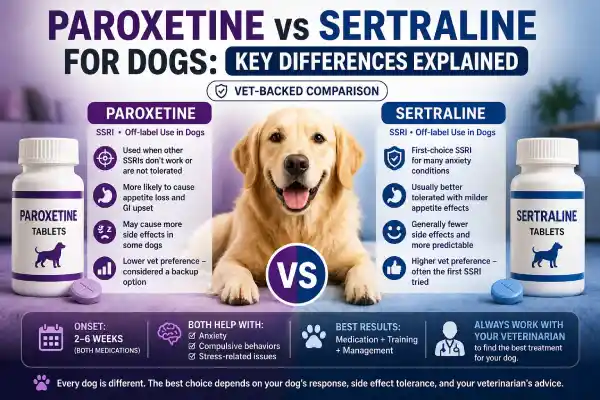
Paroxetine vs Sertraline for Dogs with anxiety can be confusing.
Both are SSRIs, but they differ in tolerability, side-effect profile, and real-world use.
Quick Answer (Featured Snippet)
- First-line in dogs: Sertraline
- Alternative SSRI: Paroxetine
- Better tolerated (often): Sertraline
- Used when others fail: Paroxetine
👉 In most cases, sertraline is preferred.
👉 Paroxetine is used when other SSRIs (like fluoxetine/sertraline) are not effective or tolerated.
Paroxetine vs Sertraline for Dogs
Overview: Paroxetine vs Sertraline
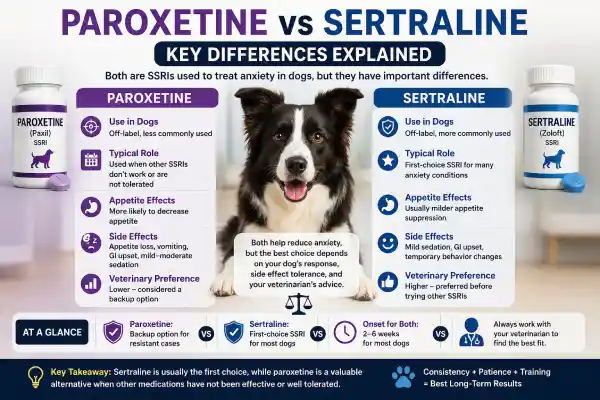
| Feature | Paroxetine | Sertraline |
|---|---|---|
| Drug class | SSRI | SSRI |
| Use in dogs | Off-label, less common | Off-label, more common |
| Onset | 2–6 weeks | 2–6 weeks |
| Appetite effects | More likely ↓ appetite | Usually milder |
| Sedation | Mild–moderate | Mild |
| Vet preference | Lower | Higher |
| Best role | Backup option | Primary SSRI alternative |
What Is Paroxetine for Dogs?
Paroxetine is an SSRI sometimes used for:
- Chronic anxiety
- Compulsive behaviors
- Cases where other SSRIs fail
Full guide:
➡️ Paroxetine for Dogs: Uses & Anxiety Treatment (Vet-Backed Guide)
➡️ Paroxetine Dosage for Dogs: Weight Chart & Safety Guide (Vet-Backed)
➡️ Paroxetine Side Effects in Dogs: What to Watch For (Vet-Backed Guide)
What Is Sertraline for Dogs?
Sertraline is a commonly used SSRI alternative to fluoxetine for:
- Generalized anxiety
- Separation anxiety
- Behavior-related stress
Full guide:
➡️ Sertraline for Dogs: Uses, Dosage & Safety (Vet-Backed Guide)
➡️ Sertraline Dosage for Dogs: Weight Chart & Safety Guide (Vet-Backed)
➡️ Sertraline Side Effects in Dogs: What to Watch For (Vet-Backed Guide)
Key Differences Explained
1) Tolerability
👉 Sertraline wins
- More predictable response
- Fewer appetite issues
- Often easier to dose-adjust
Paroxetine can cause:
- Appetite suppression
- GI upset
- Slightly stronger early side effects
2) Veterinary Preference
👉 Most vets choose sertraline before paroxetine.
Why?
- Better clinical experience in dogs
- More consistent outcomes
- Easier long-term management
For broader comparison context:
➡️ Best Anxiety Medication for Dogs: Comparison Guide (Vet-Backed)
3) Real-World Use
| Scenario | Better Option |
|---|---|
| First SSRI trial | Sertraline |
| Fluoxetine failed | Sertraline |
| Sertraline failed | Paroxetine |
| Sensitive dogs | Sertraline |
| Resistant cases | Paroxetine |
Which Is Better for Long-Term Anxiety?
👉 Winner: Sertraline (in most cases)
✔ Better tolerated
✔ More consistent results
✔ Easier long-term use
However:
👉 Paroxetine becomes valuable when:
- Other SSRIs don’t work
- Side effects differ between drugs
- Individual response requires change
For deeper SSRI comparison:
➡️ Sertraline vs Fluoxetine for Dogs: Which Is Better Long-Term? (Vet-Backed Comparison)
How Long Do They Take to Work?
Both medications are slow-acting.
| Medication | Onset |
|---|---|
| Paroxetine | 2–6 weeks |
| Sertraline | 2–6 weeks |
👉 Full effect: 6–8 weeks
Side Effects Comparison
Paroxetine
- Appetite loss
- Vomiting
- Lethargy
- Behavior changes
Sertraline
- Mild sedation
- GI upset
- Temporary behavior changes
👉 Overall: sertraline is usually easier to tolerate
When to Choose Paroxetine Instead
Paroxetine may be a better option when:
- Sertraline does not work
- Fluoxetine fails or causes side effects
- The dog needs a different SSRI response
- The vet wants to try a less common alternative
Combination Therapy (Important)
SSRIs are often combined with fast-acting meds:
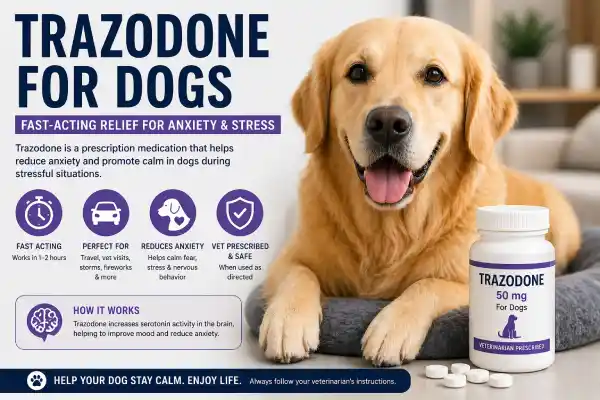
- Trazodone → planned events
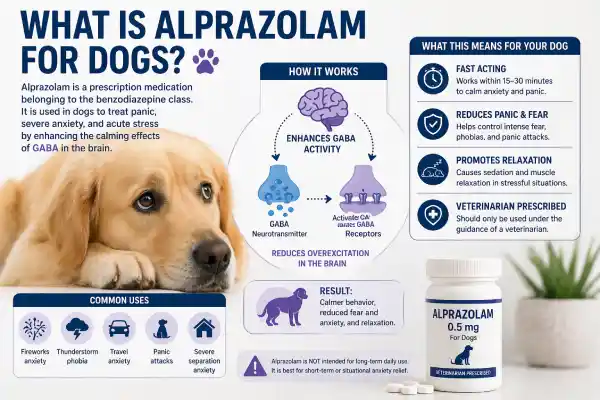
- Alprazolam → panic
See comparison:
➡️ Trazodone vs Alprazolam for Dogs: Which Works Faster?
How Veterinarians Choose Between Them
Vets consider:
- Previous medication response
- Side effect tolerance
- Severity of anxiety
- Appetite and weight changes
- Owner compliance
👉 Most common flow:
- Start with fluoxetine
- Switch to sertraline
- Try paroxetine if needed
Signs the Medication Is Working
- Less anxiety triggers
- Improved behavior
- Reduced destructive actions
- Better sleep
Signs It’s NOT Working
- No improvement after 6–8 weeks
- Increased anxiety
- Appetite issues
- Behavioral worsening
👉 Then:
- Adjust dose
- Switch medication
Common Mistakes Owners Make
- Stopping too early
- Expecting fast results
- Skipping doses
- Not combining with training
- Switching medications too quickly
Pro Tips
- Give daily at the same time
- Track behavior changes
- Combine with training
- Be patient (6–8 weeks)
- Work closely with your vet
For full treatment strategy:
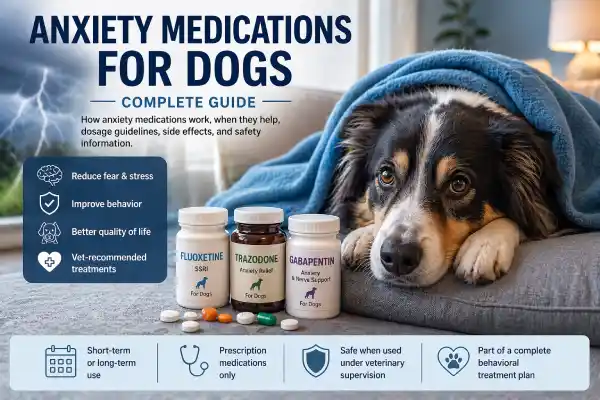
➡️ Anxiety Medications for Dogs: Complete Guide (Uses, Dosage, Side Effects & Safety)
Switching Between SSRIs in Dogs
Switching from one SSRI to another, such as from Paroxetine to Sertraline, is possible but must be done carefully.
Veterinarians may:
- Gradually taper one medication
- Introduce the new one slowly
- Monitor for serotonin-related side effects
👉 Never switch medications abruptly without veterinary guidance.
Related Guides
➡️ Anxiety Medications for Dogs: Complete Guide
➡️ Best Anxiety Medication for Dogs: Comparison Guide
➡️ Sertraline for Dogs
➡️ Paroxetine for Dogs
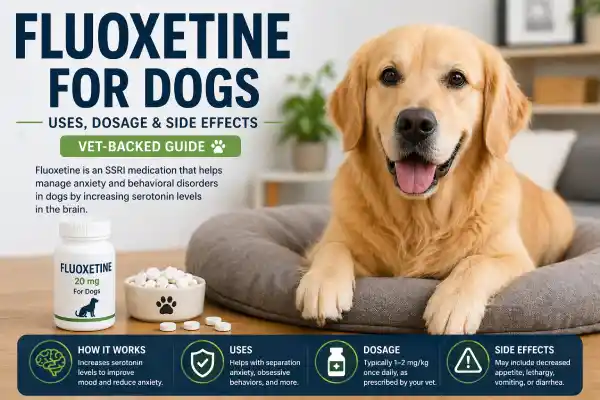
➡️ Fluoxetine for Dogs
➡️ Trazodone for Dogs
FAQ
Which is better, paroxetine or sertraline for dogs?
Sertraline is usually preferred due to better tolerability and more consistent results.
When is paroxetine used in dogs?
When other SSRIs fail or cause side effects.
Can dogs switch between SSRIs?
Yes, but only under veterinary supervision.
How long do SSRIs take to work in dogs?
Usually 2–6 weeks, with full effects at 6–8 weeks.
Conclusion
When comparing paroxetine vs sertraline for dogs:
👉 Sertraline is usually the better first choice
👉 Paroxetine is a useful backup option
✔ The best medication is the one your dog responds to best.
Medical Disclaimer
This article is for informational purposes only and does not replace veterinary advice.