
Quick Answer
Why Is My Dog Restless After Sedatives? Some dogs may become restless after sedatives because of paradoxical reactions, anxiety rebound, confusion, medication wearing off, overstimulation, or individual sensitivity to the drug. Mild pacing or temporary restlessness may occur during recovery, but severe agitation, tremors, collapse, breathing difficulty, or neurological symptoms require immediate veterinary care.
Many owners expect sedatives to make their dog:
- deeply sleepy
- calm
- quiet
- relaxed for hours
So it can feel confusing when a dog instead:
- paces around the house
- pants continuously
- refuses to settle
- seems anxious or hyper
- cries at night
- acts “wired” instead of sedated
And honestly?
This happens more often than many owners expect.
Some sedatives calm the body more than the mind. A dog may physically feel tired but still emotionally anxious or overstimulated.
One owner described their senior Golden Retriever becoming restless and wandering the hallway for several hours after receiving a sedative before a long veterinary visit. The dog appeared exhausted but repeatedly stood up, paced, and panted throughout the evening before finally settling overnight. Situations like this can feel alarming, especially when owners expect complete sedation.
This guide explains:
- why dogs sometimes become restless after sedatives
- what mild recovery symptoms may look like
- when restlessness becomes concerning
- paradoxical medication reactions
- how veterinarians evaluate these situations
- what owners should monitor closely
What Are Sedatives Commonly Used for in Dogs?
Veterinarians may prescribe sedatives for:
- anxiety
- travel stress
- fireworks fear
- thunderstorms
- grooming visits
- veterinary appointments
- post-surgical recovery
Common sedatives may include:
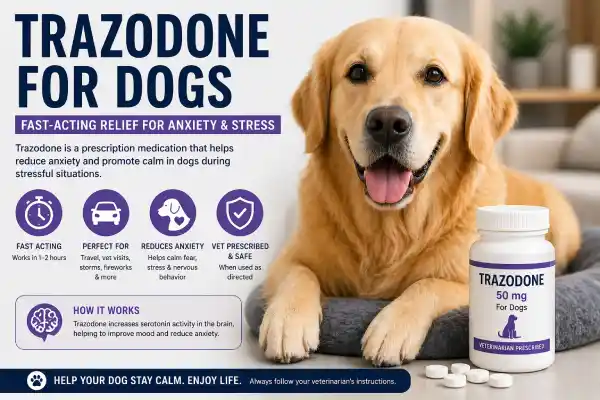
- trazodone
- gabapentin
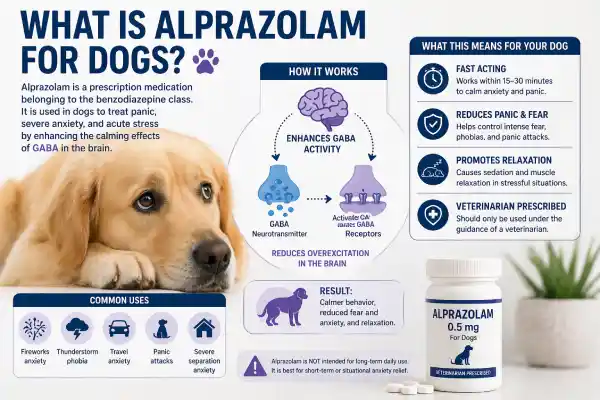
- Xanax
- acepromazine
- benzodiazepines
Owners researching sedative reactions often also read:
- Why Is My Dog Pacing After Trazodone?
- Why Is My Dog More Hyper After Anxiety Medication?
- Can Dogs Take Anxiety Medication Every Day?
- Can Dogs Overdose on Trazodone?
Why Is My Dog Restless After Sedatives?
Why Do Some Dogs Become Restless After Sedatives?

There are several possible reasons.
Some dogs experience:
paradoxical reactions.
Instead of calming down, they may appear:
- hyper
- anxious
- restless
- emotionally unsettled
Other dogs may become restless because:
- the medication is wearing off
- anxiety is returning
- they feel confused or disoriented
- they dislike the sensation of sedation
Common Reasons Dogs Become Restless After Sedatives
| Possible Cause | What Owners May Notice |
|---|---|
| Paradoxical reaction | Hyperactivity or pacing |
| Anxiety rebound | Restlessness as medication fades |
| Disorientation | Wandering or confusion |
| Overstimulation | Panting or agitation |
| Neurological sensitivity | Unusual behavioral reactions |
Some dogs seem:
sleepy but unable to relax.
That distinction matters because not all restlessness signals danger.
What Does Sedative Restlessness Usually Look Like?
Mild restlessness after sedatives may include:
- pacing
- changing sleeping spots repeatedly
- panting
- whining
- inability to settle comfortably
- brief confusion
Some dogs appear:
- emotionally unsettled
- clingy
- sensitive to noise
- mildly disoriented
Mild vs More Serious Symptoms
| Symptom | Usually Mild | More Concerning |
|---|---|---|
| Temporary pacing | Yes | Sometimes |
| Mild panting | Common | Monitor |
| Brief confusion | Sometimes | Monitor |
| Severe agitation | No | Emergency concern |
| Tremors | No | Serious |
| Collapse | No | Emergency |
This overlaps closely with:
Can Sedatives Make Dogs Hyper Instead of Calm?
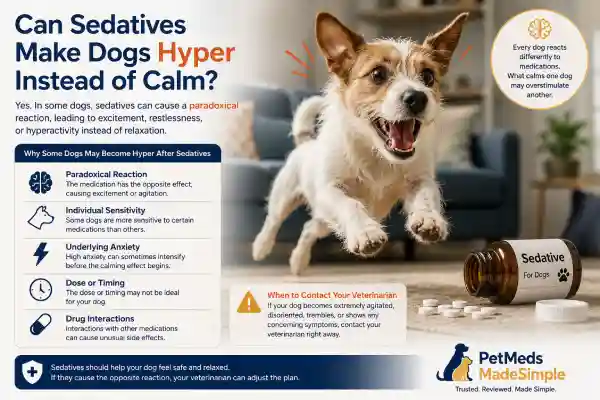
Yes – surprisingly, they can.
Some dogs experience:
paradoxical excitement.
Instead of sedation, the dog may become:
- hyperactive
- restless
- emotionally reactive
- unusually alert
Veterinarians sometimes see this in:
- highly anxious dogs
- senior dogs
- neurologically sensitive dogs
- dogs receiving multiple behavioral medications
This strongly overlaps with:
- Why Is My Dog More Hyper After Anxiety Medication?
- Can Anxiety Medication Make Dogs Aggressive?
- Can Anxiety Medication Cause Personality Changes?
Can Restlessness Happen as Sedatives Wear Off?
Absolutely.
As sedation fades, some dogs experience:
- rebound anxiety
- increased alertness
- emotional discomfort
- pacing
- nighttime restlessness
This is especially common after:
- stressful events
- thunderstorms
- fireworks
- long veterinary visits
Signs a Sedative May Be Wearing Off
| Possible Sign | What It May Mean |
|---|---|
| Sudden pacing | Anxiety returning |
| Panting | Stress response |
| Clinginess | Emotional discomfort |
| Nighttime wandering | Rebound restlessness |
| Increased vocalizing | Anxiety resurfacing |
This overlaps closely with:
Are Senior Dogs More Sensitive to Sedatives?
Often, yes.
Older dogs may process sedatives more slowly and may become more vulnerable to:
- confusion
- wobbliness
- disorientation
- prolonged sedation
- neurological side effects
A senior dog that appears:
- restless
- confused
- unable to settle
after sedation may need closer monitoring.
This is especially important if symptoms appear alongside:
- weakness
- tremors
- staring
- falling over
- breathing changes
When Is Restlessness After Sedatives an Emergency?
Most mild pacing or temporary agitation improves as the medication leaves the body.
But severe neurological symptoms should never be ignored.
Seek emergency veterinary care if your dog develops:
- collapse
- seizures
- muscle rigidity
- severe tremors
- inability to wake
- breathing difficulty
- blue gums
- severe confusion
- overheating
Emergency Warning Signs
| Symptom | Emergency Level |
|---|---|
| Mild pacing only | Usually monitor |
| Panting with anxiety | Contact vet if worsening |
| Severe agitation | Emergency concern |
| Muscle rigidity | Emergency |
| Collapse | Emergency |
| Seizures | Emergency |
| Blue gums | Emergency |
| Unresponsiveness | Emergency |
One important clue:
symptoms that rapidly worsen are more concerning.
This strongly overlaps with:
What Should Owners Do If Their Dog Seems Restless After Sedatives?
Helpful things owners can do include:
- reducing noise and stimulation
- dimming lights
- creating a calm environment
- monitoring breathing and responsiveness
- avoiding additional medication unless directed
Helpful Steps for Owners
| Step | Why It Helps |
|---|---|
| Keep the environment quiet | Reduce overstimulation |
| Monitor behavior closely | Detect worsening symptoms |
| Avoid giving extra doses | Reduce overdose risk |
| Offer calm reassurance | Lower stress |
| Contact your veterinarian if symptoms persist | Improve safety |
Owners should also monitor:
- how long symptoms last
- whether the dog can settle
- breathing patterns
- coordination
- worsening neurological signs
How Veterinarians Evaluate Sedative Restlessness
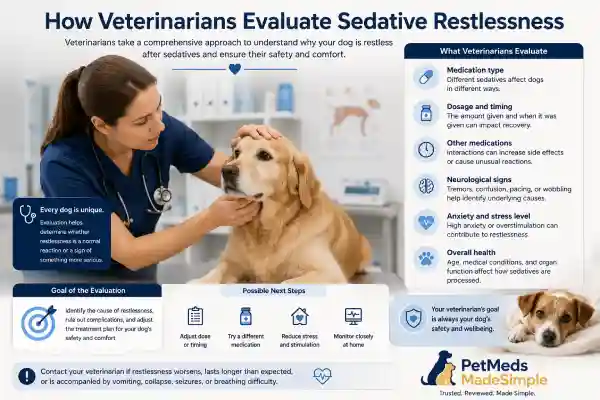
Veterinarians may evaluate:
- medication type
- dosage
- timing
- other medications
- neurological symptoms
- anxiety severity
- underlying medical conditions
Sometimes treatment may involve:
- dose adjustments
- different sedatives
- altered timing
- anxiety management plans
- supportive monitoring
Because every dog reacts differently, sedative plans often require individualized adjustments.
FAQ — Why Is My Dog Restless After Sedatives?
Is pacing after sedatives normal?
Mild temporary pacing or restlessness may happen in some dogs during recovery.
Can sedatives make dogs hyper?
Yes. Some dogs experience paradoxical excitement instead of calming.
Why is my dog panting after sedation?
Panting may occur because of stress, anxiety rebound, confusion, or medication effects.
Are senior dogs more sensitive to sedatives?
Often yes. Older dogs may experience more confusion, wobbling, or prolonged side effects.
When should owners worry?
Collapse, severe tremors, seizures, breathing difficulty, or inability to wake require emergency veterinary care.
Can sedatives cause confusion?
Yes. Some dogs may appear disoriented or emotionally unsettled during recovery.
Medical Disclaimer
This article is for educational purposes only and does not replace professional veterinary advice, diagnosis, or treatment. The content is written and pharmacist-reviewed to improve medication safety awareness and help dog owners better understand sedative-related restlessness, paradoxical reactions, rebound anxiety, neurological symptoms, and emergency warning signs in dogs. Always contact your veterinarian immediately if your dog develops collapse, seizures, breathing difficulty, severe tremors, or sudden neurological changes.
Reviewed by
Written by Pet Meds Made Simple Editorial Team
Pharmacy Reviewed by Dimitar Atanasov MPharm
Master Pharmacist | Medication Safety Educator
Last Updated: May 2026
Editorial Policy
At PetMedsMadeSimple.com, all articles are written for educational purposes and reviewed through our pharmacist-led editorial process to improve medication safety awareness for dog owners. Our content is evidence-based, regularly updated, and designed to help readers better understand veterinary medications, side effects, interactions, warning signs, and recovery concerns.
Every article is reviewed for clarity, safety-focused language, and responsible medical communication before publication.
Read our full Editorial Policy here:
👉 Pet Meds Made Simple Editorial Policy
Sources & Scientific References
- PetMD – Anxiety Medications for Dogs
- ToeGrips – Trazodone for Dogs
- VCA Hospitals
- Merck Veterinary Manual
- Plumb’s Veterinary Drug Handbook
- American Veterinary Medical Association (AVMA)