
Quick Answer
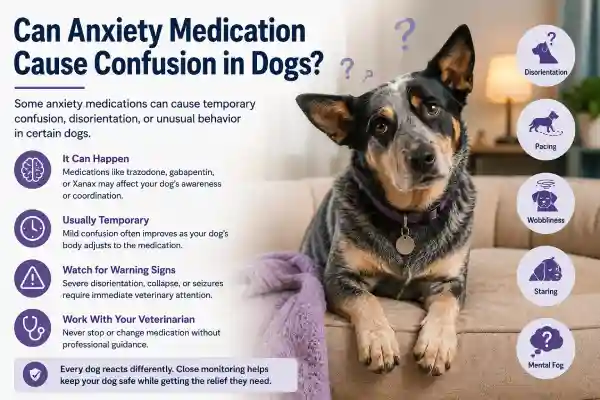
Can Anxiety Medication Cause Confusion in Dogs? Yes. Some anxiety medications may cause temporary confusion, disorientation, staring, pacing, wobbliness, or unusual behavior changes in certain dogs. Mild confusion may happen while the medication is starting to work or wearing off, but severe disorientation, collapse, seizures, or sudden neurological symptoms require immediate veterinary attention.
Many owners become frightened when their dog suddenly:
- stares at walls
- seems mentally “out of it”
- wanders aimlessly
- acts disoriented
- forgets routines
- appears confused after medication
And honestly?
That reaction is understandable.
Because confusion can feel:
very alarming to watch.
Some dogs appear:
- sleepy but mentally unsettled
- emotionally disconnected
- unusually clingy
- slow to respond
- restless or disoriented
One owner described their anxious rescue dog becoming confused and wandering from room to room after starting trazodone during a severe thunderstorm night. The dog seemed tired but repeatedly stopped in corners of the house staring briefly before slowly pacing again. The symptoms improved overnight, but the experience felt extremely unsettling for the owner.
This guide explains:
- why anxiety medications may cause confusion
- which medications are more likely to trigger it
- what mild confusion may look like
- when confusion becomes dangerous
- how veterinarians evaluate neurological side effects
- what owners should monitor closely
Why Can Anxiety Medication Cause Confusion in Dogs?
Many anxiety medications affect:
- serotonin
- GABA signaling
- neurological activity
- sedation pathways
- emotional regulation
Some dogs become:
- calm
- sleepy
- relaxed
Others may appear:
- mentally foggy
- disoriented
- emotionally “off”
- confused about surroundings
This becomes more likely when:
- starting a new medication
- increasing dosage
- combining medications
- treating senior dogs
- using sedatives alongside anxiety medication
Owners researching this problem often also read:
- Dog Acting Drunk After Gabapentin?
- Why Is My Dog Pacing After Trazodone?
- Can Dogs Overdose on Trazodone?
- How Long Does Xanax Last in Dogs?
Can Anxiety Medication Cause Confusion in Dogs?
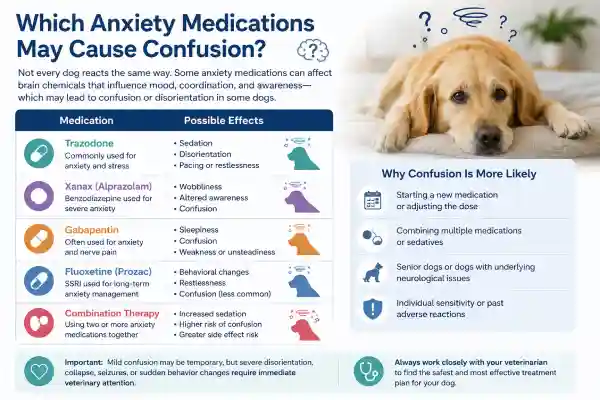
Which Anxiety Medications May Cause Confusion?
Not every dog reacts the same way.
Some dogs tolerate anxiety medications extremely well, while others appear more neurologically sensitive.
Medications Sometimes Associated With Confusion
| Medication | Possible Effects |
|---|---|
| Trazodone | Sedation, pacing, disorientation |
| Xanax (alprazolam) | Wobbliness, altered awareness |
| Gabapentin | Sleepiness, confusion, weakness |
| Fluoxetine | Behavioral changes in some dogs |
| Combination therapy | Increased neurological effects |
Confusion becomes more likely when:
- multiple sedatives are combined
- dogs are highly anxious
- doses are increased too quickly
- underlying neurological problems exist
This overlaps closely with:
- Can Dogs Take Anxiety Medication Every Day?
- Can Anxiety Medication Cause Personality Changes?
- Why Is My Dog Hiding After Taking Anxiety Medication?
- What Happens If My Dog Misses Anxiety Medication?
What Does Confusion Look Like in Dogs?
Confusion can appear in many different ways.
Some dogs seem:
- sleepy and detached
Others may become:
- restless
- emotionally reactive
- unusually clingy
- slow to recognize familiar surroundings
Common Signs of Confusion in Dogs
| Possible Symptom | What Owners May Notice |
|---|---|
| Wandering | Moving aimlessly |
| Staring | Looking at walls or corners |
| Delayed responses | Slow reactions to commands |
| Pacing | Inability to settle |
| Disorientation | Appearing “lost” indoors |
| Clinginess | Seeking reassurance constantly |
One important detail:
mild confusion is often temporary.
But rapidly worsening neurological symptoms are more concerning.
Can Sedation Cause Dogs to Seem Mentally “Out of It”?
Absolutely.
Sedation itself may temporarily affect:
- awareness
- coordination
- responsiveness
- reaction speed
Some dogs seem:
- detached
- unusually quiet
- emotionally flat
- mentally foggy
This does not always mean the medication is dangerous.
However, owners should monitor closely if the dog also develops:
- tremors
- collapse
- breathing difficulty
- severe agitation
- inability to walk
This strongly overlaps with:
- Can Anxiety Medication Cause Seizures in Dogs?
- Can Dogs Overdose on Trazodone?
- Why Does My Dog Cry at Night Even With Medication?
- Why Is My Dog Restless After Sedatives?
Are Senior Dogs More Vulnerable to Confusion?
Often, yes.
Older dogs may process medications more slowly and may become more sensitive to:
- sedation
- wobbliness
- disorientation
- behavioral changes
- neurological side effects
Senior dogs already experiencing:
- cognitive decline
- vision loss
- hearing problems
- neurological disease
may become even more vulnerable after anxiety medication.
Why Senior Dogs Require Extra Monitoring
| Risk Factor | Why It Matters |
|---|---|
| Slower metabolism | Medication effects last longer |
| Cognitive decline | Confusion may worsen |
| Neurological sensitivity | Stronger side effects possible |
| Multiple medications | Increased interaction risk |
Owners should pay close attention if confusion suddenly worsens after medication changes.
Can Anxiety Medication Cause Temporary Behavioral Changes?
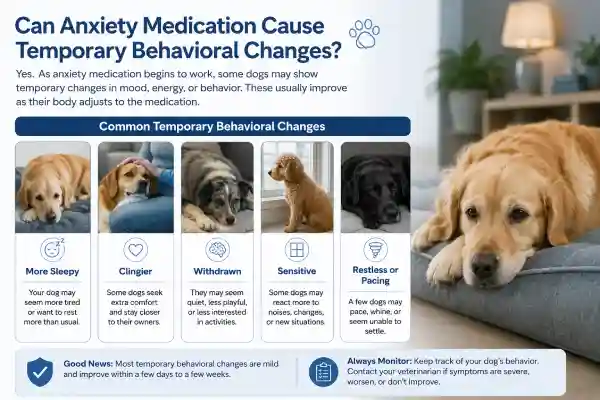
Yes.
Some dogs may temporarily appear:
- emotionally different
- quieter than usual
- clingier
- withdrawn
- unusually sensitive
This may happen:
- when starting medication
- during dose adjustments
- as medications wear off
- during stressful events
This strongly overlaps with:
- Can Anxiety Medication Cause Personality Changes?
- Why Is My Dog Hiding After Taking Anxiety Medication?
- Why Is My Dog Pacing After Trazodone?
- Why Is My Dog More Hyper After Anxiety Medication?
When Is Confusion an Emergency?
This is the MOST important section.
Seek immediate veterinary care if confusion appears alongside:
- seizures
- collapse
- severe tremors
- inability to walk
- blue gums
- breathing difficulty
- muscle rigidity
- unresponsiveness
- sudden neurological decline
Emergency Warning Signs
| Symptom | Emergency Level |
|---|---|
| Mild temporary confusion | Monitor |
| Mild wobbliness | Contact veterinarian if worsening |
| Severe disorientation | Serious concern |
| Collapse | Emergency |
| Seizures | Emergency |
| Muscle rigidity | Emergency |
| Unable to wake | Emergency |
One important clue:
rapidly worsening symptoms are more dangerous.
What Should Owners Do If Their Dog Seems Confused?
Helpful steps may include:
- reducing stimulation
- dimming lights
- creating a calm environment
- monitoring breathing and coordination
- avoiding extra medication doses unless instructed
Helpful Steps for Owners
| Step | Why It Helps |
|---|---|
| Keep the environment quiet | Reduce overstimulation |
| Monitor closely | Detect worsening symptoms |
| Avoid extra doses | Reduce overdose risk |
| Offer calm reassurance | Lower anxiety |
| Contact your veterinarian if symptoms persist | Improve safety |
Owners should also track:
- when symptoms started
- medication timing
- worsening behavior changes
- coordination problems
- appetite and responsiveness
How Veterinarians Evaluate Medication-Related Confusion
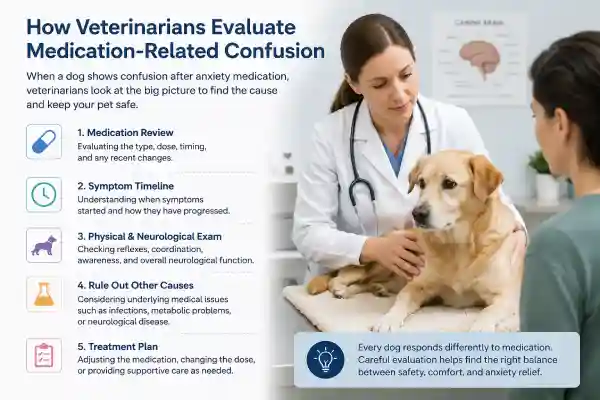
Veterinarians may evaluate:
- medication type
- dosage
- timing
- neurological symptoms
- possible interactions
- underlying medical conditions
- anxiety severity
Treatment may involve:
- dose adjustments
- medication changes
- supportive monitoring
- neurological evaluation
- emergency stabilization if severe symptoms occur
Because every dog responds differently, anxiety medication plans sometimes require careful adjustment.a
FAQ — Can Anxiety Medication Cause Confusion in Dogs?
Can trazodone make dogs confused?
Yes. Some dogs may appear disoriented, sleepy, or mentally foggy after trazodone.
Is confusion after anxiety medication always dangerous?
Not always. Mild temporary confusion may happen, but worsening neurological symptoms require veterinary attention.
Can Xanax make dogs act strange?
Yes. Some dogs become wobbly, unusually sleepy, restless, or disoriented.
Are senior dogs more sensitive?
Often yes. Older dogs may process medications more slowly and experience stronger side effects.
When should owners worry?
Collapse, seizures, severe tremors, inability to walk, or breathing difficulty require emergency veterinary care.
Can confusion happen when medication wears off?
Sometimes. Anxiety rebound or disorientation may occur as sedatives fade.
Medical Disclaimer
This article is for educational purposes only and does not replace professional veterinary advice, diagnosis, or treatment. The content is written and pharmacist-reviewed to improve medication safety awareness and help dog owners better understand confusion, disorientation, behavioral changes, neurological symptoms, and anxiety medication side effects in dogs. Always contact your veterinarian immediately if your dog develops collapse, seizures, breathing difficulty, severe tremors, or sudden neurological changes.
Reviewed by
Written by Pet Meds Made Simple Editorial Team
Pharmacy Reviewed by Dimitar Atanasov MPharm
Master Pharmacist | Medication Safety Educator
Last Updated: May 2026
Editorial Policy
At PetMedsMadeSimple.com, all articles are written for educational purposes and reviewed through our pharmacist-led editorial process to improve medication safety awareness for dog owners. Our content is evidence-based, regularly updated, and designed to help readers better understand veterinary medications, side effects, interactions, warning signs, and recovery concerns.
Every article is reviewed for clarity, safety-focused language, and responsible medical communication before publication.
Read our full Editorial Policy here:
👉 Pet Meds Made Simple Editorial Policy
Sources & Scientific References
- PetMD – Anxiety Medications for Dogs
- VCA Hospitals – Trazodone for Dogs
- ToeGrips – Trazodone for Dogs
- Merck Veterinary Manual
- American Veterinary Medical Association (AVMA)
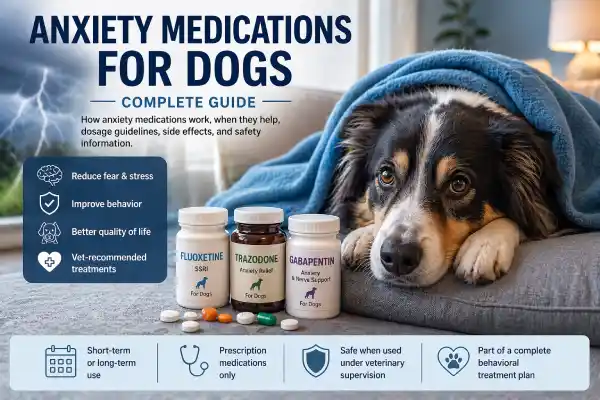
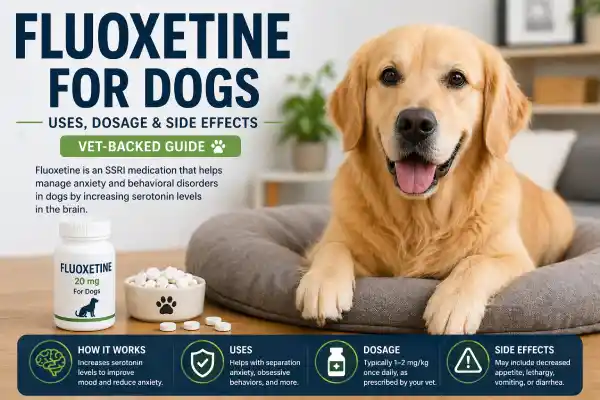
Images are created wth AI for this aticle Can Anxiety Medication Cause Confusion in Dogs?
Pingback: Is Trazodone or Gabapentin Better - PetMedsMadeSimple