
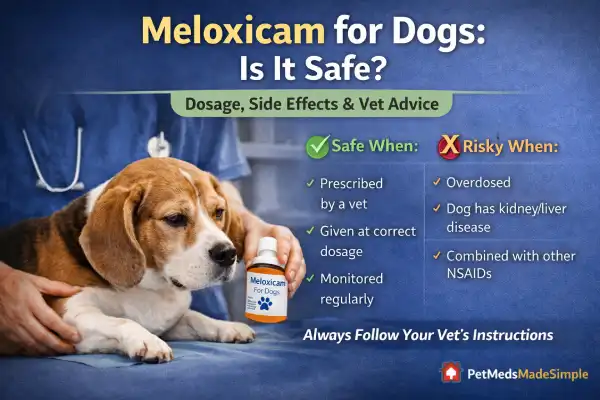
Is meloxicam safe for dogs?
Yes, meloxicam is generally safe for dogs when prescribed by a veterinarian and given at the correct dosage. It is a non-steroidal anti-inflammatory drug (NSAID) used to treat pain and inflammation, but it can cause side effects such as vomiting or kidney issues if not used properly.
Meloxicam is one of the most commonly prescribed anti-inflammatory medications for dogs—but many pet owners wonder: is it truly safe?
The short answer is: yes, when prescribed and used correctly under veterinary supervision. However, like all medications, meloxicam comes with potential risks if misused.
In this guide, we’ll cover how safe meloxicam is, proper usage, side effects, and what every dog owner should know.
What Is Meloxicam?
Meloxicam is a non-steroidal anti-inflammatory drug (NSAID) used to reduce:
- Pain
- Inflammation
- Swelling
It is commonly prescribed for:
- Arthritis
- Injuries
- Post-surgical pain
👉 Learn more in our complete guide to dog pain medications
Is meloxicam safe for dogs?
How Does Meloxicam Work in Dogs?
Meloxicam works by blocking enzymes (COX enzymes) responsible for inflammation and pain.
Benefits:
- Reduces joint pain
- Improves mobility
- Helps dogs recover after surgery
👉 Related: What Is the Safest Anti-Inflammatory for Dogs?
When Do Vets Prescribe Meloxicam?
Veterinarians may prescribe meloxicam for:
- Chronic arthritis
- Acute injuries
- Post-operative pain
- Inflammatory conditions
It is often used when long-term pain management is needed.
Meloxicam Dosage for Dogs
⚠️ Always follow your vet’s instructions
Typical guideline:
| Dog Weight | Initial Dose | Maintenance Dose |
|---|---|---|
| All sizes | 0.2 mg/kg (first dose) | 0.1 mg/kg daily |
👉 Dosage may vary depending on:
- Age
- Health condition
- Severity of pain
Is Meloxicam Safe for Dogs?
✅ Safe When:
- Prescribed by a veterinarian
- Given at correct dosage
- Monitored regularly
❌ Risky When:
- Overdosed
- Combined with other NSAIDs
- Used in dogs with kidney/liver disease
👉 Read more: Rimadyl for Dogs: Uses, Dosage & Side Effects
Side Effects of Meloxicam in Dogs
Common side effects:
- Vomiting
- Diarrhea
- Loss of appetite
Serious side effects:
- Black or bloody stools
- Lethargy
- Kidney damage
👉 If you notice these, contact your vet immediately.
When Should You Avoid Meloxicam?
Avoid or use caution if your dog:
- Has kidney or liver disease
- Is dehydrated
- Is taking other NSAIDs or steroids
- Is very young or elderly
Meloxicam vs Other NSAIDs
| Medication | Use | Notes |
|---|---|---|
| Meloxicam | Long-term pain | Common and effective |
| Carprofen (Rimadyl) | Arthritis | Widely used |
| Deracoxib | Post-surgery | Stronger option |
👉 Compare: What Is the Safest Anti-Inflammatory for Dogs?
Tips for Safe Use
- ✔ Give with food to reduce stomach upset
- ✔ Stick to exact dosage
- ✔ Never combine with other NSAIDs
- ✔ Schedule regular vet check-ups
Frequently Asked Questions (FAQ) – Is meloxicam safe for dogs?
Can meloxicam be used long-term in dogs?
Yes, but only with regular veterinary monitoring to prevent side effects.
How quickly does meloxicam work in dogs?
It usually starts working within a few hours, with noticeable improvement in 1–2 days.
Can I give my dog human meloxicam?
No. Human formulations may not be properly dosed for dogs and can be dangerous.
What happens if I miss a dose?
Give it as soon as you remember, but never double the dose.
Is meloxicam better than carprofen?
Both are effective. The best choice depends on your dog’s condition and vet recommendation.
Key Takeaway
Meloxicam is a safe and effective anti-inflammatory for dogs when used correctly, but it requires careful dosing and veterinary supervision. Misuse can lead to serious health risks, so always follow professional guidance.Is meloxicam safe for dogs?
Sources
All pictures for the article: Is meloxicam safe for dogs? is create with AI


Pingback: Deracoxib vs Carprofen: Which Is Better for Dogs? #1 Guide