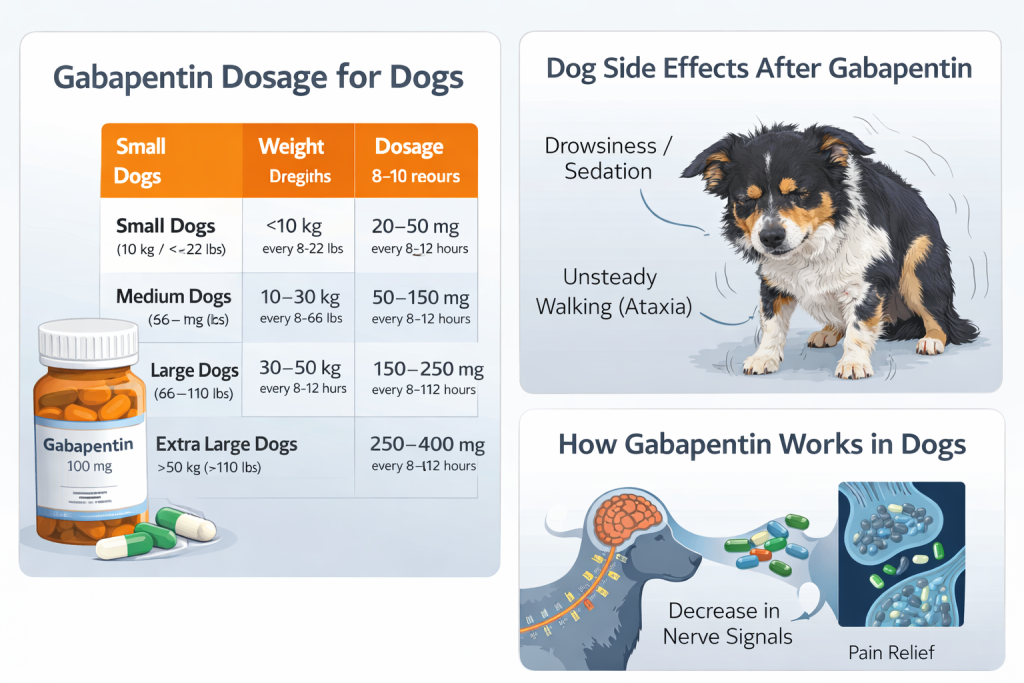

Gabapentin can be safe for dogs with kidney disease if dosed carefully and monitored by a veterinarian. Because it is excreted through the kidneys, impaired kidney function increases the risk of drug accumulation, which can cause lethargy, vomiting, tremors, or seizures. Always follow veterinary guidance, adjust doses, and monitor your dog closely.
What Is Gabapentin?
- History: Originally developed for human neuropathic pain and seizures; now commonly prescribed in veterinary medicine.
- Mechanism: Reduces nerve excitability by binding to calcium channels in the nervous system.
- Uses in Dogs: Chronic pain, neuropathic pain, arthritis, seizures, anxiety.
- Metabolism: Primarily excreted via the kidneys, making kidney function crucial in dosing.
Complete Guide to Gabapentin for Dogs: Uses, Dosage, Side Effects & Safety
Gabapentin and Kidney Disease in Dogs
Health Risks of Gabapentin in Dogs with Kidney Disease
Overdose and Accumulation
- Lethargy or extreme sleepiness
- Loss of coordination (ataxia)
- Vomiting or nausea
- Tremors or unusual behavior
Emergency Situations
- Seizures
- Severe vomiting
- Unresponsiveness
Action: Call your veterinarian or go to an emergency clinic immediately.
Gabapentin Dosing Comparison: Normal vs Kidney-Impaired Dogs
| Dog Condition | Typical Dose | Dosing Interval | Notes |
|---|---|---|---|
| Normal Kidney Function | 5–10 mg/kg | Every 8–12 hours | Standard dosing for chronic pain or neuropathic conditions |
| Mild Kidney Disease | 2.5–5 mg/kg | Every 12 hours | Start lower, monitor for lethargy and coordination changes |
| Moderate to Severe Kidney Disease | 1–2 mg/kg | Every 12–24 hours | Close veterinary supervision required; frequent bloodwork recommended |
⚠️ Note: Always consult your veterinarian before adjusting doses. This table is a general guideline and individual factors may vary.Gabapentin and Kidney Disease in Dogs
Safe Use of Gabapentin in Dogs with Kidney Disease
- Veterinary Assessment: Bloodwork to evaluate kidney function before starting gabapentin.
- Dose Adjustments: Lower doses and longer intervals for dogs with chronic kidney disease.
- Monitoring: Observe for side effects, recheck bloodwork regularly.
- Combination Therapy: May use alongside kidney-safe pain management options under veterinary supervision.
Kidney-Safe Alternatives for Pain Management
- Certain NSAIDs (vet-approved and carefully dosed)
- Physical therapy or hydrotherapy
- Omega-3 fatty acid supplements
- Other vet-approved analgesics safe for kidney-impaired dogs
Is Gabapentin Safe for All Dogs?
- Not safe without adjustment for dogs with kidney impairment.
- Dogs with severe CKD require close monitoring.
- Always consult your vet before starting or changing gabapentin dosing.
Gabapentin Dosage for Dogs: Vet Guidelines, Weight Chart & Safety Tips
Final Verdict
Gabapentin can be an effective and safe medication for dogs with kidney disease, but only under veterinary guidance. Key factors are dose adjustment, close observation, and regular blood monitoring. Awareness of early side effects and prompt action in emergencies is essential to protect your pet.
FAQ Gabapentin and Kidney Disease in Dogs
Can gabapentin overdose occur in dogs with kidney disease?
Yes. Reduced kidney function can cause accumulation, leading to lethargy, vomiting, tremors, or seizures.
How should gabapentin dosing be adjusted for dogs with kidney disease?
Veterinarians often lower the dose and extend the interval between doses, based on the dog’s kidney function.
Are there safer alternatives to gabapentin for dogs with kidney disease?
Yes. Physical therapy, omega-3 supplements, certain vet-approved NSAIDs, or other analgesics safe for kidney-impaired dogs.
Sources Gabapentin and Kidney Disease in Dogs
All pictures are created with Ai for article – Gabapentin and Kidney Disease in Dogs