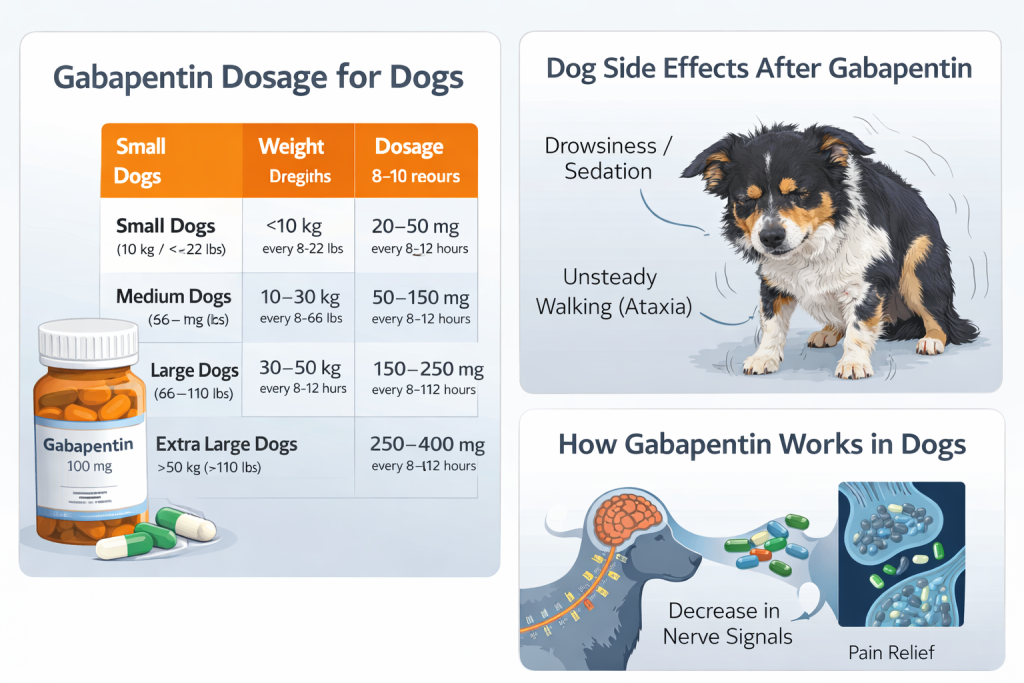

Quick Answer
Can gabapentin cause muscle tremors in dogs? Yes, gabapentin can occasionally be associated with muscle tremors, twitching, or shaking in dogs, but this is not one of its most common side effects. More often, tremors are related to pain, anxiety, spinal disease, neurological problems, medication interactions, overdose, or abrupt dose changes. If your dog develops new, persistent, worsening, or whole-body tremors while taking gabapentin, contact your veterinarian promptly.
Why Muscle Tremors After Gabapentin Worry Dog Owners
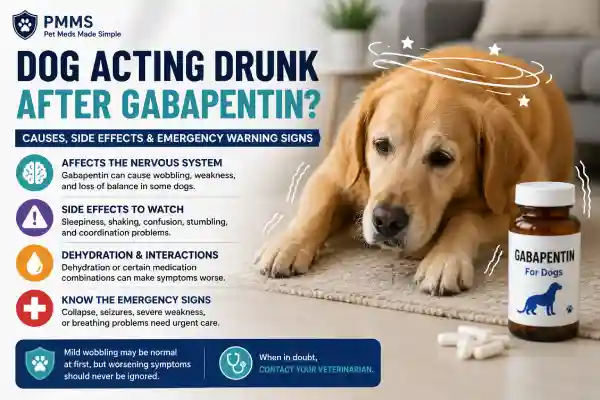
Gabapentin is commonly prescribed for dogs with chronic pain, arthritis, nerve pain, post-surgical discomfort, anxiety-related distress, and sometimes as part of seizure management. Most dogs tolerate it well. The side effects owners hear about most often are sleepiness, wobbliness, weakness, and acting “drunk.”
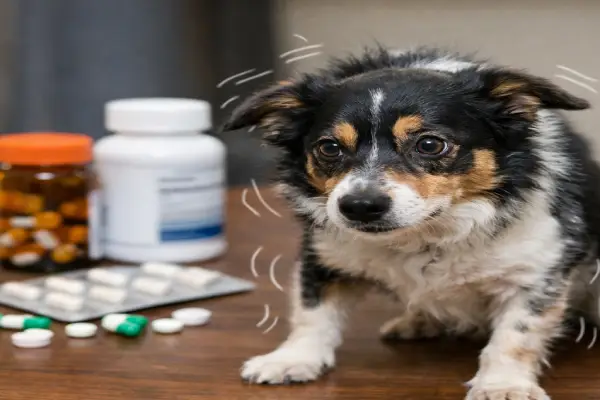
That is why muscle tremors can feel especially frightening. A dog may start with a small leg twitch, a vibrating muscle, a trembling back leg, jaw quivering, or visible shaking shortly after a dose. Owners naturally ask whether gabapentin caused the tremor, whether the dose is too high, or whether the dog is having a seizure.
The answer is rarely simple. Gabapentin can sometimes contribute to abnormal movement, especially when the dose is too high for that dog, when the dog has kidney disease, or when gabapentin is combined with other sedating medications. But many dogs taking gabapentin already have painful or neurological conditions that can cause tremors by themselves.
For example, a dog with spinal pain may tremble because the muscles are guarding the painful area. A dog with arthritis may shake because standing hurts. A dog with seizure history may show abnormal movements unrelated to gabapentin. A senior dog may process medication more slowly and become more sensitive to side effects.
This is why this article should be read together with related PMMS guides such as Why Is My Dog Shaking After Gabapentin?, Can Gabapentin Cause Neurological Side Effects?, and Why Is My Dog Wobbly After Gabapentin?. Those articles cover overlapping signs, while this guide focuses specifically on muscle tremors.
Can Gabapentin Cause Muscle Tremors in Dogs?
What Are Muscle Tremors in Dogs?
Muscle tremors are involuntary contractions of one or more muscle groups. They may appear as rhythmic shaking, twitching, trembling, vibrating, or quivering. Tremors can affect one leg, both back legs, the head, the jaw, the shoulders, the abdominal muscles, or the entire body.
Owners may describe muscle tremors in different ways:
| Owner Description | What It May Mean |
|---|---|
| “His back leg is twitching.” | Localized muscle tremor or nerve irritation |
| “She is vibrating while lying down.” | Fine tremors, pain, anxiety, or medication sensitivity |
| “His jaw keeps quivering.” | Pain, nausea, neurological sign, or stress response |
| “His whole body is shaking.” | Severe tremor, pain, fever, toxin exposure, or seizure-like event |
| “He shakes after every dose.” | Possible medication timing relationship |
A true muscle tremor usually happens while the dog is still conscious. The dog may still look at you, respond to its name, walk, eat, or change position. This is different from many generalized seizures, where awareness is often lost.
However, the distinction is not always obvious at home. That is why video recording the episode can be extremely helpful for your veterinarian.
Are Muscle Tremors a Known Gabapentin Side Effect?
Muscle tremors are not considered one of the most typical gabapentin side effects in dogs. The more common effects are sedation, wobbliness, weakness, and coordination problems.
However, because gabapentin affects nervous system signaling, unusual movement changes can occur in some dogs. These may include:
| Possible Sign | How Common It Is |
|---|---|
| Sleepiness | Common |
| Wobbliness or ataxia | Common |
| Weakness | Sometimes |
| Acting drunk | Sometimes |
| Tremors or twitching | Uncommon |
| Severe neurological signs | Rare, but important |
A dog with tremors after gabapentin should not be ignored, but tremors also do not automatically mean the medication is dangerous or must be stopped immediately. The key is context.
For example, mild tremors after a recent dose increase are different from violent tremors with collapse, vomiting, pale gums, or seizure-like activity. The first situation may require a call to your veterinarian. The second may require urgent care.
For broader medication safety context, see Complete Guide to Gabapentin for Dogs: Uses, Dosage, Side Effects & Safety and Gabapentin Side Effects in Senior Dogs: What Pet Owners Need to Know.
How Gabapentin Affects the Nervous System
Gabapentin is often misunderstood. Although its name sounds related to GABA, it does not work by simply “adding GABA” to the body. Instead, gabapentin binds to specific calcium channel subunits in the nervous system. This can reduce excessive nerve signaling and help calm abnormal pain transmission.
In many dogs, this produces:
| Desired Effect | Why Veterinarians Use It |
|---|---|
| Reduced nerve pain | Helpful for neuropathic pain and spinal disease |
| Sedation or calming | Sometimes useful in anxious or painful dogs |
| Reduced pain sensitivity | Often used in arthritis and chronic pain plans |
| Adjunct seizure support | Sometimes used with other seizure medications |
Because gabapentin changes how nerve signals are transmitted, some dogs may show temporary coordination changes or abnormal movements, especially when their nervous system is already vulnerable.
This is why muscle tremors should be interpreted alongside other signs such as weakness, wobbliness, falling over, panting, anxiety, crying, or sudden behavior changes. PMMS already covers many of these connected symptoms in Can Gabapentin Cause Weak Back Legs?, Why Is My Dog Falling Over After Gabapentin?, and Dog Acting Drunk After Gabapentin? Causes, Side Effects & Emergency Warning Signs.
Why Some Dogs Develop Tremors While Taking Gabapentin
The Dose May Be Too High for That Dog
Not every dog responds to gabapentin the same way. Two dogs of the same weight can have very different sensitivity. A dose that is appropriate for one dog may be too strong for another, especially if the dog is elderly, frail, dehydrated, or has kidney problems.
Possible signs that the dose may be too strong include:
| Sign | What It May Suggest |
|---|---|
| Tremors after each dose | Timing-related medication sensitivity |
| Severe sleepiness | Excessive CNS depression |
| Wobbliness | Ataxia or coordination impairment |
| Weak back legs | Neuromuscular weakness or underlying disease |
| Falling over | More serious coordination problem |
If tremors started after a dose increase, your veterinarian may consider adjusting the dose, changing the interval, or checking for other contributing factors. Do not reduce or stop gabapentin on your own unless your veterinarian tells you to.
Related reading: Gabapentin Dosage for Dogs: Vet Guidelines, Weight Chart & Safety Tips and How Fast Does Gabapentin Work in Dogs?.
The Dog May Have Kidney Disease
Gabapentin is cleared mainly through the kidneys. If kidney function is reduced, the medication may remain in the body longer than expected. This can increase the risk of sedation, weakness, wobbliness, or neurological side effects.
This is especially important in senior dogs. A dog may appear healthy on the outside but still have reduced kidney reserve. Blood work helps veterinarians decide whether dose adjustments are needed.
Dogs at higher risk include:
| Dog Type | Why Risk May Be Higher |
|---|---|
| Senior dogs | More likely to have reduced kidney function |
| Dogs with known kidney disease | Slower gabapentin clearance |
| Dehydrated dogs | Medication effects may feel stronger |
| Dogs on multiple medications | Higher chance of interactions or additive effects |
For more detail, see Gabapentin and Kidney Disease in Dogs: Is It Safe? and Can Senior Dogs Take Gabapentin Safely?.
Tremors May Come From Pain, Not Gabapentin

One of the most common mistakes owners make is assuming that every new symptom after medication must be caused by the medication.
Pain itself can cause trembling.
Dogs may tremble when they have:
| Pain Source | How It Can Cause Tremors |
|---|---|
| Arthritis | Muscle fatigue and guarding |
| Spinal disease | Nerve irritation and back muscle spasms |
| Post-surgical pain | Stress response and muscle tension |
| Joint injury | Weight-shifting and limb shaking |
| Neuropathic pain | Abnormal nerve firing |
A dog may still tremble even if gabapentin is helping partially. In that case, the issue may be incomplete pain control rather than a direct side effect.
This connects closely with Why Is My Dog Crying Despite Gabapentin?, Why Is My Dog Still in Pain on Gabapentin?, and Why Is My Dog Still Limping After Gabapentin?.
The Dog May Have an Underlying Neurological Condition
Some dogs take gabapentin because they already have nerve-related disease. In these dogs, tremors may reflect progression of the original condition rather than a new medication problem.
Possible neurological causes include:
| Condition | Possible Signs |
|---|---|
| Intervertebral disc disease | Back pain, weakness, trembling, reluctance to move |
| Peripheral nerve injury | Twitching, limb weakness, abnormal gait |
| Epilepsy | Tremors, seizures, abnormal episodes |
| Brain disease | Confusion, circling, behavior change |
| Spinal cord disease | Hind leg weakness, wobbliness, pain |
If your dog has tremors plus falling, severe weakness, confusion, or loss of coordination, your veterinarian may recommend a neurological exam or advanced diagnostics.
Related PMMS guides include Can Gabapentin Cause Neurological Side Effects? and Can Gabapentin Cause Breathing Problems in Dogs?, especially when neurological signs appear with systemic distress.
Medication Interactions Can Make Tremors More Likely
Many dogs receiving gabapentin also take other medications. This is common and often appropriate, especially in chronic pain or anxiety cases. However, combinations can sometimes increase sedation, weakness, wobbliness, or abnormal movement.
Common combinations include:
| Combination | Why Monitoring Matters |
|---|---|
| Gabapentin + NSAID | Common pain combination; monitor comfort and side effects |
| Gabapentin + trazodone | More sedation or coordination changes possible |
| Gabapentin + opioids | Additive CNS effects possible |
| Gabapentin + seizure medication | Neurological signs may be harder to interpret |
| Gabapentin + muscle relaxants | Weakness or wobbliness may increase |
This does not mean these combinations are automatically unsafe. Many are prescribed intentionally. But if tremors start after adding a second medication, your veterinarian needs to know.
Useful related articles include Can Dogs Take Gabapentin and NSAIDs Together?, Can Dogs Take Gabapentin With Trazodone?, and Can Gabapentin Be Given With Other Dog Medications?
Muscle Tremors vs Shaking vs Twitching

Owners often use these words interchangeably, but veterinarians may interpret them differently.
| Term | Typical Meaning |
|---|---|
| Tremor | Rhythmic involuntary muscle movement |
| Shaking | Broader owner description; may be fear, pain, cold, or tremor |
| Twitching | Short, sudden muscle contractions |
| Shivering | Often cold, fear, pain, or fever |
| Seizure | Abnormal brain electrical activity, may involve collapse or loss of awareness |
If your dog is simply trembling but remains alert, it may be less urgent than a seizure. But if your dog collapses, loses awareness, paddles, urinates, defecates, or cannot recover normally, treat it as an emergency.
Because gabapentin can be used in dogs with neurological disease, it is important not to assume every shaking episode is the same. Compare symptoms carefully with What Happens If Dogs Suddenly Stop Gabapentin? and Gabapentin Withdrawal in Dogs: What to Expect & How to Manage, especially if doses were missed or stopped.
When Tremors Are More Likely Temporary
Some mild tremors may be temporary, especially when they appear shortly after starting gabapentin or after a dose adjustment.
Temporary tremors are more likely when:
| Situation | Interpretation |
|---|---|
| Tremors are mild | Less concerning than violent shaking |
| Dog remains alert | Less seizure-like |
| No vomiting or collapse | Lower emergency concern |
| Started after dose change | Possible adaptation or sensitivity |
| Improves over 24–72 hours | May be transient |
However, “temporary” should not mean ignored. You should still tell your veterinarian, especially if your dog is senior, has kidney disease, or takes multiple medications.
When Tremors Are More Concerning
Tremors become more concerning when they are severe, progressive, repeated, or paired with other symptoms.
Contact a veterinarian urgently if tremors occur with:
| Warning Sign | Why It Matters |
|---|---|
| Collapse | Possible seizure, toxicity, cardiovascular issue, or severe weakness |
| Loss of consciousness | Possible seizure or emergency condition |
| Difficulty breathing | Emergency |
| Pale, blue, or gray gums | Possible oxygen or circulation problem |
| Severe vomiting | Possible toxicity, overdose, or systemic illness |
| Extreme weakness | Possible overdose, neurological disease, or metabolic crisis |
| High fever | Infection, inflammation, or heat-related emergency |
| Suspected overdose | Requires immediate veterinary advice |
A suspected overdose should be treated seriously. PMMS covers this separately in Gabapentin Overdose in Dogs: Signs, Safety Risks & What To Do Immediately and Can Dogs Overdose on Gabapentin? Warning Signs, Treatment & Emergency Steps.
How Veterinarians Diagnose the Cause of Muscle Tremors

Because muscle tremors can result from dozens of different medical conditions, veterinarians rarely assume that gabapentin is the sole cause without performing a thorough evaluation.
Instead, they work through a process of elimination to determine whether the tremors are caused by the medication itself, the disease being treated, or an entirely unrelated medical problem.
The first step is obtaining a detailed medical history.
Your veterinarian will usually ask questions such as:
- When did the tremors first begin?
- Did they start after beginning gabapentin?
- Did they appear after increasing the dose?
- Are they present all day or only after medication?
- Are they becoming more frequent?
- Is your dog eating and drinking normally?
- Is your dog taking any additional medications?
- Has your dog missed any recent doses?
Even these simple answers can dramatically narrow the list of possible causes.
Physical Examination
A complete physical examination helps determine whether the tremors are originating from the muscles, joints, nerves, brain, or another body system.
The veterinarian will evaluate:
| Examination | Why It Matters |
|---|---|
| Body temperature | Rules out fever or heat-related illness |
| Heart and lungs | Detects cardiovascular abnormalities |
| Hydration | Dehydration can worsen neurological signs |
| Pain response | Identifies painful joints or spinal disease |
| Muscle tone | Detects weakness or muscle wasting |
| Gait evaluation | Looks for ataxia or neurological deficits |
Many dogs that appear to have medication-related tremors are actually experiencing pain from arthritis or spinal disease.
This is why articles such as Why Is My Dog Still in Pain on Gabapentin?, Why Is My Dog Still Limping After Gabapentin?, and Can Gabapentin Cause Weak Back Legs? are closely connected to this topic.
Neurological Examination
Because tremors involve abnormal muscle movement, a neurological examination is often one of the most important parts of the visit.
The veterinarian evaluates:
- Consciousness
- Mental status
- Cranial nerves
- Postural reactions
- Spinal reflexes
- Muscle strength
- Coordination
- Balance
These findings help determine whether the tremors originate from:
- the brain
- the spinal cord
- peripheral nerves
- muscles
- metabolic disease
Dogs showing abnormal neurological findings may require additional diagnostic testing.
Blood Tests
Routine laboratory testing is commonly recommended, particularly if tremors appear suddenly or worsen over time.
Typical tests include:
| Laboratory Test | Purpose |
|---|---|
| CBC | Looks for infection or inflammation |
| Blood chemistry | Evaluates organ function |
| Kidney values | Important because gabapentin is eliminated through the kidneys |
| Liver enzymes | Detects concurrent liver disease |
| Blood glucose | Low glucose can cause tremors |
| Electrolytes | Calcium, potassium and sodium abnormalities may trigger tremors |
Although gabapentin itself is not generally considered toxic to the liver, blood work helps identify other illnesses that could explain your dog’s symptoms.
Advanced Diagnostics
If routine testing fails to identify the cause, additional investigations may be recommended.
These can include:
- Radiographs (X-rays)
- CT scan
- MRI
- Cerebrospinal fluid analysis
- Electromyography (EMG)
- Referral to a veterinary neurologist
Fortunately, most dogs do not require advanced neurological testing.
How Are Muscle Tremors Treated?
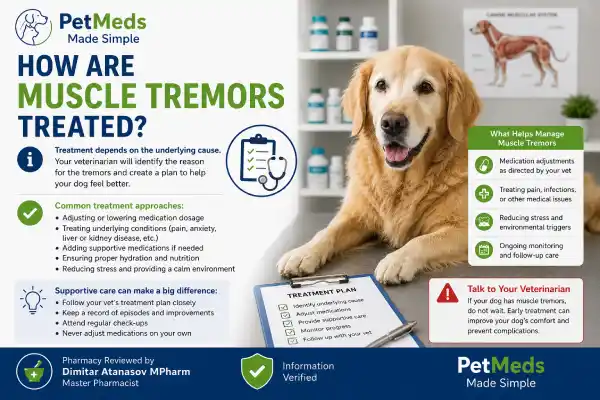
There is no single treatment because muscle tremors are a symptom rather than a disease.
Treatment always depends on identifying the underlying cause.
Mild Medication Adjustment
If gabapentin appears to be contributing to mild tremors, the veterinarian may recommend:
- lowering the dose
- increasing the interval between doses
- gradually adjusting therapy
- monitoring for several days
Owners should never make these changes without veterinary guidance.
Stopping gabapentin suddenly can sometimes create additional problems, particularly in dogs receiving long-term therapy.
For this reason, it is also worth reading What Happens If Dogs Suddenly Stop Gabapentin? and Gabapentin Withdrawal in Dogs: What to Expect & How to Manage.
Treating Pain More Effectively
Sometimes the tremors continue because the underlying pain has not been adequately controlled.
In these cases, the veterinarian may:
- adjust the pain management plan
- add another medication
- recommend physical rehabilitation
- investigate whether the original diagnosis has progressed
A dog that continues trembling because of severe arthritis requires a different treatment approach than a dog experiencing a rare medication side effect.
Managing Neurological Disease
If the tremors are caused by neurological disease rather than gabapentin, treatment focuses on that condition.
Examples include:
| Underlying Condition | Possible Treatment |
|---|---|
| Epilepsy | Anti-seizure medication adjustments |
| Intervertebral disc disease | Pain management, surgery or rehabilitation |
| Brain disease | Advanced neurological treatment |
| Peripheral neuropathy | Disease-specific therapy |
This is why a correct diagnosis is so important.
Hospitalization
Dogs showing severe neurological abnormalities may require hospitalization.
Examples include:
- repeated seizures
- suspected overdose
- inability to walk
- severe dehydration
- persistent vomiting
- respiratory compromise
Hospital care allows continuous monitoring while supportive treatment is provided.
Can Muscle Tremors Be Prevented?

Although prevention is not always possible, owners can significantly reduce the risk of medication-related complications.
Prevention Checklist
✔ Give gabapentin exactly as prescribed.
✔ Never double the next dose if one is missed.
✔ Never stop long-term treatment abruptly.
✔ Inform your veterinarian about every medication and supplement your dog receives.
✔ Monitor senior dogs carefully.
✔ Schedule recommended blood work.
✔ Watch for new neurological signs after dose adjustments.
✔ Record episodes on your phone whenever possible.
Video recordings often provide veterinarians with information that cannot be obtained from a written description alone.
Veterinarian Takeaway
Gabapentin is considered one of the safest and most commonly prescribed neurological pain medications in veterinary medicine.
Although muscle tremors can occur, they remain relatively uncommon compared with sleepiness, wobbliness, and temporary weakness.
More importantly, tremors often reflect the underlying disease rather than the medication itself.
A dog with spinal pain, arthritis, epilepsy, kidney disease, or another neurological disorder may develop tremors regardless of whether gabapentin is being administered.
Because the list of possible causes is extensive, owners should avoid stopping the medication without consulting their veterinarian.
Prompt evaluation allows veterinarians to determine whether the tremors represent:
- a temporary medication adjustment
- progression of the original disease
- an unrelated medical problem
- or a true neurological emergency.
Bottom Line
Can gabapentin cause muscle tremors in dogs?
Yes but it is not one of the medication’s most common side effects.
In many cases, tremors are actually caused by pain, spinal disease, neurological disorders, metabolic abnormalities, medication interactions, or kidney disease rather than gabapentin itself.
Most mild tremors can be evaluated during a routine veterinary appointment, especially if your dog remains bright, alert, eating normally, and otherwise comfortable.
However, tremors accompanied by collapse, seizures, severe weakness, breathing difficulty, loss of consciousness, or suspected overdose should always be treated as a veterinary emergency.
Frequently Asked Questions – Can Gabapentin Cause Muscle Tremors in Dogs
Can gabapentin directly cause muscle tremors in dogs?
Yes, although it is considered an uncommon side effect. Most dogs experience sedation or temporary wobbliness rather than muscle tremors. If tremors develop shortly after starting gabapentin or after a dose increase, your veterinarian should evaluate whether the medication, the dosage, or an underlying medical condition is responsible.
Are muscle tremors the same as seizures?
No.
Muscle tremors usually occur while the dog remains awake and aware of its surroundings. Dogs experiencing tremors often respond to their owners, can still walk, and remain conscious.
Generalized seizures usually involve:
loss of consciousness
collapse
paddling movements
loss of bladder or bowel control
confusion after the episode
If you are unsure whether your dog is experiencing tremors or seizures, record the episode and contact your veterinarian immediately.
Can kidney disease make gabapentin side effects worse?
Yes.
Because gabapentin is eliminated primarily through the kidneys, dogs with kidney disease may eliminate the medication more slowly. This can increase the likelihood of neurological side effects such as:
excessive sleepiness
wobbliness
weakness
muscle tremors
This is why senior dogs and dogs with chronic kidney disease often require individualized dosing. You may also find our guide Gabapentin and Kidney Disease in Dogs: Is It Safe? helpful.
Can muscle tremors disappear on their own?
Sometimes.
Mild tremors that occur shortly after beginning treatment or following a dose adjustment may improve as the nervous system adapts.
However, tremors that:
become more frequent,
become more severe,
involve the entire body,
or are accompanied by weakness or collapse
should never be ignored.
Should I skip the next gabapentin dose if my dog develops tremors?
No.
Do not stop or skip doses unless your veterinarian specifically instructs you to do so.
Abrupt discontinuation may increase pain and, in dogs receiving gabapentin for seizure management, may increase the risk of breakthrough seizures.
For additional information, read What Happens If Dogs Suddenly Stop Gabapentin? and Gabapentin Withdrawal in Dogs: What to Expect & How to Manage.
Can other medications increase the risk of tremors?
Yes.
Several medications may increase neurological side effects when combined with gabapentin, including certain:
opioids
anti-anxiety medications
muscle relaxants
seizure medications
Most combinations are prescribed safely by veterinarians, but owners should always report any new neurological signs after adding another medication.
Related guides include Can Dogs Take Gabapentin With Trazodone? and Can Gabapentin Be Given With Other Dog Medications? Safety Guide for Pet Owners.
Does gabapentin overdose cause muscle tremors?
It can.
Although many overdoses primarily cause profound sedation, larger overdoses may also result in:
severe tremors
extreme weakness
inability to stand
confusion
vomiting
breathing abnormalities
If you suspect your dog has received too much gabapentin, seek emergency veterinary care immediately.
You should also read Gabapentin Overdose in Dogs: Signs, Safety Risks & What To Do Immediately and Can Dogs Overdose on Gabapentin? Warning Signs, Treatment & Emergency Steps.
Can pain itself cause muscle tremors?
Absolutely.
Pain is actually one of the most common reasons dogs tremble.
Conditions such as arthritis, spinal disease, orthopedic injuries, and chronic nerve pain may all produce muscle tremors even while the dog is receiving gabapentin.
This is why your veterinarian evaluates the entire patient rather than assuming the medication is responsible.
When should I take my dog to the emergency veterinarian?
Seek immediate veterinary care if tremors occur together with:
collapse
seizures
difficulty breathing
pale or blue gums
inability to stand
repeated vomiting
loss of consciousness
suspected overdose
These signs may indicate a medical emergency requiring immediate treatment.
Can dogs continue taking gabapentin after experiencing mild tremors?
Often, yes.
Many dogs can continue treatment after their veterinarian evaluates the cause. Sometimes the dose is adjusted, the dosing interval is changed, or another underlying condition is treated.
Never make medication changes without veterinary guidance.
Reviewed By
Written by
Dimitar Georgiev Atanasov, MPharm
Master Pharmacist | Medication Safety Educator
Bulgarian Pharmaceutical Union (BPhU)
UIN: 0210000586
Pharmacy & Scientific Review by
Gergana Krasimirova Atanasova, MPharm
Assistant Lecturer, Faculty of Pharmacy
University “Prof. Dr. Asen Zlatarov” – Burgas
Master Pharmacist
Bulgarian Pharmaceutical Union (BPhU)
UIN: 0210000587
Veterinary Reviewed by
Dr. Valcho Georgiev Valchev, DVM
Licensed Veterinarian
Bulgarian Veterinary Union (BVS)
Registration No.: 28000115
Editorial Policy
At Pet Meds Made Simple, every article follows a structured editorial process designed to provide accurate, evidence-based information for pet owners. Our content is written by pharmacy professionals, scientifically reviewed, and independently veterinary reviewed before publication.
For more information, please see our Editorial Policy.
Medical Review Statement
This article was written by a licensed Master Pharmacist, scientifically reviewed by a second licensed Master Pharmacist, and independently reviewed by a licensed veterinarian. It is intended for educational purposes only and should not replace professional veterinary diagnosis or treatment. Always consult your veterinarian before starting, stopping, or changing any medication for your dog.
Sources
- Plumb DC. Plumb’s Veterinary Drug Handbook. Latest edition.
- Papich MG. Saunders Handbook of Veterinary Drugs: Small and Large Animal.
- Merck Veterinary Manual. Pain Management in Dogs and Cats.
- Grimm KA, Lamont LA, Tranquilli WJ, Greene SA, Robertson SA. Veterinary Anesthesia and Analgesia.
- AAHA 2022 Pain Management Guidelines for Dogs and Cats.
- WSAVA Global Pain Council Guidelines.
- Veterinary Information Network (VIN). Clinical discussions on gabapentin use in dogs.
- Frontiers in Veterinary Science. Current research on canine neuropathic pain and analgesia.
- JAVMA (Journal of the American Veterinary Medical Association). Articles discussing gabapentin efficacy and adverse effects in dogs.
- Boothe DM. Small Animal Clinical Pharmacology and Therapeutics.
Image Disclosure – Can Gabapentin Cause Muscle Tremors in Dogs?
Image Disclosure: Some images used in this article may be AI-generated for educational and illustrative purposes. They are designed to help explain veterinary concepts and do not replace clinical photographs or professional veterinary advice.-