
Quick Answer
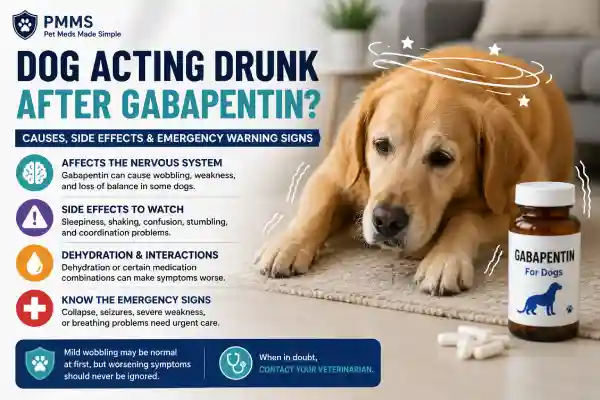
If your dog is falling over after gabapentin, the most common causes are temporary loss of coordination (ataxia), weakness, sedation, or increased sensitivity to the medication. Mild wobbliness is a recognized side effect and often improves as the medication wears off. However, repeated falls, inability to stand, collapse, or breathing difficulties should be treated as veterinary emergencies.
Why is my dog falling over after gabapentin?
Dogs may fall over after gabapentin because the medication can cause ataxia (loss of coordination), weakness, and sedation. These effects are often temporary and are most noticeable during the first few hours after a dose. Severe weakness, collapse, inability to stand, or breathing problems require immediate veterinary attention.
Table of Contents
When Owners Commonly Ask This
Most owners search “Why Is My Dog Falling Over After Gabapentin?” because something alarming happened shortly after giving the medication.
Perhaps your dog:
- Suddenly started stumbling
- Lost balance while walking
- Fell while turning around
- Appeared drunk
- Couldn’t stand up normally
- Started swaying from side to side
A common concern sounds like this:
“My dog was walking normally this morning. After taking gabapentin, he keeps falling over. Should I be worried?”
The answer depends on the severity of the symptoms, your dog’s medical history, the dose given, and whether other medications are involved.
The reassuring news is that mild balance problems are one of the more common side effects veterinarians see with gabapentin.
The challenge is determining when wobbliness is expected and when it may indicate something more serious.
Why Is My Dog Falling Over After Gabapentin?
There is no single answer.
Several different mechanisms can cause a dog to lose balance after taking gabapentin.
The most common include:
- Ataxia (loss of coordination)
- Weakness
- Sedation
- Medication sensitivity
- Drug interactions
- Underlying medical conditions
Many owners immediately assume the medication is causing the problem.
Sometimes that’s true.
However, many dogs taking gabapentin already suffer from conditions that affect mobility, such as arthritis, spinal disease, or chronic pain.
This is why veterinarians evaluate both the medication and the underlying disease when investigating balance problems.
What Does Falling Over Look Like?
Different dogs show different symptoms.
Some dogs may:
- Sway while standing
- Stumble occasionally
- Misjudge steps
- Slide on smooth floors
Others may experience:
- Frequent falls
- Severe instability
- Difficulty standing
- Trouble walking in a straight line
The severity can range from barely noticeable to quite dramatic.
Is Wobbling the Same as Falling?
Not necessarily.
Many dogs become slightly wobbly without actually collapsing.
Wobbling may involve:
- Mild swaying
- Unsteady walking
- Wider stance
- Occasional stumbling
Falling usually suggests a more significant balance problem.
Both symptoms deserve monitoring, but repeated falls are more concerning.
Is It Always a Medication Side Effect?
No.
This is one of the biggest misconceptions owners have.
A dog receiving gabapentin may already have:
- Arthritis
- Hip dysplasia
- IVDD
- Neurological disease
- Vestibular disease
These conditions can cause mobility problems independently of the medication.
Gabapentin may simply make an existing issue more noticeable.
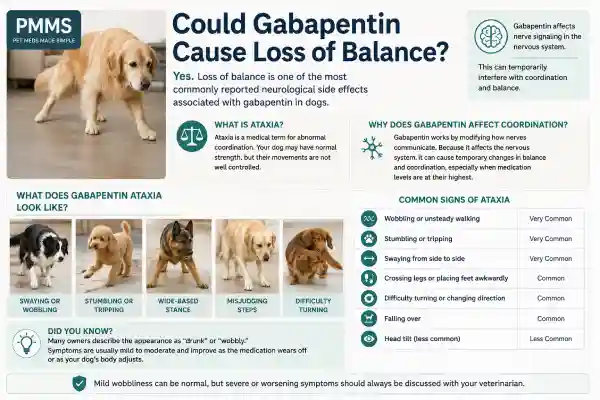
Could Gabapentin Cause Loss of Balance?
Yes.
Loss of balance is one of the most frequently reported neurological side effects associated with gabapentin.
Veterinarians refer to this problem as ataxia.
Many owners who search why is my dog falling over after gabapentin are actually describing ataxia without realizing it.
What Is Ataxia?
Ataxia is a medical term describing abnormal coordination.
The dog may have normal strength but poor control of movement.
Think of it as a communication problem between the brain and body.
The muscles still work.
The brain still functions.
The signals simply aren’t being coordinated properly.
Common Signs of Ataxia
| Symptom | Common With Gabapentin |
|---|---|
| Wobbling | Yes |
| Stumbling | Yes |
| Swaying | Yes |
| Falling over | Yes |
| Wide stance | Yes |
| Crossing legs awkwardly | Yes |
| Difficulty turning | Yes |
Many owners describe the appearance as:
“My dog looks drunk.”
That description is actually surprisingly accurate.
What Does Gabapentin Ataxia Look Like?
Dogs with ataxia may:
- Walk like they’re on a boat
- Drift sideways
- Misjudge distances
- Trip over their own feet
- Struggle on slippery floors
The effect can be mild or significant depending on the dog.
Some owners researching gabapentin side effects in dogs discover that balance problems are among the most common reasons people contact their veterinarian after starting treatment.
Why Does Gabapentin Affect Coordination?
Gabapentin works by modifying nerve signaling.
Veterinarians commonly prescribe it for:
- Chronic pain
- Nerve pain
- Arthritis discomfort
- Anxiety
- Post-surgical recovery
Because it affects the nervous system, temporary changes in coordination can occur.
These effects are usually strongest when medication levels are highest.
Could Weakness Cause a Dog to Fall Over?
Absolutely.
Many owners searching why is my dog falling over after gabapentin are actually observing weakness rather than true ataxia.
The two conditions often look very similar.
Rear-Leg Weakness
Hind-leg weakness is especially common.
Owners may notice:
- Trouble climbing stairs
- Difficulty standing
- Slipping while walking
- Reduced jumping ability
Dogs that already have arthritis may experience these problems more severely.
In fact, owners researching whether gabapentin can cause weakness in dogs often describe symptoms nearly identical to balance problems.
Front-Leg Weakness
Less commonly, weakness affects the front legs.
Signs may include:
- Leaning forward
- Buckling at the shoulders
- Difficulty supporting body weight
- Collapsing while walking
This can appear more alarming because it sometimes resembles a neurological emergency.
How Weakness Differs From Ataxia
| Feature | Weakness | Ataxia |
|---|---|---|
| Muscle strength reduced | Yes | Usually No |
| Poor coordination | Sometimes | Yes |
| Difficulty standing | Common | Possible |
| Stumbling | Common | Common |
| Falling over | Common | Common |
| Wide stance | Less common | Common |
Veterinarians often use neurological exams to distinguish between the two.
Could Sedation Be the Real Cause?
Very often, yes.
Many owners assume their dog is losing balance because something is wrong neurologically.
In reality, the dog may simply be extremely sleepy.
Dogs experiencing balance problems are often also wondering how long gabapentin sedation lasts in dogs, especially when wobbliness appears shortly after a dose.
Why Sedation Affects Balance
Balance depends on:
- Alertness
- Muscle control
- Coordination
- Fast reaction times
Sedation affects all of these factors.
A sleepy dog may:
- React more slowly
- Misjudge footing
- Correct slips less effectively
- Struggle to maintain balance
The result can look very similar to ataxia.
When Sedation Is Usually Strongest
Most dogs experience peak effects during the first few hours after administration.
| Time After Dose | Typical Effect |
|---|---|
| 30–60 minutes | Mild drowsiness |
| 1–3 hours | Sedation begins |
| 2–4 hours | Peak effects |
| 4–8 hours | Gradual improvement |
| 8–12 hours | Most dogs improve significantly |
This explains why many owners report stumbling shortly after dosing.
Could Sedation Become Worse After a Dose Increase?
Definitely.
One of the most common reasons owners notice balance problems is because:
- The dosage increased
- Treatment recently started
- Another medication was added
Owners who notice excessive sleepiness often ask why their dog sleeps so much on gabapentin, particularly during the first week of treatment.
In many cases, these effects improve as the body adjusts.
Could Confusion Be Mistaken for Falling Problems?
Sometimes.
Owners may notice:
- Slow responses
- Disorientation
- Reduced interaction
- Unusual behavior
This often leads to questions about why a dog seems confused after gabapentin or why a dog is acting strange on gabapentin.
Confusion, sedation, and balance issues can overlap significantly.
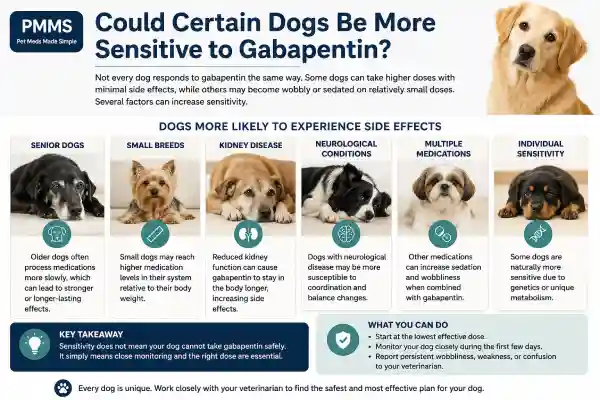
Could Certain Dogs Be More Sensitive to Gabapentin?
Yes.
Not every dog responds the same way.
Dogs more likely to develop wobbliness include:
- Senior dogs
- Small breeds
- Dogs with kidney disease
- Dogs with neurological conditions
- Dogs taking multiple medications
One dog may become mildly sleepy.
Another may become significantly unsteady on exactly the same dose.
This variability is completely normal and one reason veterinarians individualize treatment plans.
Could the Dose Be Too High?
Sometimes.
One of the most common reasons owners search “Why Is My Dog Falling Over After Gabapentin?” is because the symptoms started shortly after a dose increase.
This does not necessarily mean the veterinarian prescribed the wrong dose.
Gabapentin dosing varies considerably depending on:
- Body weight
- Age
- Medical condition
- Pain severity
- Other medications
- Individual sensitivity
A dose that causes no side effects in one dog may produce significant wobbliness in another.
Signs the Dose May Be Too Strong
| Possible Sign | Commonly Seen |
|---|---|
| Excessive sleepiness | Yes |
| Severe wobbliness | Yes |
| Repeated stumbling | Yes |
| Falling while walking | Yes |
| Difficulty standing | Yes |
| Extreme lethargy | Sometimes |
| Confusion | Sometimes |
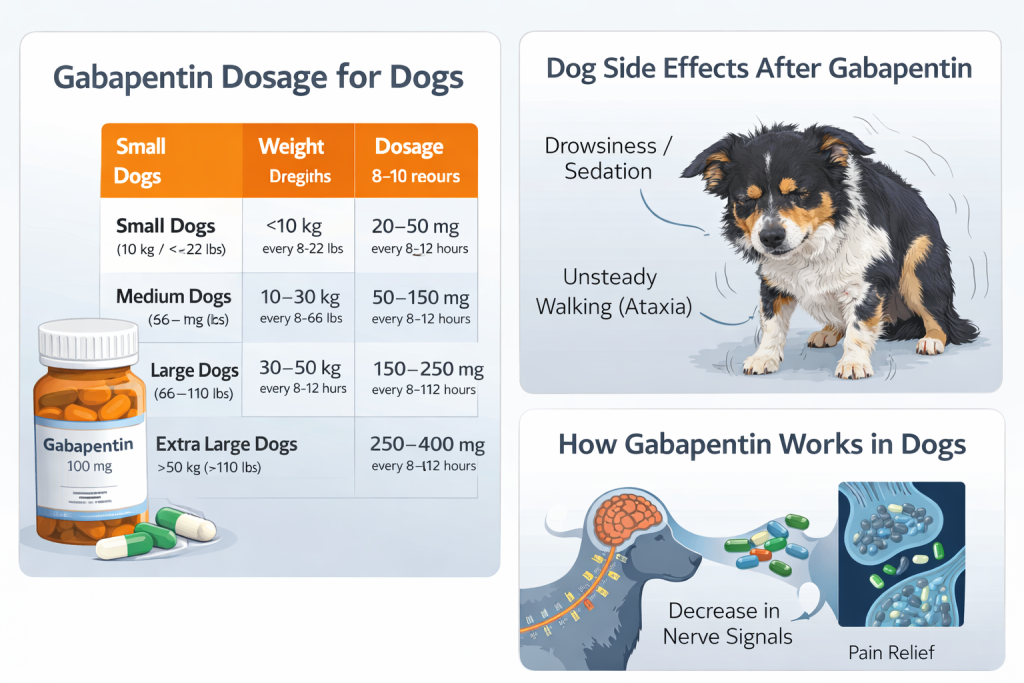
Owners researching gabapentin dosage guidelines for dogs are often surprised to learn how widely dosages can vary between patients.
Are Small Dogs More Sensitive?
Not always, but side effects can sometimes be more noticeable in smaller dogs.
A Chihuahua that becomes mildly wobbly is often more obvious than a Labrador experiencing the same degree of coordination loss.
Can Dose Increases Cause Falling?
Absolutely.
Many owners report symptoms beginning:
- After increasing the dose
- After adding a second medication
- During the first few days of treatment
Fortunately, some dogs adapt over time and become less sensitive to these effects.
Could Senior Dogs Be More Affected?
Yes.
Senior dogs are among the most common patients prescribed gabapentin, especially for arthritis and chronic pain.
They are also among the most likely to experience balance-related side effects.
Reduced Medication Clearance
Older dogs often process medications more slowly.
This may result in:
- Stronger medication effects
- Longer-lasting sedation
- Increased sensitivity
- Slower recovery from side effects
Arthritis and Mobility Problems
Many senior dogs already struggle with:
- Arthritis
- Joint pain
- Muscle loss
- Reduced mobility
When mild gabapentin side effects are added on top of existing mobility issues, falling becomes more likely.
Owners often researching the safest pain medication options for dogs eventually learn that most chronic pain patients require a balance between pain relief and side-effect management.
Why Older Dogs Fall More Easily
| Contributing Factor | Effect |
|---|---|
| Arthritis | Reduced stability |
| Muscle loss | Reduced strength |
| Joint stiffness | Slower movement |
| Poor vision | Navigation problems |
| Medication sensitivity | Stronger side effects |
This is why owners frequently ask whether senior dogs can take gabapentin safely.
The answer is usually yes, but monitoring becomes especially important.
Could Other Medications Make the Problem Worse?
Definitely.
Gabapentin is commonly prescribed alongside other medications.
While these combinations can be extremely effective, they may also increase side effects.
Common Medications That May Increase Wobbliness
| Medication | May Increase Sedation? |
|---|---|
| Trazodone | Yes |
| Anxiety medications | Yes |
| Seizure medications | Yes |
| Sedatives | Yes |
| Some pain medications | Yes |
Trazodone
One of the most common questions owners ask is about trazodone versus gabapentin and whether the two medications can cause excessive sedation together.
The answer is yes.
Both medications can affect alertness and coordination.
Pain Medications
Owners often wonder whether dogs can take gabapentin and NSAIDs together safely.
In most cases, yes.
However, every dog responds differently, and some patients may experience increased weakness or reduced activity levels.
Anxiety Medications
Owners also frequently ask whether dogs can take melatonin with anxiety medication or whether combining multiple calming medications could increase wobbliness.
Any time multiple medications affect the nervous system, side effects may become more noticeable.
Could Falling Over Mean an Overdose?
Sometimes, but not usually.
Most dogs that become wobbly after gabapentin are experiencing expected side effects rather than an overdose.
However, severe symptoms should never be ignored.
Early Signs of Overdose
Potential signs include:
- Extreme sleepiness
- Severe wobbliness
- Difficulty standing
- Significant weakness
- Disorientation
Severe Signs of Overdose
More serious symptoms may include:
- Collapse
- Inability to stand
- Unresponsiveness
- Severe neurological abnormalities
- Breathing difficulties
Owners worried about this possibility often search whether dogs can overdose on gabapentin, particularly when symptoms seem more severe than expected.
What Should Owners Do?
If an overdose is suspected:
- Contact your veterinarian immediately.
- Contact an emergency veterinary hospital if needed.
- Gather information about:
- Dose administered
- Time given
- Other medications
- Current symptoms
Prompt evaluation is always safest.
Could Another Condition Be Causing the Problem?
Absolutely.
One of the biggest mistakes owners make is assuming the medication is always responsible.
Many dogs receiving gabapentin already have medical conditions that affect mobility.
Arthritis
Dogs with arthritis may:
- Stumble
- Move slowly
- Have difficulty standing
Owners researching the best pain medication for dogs with arthritis often discover that arthritis alone can cause significant balance problems.
Intervertebral Disc Disease (IVDD)
IVDD may cause:
- Weakness
- Loss of coordination
- Difficulty walking
- Falling
These symptoms can easily be mistaken for medication side effects.
Vestibular Disease
Vestibular disease is one of the classic causes of sudden balance problems in dogs.
Signs may include:
- Falling to one side
- Head tilt
- Circling
- Severe imbalance
Neurological Disorders
Various neurological conditions can produce symptoms similar to gabapentin-related ataxia.
Post-Surgical Recovery
Dogs recovering from surgery may already have:
- Reduced strength
- Pain
- Mobility limitations
Gabapentin may simply make these existing problems more obvious.
How Veterinarians Evaluate a Dog That Is Falling Over
When veterinarians investigate why a dog is falling over after gabapentin, they rarely assume the medication is the only cause.
Instead, they assess several factors.
Questions Veterinarians Commonly Ask
- When did symptoms begin?
- What dose was given?
- Was the dosage recently changed?
- Is the dog taking other medications?
- Is the dog improving or worsening?
- Has this happened before?
Physical Examination
The veterinarian may evaluate:
- Balance
- Coordination
- Strength
- Reflexes
- Mental status
- Hydration
Additional Testing
Depending on the situation, testing may include:
- Bloodwork
- Kidney function tests
- Liver function tests
- Neurological examination
- Imaging studies
The goal is determining whether the problem is:
- Medication-related
- Disease-related
- A combination of both
When Does Falling Over Become an Emergency?
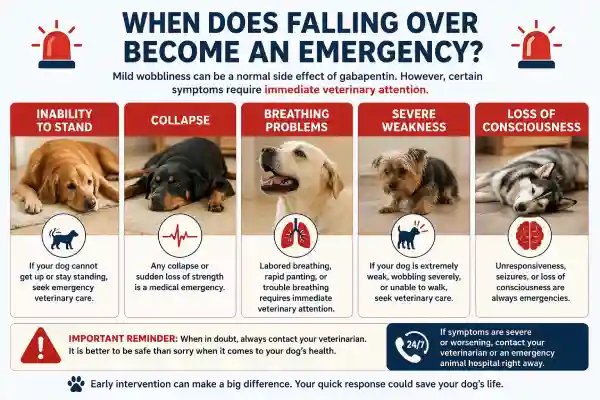
Mild wobbliness is often expected.
Certain symptoms, however, should never be ignored.
Inability to Stand
A dog that cannot rise normally should be evaluated immediately.
Collapse
Any collapse should be treated as a medical emergency.
Breathing Problems
Owners concerned about respiratory symptoms often ask whether gabapentin can cause breathing problems.
Breathing abnormalities always warrant prompt evaluation.
Severe Weakness
Especially when worsening rapidly.
Loss of Consciousness
Loss of consciousness is never considered a normal medication side effect.
Emergency Warning Signs
| Symptom | Emergency? |
|---|---|
| Mild wobbling | Usually No |
| Occasional stumbling | Usually No |
| Repeated falls | Yes |
| Collapse | Yes |
| Breathing difficulty | Yes |
| Inability to stand | Yes |
| Unresponsiveness | Yes |
Related Symptoms Owners Often Search For
Owners searching Why Is My Dog Falling Over After Gabapentin? frequently search for other symptoms at the same time.
Sleeping More Than Usual
Many dogs that become wobbly are also unusually tired.
This often leads owners to wonder why their dog sleeps so much on gabapentin.
Weakness
Questions about whether gabapentin can cause weakness in dogs are among the most common follow-up searches.
Confusion
Some dogs appear disoriented, causing owners to ask why their dog seems confused after gabapentin.
Clinginess
Behavioral changes may occur alongside sedation, leading owners to search why their dog becomes clingy after gabapentin.
Acting Strange
Some owners simply describe their pet as “different” and wonder why their dog is acting strange on gabapentin.
Personality Changes
Others worry about longer-term behavior changes and ask whether gabapentin can affect a dog’s personality.
Appetite Changes
Reduced appetite often accompanies sedation and weakness.
What Questions Should Owners Ask Their Veterinarian?
Helpful questions include:
- Is this amount of wobbliness normal?
- Could the dosage be too high?
- Could another medication be contributing?
- How long should these symptoms last?
- Should kidney function be evaluated?
- Is this weakness or ataxia?
- What symptoms require emergency care?
- Would a dosage adjustment help?
Keeping a medication journal can be extremely useful when discussing side effects.
Bottom Line
If your dog is falling over after gabapentin, the most common causes are temporary ataxia, weakness, sedation, or increased sensitivity to the medication. These side effects are often most noticeable during the first few hours after a dose and may improve as the medication wears off or as the body adjusts to treatment.
However, repeated falls, inability to stand, collapse, breathing difficulties, or unresponsiveness are not considered normal and require immediate veterinary attention.
Veterinarian Takeaway
Gabapentin can cause temporary wobbliness, loss of coordination, weakness, and sedation in some dogs. Mild ataxia is a recognized side effect and often improves with time. Senior dogs, dogs taking multiple medications, and dogs with chronic medical conditions may be more susceptible to balance-related side effects. Any severe or worsening symptoms should be evaluated promptly by a veterinarian.
Frequently Asked Questions – Why Is My Dog Falling Over After Gabapentin?
Is it normal for my dog to fall over after gabapentin?
Mild wobbliness and coordination problems can occur as recognized side effects.
Can gabapentin cause loss of balance?
Yes. Ataxia is one of the most commonly reported neurological side effects.
How long does gabapentin wobbliness last?
Many dogs improve within several hours as the medication wears off.
Can senior dogs experience stronger side effects?
Yes. Older dogs are often more sensitive to medication effects.
Could weakness be causing my dog to fall?
Absolutely. Weakness and ataxia can appear very similar.
Does gabapentin affect the rear legs?
Some dogs experience temporary hind-leg weakness or instability.
Can gabapentin and trazodone increase wobbliness?
Yes. Combination therapy may increase sedation and balance problems.
Could falling over mean my dog received too much gabapentin?
Possibly. Severe symptoms should always be discussed with a veterinarian.
Should I stop gabapentin if my dog is falling over?
Never stop or adjust medication without veterinary guidance.
When should I seek emergency care?
Seek immediate veterinary attention if your dog collapses, cannot stand, becomes unresponsive, or develops breathing difficulties.
Reviewed By
Pharmacy Reviewed By
Dimitar Atanasov, MPharm
Master Pharmacist | Medication Safety Educator
Editorial Policy
At Pet Meds Made Simple, we are committed to providing accurate, evidence-based information about pet medications, veterinary treatments, medication safety, and common health concerns that affect dogs and cats.
Our content is researched using veterinary reference texts, peer-reviewed veterinary literature, clinical guidelines, and trusted veterinary organizations. Every article is written to help pet owners better understand their pet’s medications while supporting—not replacing—the advice of their veterinarian.
Sources
- Plumb’s Veterinary Drug Handbook
- American Animal Hospital Association (AAHA)
- American Veterinary Medical Association (AVMA)
- Merck Veterinary Manual
- Veterinary Pharmacology and Therapeutics
- Small Animal Clinical Pharmacology
- Journal of the American Veterinary Medical Association (JAVMA)
- Frontiers in Veterinary Science
- Veterinary Anaesthesia and Analgesia
- Veterinary Information Network (VIN)
Medical Review Statement
This article was pharmacy-reviewed by Dimitar Atanasov, MPharm, Master Pharmacist, using current veterinary pharmacology references, canine medication-safety guidelines, and published veterinary literature available at the time of review.
Images created with AI – Why Is My Dog Falling Over After Gabapentin?