Quick Answer
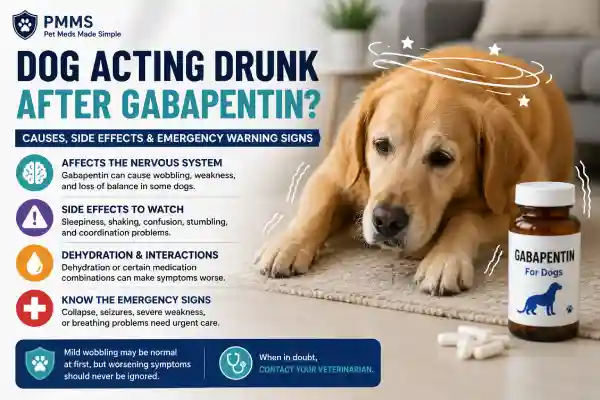
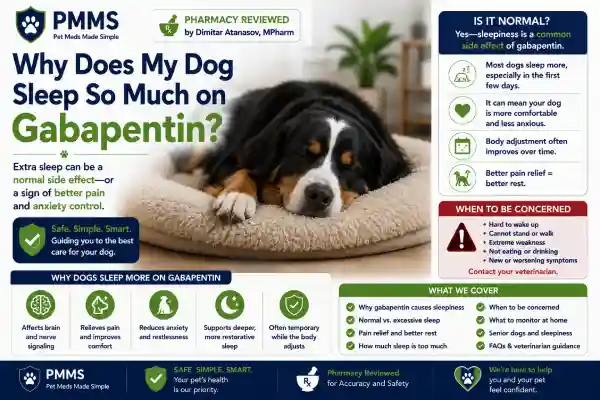
Why does my dog sleep so much on gabapentin? Gabapentin commonly causes drowsiness and sedation in dogs. Many dogs sleep more than usual after starting the medication, especially during the first few days of treatment. In some cases, extra sleep may simply mean your dog is more comfortable because pain or anxiety is better controlled. However, excessive sleepiness, difficulty waking up, or severe weakness should be discussed with a veterinarian.
Why does my dog sleep so much on gabapentin?
Gabapentin often causes drowsiness in dogs because it affects nerve signaling within the brain and nervous system. Many dogs sleep more while taking gabapentin, particularly when treatment begins. Increased sleep is usually normal, but excessive sedation, difficulty standing, or difficulty waking should be evaluated by a veterinarian.
When Owners Commonly Ask This
Owners often search why does my dog sleep so much on gabapentin after noticing:
- Sleeping most of the day
- Longer naps than usual
- Less interest in activity
- Difficulty waking up
- Reduced excitement
- More time resting in bed
Many owners become concerned because their dog suddenly seems much quieter than normal.
Why Does Gabapentin Make Dogs Sleep More?
Gabapentin affects communication between nerves.
While veterinarians commonly prescribe it for:
- Chronic pain
- Nerve pain
- Anxiety
- Post-surgical recovery
one of its most common side effects is sedation.
As a result, some dogs naturally:
- Sleep longer
- Nap more often
- Rest more comfortably
- Appear less active
This is often expected during treatment.
Why Does My Dog Sleep So Much on Gabapentin?
Is Sleeping More a Normal Side Effect?
Yes.
When owners ask why does my dog sleep so much on gabapentin, the most common explanation is simply that drowsiness is a known effect of the medication.
Many dogs experience:
Increased Napping
Short naps become more frequent.
Longer Sleep Periods
Dogs may stay asleep longer than usual.
Reduced Activity
They may be less interested in play.
More Relaxed Behavior
Some dogs finally appear calm after struggling with pain or anxiety.
For many dogs, these changes are temporary and mild.
Could Better Pain Control Be the Reason?
Absolutely.
This is one of the most overlooked explanations.
Many dogs sleep more because they are finally comfortable.
Before treatment, pain may have caused:
- Frequent waking
- Restlessness
- Pacing
- Difficulty getting comfortable
Once pain improves, dogs often catch up on needed rest.
Owners sometimes assume the medication is causing a problem when the dog is actually experiencing relief.
Related articles:
- Why Is My Dog Still in Pain on Gabapentin?
- Why Does Gabapentin Stop Working in Dogs?
- Best Pain Medication for Dogs with Arthritis (Comparison Guide – Vet-Backed)
Is Sleeping More a Sign the Medication Is Working?
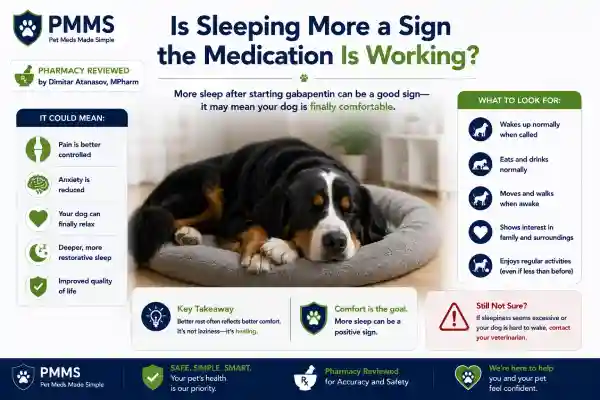
Sometimes, yes.
If a dog previously suffered from:
- Chronic pain
- Arthritis
- Anxiety
- Nerve discomfort
improved sleep can actually be a positive sign.
However, there is an important difference between:
Healthy Rest
A comfortable dog that wakes normally.
and
Excessive Sedation
A dog that appears overly drugged or difficult to wake.
Understanding this distinction is important.
How Much Sleep Is Too Much?
This is one of the most common owner concerns.
There is no single number that applies to every dog.
Factors include:
- Age
- Breed
- Medical conditions
- Activity level
- Other medications
However, owners should pay attention if their dog:
- Cannot stay awake normally
- Is difficult to wake
- Seems unusually weak
- Struggles to stand
- Shows little interest in food or water
These situations deserve veterinary attention.
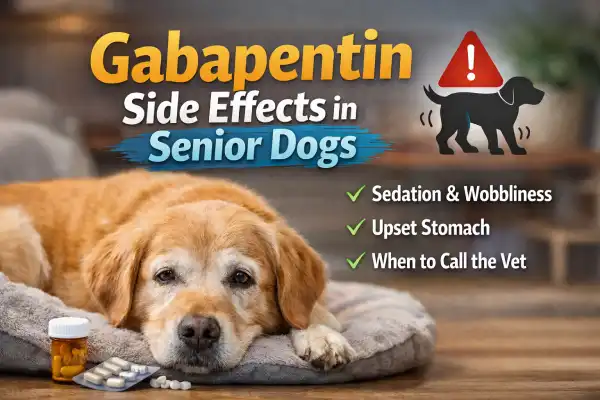
Could Senior Dogs Sleep More on Gabapentin?
Yes.
Senior dogs often appear more affected by sedative medications.
This may occur because older dogs commonly have:
- Arthritis
- Chronic pain
- Reduced mobility
- Multiple medications
- Age-related changes
As a result, owners may notice more sleeping than they would in a younger dog.
Related articles:
- Can Senior Dogs Safely Take Anxiety Medication?
- Can Gabapentin Cause Weak Back Legs?
- Can Gabapentin Cause Weakness in Dogs?
Could Anxiety Relief Be Contributing?
Absolutely.
Dogs with anxiety often spend much of their day in a state of alertness.
They may:
- Pace
- Pant
- Follow owners constantly
- React to every sound
When anxiety improves, many dogs finally relax enough to sleep normally.
This can look dramatic to owners who are accustomed to seeing a constantly alert dog.
Related articles:
- Can Dogs Take Gabapentin With Trazodone?
- Can Dogs Take CBD With Anxiety Medication?
- Can Gabapentin Cause Anxiety in Dogs?
What Other Symptoms Might Occur?
Owners searching why does my dog sleep so much on gabapentin often notice other symptoms as well.
Weakness
Related article: Can Gabapentin Cause Weakness in Dogs?
Wobbliness
Related article: Why Is My Dog Wobbly After Gabapentin?
Shaking
Related article: Can Gabapentin Cause Shaking in Dogs?
Panting
Related article: Why Is My Dog Panting After Gabapentin?
Restlessness at Night
Related article: Why Is My Dog Restless at Night on Gabapentin?
Depression-Like Behavior
Related article: Can Gabapentin Cause Depression in Dogs?
Aggression
Related article: Can Gabapentin Cause Aggression in Dogs?
Could Other Medications Increase Sleepiness?
Yes.
Some dogs receive gabapentin alongside other medications that can also cause sedation.
Examples may include:
- Trazodone
- Certain pain medications
- Some anti-anxiety medications
- Certain seizure medications
Combining medications may increase drowsiness in some dogs.
When Does Sleepiness Become Concerning?
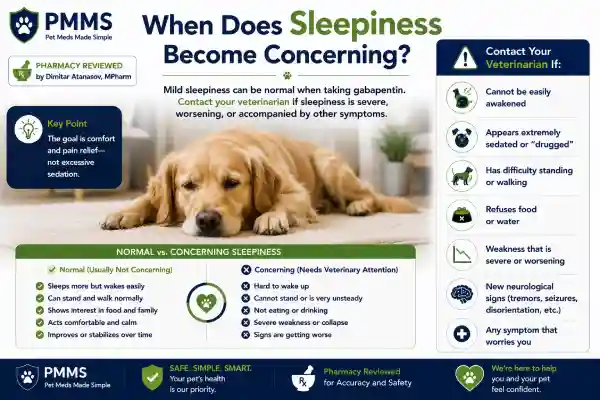
Contact your veterinarian if your dog:
- Cannot be easily awakened.
- Appears extremely weak.
- Cannot stand normally.
- Stops eating.
- Stops drinking.
- Has trouble walking.
- Develops new neurological signs.
- Appears significantly worse over time.
Most sleepiness is mild, but severe sedation should always be evaluated.
How Veterinarians Evaluate Excessive Sleepiness
When owners ask why does my dog sleep so much on gabapentin, veterinarians try to determine whether the sleepiness is a normal medication effect or a sign that further evaluation is needed.
A veterinarian may assess:
- Medication dosage
- Timing of doses
- Other medications being used
- Underlying medical conditions
- Mobility
- Pain levels
- Neurological function
One of the most important questions is:
Is the dog simply sleeping more, or is the dog difficult to wake and unusually weak?
This distinction often helps determine whether the situation is normal or concerning.
Can Sleeping More Be Temporary?
Yes.
Many dogs become noticeably sleepy when they first start gabapentin.
In numerous cases, the body gradually adjusts over time.
Owners may notice:
More Sleep During the First Few Days
The adjustment period is often when drowsiness is most obvious.
Gradual Improvement
Some dogs become more alert after several days or weeks.
Better Activity Levels
Energy may improve as the body adapts.
This is one reason veterinarians often recommend monitoring rather than immediately discontinuing treatment.
Could a Dose Adjustment Be Needed?
Sometimes.
If sleepiness becomes excessive, veterinarians may review:
- The dose
- The dosing schedule
- Other medications
- The overall treatment plan
However, owners should never change the dose on their own.
Any adjustment should be made under veterinary supervision.
What Owners Should Monitor at Home
If your dog is sleeping more than usual, keep track of:
Wakefulness
Can your dog wake up normally when called?
Mobility
Can your dog stand and walk comfortably?
Appetite
Is your dog eating normally?
Water Intake
Is drinking behavior unchanged?
Bathroom Habits
Are urination and bowel movements normal?
Activity Between Naps
Does your dog still interact with family members?
Pain Levels
Has comfort improved since starting treatment?
These observations often provide valuable information for your veterinarian.
Could Excessive Sleepiness Be Mistaken for Depression?
Absolutely.
Owners sometimes worry that their dog seems depressed because:
- They sleep more
- They play less
- They appear quieter
However, sedation and depression are not the same thing.
A sedated dog may still:
- Eat normally
- Respond to family members
- Enjoy affection
- Wake when encouraged
This is why veterinarians evaluate the entire picture rather than focusing on one symptom.
Related article:
Can Gabapentin Cause Depression in Dogs?
Is Sleeping More Common in Senior Dogs?
Yes.
Senior dogs frequently experience:
- Chronic pain
- Arthritis
- Reduced mobility
- Cognitive changes
- Multiple medications
Because of these factors, older dogs often appear sleepier while taking gabapentin.
This does not automatically mean something is wrong.
Related articles:
- Can Senior Dogs Safely Take Anxiety Medication?
- Can Gabapentin Cause Weak Back Legs?
- Can Gabapentin Cause Weakness in Dogs?
Could Sleeping More Mean Your Dog Finally Feels Better?
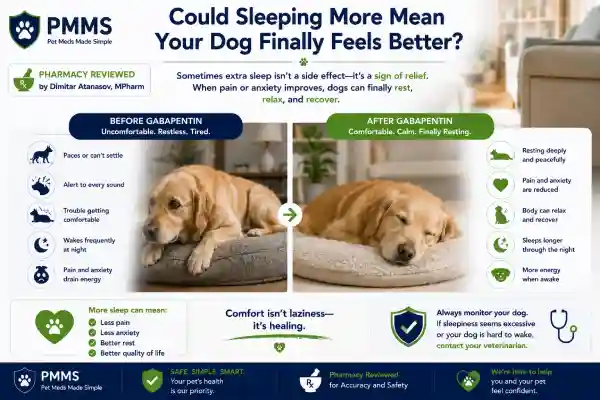
In many cases, yes.
This is one of the most reassuring explanations.
Dogs living with chronic pain or anxiety may spend weeks or months:
- Sleeping poorly
- Waking frequently
- Remaining alert
- Struggling to relax
When treatment begins helping, these dogs may finally get the rest they need.
Owners often interpret the extra sleep as a problem when it may actually reflect improved comfort.
Related Symptoms Owners Often Notice
Dogs sleeping more on gabapentin may also experience:
Weakness
Related article: Can Gabapentin Cause Weakness in Dogs?
Wobbliness
Related article: Why Is My Dog Wobbly After Gabapentin?
Shaking
Related article: Can Gabapentin Cause Shaking in Dogs?
Panting
Related article: Why Is My Dog Panting After Gabapentin?
Restlessness
Related article: Why Is My Dog Restless at Night on Gabapentin?
Anxiety Changes
Related article: Can Gabapentin Cause Anxiety in Dogs?
Aggression
Related article: Can Gabapentin Cause Aggression in Dogs?
Missing Doses
Related article: What Happens If My Dog Misses Gabapentin?
When Should Owners Contact Their Veterinarian?
Contact your veterinarian if your dog:
- Cannot be easily awakened.
- Appears extremely sedated.
- Has difficulty standing.
- Refuses food.
- Refuses water.
- Develops severe weakness.
- Experiences worsening symptoms.
- Shows new neurological signs.
While mild drowsiness is common, severe sedation should never be ignored.
Veterinarian Takeaway
Why does my dog sleep so much on gabapentin? The most common reason is that gabapentin causes drowsiness and sedation. In some dogs, increased sleep is also a sign that pain or anxiety is finally under better control. Most cases are mild and improve over time, but excessive sedation, difficulty waking, or significant weakness should be evaluated by a veterinarian.
Bottom Line
If you’re wondering why does my dog sleep so much on gabapentin, the answer is often reassuring.
Many dogs sleep more because:
- Gabapentin commonly causes drowsiness.
- Pain relief improves comfort.
- Anxiety is reduced.
- The body is adjusting to treatment.
The key is distinguishing normal sleepiness from excessive sedation. Monitoring your dog’s appetite, mobility, alertness, and overall quality of life can help determine whether veterinary guidance is needed.
Frequently Asked Questions -Why Does My Dog Sleep So Much on Gabapentin?
Why does my dog sleep so much on gabapentin?
Gabapentin commonly causes drowsiness and sedation, especially when treatment begins.
Is sleeping more a normal side effect of gabapentin?
Yes. Increased sleep is one of the most common side effects.
Can gabapentin make dogs sleep all day?
Some dogs may sleep significantly more than usual, particularly during the adjustment period.
How long does sleepiness last?
Many dogs improve after several days or weeks, although responses vary.
Can pain relief cause a dog to sleep more?
Absolutely. Comfortable dogs often rest more than dogs experiencing pain.
Is sleeping more a sign gabapentin is working?
Sometimes. Improved sleep can reflect better pain or anxiety control.
Are senior dogs more affected by gabapentin?
Senior dogs may experience more noticeable drowsiness due to age-related factors.
Can other medications increase sleepiness?
Yes. Some medications can increase sedation when used alongside gabapentin.
Should I stop gabapentin if my dog sleeps more?
No. Consult your veterinarian before making medication changes.
When should I call my veterinarian?
Contact your veterinarian if your dog is difficult to wake, extremely weak, or showing worsening symptoms.
Reviewed By
Pharmacy Reviewed By
Dimitar Atanasov, MPharm
Master Pharmacist | Medication Safety Educator
Editorial Policy
Sources
- Plumb’s Veterinary Drug Handbook – Gabapentin dosing, adverse effects, and clinical use in dogs.
- American Animal Hospital Association – Pain management guidelines for dogs and cats.
- American Veterinary Medical Association – Veterinary medication safety and patient monitoring recommendations.
- Merck Veterinary Manual – Neurologic medications, adverse effects, and pain management in dogs.
- Veterinary Pharmacology and Therapeutics – Central nervous system medications and sedation effects.
- Small Animal Clinical Pharmacology – Clinical use of gabapentin in companion animals.
- Journal of the American Veterinary Medical Association – Studies involving gabapentin use for chronic pain and perioperative care in dogs.
- Frontiers in Veterinary Science – Research on canine pain management, anxiety treatment, and medication effects.
- Veterinary Anaesthesia and Analgesia – Studies evaluating gabapentin in perioperative and chronic pain settings.
- Veterinary Information Network – Clinical discussions and expert guidance on gabapentin use in dogs.
Medical Review Statement:
This article was pharmacy-reviewed by Dimitar Atanasov, MPharm, Master Pharmacist, using current veterinary pharmacology references, canine pain-management guidelines, and published veterinary literature available at the time of review.Why Does My Dog Sleep So Much on Gabapentin?
Images created with AI – Why Does My Dog Sleep So Much on Gabapentin?