Quick Answer
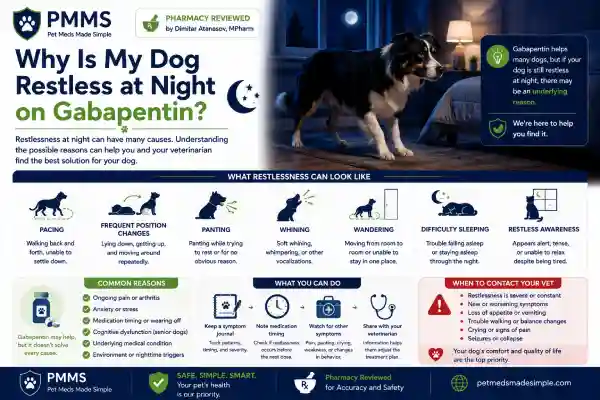
Why is my dog restless at night on gabapentin? A dog may remain restless at night while taking gabapentin because of ongoing pain, anxiety, discomfort, medication timing, age-related conditions, cognitive dysfunction, or an underlying medical problem. While gabapentin helps many dogs relax, it does not eliminate every cause of nighttime restlessness.
Why is my dog restless at night on gabapentin?
A dog may be restless at night on gabapentin because the underlying cause of discomfort is still present. Common reasons include pain, anxiety, arthritis, cognitive decline, medication timing issues, or progression of an existing medical condition. Persistent nighttime restlessness should be discussed with a veterinarian.
When Owners Commonly Ask This
Owners often search why is my dog restless at night on gabapentin when their dog:
- Paces around the house at night
- Cannot settle down
- Frequently changes sleeping locations
- Pants while trying to sleep
- Wakes repeatedly overnight
- Appears uncomfortable despite medication
Many owners become confused because they expected gabapentin to make their dog sleep more comfortably.
Why Is My Dog Restless at Night on Gabapentin?
What Does Nighttime Restlessness Look Like?
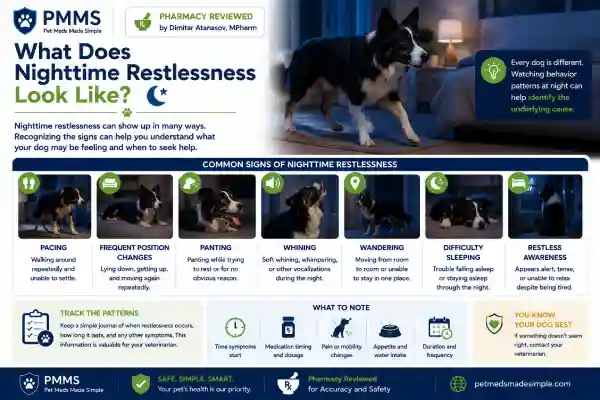
Nighttime restlessness can appear in many forms.
Pacing
Dogs may walk around repeatedly without settling.
Frequent Position Changes
Lying down and getting back up repeatedly.
Panting
Especially when trying to rest.
Whining
Some dogs vocalize during the night.
Wandering
Dogs may move from room to room.
Difficulty Sleeping
Inability to stay asleep for long periods.
Ongoing Pain Is One of the Most Common Causes
One of the most common reasons owners ask why is my dog restless at night on gabapentin is because pain is still present.
Pain often feels worse at night because:
- Activity decreases
- Distractions disappear
- Joint stiffness increases
- Dogs become more aware of discomfort
Common causes include:
- Arthritis
- Back pain
- Joint disease
- Nerve pain
- Orthopedic injuries
Related articles:
- Why Is My Dog Still in Pain on Gabapentin?
- Why Does Gabapentin Stop Working in Dogs?
- Best Pain Medication for Dogs with Arthritis (Comparison Guide – Vet-Backed)
Could Arthritis Be Worse at Night?
Absolutely.
Many senior dogs experience increased discomfort after resting for long periods.
Symptoms may include:
- Stiffness
- Difficulty getting up
- Pacing
- Reluctance to lie down
- Frequent position changes
This is one reason nighttime symptoms are especially common in older dogs.
Related articles:
- Can Gabapentin Cause Weak Back Legs?
- Can Gabapentin Cause Weakness in Dogs?
- Can Senior Dogs Safely Take Anxiety Medication?
Could Anxiety Be Contributing?
Yes.
Gabapentin is often prescribed for anxiety, but some dogs continue experiencing:
- Noise anxiety
- Separation anxiety
- General nervousness
- Environmental stress
Dogs may appear restless even though they are receiving medication.
Related articles:
- Can Gabapentin Cause Anxiety in Dogs?
- Can Dogs Take Gabapentin With Trazodone?
- Can Dogs Take CBD With Anxiety Medication?
Could Medication Timing Matter?
Sometimes.
The timing of medication administration may influence nighttime comfort.
Veterinarians sometimes evaluate:
- When the medication is given
- Whether symptoms occur before the next dose
- Whether additional adjustments are needed
Owners should never modify schedules without veterinary guidance.
Cognitive Dysfunction Can Affect Senior Dogs
Senior dogs sometimes develop cognitive dysfunction syndrome.
This condition may cause:
- Nighttime wandering
- Confusion
- Restlessness
- Sleep-wake cycle changes
- Disorientation
Owners may mistakenly assume gabapentin is causing the behavior when age-related cognitive changes are actually responsible.
Could Panting Be Part of the Problem?
Yes.
Panting and restlessness often occur together.
Some dogs may:
- Pace
- Pant
- Struggle to relax
- Change positions repeatedly
Related article: Why Is My Dog Panting After Gabapentin?
Could Restlessness Mean Gabapentin Is Not Working?
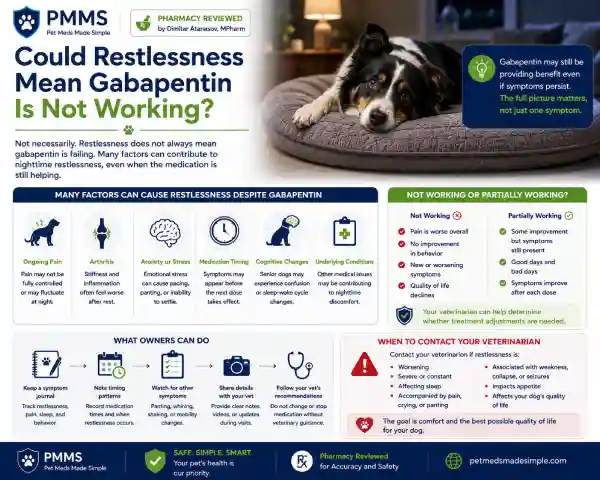
Not necessarily.
Many owners assume nighttime restlessness means treatment has failed.
In reality:
- Gabapentin may still be helping.
- Pain may be partially controlled.
- Another condition may be contributing.
- Additional treatment may be needed.
This is why veterinarians evaluate the entire picture rather than a single symptom.
What Other Symptoms Often Occur?
Owners searching why is my dog restless at night on gabapentin frequently notice:
Crying
Related article: Why Is My Dog Crying Despite Gabapentin?
Shaking
Related article: Can Gabapentin Cause Shaking in Dogs?
Wobbliness
Related article: Why Is My Dog Wobbly After Gabapentin?
Weakness
Related article: Can Gabapentin Cause Weakness in Dogs?
Hyperactivity
Related article: Why Is My Dog Hyper After Gabapentin?
Depression-Like Behavior
Related article:Can Gabapentin Cause Depression in Dogs?
Following Owners Constantly
Related article: Why Does My Dog Follow Me Everywhere After Medication?
Why Symptom Tracking Can Be Extremely Helpful
Keeping notes can reveal patterns that owners might otherwise miss.
Track:
- Bedtime
- Medication timing
- Pacing episodes
- Panting
- Crying
- Sleep duration
- Morning mobility
These observations often provide valuable clues for veterinarians.
How Veterinarians Evaluate Nighttime Restlessness
When owners ask why is my dog restless at night on gabapentin, veterinarians try to identify whether the restlessness is being caused by pain, anxiety, age-related changes, medication timing, or another medical condition.
A veterinarian may evaluate:
- Pain control
- Mobility
- Arthritis severity
- Sleep patterns
- Cognitive function
- Medication schedule
- Other medications being used
One of the most important questions is:
Did the nighttime restlessness begin before or after starting gabapentin?
The answer often helps determine whether the medication is involved or whether another issue is developing.
What Owners Should Monitor at Home
If your dog is restless overnight, keeping a symptom journal can be extremely helpful.
Pay attention to:
When Restlessness Starts
Does it occur immediately before bedtime or during the middle of the night?
Medication Timing
Does the restlessness occur close to the next scheduled dose?
Mobility
Does your dog struggle to stand or lie down?
Panting
Is your dog panting while pacing?
Appetite
Has eating or drinking changed recently?
Sleep Duration
How much actual sleep is your dog getting overnight?
Pain Indicators
Watch for:
- Limping
- Stiffness
- Reluctance to move
- Crying
- Difficulty climbing stairs
These observations can help identify why your dog is restless at night on gabapentin.
Could Another Medical Condition Be Responsible?
Absolutely.
Owners often assume the medication is responsible because the symptoms occur while their dog is taking gabapentin.
However, nighttime restlessness may also be associated with:
- Arthritis
- Cognitive dysfunction syndrome
- Heart disease
- Neurological disorders
- Endocrine conditions
- Gastrointestinal discomfort
This is particularly important in senior dogs, where multiple conditions may be present at the same time.
Related articles:
- Can Senior Dogs Safely Take Anxiety Medication?
- Can Gabapentin Cause Weak Back Legs?
- Can Gabapentin Cause Shaking in Dogs?
Could Your Dog Be Experiencing Breakthrough Pain?
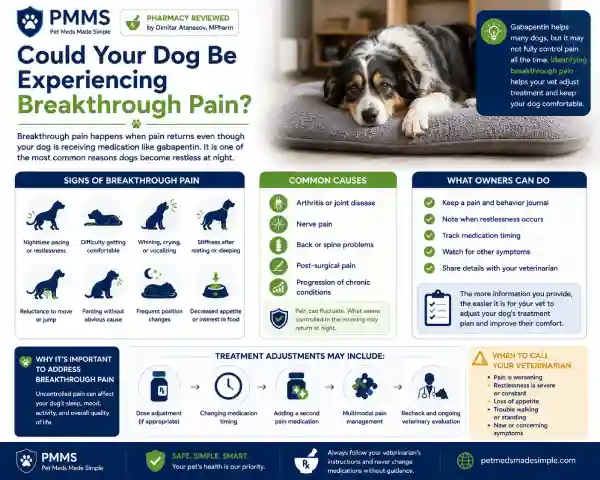
Yes.
Breakthrough pain occurs when discomfort returns despite treatment.
Signs may include:
- Nighttime pacing
- Panting
- Difficulty getting comfortable
- Whining
- Frequent position changes
Many owners searching why is my dog restless at night on gabapentin eventually discover that pain control needs adjustment rather than complete replacement.
Related articles:
- Why Is My Dog Still in Pain on Gabapentin?
- Why Does Gabapentin Stop Working in Dogs?
- Can Dogs Take Gabapentin Long-Term Safely?
Is Nighttime Restlessness More Common in Senior Dogs?
Very often.
Older dogs frequently experience:
- Arthritis
- Muscle loss
- Joint stiffness
- Cognitive decline
- Chronic pain
These conditions can become more noticeable after sunset when the household becomes quiet.
Senior dogs may wander, pace, or appear unable to settle comfortably even when receiving medication.
Can Anxiety Become Worse at Night?
In some dogs, yes.
Nighttime anxiety may be triggered by:
- Separation from family members
- Household changes
- Noise sensitivity
- Cognitive dysfunction
- Environmental stressors
Owners sometimes describe these dogs as:
- Unable to relax
- Constantly pacing
- Following family members around
- Sleeping lightly
Related articles:
- Can Gabapentin Cause Anxiety in Dogs?
- Can Dogs Take Gabapentin With Trazodone?
- What Causes Rebound Anxiety in Dogs?
Related Symptoms Owners Often Notice
Dogs that are restless at night often display additional symptoms.
Panting
Related article: Why Is My Dog Panting After Gabapentin?
Crying
Related article: Why Is My Dog Crying Despite Gabapentin?
Shaking
Related article: Can Gabapentin Cause Shaking in Dogs?
Weakness
Related article: Can Gabapentin Cause Weakness in Dogs?
Hyperactivity
Related article:Why Is My Dog Hyper After Gabapentin?
Wobbliness
Related article: Why Is My Dog Wobbly After Gabapentin?
Following Owners Around the House
Related article: Why Does My Dog Follow Me Everywhere After Medication?
Depression-Like Behavior During the Day
Related article: Can Gabapentin Cause Depression in Dogs?
When Nighttime Restlessness Becomes Concerning
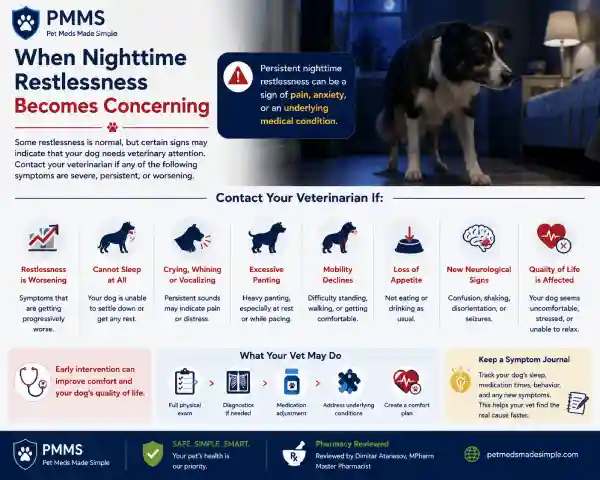
Contact your veterinarian if:
- Restlessness is worsening.
- Your dog cannot sleep at all.
- Crying accompanies the pacing.
- Panting becomes excessive.
- Mobility declines.
- Appetite decreases.
- New neurological signs appear.
- Quality of life is being affected.
Persistent nighttime discomfort should never be ignored.
Veterinarian Takeaway
Why is my dog restless at night on gabapentin? The most common causes include ongoing pain, arthritis, anxiety, cognitive dysfunction, medication timing issues, and progression of an underlying medical condition. While gabapentin helps many dogs feel more comfortable, it may not fully address every cause of nighttime restlessness. A veterinary evaluation can help determine whether treatment adjustments are needed.
Bottom Line
If you’re wondering why is my dog restless at night on gabapentin, remember that the medication is only one part of the picture.
Nighttime restlessness may be related to:
- Pain
- Arthritis
- Anxiety
- Cognitive decline
- Medication timing
- Other medical conditions
The good news is that many causes can be identified and managed once the underlying reason is understood. Careful monitoring and communication with your veterinarian are often the key to helping your dog sleep more comfortably.
Frequently Asked Questions
Why is my dog restless at night on gabapentin?
The most common reasons include pain, arthritis, anxiety, cognitive dysfunction, and medication timing issues.
Can gabapentin cause restlessness?
Some dogs may experience unusual behavioral reactions, but ongoing pain and underlying disease are often more common explanations.
Why does my dog pace all night on gabapentin?
Pacing may be caused by discomfort, anxiety, cognitive dysfunction, or breakthrough pain.
Can arthritis cause nighttime restlessness?
Yes. Arthritis often feels worse after long periods of rest.
Can anxiety cause nighttime pacing?
Absolutely. Anxiety is a common cause of restlessness in dogs.
Why is my senior dog restless at night despite medication?
Senior dogs frequently experience arthritis, cognitive decline, and chronic medical conditions that can disrupt sleep.
Can medication timing affect nighttime comfort?
Yes. Veterinarians sometimes review medication schedules when symptoms occur overnight.
Does nighttime restlessness mean gabapentin is not working?
Not necessarily. The medication may still be helping even if symptoms persist.
Should I change my dog’s dose?
No. Always consult your veterinarian before adjusting medication.
When should I call my veterinarian?
Contact your veterinarian if restlessness is severe, worsening, or affecting your dog’s quality of life.
Reviewed By
Pharmacy Reviewed By
Dimitar Atanasov, MPharm
Master Pharmacist | Medication Safety Educator
Editorial Policy
At Pet Meds Made Simple, our content is researched using current veterinary references, peer-reviewed veterinary literature, and established medication safety guidelines. Every article is reviewed for medication safety, accuracy, and owner education.
Read our full Editorial Policy:
Sources
- Merck Veterinary Manual
- American Veterinary Medical Association (AVMA)
- American Animal Hospital Association (AAHA)
- FDA Center for Veterinary Medicine
- Veterinary Information Network (VIN)
- American College of Veterinary Internal Medicine (ACVIM)
- Plumb’s Veterinary Drug Handbook
- Veterinary Pharmacology and Therapeutics
- Small Animal Clinical Pharmacology
- Peer-reviewed research on gabapentin use, canine pain management, and cognitive dysfunction in dogs
images created with AI –