Quick Answer
What causes rebound anxiety in dogs? Rebound anxiety occurs when anxiety symptoms temporarily return or appear more intense as the effects of certain medications wear off. It is most commonly associated with fast-acting anxiety medications such as alprazolam (Xanax) and occasionally other sedative medications. Rebound anxiety may cause dogs to appear more nervous, restless, clingy, fearful, or reactive after medication effects decrease.
Many owners feel confused when anxiety medication seems to help initially but later appears to make anxiety worse.
A common description is:
“My dog was calm for a few hours, then became even more anxious.”
This experience may be related to rebound anxiety.
When Owners Commonly Ask This
Many owners begin searching after noticing:
- My dog is anxious again after medication.
- My dog’s medication stopped working suddenly.
- My dog seems worse after Xanax wears off.
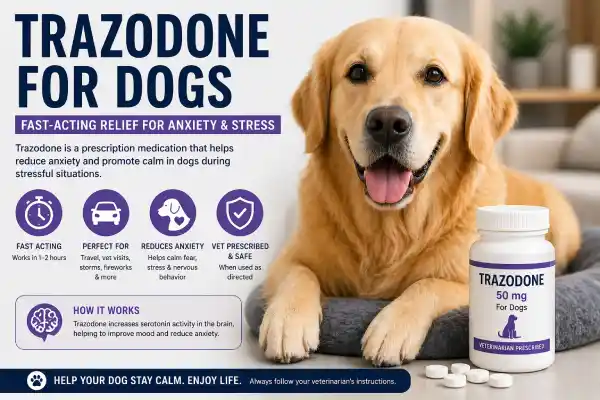
- My dog becomes nervous after trazodone.
- My dog is panicking after medication.
- My dog gets clingy when medication wears off.
- My dog seems more fearful than before.
These situations can be frustrating because the medication initially appears successful.
What Is Rebound Anxiety?
Rebound anxiety refers to a temporary increase in anxiety symptoms that may occur as the effects of certain medications decline.
Instead of returning to their previous anxiety level, some dogs may appear:
- More nervous
- More reactive
- More fearful
- More restless
- More clingy
The effect is usually temporary.
However, it can be alarming for owners who are not expecting it.
Why Does Rebound Anxiety Happen?
Several factors may contribute.
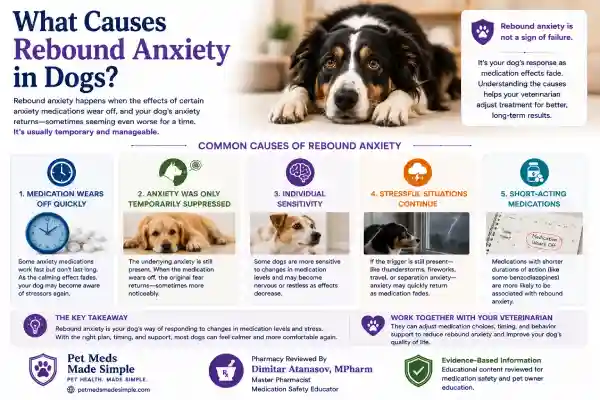
The Medication Wears Off Quickly
Some anxiety medications have relatively short durations of action.
As the calming effect fades, dogs may become aware of stressors again.
This can make anxiety seem stronger than before.
Anxiety Was Only Temporarily Suppressed
The underlying anxiety may still be present.
Once medication effects diminish, the original fear returns.
Owners sometimes interpret this as the medication causing anxiety when it may actually be revealing anxiety that never fully resolved.
Individual Sensitivity
Every dog responds differently.
Some dogs are simply more sensitive to changes in medication levels.
These dogs may experience:
- Restlessness
- Nervousness
- Increased vigilance
as medication effects decrease.
Stressful Situations Continue
If the trigger remains present, anxiety may quickly return.
Examples include:
- Thunderstorms
- Fireworks
- Travel
- Veterinary visits
- Separation anxiety
The medication may wear off before the stressful event ends.
What Causes Rebound Anxiety in Dogs?
Which Medications Are Most Commonly Associated With Rebound Anxiety?
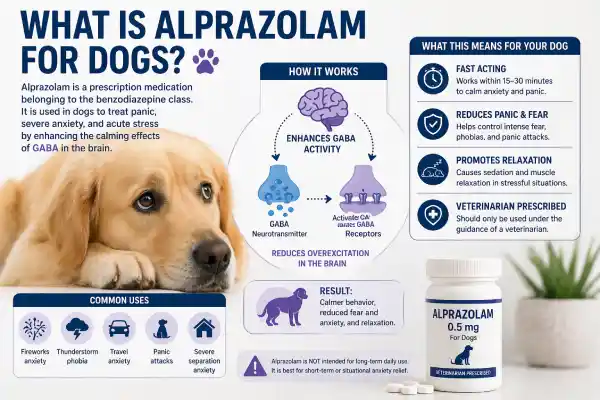
Alprazolam (Xanax)
Xanax is the medication most commonly discussed in relation to rebound anxiety.
Because it works quickly and has a relatively short duration of action, some dogs may experience increased anxiety as effects wear off.
Related article:
Can Dogs Develop Tolerance to Xanax?
Diazepam
Similar effects may occasionally occur with diazepam.
These medications belong to the benzodiazepine family.
Other Short-Acting Sedatives
Some dogs may experience behavioral changes as other fast-acting medications wear off.
However, true rebound anxiety is most often discussed with benzodiazepines.
Is Rebound Anxiety the Same as Medication Failure?
No.
This is one of the biggest misconceptions.
Medication failure means the medication is not adequately controlling anxiety.
Rebound anxiety means:
- The medication worked initially
- Anxiety increased as effects faded
The distinction is important because treatment approaches may differ.
What Does Rebound Anxiety Look Like?
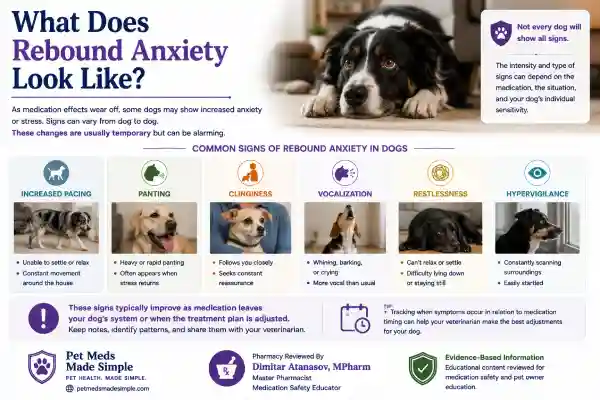
Owners often notice:
Increased Pacing
Dogs may seem unable to relax.
Panting
Stress-related panting often returns.
Clinginess
Many dogs seek reassurance from owners.
Related article:
Why Does My Dog Follow Me Everywhere After Medication?
Vocalization
Some dogs begin:
- Whining
- Barking
- Crying
Restlessness
Dogs may appear unable to settle.
Hypervigilance
The dog may constantly monitor their surroundings.
Related article:
Why Is My Dog Sensitive to Noise Suddenly?
Can Rebound Anxiety Be Prevented?
Sometimes.
Veterinarians may reduce the risk by:
Selecting Appropriate Medications
Different medications have different durations of action.
Adjusting Timing
Timing medication appropriately can help maintain coverage during stressful events.
Using Long-Term Anxiety Management
Some dogs benefit from medications designed for ongoing anxiety control.
Examples include:
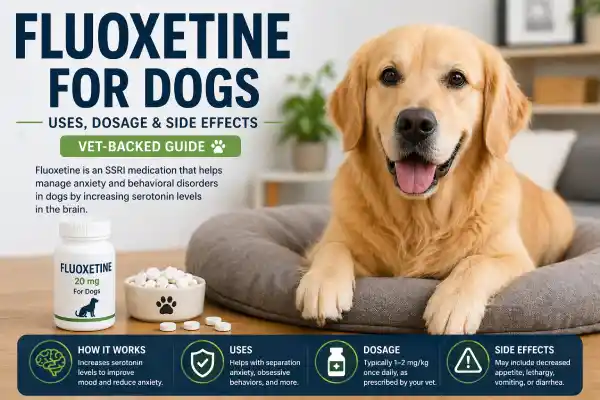
- Fluoxetine (Prozac)
- Other long-term anxiety treatments
Combining Medication With Behavioral Strategies
Medication works best when paired with:
- Training
- Environmental management
- Behavior modification
Is Rebound Anxiety Dangerous?
In most cases, rebound anxiety is not considered a medical emergency.
However, it can significantly affect a dog’s:
- Comfort
- Behavior
- Quality of life
- Response to treatment
Many dogs experience only mild symptoms that improve as medication strategies are adjusted.
The bigger concern is often the stress and fear the dog experiences during these episodes.
Can Rebound Anxiety Make Anxiety Look Worse?
Yes.
This is one reason rebound anxiety can be confusing.
Owners often describe:
“The medication worked, but now my dog seems worse than before.”
What is actually happening may be:
- Medication temporarily reduced anxiety.
- Medication effects began to fade.
- Anxiety returned quickly.
- The contrast made symptoms appear more severe.
Because owners have just seen their dog relaxed, the return of anxiety may feel more dramatic.
What Owners Can Do If Rebound Anxiety Occurs
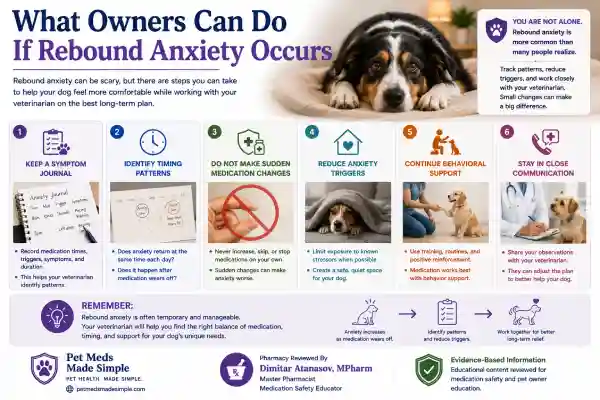
Keep a Symptom Journal
Tracking patterns can be extremely helpful.
Record:
- Medication times
- Anxiety episodes
- Triggers
- Duration of symptoms
Veterinarians often use this information to identify patterns.
Identify Timing Patterns
Ask yourself:
- Does anxiety return at the same time every day?
- Does it occur shortly after medication wears off?
- Does it happen only during specific events?
Timing clues are often important.
Avoid Sudden Medication Changes
Owners should never:
- Increase doses
- Skip doses
- Stop medications abruptly
without veterinary guidance.
Sudden medication changes can sometimes worsen behavioral symptoms.
Reduce Anxiety Triggers
If possible, limit exposure to known stressors.
Examples include:
- Fireworks
- Loud noises
- Crowded environments
- Stressful travel situations
Related article:
Why Is My Dog Sensitive to Noise Suddenly?
Continue Behavioral Support
Helpful strategies include:
- Safe spaces
- Consistent routines
- Positive reinforcement
- Environmental enrichment
Medication is rarely the entire solution.
How Veterinarians Manage Rebound Anxiety
Veterinarians have several options depending on the situation.
Adjusting Medication Timing
Sometimes the issue is simply that medication coverage does not last long enough.
Adjusting timing may help.
Evaluating Medication Choice
Some medications are better suited for:
- Chronic anxiety
- Situational anxiety
- Noise phobias
- Separation anxiety
Treatment plans are individualized.
Long-Term Anxiety Management
Dogs experiencing rebound anxiety may benefit from medications designed for more consistent anxiety control.
Examples may include:
- Fluoxetine (Prozac)
- Clomipramine
These medications often provide steadier anxiety management.
Combination Therapy
Some dogs benefit from carefully supervised combination treatment.
Related article:
Can Dogs Take Prozac and Trazodone Together?
Behavioral Modification
Veterinarians frequently combine medication with:
- Desensitization training
- Counterconditioning
- Environmental management
This approach often provides the best long-term results.
When Rebound Anxiety Becomes Concerning
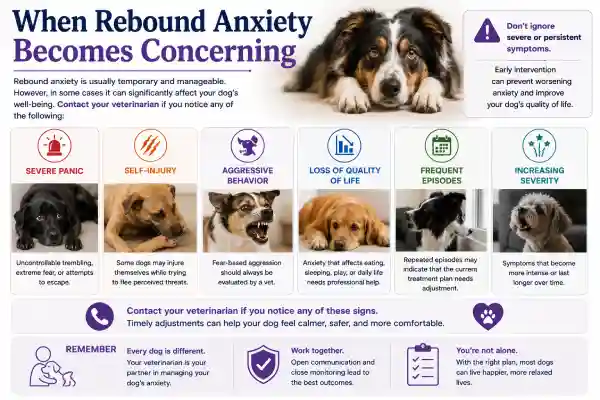
Owners should seek veterinary advice if rebound anxiety causes:
Severe Panic
Examples include:
- Uncontrollable trembling
- Extreme fear
- Attempts to escape
Self-Injury
Some dogs may injure themselves while trying to flee perceived threats.
Aggressive Behavior
Fear-based aggression should always be evaluated.
Loss of Quality of Life
Anxiety becomes a serious concern when it affects:
- Eating
- Sleeping
- Family interaction
- Daily activities
Frequent Episodes
Repeated rebound anxiety episodes may indicate that the current treatment plan needs adjustment.
Related Symptoms Owners Often Notice
Dogs experiencing rebound anxiety may also show:
Clinginess
Many dogs seek reassurance from owners.
Related article:
Why Does My Dog Follow Me Everywhere After Medication?
Noise Sensitivity
Dogs may become more reactive to sounds.
Related article:
Why Is My Dog Sensitive to Noise Suddenly?
Nighttime Panic
Symptoms sometimes become more noticeable during quiet nighttime hours.
Related article:
Why Does My Dog Panic at Night?
Restlessness
Dogs may struggle to relax.
Increased Vocalization
Whining and barking may increase.
When Owners Should Contact Their Veterinarian
Contact your veterinarian if:
- Anxiety appears worse after medication wears off
- Symptoms become more severe over time
- Panic episodes develop
- Appetite changes occur
- Sleep becomes disrupted
- Aggression develops
- The medication no longer seems effective
- New behavioral symptoms appear
The sooner medication-related concerns are evaluated, the easier they often are to manage.
Veterinarian Takeaway
What causes rebound anxiety in dogs? Rebound anxiety occurs when anxiety symptoms temporarily increase as the effects of certain medications fade. It is most commonly associated with short-acting anxiety medications such as alprazolam (Xanax). Dogs may appear more nervous, clingy, restless, or fearful during these periods. Although rebound anxiety is often manageable, persistent or severe symptoms should be discussed with a veterinarian so treatment strategies can be adjusted appropriately.What Causes Rebound Anxiety in Dogs?
Bottom Line
What causes rebound anxiety in dogs? The most common causes include medication effects wearing off, underlying anxiety remaining unresolved, individual sensitivity to medication changes, and ongoing exposure to stressful triggers.
While rebound anxiety can be frustrating, it does not necessarily mean treatment has failed.
Many dogs improve significantly once veterinarians adjust:
- Medication timing
- Medication selection
- Behavioral strategies
- Long-term anxiety management plans
Owners should never adjust anxiety medications without veterinary guidance.
Frequently Asked Questions – What Causes Rebound Anxiety in Dogs?
What is rebound anxiety in dogs?
Rebound anxiety refers to a temporary increase in anxiety symptoms as certain medication effects wear off.
Which medications are most commonly associated with rebound anxiety?
Alprazolam (Xanax) is most commonly discussed in relation to rebound anxiety.
Can trazodone cause rebound anxiety?
It is less commonly associated with rebound anxiety than benzodiazepines, but behavioral changes can occur as medications wear off.
Does rebound anxiety mean the medication is not working?
Not necessarily. The medication may work initially but symptoms return as effects fade.
Can rebound anxiety make dogs seem worse than before?
Yes. The contrast between calmness and returning anxiety can make symptoms feel more dramatic.
Is rebound anxiety dangerous?
Usually not, but severe anxiety episodes should be evaluated by a veterinarian.
How can veterinarians reduce rebound anxiety?
Strategies may include medication adjustments, timing changes, combination therapy, and behavioral modification.
Can long-term anxiety medications help?
Many dogs benefit from medications designed for more consistent anxiety control.
Should I change the dose myself?
No. Never adjust anxiety medications without veterinary guidance.
When should I call my veterinarian?
Contact your veterinarian if symptoms worsen, become severe, or interfere with your dog’s quality of life.
Reviewed By
Pharmacy Reviewed By
Dimitar Atanasov, MPharm
Master Pharmacist | Medication Safety Educator
Editorial Policy
Sources
- American Veterinary Medical Association (AVMA)
- American Animal Hospital Association (AAHA)
- Merck Veterinary Manual
- Plumb’s Veterinary Drug Handbook
- FDA Center for Veterinary Medicine
- American College of Veterinary Behaviorists (ACVB)
- Veterinary Behavioral Medicine Guidelines
- Veterinary Pharmacology and Therapeutics
- Small Animal Clinical Pharmacology
- Peer-Reviewed Research on Canine Anxiety Disorders
images created with AI – What Causes Rebound Anxiety in Dogs?