
Quick Answer
Why does my dog follow me everywhere after medication? Some dogs become unusually clingy after medication because of sedation, confusion, anxiety, changes in perception, or the comforting effects of being near their owner. Certain medications can temporarily alter behavior, causing dogs to seek reassurance and stay close to familiar people. While mild clinginess is often temporary, persistent behavioral changes should be discussed with a veterinarian.
Many owners become concerned when their dog suddenly starts following them from room to room after taking medication. A dog that normally enjoys independence may suddenly refuse to leave your side, watch your every movement, or insist on staying physically close throughout the day.
If you’ve recently started a new medication and are wondering “Why does my dog follow me everywhere after medication?”, you’re not alone. This behavioral change is more common than many owners realize.
When Owners Commonly Ask This
Many owners begin searching for answers after noticing:
- My dog won’t leave me alone after medication.
- My dog follows me to every room.
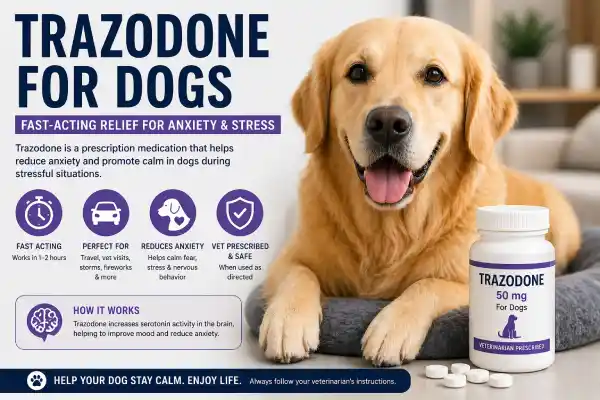
- My dog became clingy after trazodone.
- My dog suddenly wants constant attention.
- My dog seems attached after anxiety medication.
- My dog follows me everywhere after surgery medication.
- My dog acts needy after medication.
Sometimes the behavior appears within hours of starting treatment.
Other times it develops gradually over several days.
Why Does My Dog Follow Me Everywhere After Medication?
In many cases, medication changes how a dog feels physically or emotionally.
When dogs feel different, uncertain, sleepy, confused, or anxious, they often seek comfort from the person they trust most.
For most dogs, that person is their owner.
Following behavior can therefore be a natural response to:
- Feeling unusual
- Feeling vulnerable
- Mild confusion
- Temporary anxiety
- Seeking reassurance
This does not necessarily mean something is wrong.
However, understanding the possible reasons can help determine whether the behavior is expected or requires veterinary attention.
Why Does My Dog Follow Me Everywhere After Medication?
7 Common Reasons Dogs Become Clingy After Medication
Sedation Can Make Dogs Feel Vulnerable
Many medications can cause drowsiness.
When dogs feel sleepy or less alert than normal, they may seek additional comfort and security.
Being near their owner often helps them feel safer.
This is especially common with:
- Trazodone
- Gabapentin
- Benadryl
- Certain pain medications
Some dogs become “shadow dogs” for a day or two after receiving sedating medications.
Mild Confusion
Certain medications may temporarily affect awareness and perception.
Dogs experiencing mild confusion may:
- Follow owners closely
- Watch owners constantly
- Appear uncertain
- Become more dependent
Related article:
Can Anxiety Medication Cause Confusion in Dogs?
Anxiety About Unfamiliar Feelings
Dogs do not understand medication the way humans do.
They simply know they feel different.
This unfamiliar sensation can sometimes cause anxiety.
A dog may stay close because:
- You are familiar
- You provide reassurance
- You represent safety
Ironically, medications intended to reduce anxiety can sometimes trigger temporary clinginess during the adjustment period.
Physical Weakness
Some medications may cause:
- Weakness
- Reduced coordination
- Fatigue
A dog that feels physically less capable may stay closer to their owner.
Related article:
Can Anxiety Medication Cause Weakness in Dogs?
Changes in Vision or Perception
Although uncommon, some medications may temporarily affect a dog’s awareness of their surroundings.
Dogs that feel uncertain may rely more heavily on familiar people.
Recovery After Stress
If medication was given during a stressful event, such as:
- Veterinary visits
- Fireworks
- Thunderstorms
- Travel
the dog may simply be seeking reassurance afterward.
Learned Attention-Seeking
Dogs quickly learn which behaviors produce attention.
If following behavior consistently results in:
- Petting
- Talking
- Comfort
the behavior may become temporarily reinforced.
Which Medications Are Most Commonly Associated With Clinginess?

Potential examples include:
Trazodone
One of the most commonly reported medications associated with clingy behavior.
Related article:
Why Does My Dog Sleep All Day After Trazodone?
Gabapentin
May occasionally cause increased dependence on owners.
Benadryl
Sedation may contribute to clingy behavior.
Pain Medications
Dogs recovering from pain often seek additional comfort.
Is Clinginess After Medication Normal?
In many cases, yes.
A dog that suddenly follows you everywhere after starting medication is often experiencing a temporary adjustment period.
Many medications affect:
- Energy levels
- Awareness
- Anxiety levels
- Sleep patterns
- Physical comfort
Because of these changes, dogs frequently seek reassurance from the people they trust most.
Mild clinginess is often considered normal when:
- It starts shortly after medication begins
- The dog remains otherwise comfortable
- Appetite remains normal
- Drinking remains normal
- The behavior gradually improves
Many owners notice that the behavior fades after a few days as the dog becomes accustomed to the medication.
How Long Does Clinginess Usually Last?
The answer depends on the medication and the individual dog.
Some dogs only seem clingy for:
- Several hours
- One day
- A few days
Others may show behavioral changes for a week or two while adjusting to treatment.
Dogs starting long-term anxiety medications may require more time to adapt.
The good news is that most temporary medication-related clinginess improves rather than worsens.
When Clinginess Becomes Concerning
Although mild clinginess is often harmless, certain situations deserve closer attention.
Contact your veterinarian if your dog becomes:
Extremely Anxious
If your dog appears distressed rather than comforted, further evaluation may be needed.
Unable to Settle
Dogs that pace continuously, whine excessively, or cannot relax may be experiencing something beyond normal adjustment.
Severely Confused
Confusion can sometimes indicate medication intolerance or another medical issue.
Related article:
Can Anxiety Medication Cause Confusion in Dogs?
Weak or Unsteady
A clingy dog that also struggles to stand, walk, or balance should be evaluated.
Related article:
Can Anxiety Medication Cause Weakness in Dogs?
Less Interested in Food or Water
Significant appetite changes deserve attention.
Related article:
Can Anxiety Medication Affect Appetite in Dogs?
Related Symptoms Owners Often Notice
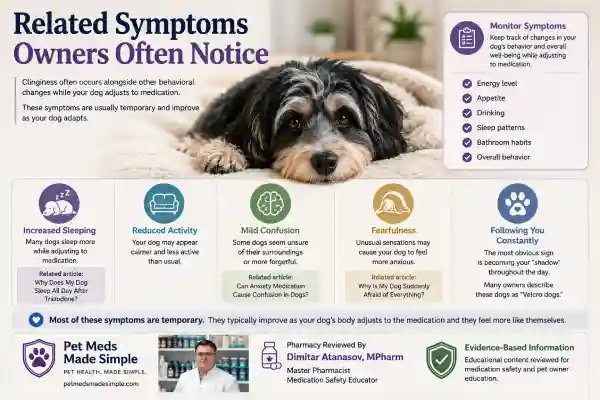
Clinginess often occurs alongside other behavioral changes.
Increased Sleeping
Many dogs sleep more while adjusting to medication.
Related article:
Why Does My Dog Sleep All Day After Trazodone?
Reduced Activity
Dogs may appear calmer than usual.
Mild Confusion
Some dogs seem unsure of their surroundings.
Fearfulness
Dogs experiencing unusual sensations may seek reassurance.
Related article:
Why Is My Dog Suddenly Afraid of Everything?
Following Owners Constantly
The most obvious sign is becoming your shadow throughout the day.
Many owners describe these dogs as:
“Velcro dogs.”
What Owners Can Do If Their Dog Becomes Clingy
Stay Calm
Dogs often mirror human emotions.
Remaining calm can help reassure your pet.
Provide Reassurance
Gentle attention is usually appropriate.
Maintain Normal Routines
Predictability helps many dogs feel secure.
Try to maintain:
- Feeding schedules
- Walk schedules
- Bedtime routines
Monitor Symptoms
Keep track of:
- Energy level
- Appetite
- Drinking
- Sleep
- Behavior changes
Give the Medication Time
Many behavioral changes improve naturally as adjustment occurs.
Should You Encourage or Discourage Clinginess?

In most situations, neither extreme is necessary.
You do not need to ignore your dog completely.
You also do not need to reinforce every instance of following behavior.
The goal is balance.
Provide reassurance while encouraging normal independence whenever possible.
Most medication-related clinginess resolves naturally.
When Owners Should Contact Their Veterinarian
Contact your veterinarian if:
- Clinginess appears suddenly and severely
- Symptoms continue worsening
- Confusion develops
- Weakness develops
- Appetite decreases significantly
- Vomiting occurs
- Your dog appears distressed
- New symptoms appear
- The behavior persists beyond the expected adjustment period
A veterinarian can determine whether the behavior is medication-related or caused by another issue.
Veterinarian Takeaway
Why does my dog follow me everywhere after medication? Many dogs become temporarily clingy after medication because they feel sleepy, confused, anxious, physically vulnerable, or simply different than usual. Staying close to their owner provides reassurance and comfort during this adjustment period. In most cases, mild clinginess improves as the dog becomes accustomed to treatment. However, severe behavioral changes, confusion, weakness, or persistent symptoms should be discussed with a veterinarian.
Bottom Line
Why does my dog follow me everywhere after medication? In many cases, it is a temporary behavioral change caused by medication effects, adjustment to treatment, mild confusion, sedation, or the desire for reassurance.
Most dogs improve within days as they adapt to the medication.
While mild clinginess is often normal, owners should monitor for additional symptoms such as weakness, confusion, vomiting, or worsening anxiety.
When in doubt, a conversation with your veterinarian is always the safest approach.
Frequently Asked Questions – Why Does My Dog Follow Me Everywhere After Medication?
Why is my dog suddenly attached to me after medication?
Many dogs seek reassurance when they feel different, sleepy, or uncertain after starting medication.
Can trazodone make dogs clingy?
Yes. Some owners report increased clinginess while dogs adjust to trazodone.
Can anxiety medication change my dog’s personality?
Temporary behavioral changes may occur while some dogs adjust to medication.
Is it normal for my dog to follow me everywhere after medication?
Mild clinginess is often normal and frequently temporary.
How long does medication-related clinginess last?
Many dogs improve within a few days, though adjustment periods vary.
Can medication cause separation anxiety?
Medication itself usually does not cause separation anxiety, but temporary behavioral changes may occur.
Why does my dog stare at me constantly after medication?
Some dogs seek reassurance or appear more dependent while adjusting to medication.
Should I worry if my dog won’t leave my side?
Not necessarily. However, severe clinginess combined with other symptoms deserves veterinary attention.
Can pain medication make dogs clingy?
Yes. Dogs recovering from pain may seek additional comfort and reassurance.
When should I call my veterinarian?
Contact your veterinarian if clinginess is severe, worsening, or accompanied by confusion, weakness, vomiting, or appetite changes.
Reviewed By
Pharmacy Reviewed By
Dimitar Atanasov, MPharm
Master Pharmacist | Medication Safety Educator
Editorial Policy
Sources
- American Veterinary Medical Association (AVMA)
- American Animal Hospital Association (AAHA)
- Merck Veterinary Manual
- Plumb’s Veterinary Drug Handbook
- FDA Center for Veterinary Medicine
- American College of Veterinary Behaviorists (ACVB)
- Veterinary Behavioral Medicine Guidelines
- Veterinary Pharmacology and Therapeutics
- Small Animal Internal Medicine
- Peer-Reviewed Research on Canine Behavior and Anxiety