Quick Answer
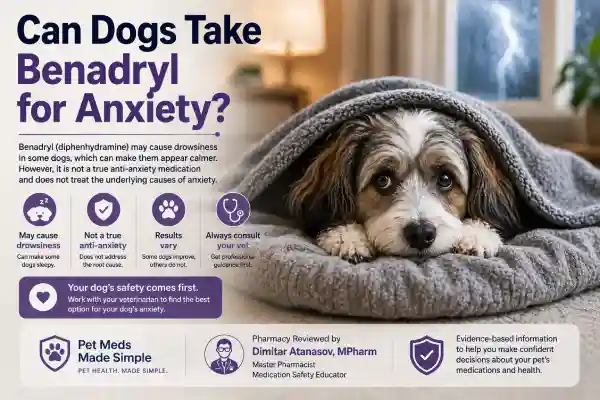
Can dogs take Benadryl for anxiety? Benadryl (diphenhydramine) is sometimes used in dogs and may cause drowsiness, which can make some dogs appear calmer. However, Benadryl is not considered a true anti-anxiety medication and does not treat the underlying causes of anxiety. While some dogs become sleepy after taking Benadryl, others show little improvement in anxiety symptoms. Pet owners should always consult their veterinarian before giving Benadryl or any medication to a dog.
If you’ve ever wondered whether a common allergy medication could help calm an anxious dog, you’re not alone. Many owners search “Can dogs take Benadryl for anxiety?” before thunderstorms, fireworks, travel, or veterinary visits. Understanding what Benadryl can—and cannot—do is important before using it as an anxiety solution.
When Owners Commonly Ask This
Many owners consider Benadryl when they notice:
- Fear of thunderstorms
- Fireworks anxiety
- Travel stress
- Separation anxiety
- Panic during veterinary visits
- Nighttime anxiety
- General nervousness
Common searches include:
- Will Benadryl calm my dog?
- Can Benadryl help with fireworks?
- Is Benadryl good for dog anxiety?
- Does Benadryl make dogs sleepy?
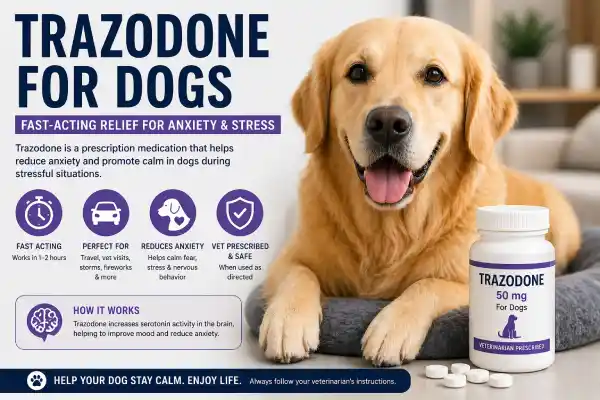
- Can I use Benadryl instead of trazodone?
What Is Benadryl?
Benadryl is the brand name for diphenhydramine, an antihistamine commonly used to treat:
- Allergies
- Itching
- Insect bites
- Mild allergic reactions
In both humans and dogs, diphenhydramine may cause drowsiness.
This sedating effect is one reason some owners consider using it for anxiety-related situations.
However, sedation and anxiety relief are not the same thing.
How Does Benadryl Work?
Benadryl blocks histamine receptors in the body.
Histamine is involved in allergic reactions and itching.
By blocking histamine, Benadryl may help reduce:
- Sneezing
- Itching
- Hives
- Allergy symptoms
The medication also crosses into the brain, where it can cause:
- Sleepiness
- Mild sedation
- Reduced alertness
This is why some dogs appear calmer after taking it.
Can Dogs Take Benadryl for Anxiety?
Can Dogs Take Benadryl for Anxiety?
Yes, dogs can sometimes take Benadryl under veterinary guidance, but it is important to understand its limitations.
Can dogs take Benadryl for anxiety? Technically yes, but veterinarians generally do not consider Benadryl a primary anxiety medication.
The reason is simple:
Benadryl may make a dog sleepy.
It does not directly address the brain pathways involved in anxiety disorders.
A sleepy dog can still feel afraid.
This distinction is important because owners may mistake sedation for genuine anxiety relief.
Why Benadryl Doesn’t Always Work for Anxiety
Many owners report mixed results.
Some dogs become sleepy and seem calmer.
Others remain fully anxious despite appearing tired.
For example, a dog experiencing fireworks anxiety may still:
- Tremble
- Pant
- Hide
- Pace
even if Benadryl causes mild sedation.
This is why veterinarians often prefer medications specifically designed for anxiety management.
Can Benadryl Help During Thunderstorms or Fireworks?
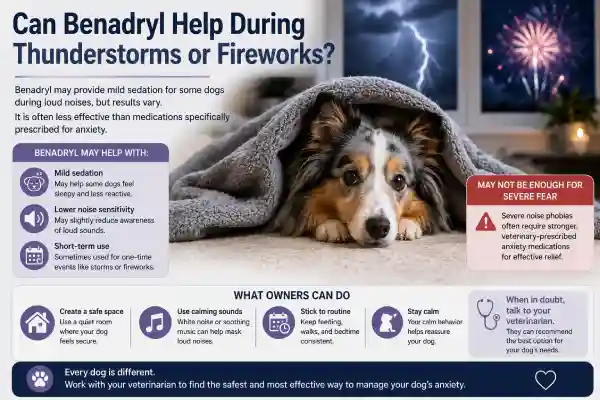
Sometimes, but results vary significantly.
Benadryl may provide mild sedation for some dogs.
However, severe noise phobias often require more effective treatments.
Dogs with intense fear may benefit more from medications specifically prescribed for anxiety.
Related articles:
Best Anxiety Medication for Dogs: Comparison Guide
What Is the Safest Anxiety Medication for Dogs?
Which Dogs May Respond Better to Benadryl?
Some dogs appear to benefit more than others.
Examples may include dogs with:
- Mild situational anxiety
- Travel nervousness
- Temporary stress
- Concurrent allergy symptoms
However, even in these situations, results can vary.
Every dog responds differently.
Benadryl vs True Anxiety Medications
| Medication | Causes Sedation | Treats Anxiety Directly |
|---|---|---|
| Benadryl | Yes | Limited |
| Trazodone | Yes | Yes |
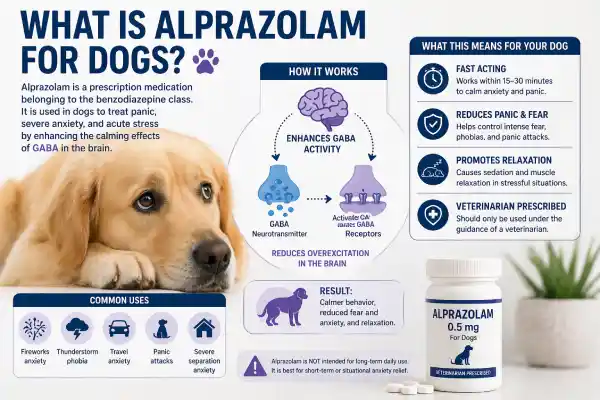
| Xanax (Alprazolam) | Yes | Yes |
| Fluoxetine | Usually No | Yes |
| Clomipramine | Sometimes | Yes |
This table highlights why Benadryl is not usually the first choice for significant anxiety disorders.
Related Symptoms Owners Often Notice
Clinginess
Some anxious dogs become unusually attached to their owners.
Related article:
Why Is My Dog Clingy After Anxiety Medication?
Nighttime Panic
Fear often becomes more noticeable after dark.
Related article:
Why Does My Dog Panic at Night?
Weakness
Sedating medications can sometimes contribute to weakness.
Related article:
Can Anxiety Medication Cause Weakness in Dogs?
Sleepiness
Dogs may sleep more than usual after sedating medications.
Related article:
Why Does My Dog Sleep All Day After Trazodone?
Vomiting
Some medications can occasionally upset the stomach.
Related article:
Can Anxiety Medication Cause Vomiting?
When Benadryl May Not Be Appropriate
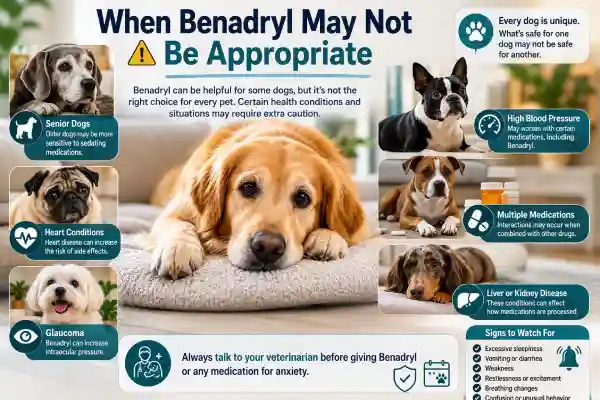
Although Benadryl is commonly used in dogs, it is not the right choice for every pet.
Certain dogs may require additional caution, including:
- Senior dogs
- Dogs with glaucoma
- Dogs with certain heart conditions
- Dogs with high blood pressure
- Dogs taking multiple medications
- Dogs with liver disease
- Dogs with urinary retention problems
Because Benadryl can cause sedation and other side effects, veterinary guidance is important before use.
This is especially true if your dog already receives anxiety medication.
Potential Side Effects of Benadryl
Most dogs tolerate Benadryl reasonably well, but side effects can occur.
Common side effects include:
Sleepiness
This is the most frequently reported effect.
Many owners interpret sleepiness as anxiety relief.
However, a sleepy dog may still feel anxious internally.
Dry Mouth
Some dogs drink more water after taking Benadryl.
Reduced Energy
Temporary lethargy may occur.
Mild Digestive Upset
Occasionally dogs may develop:
- Nausea
- Vomiting
- Reduced appetite
Excitement Instead of Sedation
Surprisingly, some dogs experience the opposite reaction.
Rather than becoming sleepy, they may become:
- More restless
- More active
- More vocal
This paradoxical response is uncommon but possible.
Can Benadryl Make Anxiety Worse?
In some dogs, yes.
While many owners expect Benadryl to calm their dog, the medication can occasionally produce unexpected behavioral effects.
A dog experiencing paradoxical excitement may appear:
- More anxious
- More restless
- More agitated
- Less able to settle
This is one reason Benadryl should not automatically be considered a reliable anxiety treatment.
Benadryl vs Trazodone for Anxiety
Many owners compare Benadryl and trazodone.
Although both medications may cause sleepiness, they work very differently.
Benadryl
- Primarily an antihistamine
- Designed for allergies
- May cause sedation
- Limited anxiety control
Trazodone
- Specifically used for anxiety management
- Commonly prescribed by veterinarians
- Better studied for anxiety-related situations
- Often more effective for fireworks, thunderstorms, travel, and veterinary visits
For dogs with significant anxiety, veterinarians frequently prefer trazodone or other dedicated anxiety medications.
Related article:
Best Anxiety Medication for Dogs: Comparison Guide
What Owners Can Do Instead

If Benadryl is not providing sufficient relief, several alternatives may help.
Work With Your Veterinarian
A veterinary evaluation can identify:
- Anxiety triggers
- Medical contributors
- Appropriate treatment options
Behavioral Training
Behavior modification often plays a major role in anxiety management.
Environmental Changes
Simple adjustments can help reduce stress.
Examples include:
- Quiet rooms
- White noise
- Safe hiding spaces
- Predictable routines
Veterinary Anxiety Medications
For dogs with moderate to severe anxiety, prescription medications are often more effective.
Related article:
What Is the Safest Anxiety Medication for Dogs?
Which Dogs May Need Extra Monitoring?
Certain dogs should be monitored more closely when taking Benadryl.
Senior Dogs
Older dogs may be more sensitive to sedating medications.
Dogs Already Taking Anxiety Medication
Combining medications can sometimes increase side effects.
Dogs With Medical Conditions
Underlying health problems may influence how the medication is processed.
Dogs Experiencing New Symptoms
Behavior changes, weakness, or gastrointestinal symptoms deserve attention.
Related articles:
Can Senior Dogs Safely Take Anxiety Medication?
Can Anxiety Medication Cause Weakness in Dogs?
When Owners Should Contact Their Veterinarian
Contact your veterinarian if:
- Anxiety remains severe despite Benadryl
- Your dog appears excessively sedated
- Vomiting develops
- Weakness occurs
- Breathing changes occur
- Confusion develops
- Symptoms worsen
- Your dog has underlying health conditions
A veterinarian can determine whether Benadryl is appropriate and whether a more effective anxiety treatment may be needed.
Veterinarian Takeaway
Can dogs take Benadryl for anxiety? Yes, some dogs may take Benadryl under veterinary guidance, and its sedating effects can make certain dogs appear calmer. However, Benadryl is not considered a true anti-anxiety medication and does not directly treat the underlying causes of anxiety. While it may help some dogs with mild situational stress, many dogs with significant anxiety benefit more from treatments specifically designed for anxiety management.
Bottom Line
Can dogs take Benadryl for anxiety? They can, but Benadryl is not usually the most effective option for anxiety disorders. The medication may cause sleepiness, which can sometimes reduce activity and make a dog appear calmer. However, sedation does not necessarily mean anxiety has improved.
For mild, temporary situations, Benadryl may provide some benefit under veterinary guidance. For ongoing or severe anxiety, owners should work with their veterinarian to explore more effective treatment options tailored to their dog’s needs.
Frequently Asked Questions
Can Benadryl calm an anxious dog?
Sometimes. Benadryl may cause sleepiness, but it does not directly treat anxiety.
Does Benadryl work for fireworks anxiety?
It may help some dogs become sleepy, but it is often less effective than medications specifically prescribed for anxiety.
Is Benadryl safe for dogs?
Many dogs can take Benadryl under veterinary guidance, but it is not appropriate for every dog.
Can Benadryl replace trazodone?
Usually not. Trazodone is generally considered more effective for anxiety management.
Why doesn’t Benadryl help my dog’s anxiety?
Benadryl primarily treats allergies and causes sedation. Anxiety may persist even when a dog feels sleepy.
Can Benadryl make dogs sleepy?
Yes. Sleepiness is one of the most common side effects.
Can Benadryl cause vomiting?
Occasionally. Mild gastrointestinal upset can occur.
Can Benadryl make dogs hyper?
Yes. Some dogs experience paradoxical excitement instead of sedation.
Can senior dogs take Benadryl?
Many can, but senior dogs may require additional caution and monitoring.
When should I call my veterinarian?
Contact your veterinarian if anxiety remains severe, side effects develop, or symptoms worsen.
Reviewed By
Pharmacy Reviewed By
Dimitar Atanasov, MPharm
Master Pharmacist | Medication Safety Educator
Dimitar Atanasov is a licensed Master Pharmacist with experience in pharmacology, medication safety, toxicology, and patient education. He reviews educational content to help pet owners better understand medication effects, side effects, and treatment options.
Editorial Policy
Pet Meds Made Simple publishes evidence-based educational content developed from veterinary references, pharmacology resources, medication safety literature, and peer-reviewed research.
Our mission is to help pet owners make informed decisions while supporting—not replacing—the veterinarian-client relationship.
Learn more about our editorial standards and review process:
Sources
- American Veterinary Medical Association (AVMA)
- American Animal Hospital Association (AAHA)
- Merck Veterinary Manual
- Plumb’s Veterinary Drug Handbook
- FDA Center for Veterinary Medicine
- Veterinary Pharmacology and Therapeutics
- American College of Veterinary Behaviorists (ACVB)
- Peer-Reviewed Canine Anxiety Research
- Small Animal Clinical Pharmacology References
- Veterinary Behavioral Medicine Guidelines
Medical Disclaimer
This article is for educational purposes only and does not replace professional veterinary advice. Always consult your veterinarian before giving Benadryl or any medication to your dog. Never start, stop, or adjust medications without professional guidance.
Images generated with AI – Can Dogs Take Benadryl for Anxiety