Quick Answer
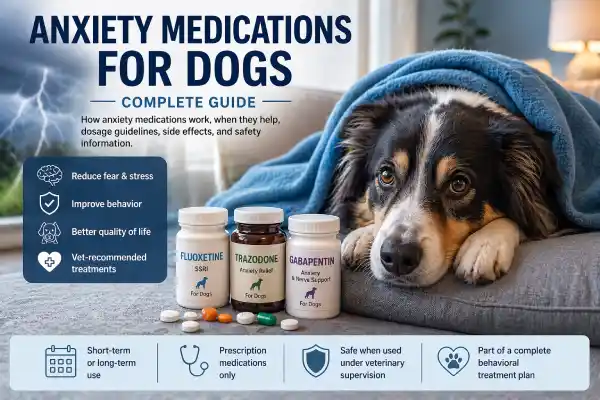
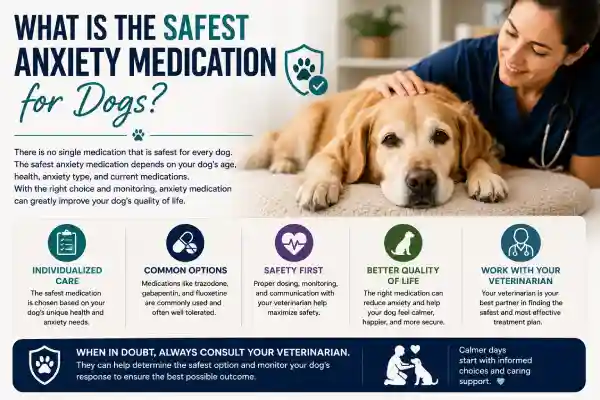
What is the safest anxiety medication for dogs? There is no single anxiety medication that is safest for every dog. The safest anxiety medication depends on your dog’s age, health conditions, current medications, anxiety triggers, and overall medical history. Medications such as trazodone, gabapentin, and fluoxetine are commonly prescribed and are often well tolerated when used appropriately under veterinary supervision.
The goal is not simply finding the safest anxiety medication for dogs in general, but finding the safest option for your individual dog.
When Owners Commonly Ask This
Many dog owners search for the safest anxiety medication when they notice:
- Severe thunderstorm anxiety
- Firework fears
- Separation anxiety
- Travel-related stress
- Veterinary visit anxiety
- Chronic nervousness
- Panic behaviors
- Excessive barking caused by anxiety
Owners are often concerned about side effects, especially if their dog is older, takes other medications, or has underlying medical conditions.
If your dog is a senior pet, you may also find our article Can Senior Dogs Safely Take Anxiety Medication? helpful.
What Is the Safest Anxiety Medication for Dogs?
The honest answer is that the safest anxiety medication for dogs varies from one patient to another.
Veterinarians consider:
- Age
- Weight
- Liver health
- Kidney function
- Heart health
- Existing medications
- Severity of anxiety
- Behavioral history
A medication that is extremely safe for one dog may not be ideal for another.
This is why veterinarians focus on individualized treatment plans rather than one-size-fits-all recommendations.
Why There Is No Single Safest Anxiety Medication
Many owners hope there is one medication that works perfectly for every dog.
Unfortunately, anxiety medications involve trade-offs.
For example:
- Some medications work quickly but cause more sedation.
- Some work well long-term but take weeks to become effective.
- Some are ideal for occasional anxiety but not daily use.
The safest anxiety medication is often the one that effectively controls anxiety while causing the fewest side effects for that specific dog.
What Is the Safest Anxiety Medication for Dogs?
Comparing Common Anxiety Medications
| Medication | Common Uses | Safety Profile | Common Side Effects |
|---|---|---|---|
| Trazodone | Situational anxiety | Generally well tolerated | Sleepiness |
| Gabapentin | Anxiety and pain | Usually safe | Weakness, sedation |
| Fluoxetine | Chronic anxiety | Good long-term safety | Appetite changes |
| Clomipramine | Separation anxiety | Effective with monitoring | Digestive upset |
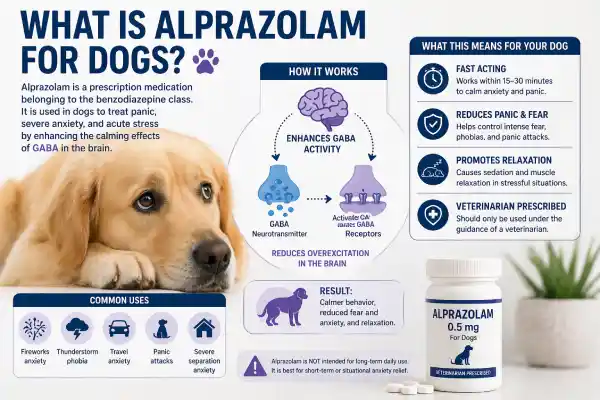
| Alprazolam | Acute anxiety | Useful short-term | Sedation |
Each medication has advantages and disadvantages.
Owners comparing medications often ask whether Is Trazodone or Gabapentin Better for Anxiety in Dogs? The answer depends largely on the dog’s needs and medical history.
Which Anxiety Medication Is Often Considered Safest?
Trazodone
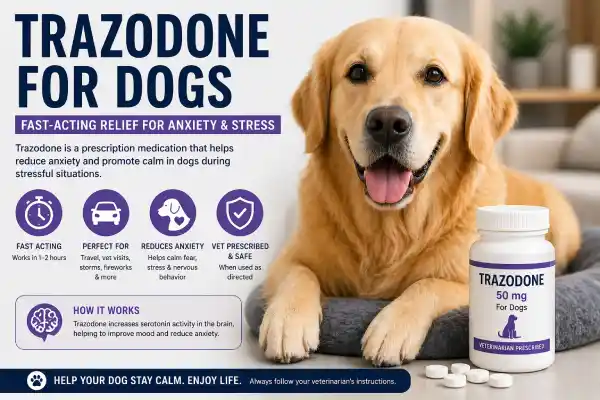
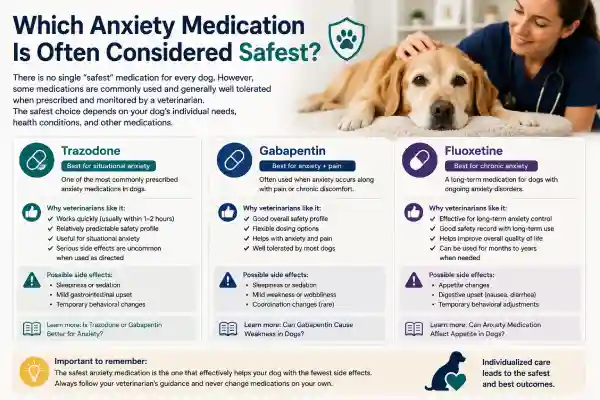
Trazodone is one of the most commonly prescribed anxiety medications in dogs.
Veterinarians often choose trazodone because:
- It has a relatively predictable safety profile.
- It works quickly.
- It is useful for situational anxiety.
- Serious side effects are uncommon when properly prescribed.
However, some dogs may experience:
- Sleepiness
- Mild gastrointestinal upset
- Temporary behavioral changes
Owners sometimes notice increased attachment behaviors after treatment. If this sounds familiar, see Why Is My Dog Clingy After Anxiety Medication?
Gabapentin
Gabapentin is frequently used when anxiety occurs alongside pain.
Benefits include:
- Flexible dosing
- Good overall safety profile
- Additional pain-relieving properties
However, gabapentin may cause:
- Sleepiness
- Mild weakness
- Coordination changes
Learn more in Can Gabapentin Cause Weakness in Dogs?
Fluoxetine
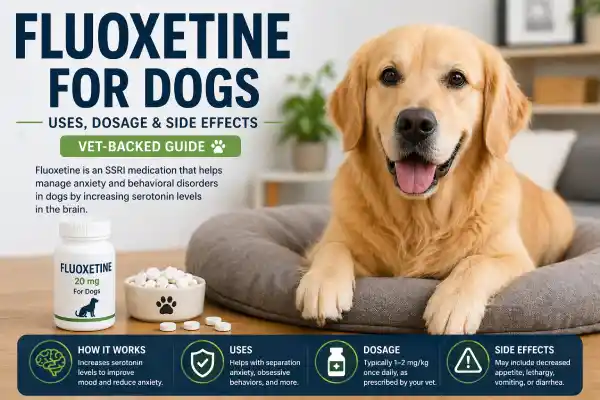
Fluoxetine is commonly prescribed for chronic anxiety disorders.
Advantages include:
- Long-term anxiety control
- Strong veterinary experience
- Good safety record
Potential side effects include:
- Appetite changes
- Digestive upset
- Temporary behavioral adjustments
If your dog has recently started fluoxetine, see Can Anxiety Medication Affect Appetite in Dogs?
What Factors Affect Medication Safety?
Age
Senior dogs often process medications differently.
Veterinarians may use:
- Lower starting doses
- Slower dose increases
- More frequent monitoring
For older pets, read Can Senior Dogs Safely Take Anxiety Medication?
Liver Disease
Many anxiety medications are processed through the liver.
Dogs with liver disease may require:
- Adjusted dosing
- Alternative medications
- Additional monitoring
Kidney Disease
Reduced kidney function may alter how certain medications leave the body.
This is particularly important in senior dogs.
Heart Disease
Some medications require additional caution in dogs with cardiovascular disease.
Veterinarians evaluate:
- Heart rhythm
- Blood pressure
- Existing heart medications
Other Medications
Drug interactions can significantly influence safety.
Always inform your veterinarian about:
- Supplements
- CBD products
- Prescription medications
- Over-the-counter products
If you use CBD products, see Can Dogs Take CBD With Anxiety Medication?
Which Dogs May Need Extra Monitoring?
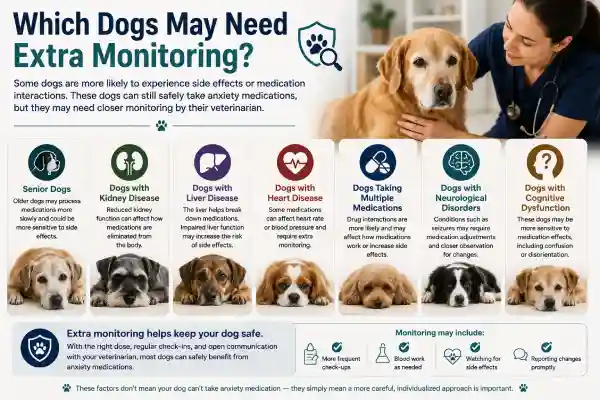
Some dogs require closer supervision during anxiety treatment.
Examples include:
- Senior dogs
- Dogs with kidney disease
- Dogs with liver disease
- Dogs with heart disease
- Dogs taking multiple medications
- Dogs with neurological disorders
- Dogs with seizure disorders
These dogs can often still receive anxiety medication safely, but veterinarians may monitor them more closely.
How Veterinarians Choose the Safest Medication
Veterinarians typically evaluate several factors before prescribing treatment.
Type of Anxiety
Situational anxiety often responds differently than chronic anxiety.
Frequency of Symptoms
Occasional thunderstorms require a different approach than daily separation anxiety.
Medical History
Health conditions often influence medication selection.
Current Medications
Avoiding drug interactions is critical.
Previous Responses
Past medication experiences provide valuable information.
This individualized approach helps maximize safety while improving quality of life.
Related Symptoms Owners Often Notice
Owners frequently notice additional changes when dogs start anxiety medication.
Sleepiness
One of the most common side effects.
Some dogs simply sleep more during the adjustment period.
Appetite Changes
Temporary changes in eating habits can occur.
See Can Anxiety Medication Affect Appetite in Dogs?
Clinginess
Some dogs become more affectionate or attached.
Related article: Why Is My Dog Clingy After Anxiety Medication?
Weakness
Mild weakness may occur, especially with gabapentin.
Related article: Can Gabapentin Cause Weakness in Dogs?
Temporary Behavioral Changes
Dogs may temporarily act differently as their bodies adjust.
Related reading:
- Can Anxiety Medication Cause Confusion in Dogs?
- Why Does Anxiety Medication Stop Working in Dogs?
- Can Dogs Take Melatonin With Anxiety Medication?
- Can Dogs Take CBD With Anxiety Medication?
- Best Anxiety Medication for Dogs: Comparison Guide
- Can Anxiety Medication Make Dogs Aggressive?
- Can Dogs Take Anxiety Medication Every Day?
- What Happens If My Dog Misses Anxiety Medication?
- How Long Does Xanax Last in Dogs?
These symptoms are often temporary but should still be monitored carefully.
When Owners Should Contact Their Veterinarian
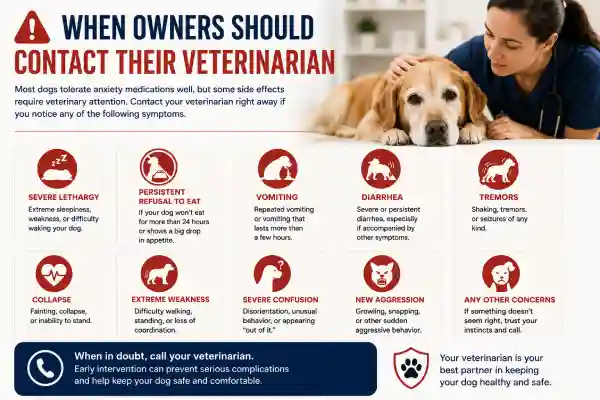
Contact your veterinarian if your dog develops:
- Severe lethargy
- Persistent vomiting
- Refusal to eat
- Collapse
- Tremors
- Significant weakness
- Severe confusion
- New aggression
- Difficulty walking
Prompt evaluation can help determine whether medication adjustments are needed.
What Owners Can Do to Improve Medication Safety
Follow Prescribed Doses
Never increase or decrease doses without veterinary guidance.
Monitor Side Effects
Track:
- Appetite
- Sleep
- Energy levels
- Behavior changes
Keep Follow-Up Appointments
Routine monitoring improves medication safety.
Communicate Changes
Report any unusual symptoms promptly.
Avoid Self-Medicating
Never use human anxiety medications without veterinary supervision.
Veterinarian Takeaway
The safest anxiety medication for dogs is not the same for every patient. Medications such as trazodone, gabapentin, and fluoxetine are commonly used and often well tolerated, but safety depends on your dog’s age, medical history, anxiety type, and other medications. Veterinary evaluation remains the best way to identify the safest and most effective treatment plan.
Bottom Line
What is the safest anxiety medication for dogs? There is no universal answer. The safest choice depends on your dog’s individual health profile and anxiety needs. With proper veterinary guidance, many dogs safely use medications such as trazodone, gabapentin, and fluoxetine to improve their comfort and quality of life. The key is selecting the right medication, monitoring carefully, and maintaining ongoing communication with your veterinarian.
Frequently Asked Questions
What is the safest anxiety medication for dogs?
The safest anxiety medication for dogs depends on the dog’s health, age, and anxiety condition. Trazodone, gabapentin, and fluoxetine are commonly considered safe when properly prescribed.
Is trazodone safe for most dogs?
Yes. Trazodone is widely used and generally well tolerated.
Is gabapentin safer than trazodone?
Neither medication is universally safer. The best choice depends on the individual dog.
What is the safest anxiety medication for senior dogs?
Senior dogs often require individualized treatment plans and closer monitoring.
Can anxiety medication cause side effects?
Yes. Common side effects include sleepiness, appetite changes, and mild behavioral changes.
Is fluoxetine safe for long-term use?
Many dogs safely take fluoxetine for extended periods under veterinary supervision.
Should dogs with liver disease take anxiety medication?
Possibly, but additional precautions and monitoring may be necessary.
Can dogs take CBD with anxiety medication?
Sometimes, but veterinary guidance is important because interactions may occur.
How do veterinarians choose the safest medication?
They evaluate health conditions, current medications, anxiety severity, and treatment goals.
When should I call my veterinarian?
Contact your veterinarian if your dog develops severe side effects, vomiting, weakness, confusion, or appetite loss.
Reviewed By
Pharmacy Reviewed By
Dimitar Atanasov, MPharm
Master Pharmacist | Medication Safety Educator
Dimitar Atanasov is a licensed Master Pharmacist with experience in pharmacology, medication safety, patient education, and veterinary medication research. He reviews educational content to help pet owners better understand medication use, side effects, and safe treatment practices.
Editorial Policy
Pet Meds Made Simple publishes evidence-based educational content developed from veterinary references, pharmacology resources, peer-reviewed literature, and medication safety guidelines. All content is reviewed for accuracy, clarity, and usefulness to pet owners.
Learn more about our editorial standards and review process on our Editorial Policy page
Sources
- American Veterinary Medical Association (AVMA)
- American Animal Hospital Association (AAHA)
- Merck Veterinary Manual
- American College of Veterinary Behaviorists (ACVB)
- Plumb’s Veterinary Drug Handbook
- Behavior Problems of the Dog and Cat – Overall KL
- FDA Center for Veterinary Medicine
- Peer-reviewed veterinary psychopharmacology literature
- Veterinary behavior medicine guidelines
- Clinical references on canine anxiety treatment
Medical Disclaimer
This article is for educational purposes only and does not replace professional veterinary advice. Always consult your veterinarian regarding medication side effects, dosage adjustments, behavioral changes, or concerns about your dog’s health. Never stop prescribed medication without veterinary guidance.What Is the Safest Anxiety Medication for Dogs?
Images created with AI – What Is the Safest Anxiety Medication for Dogs?