Quick Answer
Yes, anxiety medications can affect appetite in dogs. Some medications may reduce appetite, causing dogs to eat less than usual, while othersa may increase hunger. The effect depends on the specific medication, dosage, the dog’s age, health status, and how their body responds to treatment.
Most appetite changes are temporary and improve as the dog adjusts to the medication. However, prolonged appetite loss, significant weight changes, or refusal to eat should be discussed with a veterinarian.
When Owners Commonly Ask This
Dog owners often ask this question when:
- Their dog suddenly eats less after starting anxiety medication
- A previously food-motivated dog loses interest in meals
- Their dog seems hungry all the time after beginning treatment
- Weight loss occurs during anxiety treatment
- Medication was recently increased or changed
- Their dog refuses treats that they normally love
Can Anxiety Medication Change a Dog’s Appetite?
Yes.
The brain chemicals that regulate anxiety also help regulate:
- Hunger
- Satiety (feeling full)
- Digestion
- Nausea perception
- Food motivation
Because anxiety medications affect these systems, appetite changes can occur as a side effect.
In many dogs, these changes are mild and temporary.
Can Anxiety Medication Affect Appetite in Dogs?
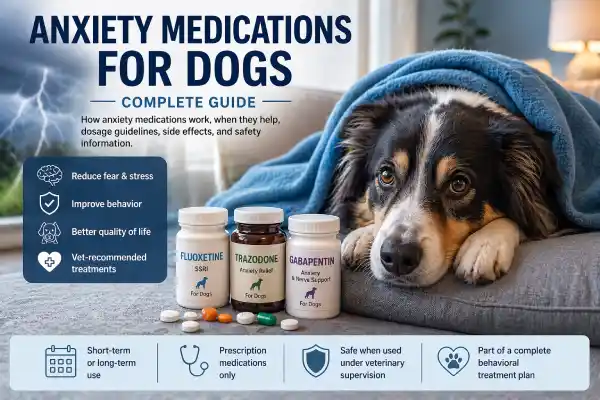
Which Anxiety Medications May Affect Appetite?
| Medication | Appetite Effect |
|---|---|
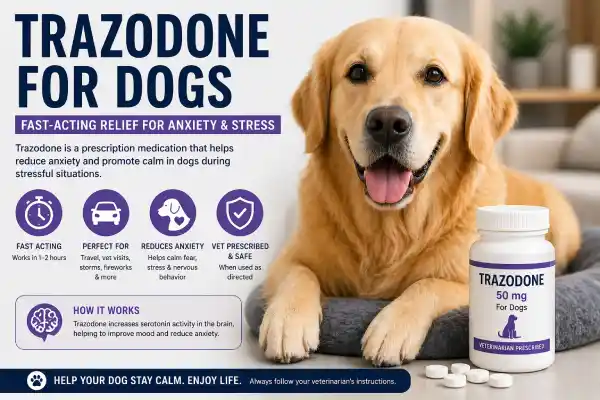
| Trazodone | Appetite decrease occasionally reported |
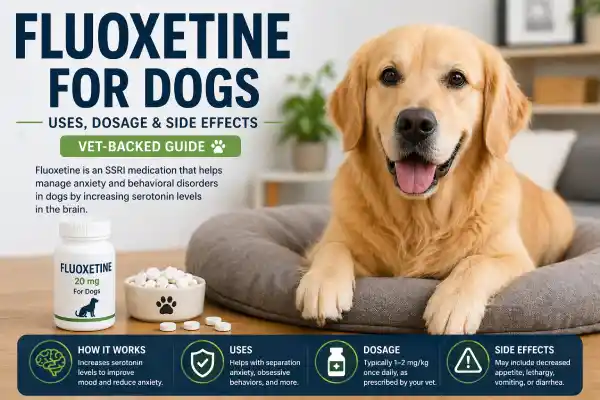
| Fluoxetine (Prozac) | Loss of appetite relatively common during early treatment |
| Clomipramine | May reduce appetite in some dogs |
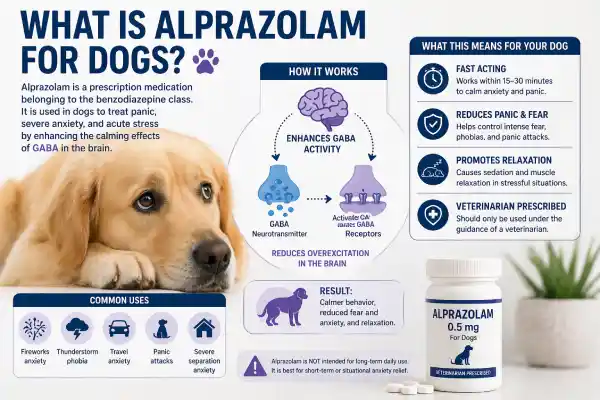
| Alprazolam (Xanax) | Can occasionally increase appetite |
| Diazepam | Sometimes increases hunger |
| Gabapentin (used for anxiety in some dogs) | Usually neutral but may affect appetite indirectly |
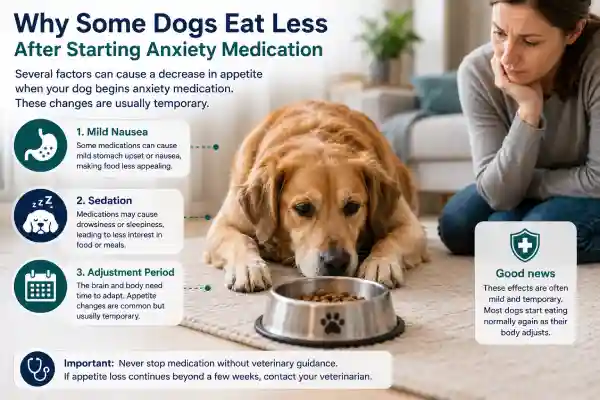
Why Some Dogs Eat Less After Starting Anxiety Medication
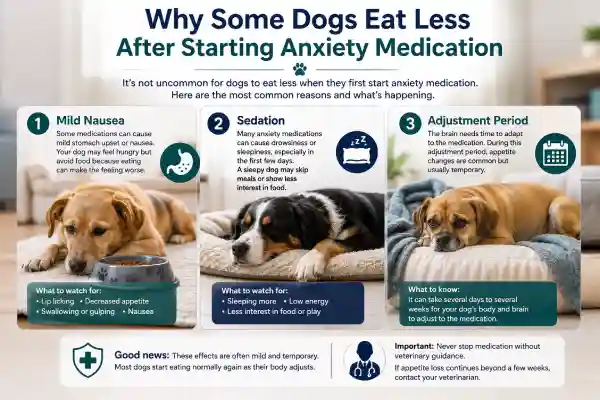
Several factors may contribute.
1. Mild Nausea
Some medications may cause:
- Stomach upset
- Mild nausea
- Temporary digestive discomfort
A dog may feel hungry but avoid food because eating worsens the sensation.
2. Sedation
Dogs that feel sleepy may:
- Skip meals
- Ignore treats
- Show less interest in food
This is especially common during the first few days of treatment.
3. Adjustment Period
The brain often needs time to adapt.
Many medications require:
- Several days
- Several weeks
before side effects improve.
Why Some Dogs Become Hungrier
Not all appetite changes involve eating less.
Certain medications may:
- Reduce stress-related stomach upset
- Improve overall comfort
- Decrease anxiety-related pacing
As anxiety improves, some dogs begin eating more normally.
Others may appear hungrier because they are calmer and more relaxed.
Common Appetite Changes by Medication
| Medication | Appetite Loss | Increased Appetite |
|---|---|---|
| Fluoxetine | Common | Rare |
| Trazodone | Occasional | Rare |
| Clomipramine | Possible | Uncommon |
| Diazepam | Rare | Possible |
| Alprazolam | Rare | Possible |
How Long Do Appetite Changes Last?
For many dogs:
| Time Period | What Happens |
|---|---|
| First few days | Appetite changes most noticeable |
| 1–2 weeks | Improvement often begins |
| 3–4 weeks | Many dogs return to normal eating habits |
| Beyond 4 weeks | Veterinary review recommended |
If appetite loss continues beyond several weeks, the treatment plan may need adjustment.
Signs Appetite Changes May Be Medication Related
Owners may notice:
- Refusing meals shortly after medication
- Leaving food unfinished
- Reduced interest in treats
- Eating much slower than usual
- Sudden weight loss
- Increased begging for food
- Searching for food more frequently
Tracking these changes can help your veterinarian determine whether medication is responsible.
When Appetite Loss Becomes Concerning
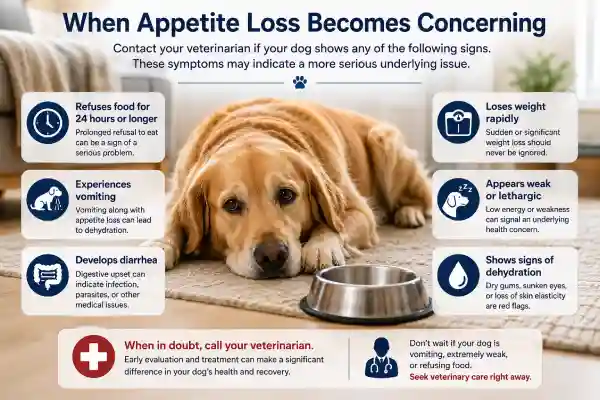
Contact your veterinarian if your dog:
- Refuses food for 24 hours or longer
- Experiences vomiting
- Develops diarrhea
- Loses weight rapidly
- Appears weak or lethargic
- Shows signs of dehydration
- Has underlying medical conditions
These symptoms may indicate something more serious than a routine medication adjustment.
What Owners Should Do
If your dog develops appetite changes:
Do
✓ Monitor food intake
✓ Record medication timing
✓ Track weight changes
✓ Offer regular meals
✓ Follow veterinary instructions
Don’t
✗ Stop medication suddenly
✗ Double doses
✗ Add supplements without approval
✗ Assume appetite loss is harmless if it continues
Anxiety vs Medication: Which Is Causing the Appetite Change?
Sometimes anxiety itself affects appetite.
Dogs with severe anxiety may:
- Eat less
- Skip meals
- Ignore food during stressful events
In these cases, appetite may actually improve once treatment begins.
This is why timing matters. If appetite changes begin immediately after starting medication, the medication may be contributing. If appetite problems existed beforehand, anxiety may be the larger factor.
Related Symptoms Owners Often Notice
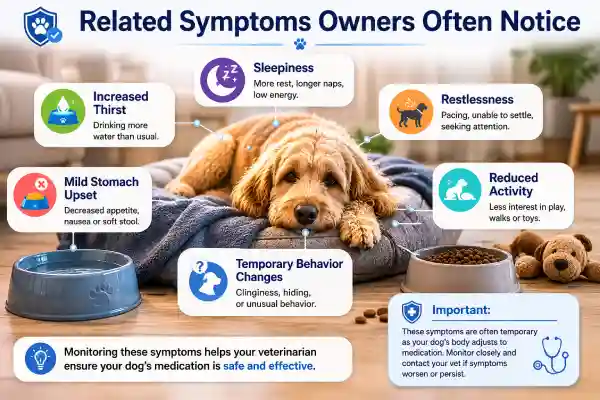
Appetite changes may occur alongside:
- Sleepiness
- Restlessness
- Increased thirst
- Mild stomach upset
- Temporary behavior changes
- Reduced activity levels
Related PMMS articles:
- Can Anxiety Medication Cause Confusion in Dogs?
- Can Dogs Take Melatonin With Anxiety Medication?
- Why Does Anxiety Medication Stop Working in Dogs?
- Can Dogs Take CBD With Anxiety Medication?
- Can Dogs Take Anxiety Medication Every Day?
Veterinarian Takeaway
Appetite changes are a recognized side effect of many anxiety medications used in dogs. Most cases are mild and temporary, especially during the first few weeks of treatment. Monitoring food intake, body weight, and overall behavior can help determine whether your dog is adjusting normally or needs a medication review.
Bottom Line
Yes, anxiety medication can affect appetite in dogs.
Some dogs may eat less, while others may become hungrier. Most appetite changes improve as the body adjusts to treatment. Persistent appetite loss, weight changes, vomiting, or refusal to eat should be evaluated by a veterinarian to ensure the medication remains safe and effective.
FAQ – Can Anxiety Medication Affect Appetite in Dogs?
Can trazodone cause loss of appetite in dogs?
Yes. Some dogs experience reduced appetite, especially when first starting trazodone.
Does fluoxetine make dogs stop eating?
Fluoxetine can temporarily decrease appetite in some dogs during the first few weeks of treatment.
Can anxiety medication make dogs hungry?
Yes. Certain medications may increase appetite or improve appetite indirectly by reducing anxiety.
How long does appetite loss last?
Many dogs improve within one to three weeks.
Should I stop anxiety medication if my dog won’t eat?
No. Never stop medication without veterinary guidance.
Can anxiety itself cause appetite loss?
Yes. Stress and anxiety commonly reduce food intake in dogs.
Which anxiety medication is most likely to affect appetite?
Fluoxetine and clomipramine are among the medications more commonly associated with appetite changes.
Can anxiety medication cause weight loss?
Yes, prolonged appetite reduction can lead to weight loss.
Should I give medication with food?
Follow your veterinarian’s instructions. Some medications are better tolerated with food.
Medical Disclaimer
This article is for educational purposes only and does not replace professional veterinary advice. Always consult your veterinarian regarding medication side effects, dosage changes, or concerns about your dog’s health. Never stop or adjust prescription medications without veterinary guidance.
Sources
- American Veterinary Medical Association
- American Animal Hospital Association
- Merck Veterinary Manual
- Veterinary psychopharmacology references regarding fluoxetine, trazodone, clomipramine, alprazolam, and diazepam use in dogs.