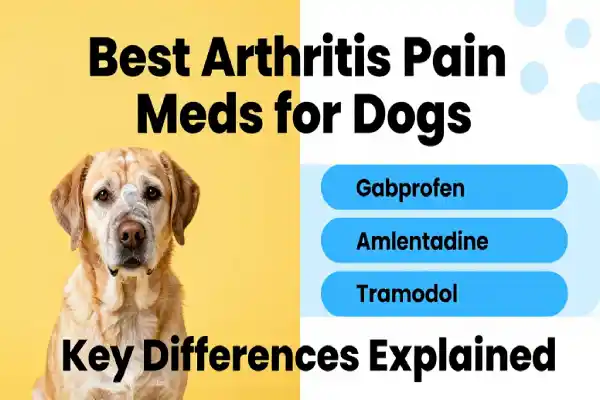
Best pain medication for dogs with arthritis is one of the most important decisions pet owners face, especially as dogs age and joint degeneration progresses.
Arthritis pain is chronic, progressive, and multi-layered—which means no single medication works perfectly on its own.
👉 The key is not just choosing a “strong” drug, but using the right combination for long-term control and quality of life.
Before choosing any medication, make sure you understand the cause of your dog’s discomfort:
➡️ Why Is My Dog in Pain? Signs, Causes & When to Go to the Vet
Quick Answer
- Best first-line medication: Carprofen
- Best for chronic/nerve pain: Gabapentin
- Best add-on for severe cases: Amantadine
- Best short-term relief: Tramadol
👉 Best results come from multimodal pain management (combining medications)
Understanding Arthritis Pain in Dogs
Arthritis (osteoarthritis) is not just “joint pain.”
It involves:
- Inflammation inside the joint
- Cartilage breakdown
- Bone changes
- Nerve sensitization over time
👉 This is why arthritis pain becomes:
- Inflammatory (early stages)
- Chronic and nerve-related (later stages)
✔ That’s also why treatment must evolve—not stay the same.
Best Pain Medication for Dogs with Arthritis
Best Pain Medications for Dogs with Arthritis
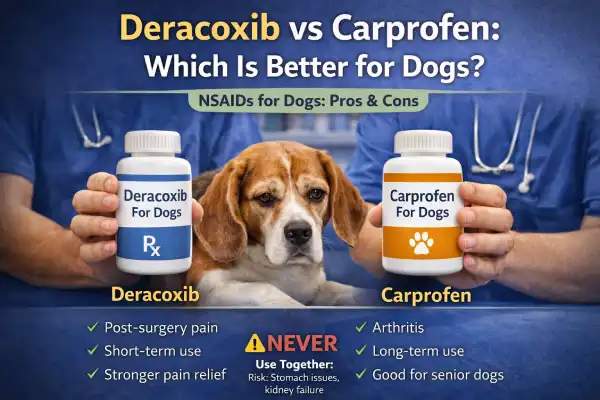
1. Carprofen (Best First-Line Treatment)
Carprofen is one of the most widely prescribed veterinary NSAIDs.
Why it works:
- Reduces inflammation (root cause of arthritis pain)
- Improves mobility
- Fast onset (within hours)
Best for:
- Mild to moderate arthritis
- Daily pain control
- Dogs with visible stiffness
➡️ Internal links:
- Carprofen for Dogs: Uses, Dosage & Side Effects
- Carprofen vs Gabapentin for Dogs: Which One Works Better?
2. Gabapentin (Best for Chronic Pain)
Gabapentin targets nerve-related pain that develops over time.
Why it matters:
- Arthritis pain becomes neurologically amplified
- NSAIDs alone often stop being enough
Best for:
- Advanced arthritis
- Chronic discomfort
- Dogs that don’t respond fully to NSAIDs
➡️ Internal link:
3. Amantadine (Best Add-On Therapy)
Amantadine is often overlooked—but extremely powerful in the right cases.
What it does:
- Blocks NMDA receptors
- Reduces “pain memory” in the nervous system
- Enhances other medications
Best for:
- Dogs not improving with standard therapy
- Long-term arthritis cases
- Combination therapy
➡️ Internal link:
4. Tramadol (Short-Term Support)
Tramadol provides temporary relief but is not ideal for long-term arthritis management.
Best for:
- Acute flare-ups
- Post-surgery pain
- Temporary support
➡️ Internal link:
Comparison Table
| Medication | Pain Type | Speed | Long-Term Use | Role |
|---|---|---|---|---|
| Carprofen | Inflammatory | Fast | Yes (monitoring) | First-line |
| Gabapentin | Nerve/chronic | Moderate | Yes | Secondary |
| Amantadine | Resistant pain | Slow | Yes | Add-on |
| Tramadol | Acute pain | Fast | Limited | Short-term |
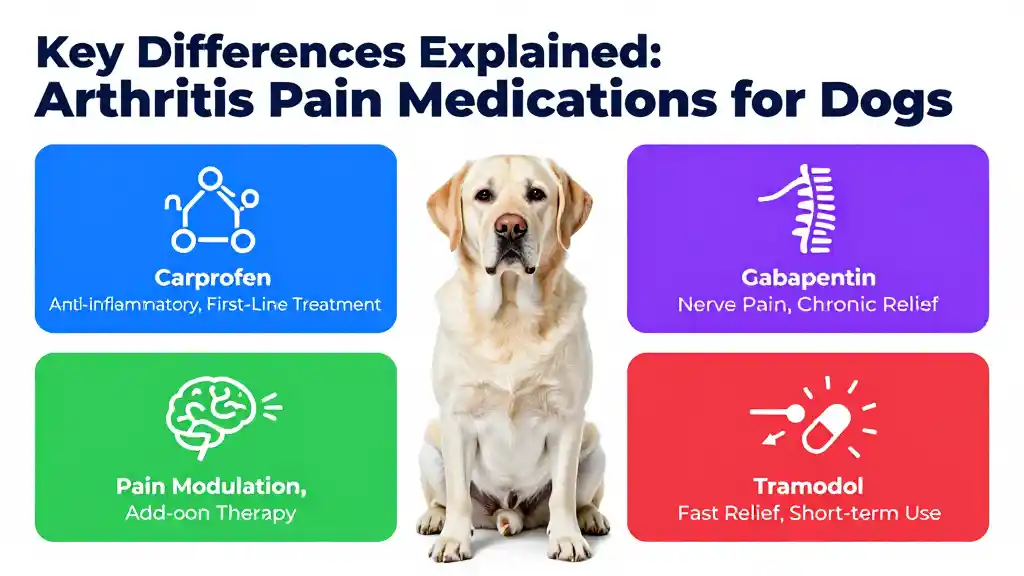
Key Differences Explained
Type of Pain Treated
- Carprofen → inflammation
- Gabapentin → nerve pain
- Amantadine → pain modulation
- Tramadol → acute pain relief
👉 Arthritis involves ALL of these over time.
Strength vs Role
- Carprofen = foundation
- Gabapentin = stabilizer
- Amantadine = amplifier
- Tramadol = temporary relief
✔ No single drug “wins” — the strategy wins
Advanced Arthritis Treatment Strategy
This is where most content online fails—but this is what vets actually do.
Step 1: Start with Anti-Inflammatory Control
- NSAID (Carprofen)
- Reduce joint inflammation
Step 2: Add Nerve Pain Control
- Introduce Gabapentin
✔ Covers chronic pain component
Step 3: Add Amantadine (If Needed)
- When pain persists
- Enhances effectiveness of other drugs
✔ This is called multimodal therapy
Step 4: Optimize Long-Term
- Adjust doses
- Reduce NSAID if possible
- Maintain mobility
Step 5: Add Lifestyle Support
- Weight management
- Joint supplements
- Controlled exercise
➡️ Internal link:
Why Some Dogs Don’t Improve
Common reasons:
- Using only one medication
- Treating the wrong type of pain
- Stopping treatment too early
- Ignoring chronic progression
👉 Biggest mistake: monotherapy in chronic arthritis
Medication vs Natural Remedies
| Approach | Effectiveness |
|---|---|
| Natural only | Mild cases |
| Medication only | Moderate |
| Combination | BEST |
Natural options include:
- Omega-3 fatty acids
- Glucosamine
- Turmeric
👉 These support treatment—but rarely replace medication.
Decision Tree
👉 Use this:
- Mild arthritis → NSAID + supplements
- Moderate → NSAID + Gabapentin
- Severe → NSAID + Gabapentin + Amantadine
- Flare-ups → Add Tramadol
Common Mistakes Owners Make
- Expecting one drug to fix everything
- Ignoring chronic pain progression
- Avoiding combination therapy
- Stopping medication early
Pro Tips
✔ Start treatment early
✔ Use combination therapy
✔ Monitor response closely
✔ Adjust with your vet
Can Dogs Stay on Arthritis Medication for Life?
Yes—many dogs require lifelong management.
Veterinarians often:
- Maintain NSAIDs with monitoring
- Add gabapentin long-term
- Adjust therapy over time
👉 The goal is quality of life, not just pain suppression
FAQ
What is the best pain medication for dogs with arthritis?
Carprofen is the most common first-line treatment.
Can dogs take multiple pain medications?
Yes. Combination therapy is standard for arthritis.
Is gabapentin good for arthritis?
Yes—especially for chronic or advanced cases.
What is the best combination?
Carprofen + Gabapentin + Amantadine.
Can arthritis be cured?
No—but it can be effectively managed.
Conclusion
👉 Carprofen = foundation
👉 Gabapentin = chronic pain control
👉 Amantadine = advanced support
👉 Tramadol = temporary relief
✔ The best treatment is multimodal, personalized, and consistent
Medical Disclaimer
This content is for educational purposes only and does not replace professional veterinary advice. Always consult a licensed veterinarian before starting or changing any medication. Individual responses may vary based on health status, age, and underlying conditions.