
Safest pain medication for dogs is one of the most important questions pet owners ask—because effectiveness means nothing without safety, especially for long-term use.
Pain management in dogs must balance:
- ✔ Effectiveness
- ✔ Long-term safety
- ✔ Individual health risks
👉 The safest option is NOT always the weakest—it’s the most appropriate for your dog’s condition.
Before choosing medication, understand the cause of pain:
➡️ Why Is My Dog in Pain? Signs, Causes & When to Go to the Vet
Quick Answer
- Safest first-line option: Carprofen (with monitoring)
- Safest for long-term use: Gabapentin
- Safest add-on: Amantadine
- Least safe long-term: Tramadol
👉 Best safety comes from correct combination + proper monitoring
Safest Pain Medication for Dogs
What Makes a Pain Medication “Safe” for Dogs?
Safety depends on several factors:
- Liver and kidney impact
- Gastrointestinal tolerance
- Long-term side effects
- Drug interactions
- Dose accuracy
👉 A medication can be safe for one dog—and risky for another.
Safest Pain Medications for Dogs (Compared)
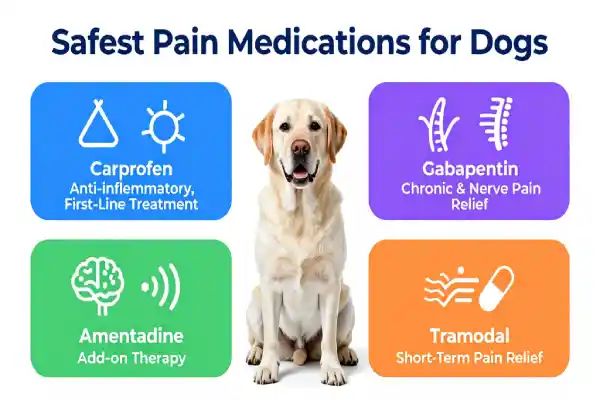
1. Carprofen (Safest First-Line NSAID)
Why it’s considered safe:
- Widely studied in veterinary medicine
- Effective for inflammation
- Safe when monitored properly
Best for:
- Arthritis
- Joint pain
- Inflammatory conditions
➡️ Internal links:
- Carprofen for Dogs: Uses, Dosage & Side Effects
- Carprofen vs Gabapentin for Dogs: Which One Works Better?
2. Gabapentin (Safest for Long-Term Use)
Why it’s safe:
- Minimal organ toxicity
- Well tolerated
- Ideal for chronic pain
Best for:
- Nerve pain
- Chronic conditions
- Long-term therapy
➡️ Internal link:
3. Amantadine (Safe Add-On Therapy)
Why it’s safe:
- Low toxicity profile
- Enhances other medications
- Rare serious side effects
➡️ Internal link:
4. Tramadol (Safe Short-Term, Not Long-Term)
Safety profile:
- Safe for short-term use
- Risk increases with long-term use
Best for:
- Acute pain
- Temporary relief
➡️ Internal link:
Safety Comparison Table
| Medication | Organ Risk | Long-Term Use | Common Side Effects | Safety Level |
|---|---|---|---|---|
| Carprofen | Moderate (monitor) | Yes | GI upset | High (with vet) |
| Gabapentin | Low | Yes | Sedation | Very High |
| Amantadine | Low | Yes | Mild GI | Very High |
| Tramadol | Moderate | Limited | Sedation | Moderate |
Key Differences Explained
Organ Impact
- Carprofen → liver/kidney monitoring required
- Gabapentin → minimal organ stress
- Amantadine → low toxicity
- Tramadol → CNS effects
Long-Term Safety
- Gabapentin → best long-term
- Amantadine → safe add-on
- Carprofen → safe with monitoring
- Tramadol → not ideal long-term
Risk vs Benefit
👉 The safest drug is the one that:
- Controls pain effectively
- Has manageable side effects
- Fits the dog’s health status
Advanced Safety Strategy
Step 1 – Start with Lowest Risk Effective Option
- Mild pain → natural + NSAID
- Moderate pain → NSAID
Step 2 – Add Safer Long-Term Options
- Add Gabapentin for chronic pain
- Avoid increasing NSAID dose unnecessarily
Step 3 – Use Add-Ons Instead of Increasing Risk
- Add Amantadine instead of increasing dosage
Step 4 – Monitor Regularly
- Blood tests
- Behavior changes
- Appetite and mobility
Step 5 – Rotate or Adjust Therapy
- Reduce risk over time
- Customize treatment
Why Some “Safe” Medications Still Cause Problems
❌ Wrong dose
❌ No monitoring
❌ Drug interactions
❌ Underlying disease
👉 Safety depends on how the medication is used
Medication vs Natural Pain Relief (Safety Perspective)
| Option | Safety | Effectiveness |
|---|---|---|
| Natural remedies | Very High | Mild |
| NSAIDs | High (monitored) | Strong |
| Combination therapy | High | BEST |
➡️ Internal link:
👉 Natural Pain Relief for Dogs: What Works & What Doesn’t
Decision Tree
👉 Use this:
- Mild pain → Natural + NSAID
- Chronic pain → Add Gabapentin
- Resistant pain → Add Amantadine
- Acute pain → Short-term Tramadol
Common Safety Mistakes
- Overusing NSAIDs
- Ignoring blood work
- Using human medications
- Combining drugs incorrectly
Pro Tips for Safe Pain Management
✔ Always start low
✔ Monitor regularly
✔ Combine instead of increasing dose
✔ Work with a vet
What Is the Absolute Safest Pain Medication for Dogs?
👉 There is no single answer.
✔ For most dogs:
- Gabapentin = safest long-term
- Carprofen = safest effective first-line
👉 The safest plan is personalized treatment
FAQ
What is the safest painkiller for dogs?
Gabapentin is often considered the safest for long-term use.
Is carprofen safe for dogs long-term?
Yes, with proper veterinary monitoring.
Can dogs take multiple pain medications safely?
Yes—when prescribed correctly.
What pain meds should dogs avoid?
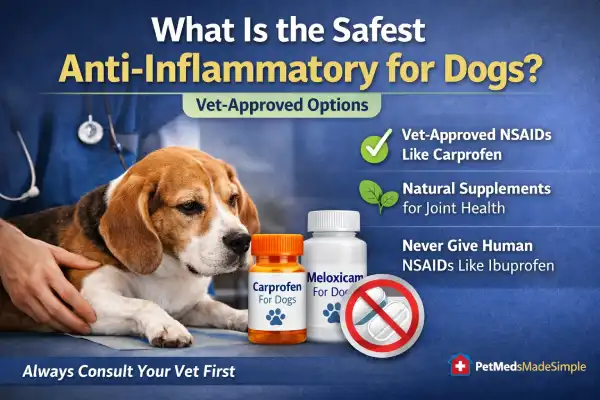
Human medications like ibuprofen are dangerous.
How can I reduce risk?
Use correct dosage and regular vet checkups.
Conclusion
👉 Gabapentin = safest long-term
👉 Carprofen = safest effective first-line
👉 Amantadine = safest add-on
👉 Tramadol = short-term only
✔ Safety comes from strategy, not just medication
Medical Disclaimer
This content is for informational purposes only and does not replace professional veterinary advice. Always consult a licensed veterinarian before starting or changing any treatment.