Quick Answer
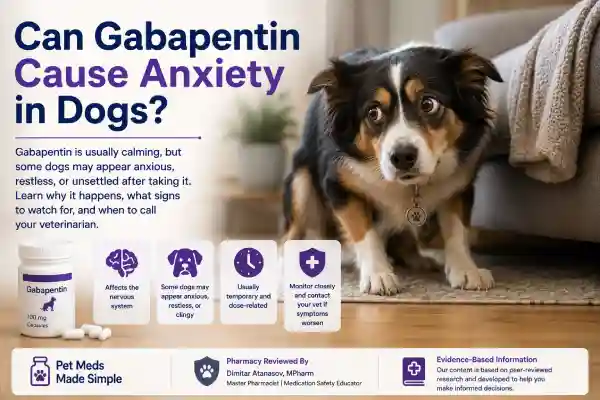
Can gabapentin cause anxiety in dogs? Gabapentin is typically used to help dogs feel calmer and more comfortable, but some dogs may appear anxious, restless, clingy, or unsettled after taking it. In many cases, gabapentin is not directly causing anxiety. Instead, dogs may be reacting to side effects such as wobbliness, sedation, confusion, or unfamiliar sensations caused by the medication. Severe anxiety, panic, or significant behavioral changes should always be discussed with a veterinarian.
Most owners expect gabapentin to make their dog sleepy.
That is why it can be surprising when a dog suddenly seems:
- More restless
- More nervous
- Clingy
- Unable to settle
- Pacing around the house
- Acting differently than normal
Many owners immediately wonder:
“Is gabapentin making my dog anxious?”
The answer is sometimes more complicated than a simple yes or no.
While gabapentin is generally known for its calming effects, some dogs may experience behavioral changes that can look very similar to anxiety.
When Owners Commonly Ask This
Owners often search for this question after noticing:
- My dog seems anxious after gabapentin.
- My dog is pacing after medication.
- My dog is restless after gabapentin.
- My dog is acting nervous.
- My dog won’t settle after medication.
- My dog seems scared after gabapentin.
- My dog is more clingy than usual.
These symptoms may occur after the first dose or after a dosage adjustment.
Can Gabapentin Cause Anxiety in Dogs?
What Is Gabapentin Used for in Dogs?
Gabapentin is commonly prescribed by veterinarians for:
- Nerve pain
- Chronic pain
- Arthritis support
- Anxiety management
- Stress reduction
- Seizure disorders
The medication works by affecting how signals travel through the nervous system.
For most dogs, this leads to:
- Relaxation
- Reduced discomfort
- Less stress
- Improved comfort
However, every dog responds differently.
Can Gabapentin Actually Cause Anxiety?
In some dogs, anxiety-like behavior may develop after taking gabapentin.
However, veterinarians often find that the medication itself is not directly creating anxiety.
Instead, dogs may react to the way the medication makes them feel.
For example, a dog that suddenly feels:
- Sleepy
- Wobbly
- Disoriented
- Less coordinated
may become unsettled or insecure.
Because dogs do not understand why their body feels different, they may respond with behaviors that resemble anxiety.
7 Reasons a Dog May Seem Anxious After Taking Gabapentin
Wobbliness Can Be Frightening
One of the most common side effects of gabapentin is reduced coordination.
A dog that suddenly feels unsteady may become nervous.
Some dogs respond by:
- Following owners constantly
- Moving cautiously
- Refusing stairs
- Seeking reassurance
Related article:
Why Is My Dog Wobbly After Gabapentin?
Sedation Can Feel Uncomfortable
Most owners think of sleepiness as relaxing.
However, some dogs do not enjoy the sensation.
A dog that suddenly feels unusually tired may become confused or unsettled.
This can create anxiety-like behavior.
Pain May Still Be Present
Gabapentin does not eliminate all pain in every dog.
If pain remains uncontrolled, a dog may continue to show:
- Restlessness
- Pacing
- Panting
- Difficulty settling
Owners sometimes mistake these signs for medication-related anxiety.
Temporary Confusion
Some dogs become mildly disoriented after taking gabapentin.
This confusion may cause:
- Clinginess
- Nervous behavior
- Hesitation
- Increased attention-seeking
For some dogs, this passes as the medication wears off.
Individual Sensitivity
Every dog metabolizes medications differently.
Some dogs are naturally more sensitive to nervous-system medications.
These dogs may experience stronger behavioral effects than expected.
Combination With Other Medications
Gabapentin is often prescribed alongside other medications.
When multiple medications affect the nervous system, behavior changes may become more noticeable.
Examples may include:
- Anxiety medications
- Pain medications
- Sedatives
Related article:
Can Gabapentin Be Given With Other Dog Medications?
The Anxiety Was Already There
Sometimes the timing is misleading.
The dog may already be experiencing anxiety because of:
- Pain
- Illness
- Recovery from surgery
- A stressful event
- A veterinary visit
Gabapentin may simply be given around the same time those symptoms become more obvious.
What Does Gabapentin-Related Anxiety Look Like?
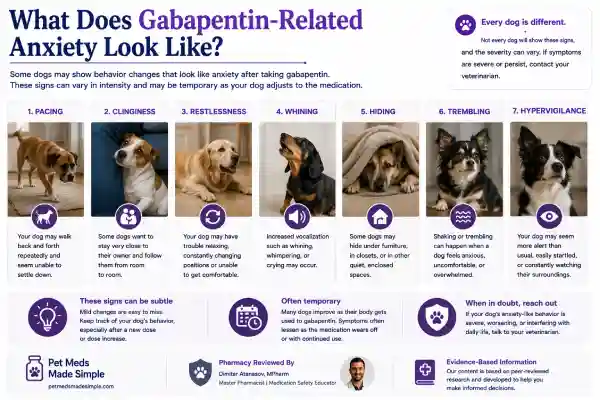
The signs vary from dog to dog.
Owners commonly report:
Pacing
Dogs may walk continuously without settling.
Clinginess
Some dogs suddenly want to stay very close to their owners.
Restlessness
The dog may repeatedly lie down and get back up.
Whining
Some dogs become more vocal.
Hiding
Others seek quiet places away from activity.
Trembling
Shaking may occur if the dog feels frightened or uncomfortable.
Hypervigilance
Some dogs seem unusually alert or watchful.
Is Anxiety a Common Side Effect of Gabapentin?
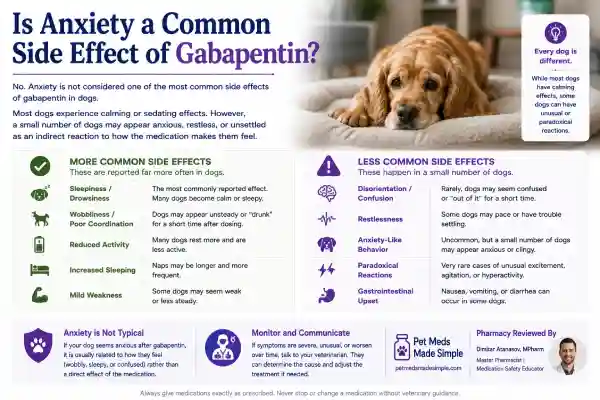
No.
Anxiety is not generally considered one of the most common gabapentin side effects.
More commonly reported effects include:
- Sleepiness
- Wobbliness
- Reduced coordination
- Mild weakness
- Increased sleeping
Related article:
Can Gabapentin Cause Weakness in Dogs?
Because these effects can feel unusual to a dog, some dogs may respond with behaviors that appear anxious.
Which Dogs May Be More Likely to Experience Anxiety-Like Behavior?
Certain dogs may be more sensitive.
Senior Dogs
Older dogs often experience medication side effects more strongly.
Dogs New to Gabapentin
Behavior changes are often most noticeable when treatment first begins.
Dogs With Existing Anxiety
Dogs already prone to anxiety may react differently to changes in sensation or routine.
Dogs Taking Multiple Medications
Combination therapy may increase behavioral side effects in some cases.
Can Anxiety-Like Symptoms Improve Over Time?
Yes.
Many dogs adjust to gabapentin after several days.
As the body becomes accustomed to the medication, side effects often become less noticeable.
Owners frequently report that:
- Restlessness improves
- Clinginess decreases
- Nervous behavior becomes less frequent
This adjustment period varies from dog to dog.
What Owners Can Do If Their Dog Seems Anxious After Gabapentin
Stay Calm
Dogs often take cues from their owners.
Remaining calm may help reduce stress.
Maintain a Familiar Routine
Predictability can help anxious dogs feel more secure.
Provide a Comfortable Resting Area
A quiet space may help dogs relax.
Monitor Symptoms
Keep track of:
- Medication timing
- Behavior changes
- Appetite
- Activity levels
Contact Your Veterinarian if Symptoms Persist
Persistent or worsening symptoms should always be discussed with a veterinary professional.
When Anxiety Becomes Concerning
Owners should seek veterinary advice if they notice:
Severe Panic
Extreme fear is not considered a normal response.
Aggression
Sudden aggressive behavior should always be evaluated.
Inability to Rest
Dogs that cannot settle for extended periods may require reassessment.
Significant Confusion
Severe disorientation deserves prompt attention.
Worsening Symptoms
Side effects that continue to intensify should be investigated.
How Veterinarians Evaluate Anxiety After Gabapentin
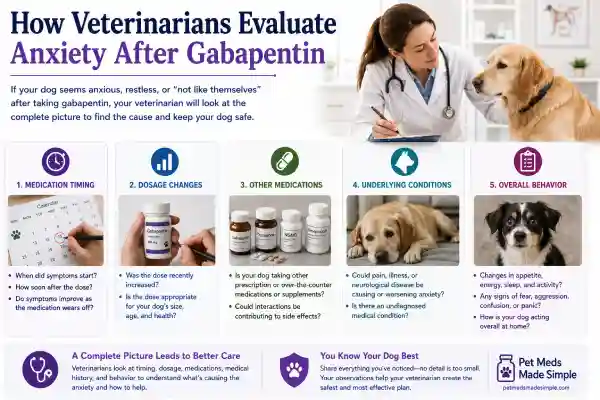
Veterinarians often review:
Medication Timing
Did symptoms begin shortly after dosing?
Dosage Changes
Was the dose recently increased?
Other Medications
Could another medication be contributing?
Underlying Conditions
Could pain, illness, or neurological disease be involved?
Overall Behavior
Veterinarians evaluate the complete picture rather than focusing on a single symptom.
Related Symptoms Owners Often Notice
Dogs that appear anxious after gabapentin may also show:
Wobbliness
Related article:
Why Is My Dog Wobbly After Gabapentin?
Weakness
Related article:
Can Gabapentin Cause Weakness in Dogs?
Increased Sleeping
Some dogs alternate between restlessness and sleepiness.
Reduced Coordination
Balance changes may contribute to nervous behavior.
Clinginess
Many dogs seek reassurance from their owners.
When Owners Should Contact Their Veterinarian
Contact your veterinarian if:
- Anxiety becomes severe
- Panic develops
- Symptoms worsen over time
- Aggression appears
- Confusion becomes significant
- Your dog seems unable to function normally
- New symptoms develop
Most mild behavioral changes improve, but severe reactions should never be ignored.
Veterinarian Takeaway
Can gabapentin cause anxiety in dogs? Although gabapentin is usually associated with calming effects, some dogs may appear anxious, restless, clingy, or unsettled after taking it. Often, these behaviors result from side effects such as wobbliness, sedation, or unfamiliar body sensations rather than true anxiety caused directly by the medication. Persistent, severe, or worsening symptoms should be evaluated by a veterinarian.
Bottom Line
Gabapentin is generally considered a calming medication, but some dogs may temporarily appear more anxious after taking it.
In many cases, the dog is reacting to how the medication makes them feel rather than developing true anxiety from the medication itself.
Most mild symptoms improve with time.
However, owners should contact their veterinarian if anxiety becomes severe, persistent, or is accompanied by other concerning signs.
Frequently Asked Questions – Can Gabapentin Cause Anxiety in Dogs?
Can gabapentin make dogs anxious?
In some dogs, anxiety-like behaviors may occur after taking gabapentin.
Is anxiety a common side effect of gabapentin?
No. Sleepiness and wobbliness are generally more common.
Why is my dog pacing after gabapentin?
Pacing may result from discomfort, confusion, or anxiety-like reactions.
Can gabapentin make dogs clingy?
Yes. Some dogs become more attached to their owners while adjusting to the medication.
Can gabapentin cause trembling?
Some dogs may tremble if they feel nervous or uncomfortable.
How long do anxiety-like symptoms last?
Many improve as the medication wears off or as the dog adjusts.
Can senior dogs react differently to gabapentin?
Yes. Older dogs may be more sensitive to side effects.
Should I stop gabapentin if my dog seems anxious?
Never stop medication without veterinary guidance.
Can pain cause anxiety-like symptoms despite gabapentin?
Yes. Ongoing pain may contribute to restlessness and nervous behavior.
When should I call my veterinarian?
Contact your veterinarian if symptoms are severe, worsening, or interfere with normal daily activities.
Sources
- American Veterinary Medical Association (AVMA)
- American Animal Hospital Association (AAHA)
- Merck Veterinary Manual
- Plumb’s Veterinary Drug Handbook
- FDA Center for Veterinary Medicine
- Veterinary Pharmacology and Therapeutics
- Small Animal Internal Medicine
- Veterinary Pain Management Guidelines
- Veterinary Behavioral Medicine References
- Peer-Reviewed Research on Gabapentin Use in Dogs
Images created with AI – Can Gabapentin Cause Anxiety in Dogs?