
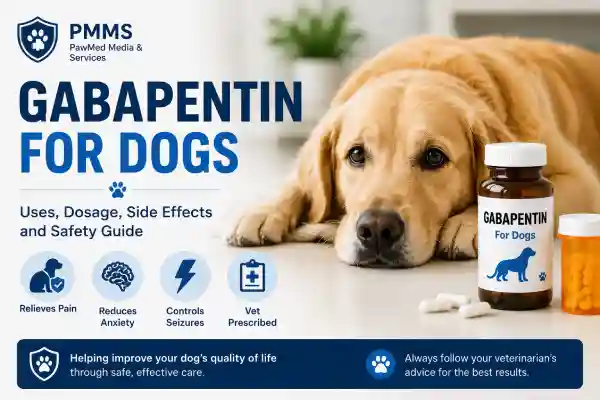
Gabapentin for Dogs / Dog Medication Safety
Gabapentin is one of the most commonly prescribed medications in veterinary medicine for managing chronic pain, nerve-related conditions, and anxiety in dogs. Originally developed for human medicine, the drug has become an important tool for veterinarians treating conditions such as arthritis, nerve pain, and post-surgical discomfort in dogs.
When used correctly under veterinary supervision, gabapentin is generally considered safe and well tolerated. However, pet owners often have questions about dosage, side effects, safety concerns, and how the medication affects their dog’s behavior.
This guide explains everything pet owners should know about gabapentin for dogs — including how it works, when it’s prescribed, and how to use it safely.
What Is Gabapentin?
Gabapentin is a medication originally developed to treat seizures and nerve pain in humans. In veterinary medicine, it is commonly prescribed for dogs to manage pain and anxiety-related conditions.
Gabapentin works by affecting the way nerves send signals to the brain. By reducing abnormal nerve activity, the medication can help decrease pain sensations and calm the nervous system.
Unlike many traditional pain medications, gabapentin does not belong to the NSAID (non-steroidal anti-inflammatory drug) class and therefore works through a different mechanism.
Gabapentin for Dogs Complete Guide
Why Veterinarians Prescribe Gabapentin for Dogs
Veterinarians use gabapentin for a variety of conditions, particularly those involving nerve-related pain or heightened nervous system activity.
Common Uses Include
Chronic pain management
Gabapentin is frequently used to treat chronic conditions such as arthritis or nerve damage.
Neuropathic pain
Pain caused by damaged or irritated nerves often responds well to gabapentin therapy.
Post-surgical recovery
The medication is sometimes prescribed after surgery to help control discomfort.
Anxiety and stress
Gabapentin may be used to help calm dogs during stressful situations such as veterinary visits, travel, or thunderstorms.
Because it targets nerve signaling, gabapentin is often combined with other medications to improve overall pain management.
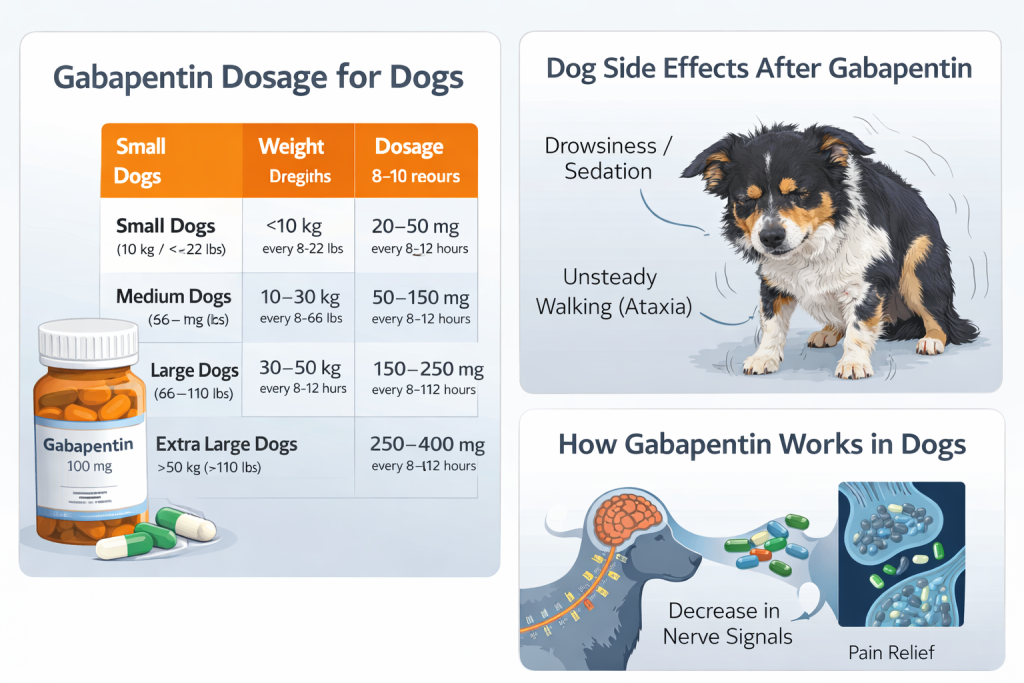
How Gabapentin Works in Dogs
Gabapentin affects the central nervous system, particularly calcium channels involved in nerve communication.
By modifying how nerve signals are transmitted, the medication helps:
- Reduce pain signals sent to the brain
- Stabilize nerve activity
- Provide mild sedation or calming effects
These combined effects make gabapentin useful for dogs experiencing both physical pain and anxiety-related symptoms.
Gabapentin Dosage for Dogs
Gabapentin dosing varies depending on the dog’s weight, medical condition, and overall health.
Veterinarians typically prescribe gabapentin every 8 to 12 hours, though dosing schedules may differ depending on the situation.
Typical Dosage Range
Many veterinary guidelines suggest a dosage range of:
5–20 mg per kilogram of body weight
However, the exact dosage must always be determined by a veterinarian.
Gabapentin Dosage for Dogs: Vet Guidelines, Weight Chart & Safety Tips
How Long Does Gabapentin Take to Work?
Gabapentin generally begins working within 1 to 2 hours after administration.
Some dogs may experience mild sedation shortly after receiving the medication, while pain relief may develop gradually over several doses.
Factors that influence how quickly gabapentin works include:
- Dog’s body weight
- Severity of the condition
- Kidney function
- Other medications being used
Common Side Effects of Gabapentin in Dogs
Most dogs tolerate gabapentin well, but mild side effects can occur, especially when treatment first begins.Gabapentin for Dogs
Common Side Effects
- Sleepiness or sedation
- Mild weakness
- Unsteady walking (ataxia)
- Increased appetite
These effects often improve as the dog’s body adjusts to the medication.
When Side Effects May Be Concerning
Although uncommon, more serious symptoms should be evaluated by a veterinarian.
These may include:
- Severe lethargy
- Vomiting
- Tremors
- Collapse
- Breathing difficulty
If these symptoms appear suddenly or worsen, veterinary care should be sought immediately.
Is Gabapentin Safe for Small Dogs?
Gabapentin can be safely prescribed to small dogs when the dose is carefully calculated based on body weight.
Smaller dogs may be more sensitive to sedative effects, which is why veterinarians often start with a lower dose and gradually adjust as needed.
Can Dogs Take Gabapentin Long Term?
Gabapentin is often used as part of long-term pain management plans, particularly for chronic conditions such as arthritis or nerve injury.
Many dogs take gabapentin for extended periods without serious complications when monitored by a veterinarian.
Regular check-ups help ensure:
- Proper dosing
- Kidney function monitoring
- Evaluation of overall treatment effectiveness
What Happens If a Dog Gets Too Much Gabapentin?
While gabapentin has a relatively wide safety margin, excessive doses can cause significant nervous system depression.
Possible symptoms include:
- Extreme sedation
- Severe loss of coordination
- Slow breathing
- Collapse
Gabapentin Overdose in Dogs: Signs, Safety Risks & What To Do Immediately
Prompt veterinary care is important if overdose is suspected.
Stopping Gabapentin Safely
Dogs taking gabapentin for extended periods should not stop the medication suddenly without veterinary guidance.
Gradual dose reduction is often recommended to prevent withdrawal symptoms.
Gabapentin Withdrawal in Dogs: What to Expect & How to Manage
Tips for Giving Gabapentin to Dogs
To ensure safe use:
- Follow veterinary dosing instructions carefully
- Use a medication schedule to avoid missed doses
- Store medications securely
- Avoid combining medications unless directed by your veterinarian
Consistent administration helps maintain stable drug levels and improves treatment effectiveness.
When to Contact Your Veterinarian
You should contact your veterinarian if your dog:
- Shows unusual behavioral changes
- Experiences severe sedation or weakness
- Misses multiple doses
- Appears to have ingested too much medication
Early communication with your veterinarian helps prevent complications.
Final Thoughts
Gabapentin has become an important medication in modern veterinary care, helping many dogs manage chronic pain, nerve conditions, and anxiety.
When used responsibly under veterinary supervision, gabapentin can significantly improve a dog’s comfort and quality of life.
Understanding how the medication works — and how to use it safely — allows pet owners to support their dog’s treatment while minimizing risks.
FAQ: Gabapentin for Dogs
Is gabapentin safe for dogs?
Yes, gabapentin is widely used in veterinary medicine and is generally safe when prescribed and monitored by a veterinarian.
Why is my dog sleepy after gabapentin?
Sedation is a common side effect of gabapentin, especially during the first few days of treatment.
Can gabapentin help dog anxiety?
Yes, veterinarians sometimes prescribe gabapentin to reduce anxiety related to stressful events such as travel or veterinary visits.
How long does gabapentin last in dogs?
Effects usually last 6–12 hours, depending on the dog and dosage.
What happens if I miss a gabapentin dose?
If a dose is missed, contact your veterinarian for guidance rather than doubling the next dose.
Medical Disclaimer
The information provided in this article is for educational purposes only and should not replace professional veterinary advice. Always consult a licensed veterinarian before starting, adjusting, or discontinuing any medication.
References – Gabapentin for Dogs
All images for the article are created with AI – Gabapentin for Dogs
Pingback: Gabapentin and Kidney Disease in Dogs #1 Guide - PMMS.com
Pingback: How Long Does Gabapentin Last in Dogs - PetMedsMadeSimple
Pingback: Why Is My Dog Shaking After Gabapentin? PetMedsMadeSimple
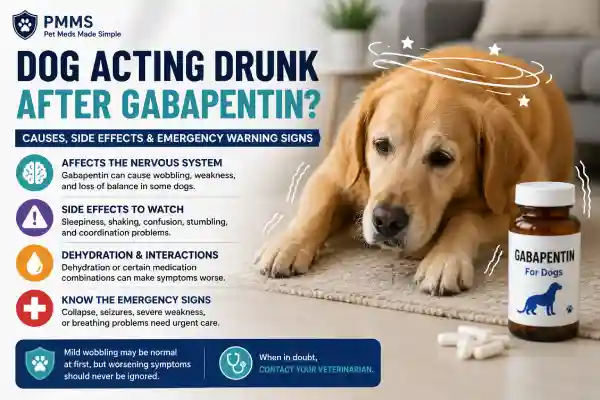
Pingback: Dog Acting Drunk After Gabapentin #1guidePetMedsMadeSimple
Pingback: Gabapentin Side Effects in Senior Dogs - PetMedsMadeSimple
Pingback: Gabapentin Withdrawal in Dogs #1 guide - PetMedsMadeSimple
Pingback: Can Gabapentin Cause Constipation in Dogs? #1 Guide
Pingback: Dog Pain Medications Explained #1 Guide PetMedsMadeSimple
Pingback: Gabapentin vs Tramadol for Dog #1 Guide PetMedsMadeSimple
Pingback: Buprenorphine for Dogs #1 Guide - PetMedsMadeSimple
Pingback: Carprofen for Dogs #1 Full Guide - PetMedsMadeSimple
Pingback: Natural Pain Relief for Dogs #1 Guide - PetMedsMadeSimple
Pingback: Antibiotics for Dogs #1 Full Guide - PetMedsMadeSimple
Pingback: Seizure Medications for Dogs #1 Guide - PetMedsMadeSimple
Pingback: Phenobarbital for Dogs #1 Full Guide - PetMedsMadeSimple
Pingback: Anxiety Medications for Dogs #1 Guide - PetMedsMadeSimple
Pingback: Can Gabapentin Cause Weakness in Dogs #1 Guide - PMMS
Pingback: Is Tramadol Still Recommended for Dogs #1 Guide - PMMS
Pingback: How Fast Does Gabapentin Work in Dogs #1 Full Guide - PMMS
Pingback: Can Pain Medication Cause Loss of Appetite in Dogs #1 Guide
Pingback: Can Dogs Take Antibiotics With Gabapentin #1 Guide - PMMS
Pingback: Why Is My Dog Shaking After Gabapentin? #1 Guide - PMMS
Pingback: Dog Acting Drunk After Gabapentin #1guidePetMedsMadeSimple
Pingback: Gabapentin Overdose in Dogs #1 Guide - PetMedsMadeSimple
Pingback: Can I Give My Dog Human Gabapentin? Safety, Dosage & Risk