

Quick Answer
Can dogs take antibiotics with gabapentin? In many cases, yes veterinarians often prescribe gabapentin together with antibiotics safely. However, some dogs may experience increased sleepiness, weakness, wobbling, appetite loss, or gastrointestinal side effects depending on the antibiotic used, the dog’s age, hydration status, underlying health conditions, and other medications. Senior dogs and dogs with neurological sensitivity may require closer monitoring.
Many owners become worried when their dog takes:
- gabapentin and amoxicillin together
- gabapentin with metronidazole
- gabapentin during infection treatment
- multiple medications at the same time
And honestly?
That concern is understandable.
Gabapentin itself may already cause:
- sleepiness
- wobbling
- weakness
- sedation
Some antibiotics may ALSO cause:
- lethargy
- stomach upset
- dehydration
- neurological side effects
When combined, side effects may sometimes feel stronger.
This guide explains:
- whether antibiotics and gabapentin are usually safe together
- possible side effects to monitor
- neurological concerns
- dehydration and weakness risks
- senior dog safety
- emergency warning signs owners should never ignore
What Is Gabapentin Used for in Dogs?
Gabapentin is commonly used in dogs for:
- nerve pain
- chronic pain
- arthritis support
- anxiety
- seizure management
- post-surgical discomfort
It is frequently combined with:
- pain medications
- seizure medications
- antibiotics
- anti-inflammatory medications
This naturally connects with Gabapentin for Dogs: Uses, Dosage & Side Effects, Can Gabapentin Cause Weakness in Dogs?, and Gabapentin vs Tramadol.
Can Dogs Take Antibiotics With Gabapentin?
Can Dogs Usually Take Antibiotics With Gabapentin?
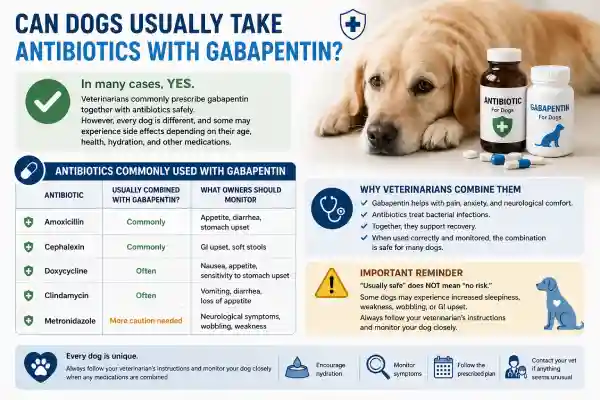
In many cases, yes.
Veterinarians commonly prescribe gabapentin together with antibiotics such as:
- amoxicillin
- cephalexin
- doxycycline
- clindamycin
- metronidazole
However, “usually safe” does NOT mean side effects cannot occur.
The dog’s:
- age
- kidney function
- hydration status
- neurological sensitivity
- appetite
- other medications
all matter.
Antibiotics Often Used With Gabapentin
| Antibiotic | Usually Combined With Gabapentin? | What Owners Should Monitor |
|---|---|---|
| Amoxicillin | Commonly | Appetite, diarrhea |
| Cephalexin | Commonly | GI upset |
| Doxycycline | Often | Nausea, appetite |
| Clindamycin | Often | Vomiting, diarrhea |
| Metronidazole | More caution needed | Neurological symptoms |
This strongly connects with Can Dogs Take Human Antibiotics Safely? and What Is the Safest Antibiotic for Senior Dogs?
Why Can Dogs Seem More Sleepy on Antibiotics and Gabapentin?
This is one of the MOST common owner concerns.
Gabapentin alone may cause:
- sedation
- sleepiness
- weakness
- slower movement
If a dog is ALSO:
- recovering from infection
- dehydrated
- not eating well
- fighting inflammation
the tiredness may feel more intense.
Certain antibiotics may also contribute to:
- lethargy
- nausea
- weakness
- neurological changes
This naturally links with:
- Why Does My Dog Sleep All Day After Antibiotics?
- Why Is My Dog Weak After Infection Treatment?
- Can Antibiotics Cause Weakness in Dogs?
Can Antibiotics and Gabapentin Cause Weakness Together?
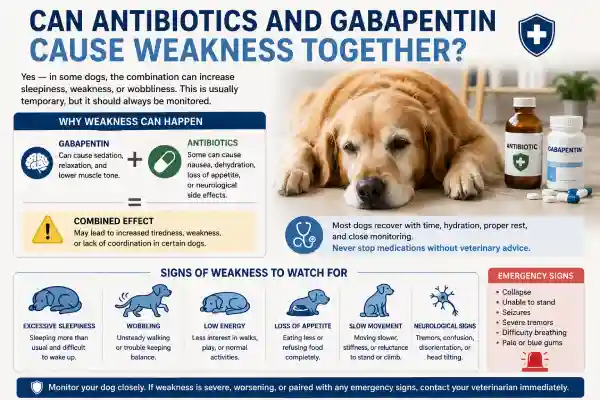
Yes — sometimes.
The combination may increase:
- wobbliness
- low energy
- slower walking
- coordination problems
- muscle weakness
This becomes MORE noticeable in:
- senior dogs
- dehydrated dogs
- dogs with neurological disease
- dogs taking multiple medications
Common Side Effects Owners May Notice
| Symptom | Possible Cause |
|---|---|
| Sleepiness | Gabapentin sedation |
| Weakness | Medication combination |
| Wobbling | Neurological effects |
| Reduced appetite | GI side effects |
| Vomiting | Antibiotic irritation |
| Confusion | Neurological sensitivity |
This connects closely with:
- Can Antibiotics Cause Neurological Problems in Dogs?
- Can Antibiotics Affect Dog Behavior?
- Can Antibiotics Cause Shaking in Dogs?
Can Metronidazole and Gabapentin Be Riskier Together?
This is VERY important.
Metronidazole already carries potential neurological side effect risks in some dogs.
Possible symptoms may include:
- wobbling
- tremors
- confusion
- disorientation
- weakness
- seizures
Gabapentin itself affects the nervous system.
This does NOT automatically mean the combination is dangerous — veterinarians use it frequently — but dogs should be monitored carefully.
This strongly relates to:
Can Senior Dogs Take Antibiotics With Gabapentin?
Yes — but senior dogs may require extra caution.
Older dogs are more sensitive to:
- dehydration
- weakness
- neurological effects
- medication buildup
- kidney stress
Senior dogs taking gabapentin and antibiotics together may become:
- extra sleepy
- unstable while walking
- weak after infection treatment
- less interested in food or water
This naturally connects with:
Can Antibiotics and Gabapentin Affect Appetite?
Absolutely.
Some dogs taking both medications may experience:
- nausea
- vomiting
- diarrhea
- reduced appetite
- low energy
Poor appetite may worsen:
- weakness
- dehydration
- medication tolerance
- recovery speed
This strongly connects with:
- Why Does My Dog Refuse Food After Antibiotics?
- Why Is My Dog Vomiting After Antibiotics?
- Can Dogs Take Probiotics With Antibiotics?
Can Dehydration Make Side Effects Worse?
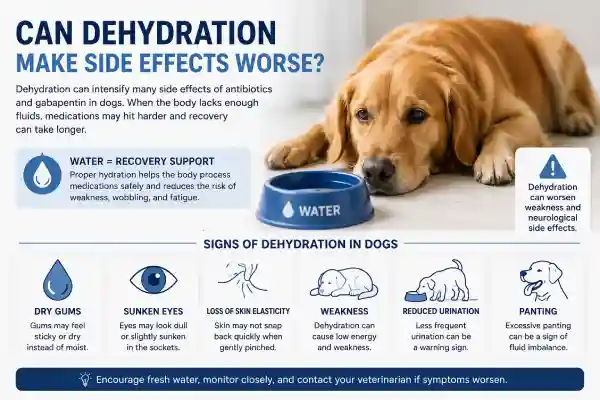
Very easily.
Dogs recovering from infection may already drink less.
If diarrhea or vomiting develops, dehydration may worsen:
- weakness
- wobbling
- sedation
- dizziness
- confusion
Signs of Possible Dehydration
| Symptom | Possible Concern |
|---|---|
| Dry gums | Dehydration |
| Weakness | Fluid loss |
| Sunken eyes | Moderate dehydration |
| Panting | Stress or imbalance |
| Reduced urination | Fluid deficiency |
What Symptoms Are Emergencies?
This section is CRITICAL.
Seek emergency veterinary care immediately if your dog develops:
- seizures
- collapse
- inability to stand
- severe tremors
- blue gums
- breathing difficulty
- repeated vomiting
- severe confusion
- extreme weakness
- unresponsiveness
Emergency Warning Signs
| Symptom | Emergency Level |
|---|---|
| Seizures | EMERGENCY |
| Collapse | EMERGENCY |
| Difficulty breathing | EMERGENCY |
| Severe tremors | EMERGENCY |
| Blue gums | EMERGENCY |
| Extreme weakness | Serious |
| Inability to stand | EMERGENCY |
| Severe confusion | EMERGENCY |
This naturally connects with:
How Veterinarians Monitor Dogs Taking Both Medications
Veterinarians may monitor:
- hydration status
- neurological signs
- walking ability
- appetite
- kidney function
- vomiting or diarrhea
- interaction risks
- infection recovery
Possible tests may include:
- bloodwork
- neurological examination
- hydration evaluation
- medication review
What Owners Should Do
Helpful Steps
| Step | Why It Helps |
|---|---|
| Monitor walking ability | Detect neurological changes |
| Encourage hydration | Prevent weakness |
| Watch appetite closely | Detect side effects early |
| Give medications exactly as prescribed | Reduce interaction risks |
| Monitor vomiting or diarrhea | Prevent dehydration |
| Report worsening symptoms quickly | Improve safety |
NEVER:
- increase doses yourself
- stop medications suddenly
- combine extra medications without guidance
- use leftover antibiotics
- ignore neurological symptoms
FAQ — Can Dogs Take Antibiotics With Gabapentin?
Can dogs take gabapentin and antibiotics together?
In many cases, yes. Veterinarians commonly prescribe them together safely.
Can antibiotics make gabapentin side effects worse?
Sometimes. Dogs may appear more sleepy, weak, or wobbly during treatment.
Is metronidazole riskier with gabapentin?
Metronidazole may occasionally contribute to neurological side effects, so monitoring is important.
Can senior dogs take both medications?
Yes, but older dogs may require closer monitoring because they are more sensitive to weakness and dehydration.
Why is my dog sleepy on gabapentin and antibiotics?
Gabapentin causes sedation, while infection recovery and antibiotics may add fatigue or weakness.
Can the combination cause wobbling?
Yes. Some dogs may experience coordination problems or weakness.
What symptoms require emergency care?
Seizures, collapse, breathing difficulty, inability to stand, or severe confusion require immediate veterinary attention.
Should I stop the medications if my dog seems weak?
Never stop prescription medications without veterinary guidance unless instructed during an emergency evaluation.
Medical Disclaimer
This article is for educational purposes only and does not replace professional veterinary advice, diagnosis, or treatment. The content is written and pharmacist-reviewed to improve medication safety awareness and help dog owners better understand gabapentin interactions, antibiotic safety, neurological side effects, dehydration risks, weakness, and recovery concerns in dogs. Always contact your veterinarian before combining medications or changing your dog’s treatment plan.Can Dogs Take Antibiotics With Gabapentin?
Sources & Scientific References
- GoodRx – Gabapentin for Dogs
- Seattle Humane – Gabapentin Veterinary Care Handout
- Merck Veterinary Manual
- American Veterinary Medical Association (AVMA)
- Plumb’s Veterinary Drug Handbook
Reviewed by
Reviewed by Dimitar Atanasov MPharm
Master Pharmacist | Medication Safety Educator





“Honestly, you put into words exactly what I’ve been thinking. Spot on”
Thank you so much for your thoughtful comment! It truly means a lot to us. We’re so glad the article reflected exactly what you’ve been thinking that’s exactly why we create these guides. Thanks for reading and for taking the time to share your feedback! Wishing you and your furry friend all the best. 🐾💙