
Quick Answer
What is the safest antibiotic for senior dogs? Antibiotics like amoxicillin, cephalexin, doxycycline, and clindamycin are often considered safer options for many senior dogs when properly prescribed by a veterinarian. However, the safest antibiotic depends on kidney function, liver health, neurological sensitivity, hydration status, medication interactions, and the specific infection being treated. Senior dogs are more vulnerable to dehydration, side effects, weakness, and organ stress, which makes veterinary monitoring especially important.
As dogs age, their bodies process medications differently.
This means antibiotics that are usually well tolerated in younger dogs may become riskier in senior pets.
Many owners notice their older dog:
- becomes weak after antibiotics
- sleeps more during treatment
- loses appetite
- develops vomiting or diarrhea
- seems confused or restless
- struggles to recover from infections
- reacts more strongly to medications
And honestly?
Senior dogs are MUCH more sensitive to medication-related complications than younger dogs.
This guide explains:
- which antibiotics are often safer for senior dogs
- which antibiotics may require extra caution
- how age affects antibiotic safety
- kidney and liver risks
- neurological side effects
- dehydration concerns
- emergency warning signs owners should never ignore
Why Senior Dogs Are More Sensitive to Antibiotics
Older dogs process medications more slowly.
As dogs age, changes may occur in:
- kidney function
- liver metabolism
- hydration balance
- digestion
- nervous system sensitivity
- immune system strength
This means senior dogs may be more vulnerable to:
- dehydration
- weakness
- neurological reactions
- appetite loss
- medication buildup
- drug interactions
Many senior dogs also take multiple medications at once, which increases interaction risks.
This naturally connects with Can Antibiotics Cause Neurological Problems in Dogs?, Why Is My Dog Weak After Infection Treatment?, and Can Antibiotics Cause Weakness in Dogs?
What Is the Safest Antibiotic for Senior Dogs?
What Antibiotics Are Often Considered Safer for Senior Dogs?
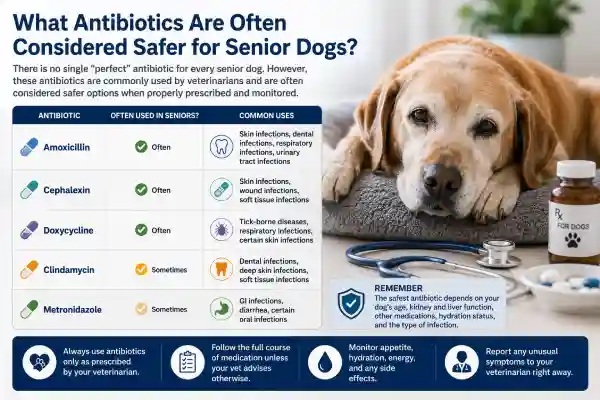
There is NO single “perfect” antibiotic for every senior dog.
However, some antibiotics are commonly considered safer when carefully prescribed and monitored.
Commonly Used Antibiotics in Senior Dogs
| Antibiotic | Often Used in Seniors? | Common Uses |
|---|---|---|
| Amoxicillin | Often | Skin, dental, respiratory infections |
| Cephalexin | Often | Skin and wound infections |
| Doxycycline | Often | Tick-borne diseases, respiratory infections |
| Clindamycin | Sometimes | Dental and soft tissue infections |
| Metronidazole | Sometimes | GI infections, diarrhea |
| Enrofloxacin | More caution needed | Resistant infections |
But “safe” NEVER means risk-free.
Senior dogs still require:
- proper dosing
- hydration monitoring
- appetite monitoring
- organ evaluation
- side effect observation
Which Antibiotics May Need Extra Caution in Senior Dogs?
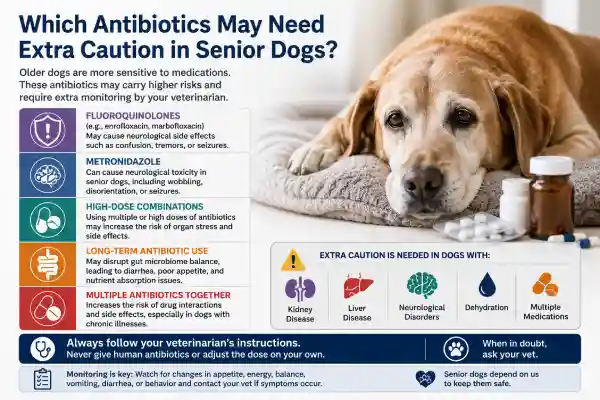
Some antibiotics may carry higher risks in older pets.
Antibiotics That May Require Extra Monitoring
| Antibiotic Type | Why Extra Caution May Be Needed |
|---|---|
| Fluoroquinolones | Neurological side effects |
| Metronidazole | Neurological toxicity risk |
| High-dose combinations | Increased organ stress |
| Long-term antibiotic use | Gut bacteria disruption |
| Multiple antibiotics together | Interaction risks |
This becomes EVEN more important in dogs with:
- kidney disease
- liver disease
- seizure disorders
- chronic dehydration
- heart disease
This naturally connects with Why Does My Dog Shake After Metronidazole?, and What Happens If Dogs Take Too Much Antibiotic?
Why Kidney Function Matters in Senior Dogs
Kidneys help clear many medications from the body.
Older dogs commonly develop:
- reduced kidney efficiency
- chronic kidney disease
- dehydration sensitivity
If medications accumulate in the body, side effects may worsen dramatically.
Possible Signs of Antibiotic Stress in Senior Dogs
| Symptom | Possible Concern |
|---|---|
| Weakness | Medication buildup |
| Excessive sleeping | Organ stress |
| Vomiting | Toxicity or GI irritation |
| Reduced appetite | Medication intolerance |
| Increased thirst | Kidney stress |
| Confusion | Neurological involvement |
This strongly relates to Why Is My Dog Drinking More Water After Antibiotics?, Can Dehydration Cause Weakness After Infection?, and Why Does My Dog Sleep All Day After Antibiotics?
Can Antibiotics Cause Neurological Problems in Senior Dogs?
Yes — and senior dogs may be MORE vulnerable.
Older dogs often have increased nervous system sensitivity.
Possible neurological symptoms include:
- wobbling
- tremors
- confusion
- weakness
- pacing
- anxiety
- seizures
- disorientation
Metronidazole and fluoroquinolones are especially important to monitor carefully in seniors.
This naturally links with:
- Can Antibiotics Cause Neurological Problems in Dogs?
- Can Antibiotics Affect Dog Behavior?
- Can Antibiotics Cause Anxiety in Dogs?
- Why Is My Dog Acting Strange After Antibiotics?
Can Antibiotics Cause Appetite Loss in Senior Dogs?
Absolutely.
Senior dogs often have more fragile digestive systems.
Possible side effects include:
- nausea
- vomiting
- diarrhea
- reduced appetite
- gut microbiome disruption
When older dogs stop eating, weakness can develop quickly.
This becomes especially dangerous because senior dogs:
- dehydrate faster
- lose muscle mass more easily
- recover more slowly
This strongly connects with:
- Why Does My Dog Refuse Food After Antibiotics?
- Why Is My Dog Vomiting After Antibiotics?
- Can Dogs Take Probiotics With Antibiotics?
Can Senior Dogs Become Dehydrated More Easily?
Yes — MUCH more easily.
Older dogs are extremely vulnerable to dehydration during illness or antibiotic treatment.
Common contributing factors include:
- vomiting
- diarrhea
- poor appetite
- kidney disease
- reduced thirst drive
- fever
- weakness
Even mild dehydration may worsen:
- lethargy
- confusion
- weakness
- dizziness
- recovery speed
This naturally connects with Why Is My Dog Weak After Infection Treatment?
Are Human Antibiotics Safe for Senior Dogs?
Owners should NEVER assume human antibiotics are automatically safe.
Some human antibiotics may:
- contain unsafe additives
- use inappropriate concentrations
- interact with senior medications
- worsen kidney or liver problems
This is especially dangerous in older dogs already taking:
- heart medications
- seizure medications
- pain medications
- anxiety medications
This strongly connects with Can Dogs Take Human Antibiotics Safely?
What Symptoms Are Emergencies in Senior Dogs?
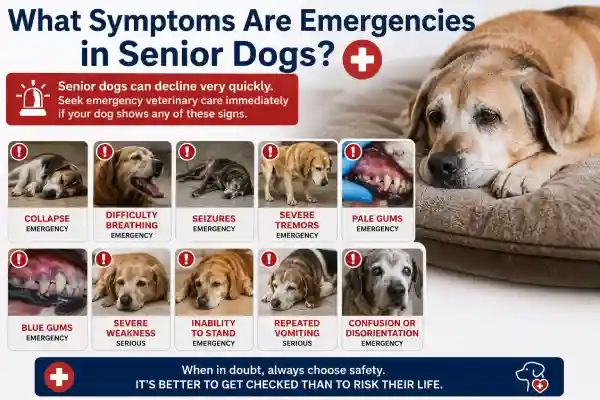
This section is CRITICAL. – What Is the Safest Antibiotic for Senior Dogs?
Senior dogs can decline very quickly.
Seek emergency veterinary care immediately if your dog develops:
- collapse
- inability to stand
- breathing difficulty
- seizures
- severe tremors
- pale gums
- blue gums
- repeated vomiting
- severe weakness
- confusion or disorientation
Emergency Warning Signs
| Symptom | Emergency Level |
|---|---|
| Collapse | EMERGENCY |
| Difficulty breathing | EMERGENCY |
| Seizures | EMERGENCY |
| Severe tremors | EMERGENCY |
| Blue gums | EMERGENCY |
| Severe weakness | Serious |
| Inability to stand | EMERGENCY |
| Repeated vomiting | Serious |
This connects naturally with:
- Can Dogs Have Allergic Reactions to Antibiotics?
- What Does Antibiotic Toxicity Look Like in Dogs?
- Why Is My Dog Breathing Fast After Antibiotics?
How Veterinarians Choose Antibiotics for Senior Dogs
Veterinarians carefully evaluate:
- infection type
- kidney function
- liver health
- hydration status
- neurological risks
- existing medications
- appetite and body weight
- chronic illnesses
Possible testing may include:
- bloodwork
- urinalysis
- imaging
- neurological examination
- hydration assessment
This is why owners should NEVER choose antibiotics based only on internet advice.What Is the Safest Antibiotic for Senior Dogs?
What Owners Can Do to Help Senior Dogs Recover Safely
Helpful Steps
| Step | Why It Matters |
|---|---|
| Encourage hydration | Prevent weakness |
| Monitor appetite | Detect side effects early |
| Watch walking ability | Detect neurological issues |
| Give medications exactly as prescribed | Reduce toxicity risk |
| Monitor vomiting or diarrhea | Prevent dehydration |
| Report worsening symptoms quickly | Protect senior dogs |
NEVER:
- use leftover antibiotics
- guess medication doses
- combine medications randomly
- stop antibiotics suddenly
- ignore worsening weakness
FAQ — What Is the Safest Antibiotic for Senior Dogs?
What antibiotic is safest for older dogs?
Amoxicillin, cephalexin, doxycycline, and clindamycin are commonly used safely in many senior dogs when prescribed and monitored by a veterinarian.
Are senior dogs more sensitive to antibiotics?
Yes. Older dogs may process medications more slowly and are more vulnerable to dehydration, weakness, neurological reactions, and organ stress.
Can antibiotics make senior dogs weak?
Absolutely. Some antibiotics may contribute to weakness, lethargy, appetite loss, or neurological side effects.
Can senior dogs have neurological reactions to antibiotics?
Yes. Tremors, wobbling, confusion, seizures, and strange behavior may occasionally occur.
Why do senior dogs dehydrate faster during antibiotics?
Older dogs often have reduced kidney efficiency, lower appetite, and weaker physiological reserves.
Can probiotics help senior dogs during antibiotics?
Some veterinarians recommend probiotics to help support digestion and gut microbiome balance.
Are human antibiotics safe for senior dogs?
Never assume human antibiotics are safe without veterinary guidance.
What symptoms require emergency care?
Collapse, seizures, breathing difficulty, severe tremors, pale gums, or inability to stand require immediate veterinary attention.
Medical Disclaimer
This article is for educational purposes only and does not replace professional veterinary advice, diagnosis, or treatment. The content is written and pharmacist-reviewed to improve medication safety awareness and help dog owners better understand antibiotic safety, dehydration risks, neurological side effects, medication interactions, organ stress, and recovery concerns in senior dogs. Always contact your veterinarian before giving antibiotics to an older dog.What Is the Safest Antibiotic for Senior Dogs?
Sources & Scientific References
- WebMD – What to Know About Antibiotics for Dogs
- PetMD – Clindamycin for Dogs and Cats
- Merck Veterinary Manual
- American Veterinary Medical Association (AVMA)
- Plumb’s Veterinary Drug Handbook
Image created with AI – What Is the Safest Antibiotic for Senior Dogs?