Quick Answer
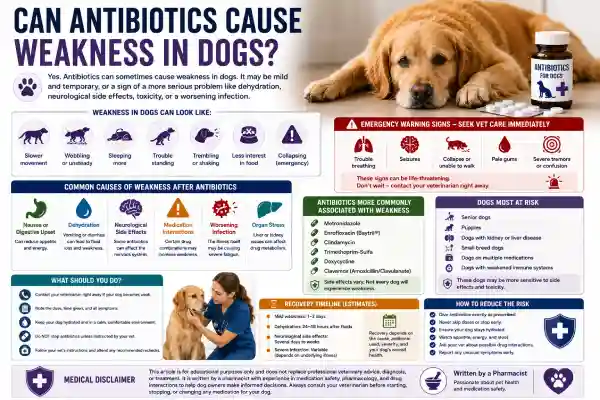
Can Antibiotics Cause Weakness in Dogs? Yes, antibiotics can sometimes cause weakness in dogs. Mild weakness may happen due to nausea, fatigue, digestive upset, or the infection itself, while severe weakness can signal dehydration, allergic reactions, neurological side effects, toxicity, or dangerous medication interactions. Certain antibiotics like metronidazole, enrofloxacin, clindamycin, and trimethoprim-sulfa are more commonly associated with weakness-related side effects in sensitive dogs.
Few things worry dog owners more than seeing their dog suddenly become:
- Weak
- Wobbly
- Unsteady
- Tired
- Shaky
- Unable to jump normally
- Less active than usual
And when this starts shortly after antibiotics, many owners immediately wonder:
“Is the medication hurting my dog?”
Sometimes weakness is temporary and mild.
Other times, it may indicate:
- Antibiotic toxicity
- Severe dehydration
- Neurological complications
- Drug interactions
- A worsening infection
- Organ stress
- Serious side effects
The important part is recognizing when weakness is expected… and when it becomes dangerous.
This guide explains:
- Why antibiotics may cause weakness
- Which antibiotics are most commonly involved
- Neurological warning signs
- When weakness becomes an emergency
- How veterinarians diagnose the problem
- What treatment may involve
- How to reduce the risk of complications
Related articles:
- Can Antibiotics Cause Shaking in Dogs?
- What Does Antibiotic Toxicity Look Like in Dogs?
- Why Is My Dog Worse After Starting Antibiotics?
- Why Is My Dog Acting Strange After Antibiotics?
- Can Dogs Have Allergic Reactions to Antibiotics?
- Why Does My Dog Refuse Food After Antibiotics?
For broader antibiotic safety:
- Antibiotics for Dogs: Uses, Types, Dosage, Side Effects & Safety Guide
- Best Antibiotics for Dogs
- Safest Antibiotics for Dogs: Vet Comparison Guide
Can Antibiotics Cause Weakness in Dogs?
Is Weakness After Antibiotics Normal?
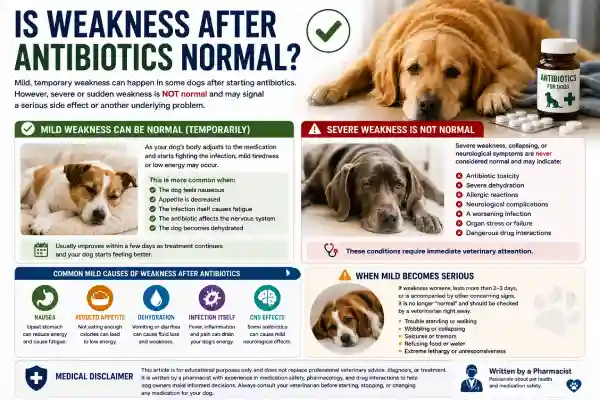
Mild temporary weakness can happen in some dogs.
This is especially common when:
- Dogs feel nauseous
- Appetite decreases
- Sleep quality worsens
- The infection itself causes fatigue
- The antibiotic affects the nervous system
- The dog becomes dehydrated
Some dogs simply become less energetic for a few days while recovering.
However, severe weakness is never considered normal.
What Does Weakness in Dogs Look Like?
Weakness can appear in many different ways.
Common Signs of Weakness
| Symptom | What Owners Notice |
|---|---|
| Slower walking | Dog moves carefully |
| Trouble standing | Difficulty rising |
| Wobbling | Unsteady movement |
| Trembling | Muscle weakness or fatigue |
| Sleeping more | Low energy |
| Refusing stairs | Reduced strength |
| Collapsing | Severe emergency sign |
| Muscle shaking | Neurological involvement |
Some owners describe their dog as:
- “acting drunk”
- “walking funny”
- “extremely tired”
- “not themselves”
Related:
- Dog Acting Drunk After Gabapentin?
- Can Antibiotics Cause Depression in Dogs?
- Why Does My Dog Hide After Taking Antibiotics?
What Causes Weakness After Antibiotics?
Several mechanisms may contribute.
Common Causes
| Cause | How It Causes Weakness |
|---|---|
| Nausea | Reduced food intake |
| Dehydration | Low blood volume |
| Diarrhea/vomiting | Electrolyte imbalance |
| Neurological toxicity | Affects coordination |
| Allergic reactions | Systemic stress |
| Drug interactions | Increased sedation |
| Infection worsening | Energy depletion |
| Organ stress | Reduced metabolism |
Which Antibiotics Most Commonly Cause Weakness?
Not all antibiotics affect dogs the same way.
Antibiotics More Commonly Associated With Weakness
| Antibiotic | Possible Weakness Cause |
|---|---|
| Metronidazole | Neurological toxicity |
| Enrofloxacin (Baytril) | Neurological effects |
| Clindamycin | GI upset and lethargy |
| Trimethoprim-sulfa | Systemic side effects |
| Doxycycline | Appetite loss and nausea |
| Clavamox | Digestive upset |
Related:
- Metronidazole Side Effects in Dogs
- Enrofloxacin Side Effects in Dogs
- Clindamycin Side Effects in Dogs
- Doxycycline Side Effects in Dogs
- Clavamox Side Effects in Dogs
Can Antibiotics Cause Neurological Weakness?
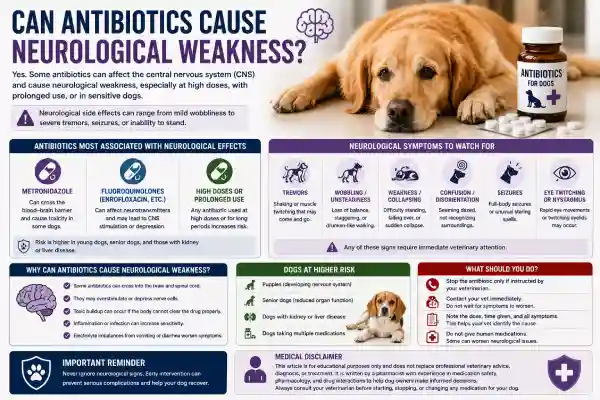
Yes.
Some antibiotics can affect:
- Brain function
- Coordination
- Muscle control
- Nerve signaling
This is especially important with:
- Metronidazole
- Fluoroquinolones like enrofloxacin
- High-dose antibiotic therapy
Neurological Symptoms to Watch For
| Symptom | Possible Concern |
|---|---|
| Tremors | Toxicity |
| Wobbling | Neurological involvement |
| Falling over | Severe weakness |
| Eye twitching | Nervous system effects |
| Confusion | Brain involvement |
| Seizures | Emergency toxicity |
Related:
- Can Metronidazole Cause Neurological Symptoms in Dogs?
- Can Antibiotics Cause Shaking in Dogs?
- Dog Seizure Symptoms: Signs, Causes & When to Act
Can Weakness Be Caused by the Infection Instead?
Absolutely.
Many infections themselves cause:
- Fatigue
- Fever
- Pain
- Muscle weakness
- Reduced appetite
- Low energy
Sometimes owners blame the antibiotic when the infection is actually worsening.
Signs the Infection May Be the Main Problem
| Sign | Possible Meaning |
|---|---|
| Fever | Infection uncontrolled |
| Swelling worsening | Antibiotic failure |
| Pus/discharge | Active infection |
| Pain worsening | Disease progression |
| Rapid breathing | Systemic illness |
| Severe lethargy | Serious infection |
Related:
- When Does a Dog Need Antibiotics?
- How Long Should Dogs Stay on Antibiotics?
- Why Is My Dog Worse After Starting Antibiotics?
Can Weakness Happen From Dehydration?
Very commonly.
Vomiting and diarrhea may quickly dehydrate dogs.
Even mild dehydration can cause:
- Fatigue
- Muscle weakness
- Panting
- Dry gums
- Low energy
- Wobbling
This is especially dangerous in:
- Puppies
- Senior dogs
- Small breeds
Related:
- Why Is My Dog Vomiting After Antibiotics?
- Antibiotic Diarrhea in Dogs
- Can Clindamycin Cause Diarrhea in Dogs?
Can Antibiotics Interact With Other Medications?
Yes — and this is often overlooked.
Certain combinations may increase:
- Sedation
- Weakness
- Tremors
- Neurological effects
Higher-Risk Medication Combinations
| Combination | Potential Risk |
|---|---|
| Antibiotics + anxiety meds | Sedation |
| Antibiotics + seizure meds | Neurological effects |
| Antibiotics + pain medications | Weakness |
| Multiple sedatives | Severe lethargy |
Related:
Which Dogs Are Most at Risk?
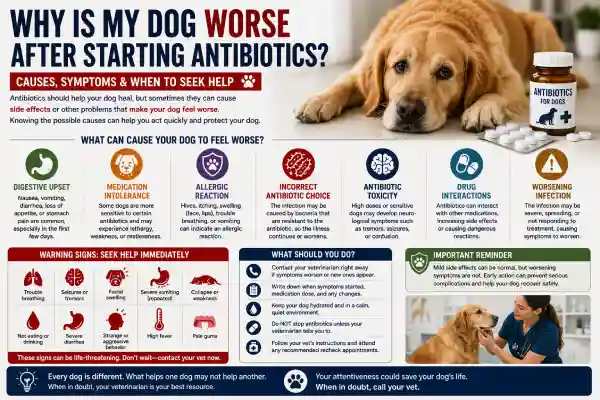
Some dogs are more vulnerable to weakness-related side effects.
Higher-Risk Dogs
| Risk Group | Why Risk Increases |
|---|---|
| Senior dogs | Reduced metabolism |
| Puppies | Sensitive nervous system |
| Dogs with kidney disease | Poor drug clearance |
| Dogs with liver disease | Drug buildup |
| Small dogs | Easier overdosing |
| Dogs on multiple meds | Drug interactions |
Related:
- Gabapentin and Kidney Disease in Dogs: Is It Safe?
- Is Enrofloxacin Safe for Puppies?
- Is Cephalexin Safe for Puppies?
When Is Weakness an Emergency?
Some symptoms require immediate veterinary attention.
Emergency Warning Signs
| Emergency Sign | Why It Matters |
|---|---|
| Collapse | Severe weakness |
| Seizures | Neurological emergency |
| Trouble breathing | Allergic reaction |
| Pale gums | Circulation problem |
| Severe tremors | Toxicity |
| Unable to walk | Serious neurological issue |
| Extreme lethargy | Systemic illness |
Seek emergency veterinary care immediately if these occur.
How Veterinarians Diagnose Antibiotic-Related Weakness
Veterinarians may evaluate:
- Medication history
- Dose accuracy
- Neurological status
- Hydration
- Organ function
- Infection severity
- Drug interactions
Testing may include:
- Bloodwork
- Neurological exam
- Imaging
- Toxicity evaluation
How Is Weakness Treated?
Treatment depends on the underlying cause.
Possible Treatments
| Treatment | Purpose |
|---|---|
| Switching antibiotics | Reduce side effects |
| IV fluids | Correct dehydration |
| Anti-nausea medications | Improve appetite |
| Probiotics | Gut support |
| Hospitalization | Severe cases |
| Toxicity management | Emergency stabilization |
Most dogs improve once the cause is identified.
How to Reduce the Risk of Weakness After Antibiotics
Prevention Tips
| Tip | Why It Helps |
|---|---|
| Give medications exactly as prescribed | Avoid overdose |
| Monitor appetite closely | Detect problems early |
| Encourage hydration | Prevent weakness |
| Ask about drug interactions | Reduce complications |
| Report neurological symptoms early | Prevent emergencies |
| Use follow-up visits | Monitor recovery |
Recovery Timeline
Recovery depends on:
- The antibiotic involved
- Severity of side effects
- Infection severity
- Overall health status
Typical Recovery Estimates
| Situation | Recovery Time |
|---|---|
| Mild weakness | 1–3 days |
| Dehydration | 24–48 hours after fluids |
| Neurological toxicity | Several days to weeks |
| Severe infection | Variable |
FAQ – Can Antibiotics Cause Weakness in Dogs?
Can antibiotics make dogs weak?
Yes. Some antibiotics may cause weakness through digestive upset, dehydration, neurological effects, or medication interactions.
Which antibiotics are most likely to cause weakness?
Metronidazole, enrofloxacin, clindamycin, doxycycline, and trimethoprim-sulfa are commonly associated with weakness-related side effects.
Should I stop antibiotics if my dog becomes weak?
Never stop antibiotics suddenly without veterinary guidance unless instructed by your veterinarian.
Can weakness be caused by dehydration?
Absolutely. Vomiting and diarrhea commonly lead to dehydration-related weakness.
When should I call the vet?
Call your veterinarian immediately if weakness becomes severe, your dog collapses, cannot walk normally, develops tremors, or shows neurological symptoms.
Medical Disclaimer
This article is for educational purposes only and does not replace professional veterinary advice, diagnosis, or treatment. The content is written with pharmacist-reviewed medication safety research to help dog owners better understand veterinary medications, side effects, toxicity risks, and drug interactions. Always consult your veterinarian before starting, stopping, or changing any medication for your dog.
Sources
- Merck Veterinary Manual
- VIN Veterinary Partner
- American Veterinary Medical Association (AVMA)
- FDA Center for Veterinary Medicine
- Plumb’s Veterinary Drug Handbook