

Quick Answer
Can Antibiotics Cause Shaking in Dogs? Yes — some antibiotics can cause shaking, tremors, muscle twitching, weakness, or even seizures in dogs. Mild trembling may happen because of nausea, stress, fever, or digestive discomfort, while more serious shaking can be linked to neurological side effects, toxicity, allergic reactions, or dangerous drug interactions. Certain antibiotics, especially metronidazole and fluoroquinolones like enrofloxacin (Baytril), are more commonly associated with neurological symptoms in dogs.
Dogs shaking after starting antibiotics can be frightening for pet owners. In some cases, the shaking is mild and temporary. In others, it may signal a serious medical problem that requires immediate veterinary care.
The key is understanding:
- what type of shaking is occurring,
- which antibiotic your dog is taking,
- how severe the symptoms are,
- and whether additional warning signs are present.
Why Would Antibiotics Cause Shaking in Dogs?
Antibiotics can affect dogs in several ways that may lead to trembling or shaking.
Possible causes include:
- nausea
- stomach pain
- fever
- weakness
- neurological toxicity
- muscle tremors
- allergic reactions
- anxiety from discomfort
- drug interactions
- low blood sugar from poor eating
Some dogs simply shake because they feel sick. Others develop more serious nervous system effects.
Related articles:
- “Why Is My Dog Vomiting After Antibiotics?”
- “Can Antibiotics Cause Lethargy in Dogs?”
- “Signs of Medication Overdose in Dogs”
- “Can Dog Medications Cause Behavior Changes?”
- “What to Do If Dog Medication Is Not Working”
Can Antibiotics Cause Shaking in Dogs?
Which Antibiotics Most Commonly Cause Shaking?
Certain antibiotics carry a higher neurological risk.
| Antibiotic | Risk Level | Possible Neurological Effects |
|---|---|---|
| Metronidazole | High | Tremors, wobbling, seizures |
| Enrofloxacin (Baytril) | Moderate to High | Tremors, agitation, seizures |
| Trimethoprim-Sulfa | Moderate | Weakness, shaking |
| Clindamycin | Mild to Moderate | Weakness, nausea-related trembling |
| Doxycycline | Mild | Shaking from nausea or pain |
| Amoxicillin | Low | Rare neurological effects |
Related guides:
- “Can Metronidazole Cause Neurological Symptoms in Dogs?”
- “Enrofloxacin Side Effects in Dogs”
- “Can Enrofloxacin Cause Joint Problems in Dogs?”
- “Metronidazole Side Effects in Dogs”
- “Doxycycline Side Effects in Dogs”
What Does Dangerous Shaking Look Like?
Not all shaking is the same.
Mild shaking may include:
- light trembling,
- mild weakness,
- temporary shivering,
- stress-related shaking.
More dangerous neurological signs include:
- uncontrolled tremors,
- loss of balance,
- falling over,
- eye twitching,
- rigid muscles,
- confusion,
- seizures,
- inability to stand.
These symptoms require urgent veterinary attention.
Metronidazole Toxicity and Tremors
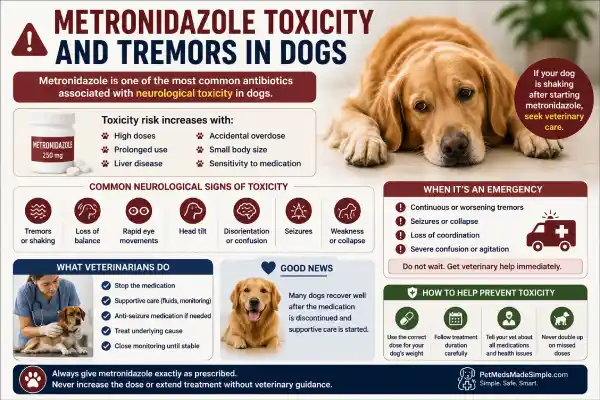
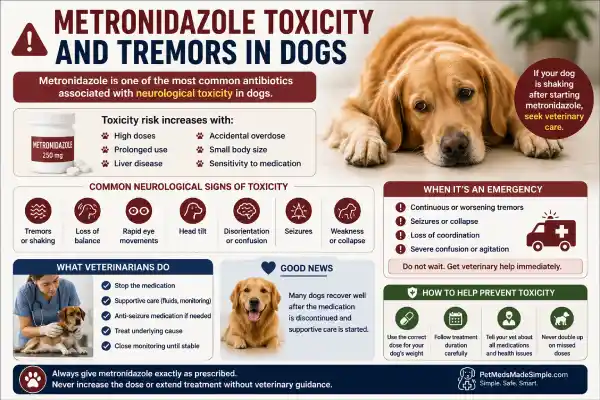
Metronidazole is one of the most important antibiotics associated with neurological toxicity in dogs.
Toxicity risk increases with:
- high doses,
- prolonged use,
- liver disease,
- accidental overdose,
- or small body size.
Common neurological signs include:
- shaking,
- head tilt,
- wobbling,
- rapid eye movements,
- weakness,
- seizures,
- severe disorientation.
Related articles:
- “Metronidazole for Dogs: Uses, Dosage, Side Effects & Safety”
- “Can Metronidazole Cause Neurological Symptoms in Dogs?”
- “Metronidazole vs Amoxicillin for Dogs”
Can Fever Cause Shaking?
Yes.
Sometimes the infection itself — not the antibiotic — causes trembling.
Dogs with fever may:
- shiver,
- pant,
- appear weak,
- hide,
- refuse food,
- or shake intermittently.
This commonly happens with:
- bacterial infections,
- pneumonia,
- severe GI infections,
- or systemic illness.
Related guide:
Can Antibiotics Cause Seizures in Dogs?
In rare cases, yes.
Certain antibiotics can lower the seizure threshold, especially in dogs with:
- epilepsy,
- neurological disease,
- previous seizures,
- or drug sensitivities.
Higher-risk antibiotics include:
- metronidazole,
- enrofloxacin,
- and some fluoroquinolones.
Dogs with seizure disorders should always be monitored closely during treatment.
Related internal links:
- “Dog Seizure Symptoms: Signs, Causes & When to Act”
- “What to Do During a Dog Seizure”
- “Best Seizure Medication for Dogs”
- “Phenobarbital for Dogs”
- “Levetiracetam (Keppra) for Dogs”
Can Antibiotics Interact With Other Medications?
Absolutely.
Some combinations increase neurological risk significantly.
Possible dangerous combinations include:
- antibiotics + seizure medications,
- antibiotics + anxiety medications,
- antibiotics + NSAIDs,
- antibiotics + multiple sedatives.
This may worsen:
- tremors,
- confusion,
- sedation,
- neurological instability.
Related articles:
- “Can Dog Medications Be Given Together?”
- “Can Gabapentin Be Given With Other Dog Medications?”
- “Trazodone vs Gabapentin for Dogs”
- “Alprazolam vs Diazepam for Dogs”
Can Low Blood Sugar Cause Shaking?
Yes.
Dogs refusing food because of nausea may develop:
- weakness,
- trembling,
- lethargy,
- low blood sugar.
Small dogs and puppies are especially vulnerable.
Related guide:
Which Dogs Are Higher Risk?
Some dogs are more likely to develop neurological side effects.
Higher-risk dogs include:
- puppies,
- senior dogs,
- dogs with liver disease,
- dogs with kidney disease,
- epileptic dogs,
- toy breeds,
- dogs on multiple medications.
Related articles:
- “Is Enrofloxacin Safe for Puppies?”
- “Is Cephalexin Safe for Puppies?”
- “Gabapentin and Kidney Disease in Dogs”
- “Is Fluoxetine Safe for Senior Dogs?”
Can Anxiety or Stress Cause Shaking?
Sometimes yes.
Dogs feeling:
- nauseous,
- painful,
- weak,
- or frightened
may tremble from stress alone.
This is especially common in:
- anxious dogs,
- dogs sensitive to medication,
- or dogs already prone to nervous behaviors.
Related guides:
- “Why Is My Dog Still Anxious After Medication?”
- “Can Dogs Take Human Anxiety Medication Safely?”
- “What Can I Give My Dog for Anxiety?”
Warning Signs You Should Never Ignore
Seek emergency veterinary care if your dog has:
| Emergency Symptom | Why It’s Serious |
|---|---|
| Seizures | Possible neurological toxicity |
| Collapse | Severe weakness or shock |
| Continuous tremors | Toxic reaction possible |
| Loss of balance | Nervous system involvement |
| Blue gums | Oxygen emergency |
| Severe lethargy | Possible systemic illness |
| Repeated vomiting | Dehydration risk |
| Confusion | Neurological emergency |
How Veterinarians Diagnose the Cause
Veterinarians may evaluate:
- medication history,
- dosing accuracy,
- neurological exam,
- bloodwork,
- liver function,
- kidney function,
- hydration,
- infection severity.
Sometimes imaging or hospitalization may be necessary.
How Is Antibiotic-Related Shaking Treated?

Treatment depends on severity.
Possible approaches include:
- stopping the antibiotic,
- changing medications,
- IV fluids,
- anti-seizure medications,
- hospitalization,
- supportive care,
- nausea treatment.
Many dogs improve quickly after the medication is discontinued safely under veterinary supervision.
Can Probiotics Help?
Probiotics do not directly treat neurological shaking, but they may help reduce:
- digestive upset,
- nausea,
- appetite loss,
- gut inflammation.
Related article:
Recovery Timeline
| Severity | Typical Recovery Time |
|---|---|
| Mild nausea-related trembling | 24–48 hours |
| Mild weakness | 1–3 days |
| Metronidazole toxicity | Several days to weeks |
| Severe neurological symptoms | Variable |
Early treatment usually improves outcomes significantly.
Frequently Asked Questions
Is shaking after antibiotics always dangerous?
No. Mild trembling can happen from nausea, fever, or stress. Severe tremors or seizures are much more concerning.
Which antibiotic causes tremors most often?
Metronidazole is one of the most commonly associated antibiotics for neurological side effects in dogs.
Should I stop antibiotics if my dog is shaking?
Do not stop prescription medication without veterinary guidance unless symptoms are severe and emergency care is needed immediately.
Can antibiotics trigger seizures in epileptic dogs?
Yes, some antibiotics may lower the seizure threshold in sensitive dogs.
Can dehydration worsen shaking?
Absolutely. Vomiting, diarrhea, and refusal to drink can worsen weakness and tremors.
Medical Disclaimer
This article is for educational purposes only and does not replace professional veterinary medical advice. Always contact a licensed veterinarian if your dog develops shaking, tremors, weakness, or neurological symptoms while taking antibiotics.