Quick Answer
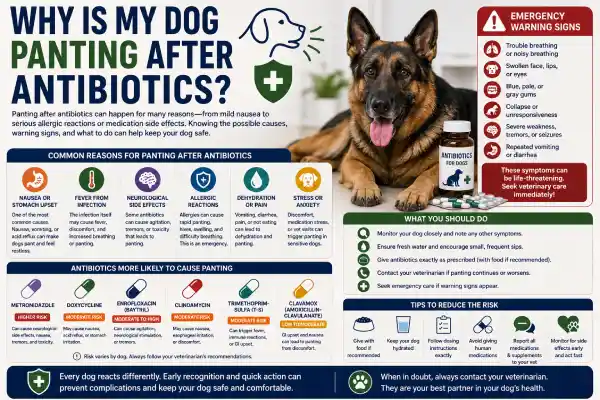
Why Is My Dog Panting After Antibiotics? – If your dog is panting after antibiotics, the cause may range from mild stress or stomach discomfort to fever, allergic reactions, pain, neurological effects, or medication interactions. Some antibiotics can indirectly trigger panting by causing nausea, anxiety, overheating, or digestive upset. Mild panting may resolve quickly, but heavy panting, weakness, collapse, pale gums, facial swelling, or breathing difficulty require immediate veterinary attention.
Panting in dogs after starting antibiotics can be alarming for pet owners. Many owners expect digestive side effects like vomiting or diarrhea, but few realize that antibiotics may also lead to unusual behaviors such as rapid breathing, restlessness, trembling, or excessive panting.
In some dogs, the panting is harmless and temporary. In others, it may signal a serious reaction requiring emergency care.
This guide explains:
- Why dogs pant after antibiotics
- Which antibiotics are more likely to trigger panting
- Dangerous warning signs
- When to call the vet
- How veterinarians diagnose and treat the problem
- What owners should NEVER do at home
If your dog is also experiencing vomiting, read our guide on Why Is My Dog Vomiting After Antibiotics? and if your dog is refusing meals, see Why Does My Dog Refuse Food After Antibiotics?
You may also want to review our pillar article:
- Antibiotics for Dogs: Uses, Types, Dosage, Side Effects & Safety Guide
- Best Antibiotics for Dogs: When to Use Each
- Safest Antibiotics for Dogs: Vet Comparison Guide
Why Is My Dog Panting After Antibiotics
Can Antibiotics Really Cause Panting in Dogs?
Yes — antibiotics can sometimes cause panting in dogs, either directly or indirectly.
Panting itself is not usually the primary side effect. Instead, antibiotics may trigger other problems that lead to panting, including:
- Nausea
- Stomach pain
- Anxiety
- Fever
- Medication interactions
- Neurological reactions
- Allergic responses
- Stress from illness
- Elevated body temperature
Dogs often pant when uncomfortable or distressed, even if the underlying issue is gastrointestinal or neurological.
Why Dogs Pant: Understanding the Mechanism
Dogs use panting to:
- Cool themselves down
- Reduce stress
- Respond to pain
- Increase oxygen exchange
- Compensate for discomfort
After antibiotics, panting may happen because the dog feels physically unwell rather than because the drug directly affects the lungs.
This is especially common when antibiotics cause:
- Vomiting
- Acid reflux
- Gut inflammation
- Tremors
- Fever
- Weakness
- Dehydration
If your dog also seems shaky, read:
Which Antibiotics Most Commonly Cause Panting?
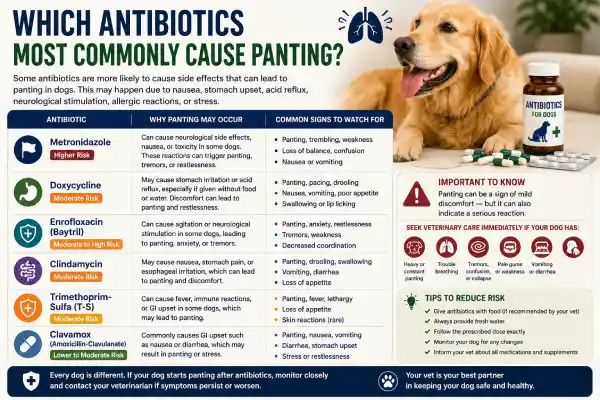
Some antibiotics are more commonly associated with side effects that may lead to panting.
Antibiotics More Commonly Linked to Panting
| Antibiotic | Why Panting May Occur |
|---|---|
| Metronidazole | Neurological side effects, nausea, tremors |
| Doxycycline | Acid reflux, stomach irritation |
| Enrofloxacin (Baytril) | Agitation, neurological stimulation |
| Clindamycin | Esophageal irritation, nausea |
| Trimethoprim-Sulfa | Fever reactions or immune responses |
| Clavamox | GI upset and discomfort |
Dogs with existing anxiety or pain conditions may pant more intensely during medication side effects.
Related guides:
- Metronidazole Side Effects in Dogs
- Doxycycline Side Effects in Dogs
- Enrofloxacin Side Effects in Dogs
- Clindamycin Side Effects in Dogs
- Clavamox Side Effects in Dogs
Can Nausea Cause Panting in Dogs?
Absolutely.
Nausea is one of the most common reasons dogs pant after taking antibiotics.
Signs of nausea include:
- Lip licking
- Drooling
- Swallowing repeatedly
- Restlessness
- Refusing food
- Eating grass
- Vomiting
- Pacing
- Panting
Dogs cannot verbally express nausea, so panting becomes one of the ways they communicate discomfort.
This is especially common with:
- Doxycycline
- Metronidazole
- Clindamycin
- Amoxicillin-clavulanate (Clavamox)
Related articles:
- Doxycycline and Vomiting in Dogs
- Can Clindamycin Cause Vomiting in Dogs?
- Antibiotic Diarrhea in Dogs
Can Antibiotics Cause Acid Reflux and Panting?
Yes.
Some antibiotics irritate the esophagus or stomach lining, leading to acid reflux and stomach burning sensations.
Dogs with reflux often:
- Pant
- Pace
- Swallow repeatedly
- Refuse lying down
- Stretch their necks
- Drool excessively
Doxycycline is particularly known for causing esophageal irritation if given without water or food.
This is why many veterinarians recommend:
- Giving medication with meals
- Following pills with water
- Avoiding dry swallowing
You may also enjoy:
Can Fever From Infection Cause Panting?
Sometimes the antibiotic is not the actual cause.
Dogs with severe infections may pant because:
- Their body temperature rises
- They are in pain
- Their oxygen demand increases
- They feel weak or stressed
Panting caused by infection is more likely if your dog:
- Was already sick before antibiotics
- Has a fever
- Seems lethargic
- Is breathing heavily even at rest
Read:
Can Allergic Reactions Cause Panting?
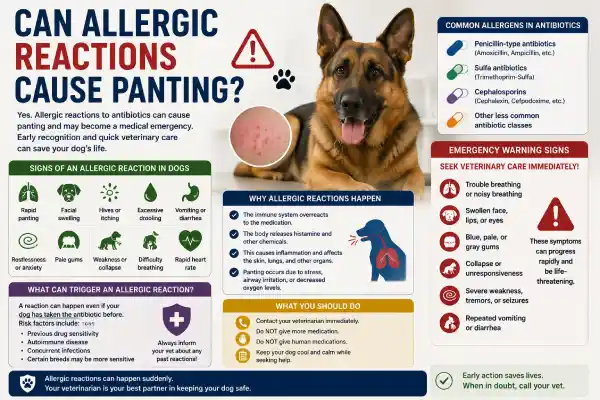
Yes — and this can become an emergency.
An allergic reaction may cause:
- Rapid panting
- Facial swelling
- Hives
- Vomiting
- Collapse
- Pale gums
- Difficulty breathing
Common triggers include:
- Penicillin-type antibiotics
- Sulfa antibiotics
- Rare drug hypersensitivity reactions
Emergency Warning Signs
Seek emergency veterinary care immediately if your dog has:
| Emergency Symptom | Why It Matters |
|---|---|
| Swollen face | Possible allergic reaction |
| Trouble breathing | Potential airway involvement |
| Blue or pale gums | Poor oxygenation |
| Collapse | Shock risk |
| Severe tremors | Possible toxicity |
| Continuous vomiting | Dehydration danger |
Can Antibiotics Interact With Other Medications?
Yes, and interactions can indirectly trigger panting.
This is especially important if your dog also takes:
- Pain medications
- Anxiety medications
- Seizure drugs
- Steroids
- NSAIDs
Interactions may increase:
- Stress
- Sedation
- Neurological symptoms
- Toxicity risks
Related internal links:
- Can Dog Medications Be Given Together?
- Signs of Medication Overdose in Dogs
- Can Dog Medications Cause Behavior Changes?
- When to Switch Dog Medication
Metronidazole Toxicity and Panting
Metronidazole deserves special attention because toxicity can become neurological.
Dogs with metronidazole toxicity may develop:
- Tremors
- Shaking
- Panting
- Eye twitching
- Loss of balance
- Confusion
- Seizures
Risk increases when:
- Dosages are too high
- Treatment lasts too long
- Dogs have liver disease
- Small dogs receive concentrated doses
This connects closely to:
What Should You Do If Your Dog Pants After Antibiotics?
Mild Panting
If your dog:
- Is still alert
- Drinks water
- Has normal gums
- Improves after rest
- Pants only briefly
You can:
- Monitor closely
- Encourage hydration
- Give medications with food (if allowed)
- Reduce stress
- Contact your vet if symptoms continue
Moderate or Severe Panting
Contact your veterinarian immediately if your dog:
- Pants continuously
- Cannot settle
- Refuses food/water
- Has tremors
- Appears weak
- Vomits repeatedly
- Has breathing difficulty
Do NOT:
- Stop antibiotics suddenly without guidance
- Give human medications
- Double doses later
- Combine medications on your own
Related guide:
How Veterinarians Diagnose Antibiotic Reactions
Veterinarians may evaluate:
- Temperature
- Hydration
- Neurological signs
- Breathing patterns
- Medication history
- Liver/kidney function
- Drug interactions
In severe cases they may perform:
- Bloodwork
- X-rays
- Neurological exams
- Oxygen monitoring
How Is Antibiotic-Related Panting Treated?
Treatment depends on the cause.
Possible Treatments
| Cause | Possible Treatment |
|---|---|
| Nausea | Anti-nausea medication |
| Acid reflux | Gastroprotectants |
| Dehydration | Fluids |
| Allergic reaction | Antihistamines/emergency care |
| Neurological toxicity | Stop/change antibiotic |
| Fever | Treat underlying infection |
| Stress/anxiety | Calm environment |
Sometimes veterinarians simply switch to a safer antibiotic option.
See:
- Safest Antibiotics for Dogs
- Best Antibiotic for Dogs with Skin Infection
- How Long Should Dogs Stay on Antibiotics?
How to Reduce the Risk of Panting After Antibiotics
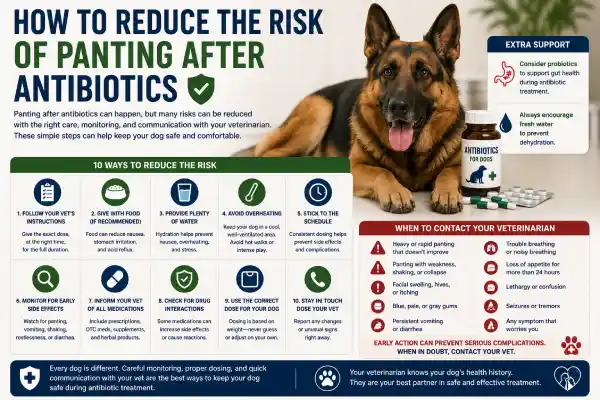
You can reduce risk by:
- Giving medications exactly as prescribed
- Using food when recommended
- Keeping your dog hydrated
- Avoiding accidental overdoses
- Monitoring side effects early
- Informing your vet about ALL medications and supplements
Probiotics may also help some dogs maintain healthier digestion during antibiotic treatment.
Related:
FAQ – Why Is My Dog Panting After Antibiotics?
Is panting after antibiotics always dangerous?
No. Mild temporary panting may occur from nausea, stress, or stomach upset. However, severe panting or breathing difficulty requires immediate veterinary attention.
Can amoxicillin cause panting in dogs?
Indirectly, yes. Amoxicillin may cause nausea, GI discomfort, or allergic reactions that lead to panting.
Why is my dog panting and shaking after antibiotics?
This may indicate pain, fever, nausea, toxicity, or neurological side effects. Metronidazole reactions are especially important to rule out.
Should I stop antibiotics if my dog is panting?
Do not stop medications without veterinary advice unless your dog is having a severe allergic reaction or emergency symptoms.
Can probiotics help reduce side effects?
Sometimes. Probiotics may help support digestion and reduce antibiotic-related GI upset in some dogs.
Medical Disclaimer
This article is for educational purposes only and does not replace professional veterinary advice, diagnosis, or treatment. Always contact your veterinarian regarding medication side effects, breathing changes, neurological symptoms, or possible allergic reactions in dogs.Why Is My Dog Panting After Antibiotics?
Sources
- American Veterinary Medical Association (AVMA)
- Merck Veterinary Manual
- VIN Veterinary Partner
- Plumb’s Veterinary Drug Handbook (referenced for general veterinary pharmacology concepts only)
- FDA Animal & Veterinary Resources
- WSAVA Global Veterinary Guidelines