

Can clindamycin cause vomiting in dogs? Yes—vomiting is one of the most common side effects of clindamycin, especially in sensitive dogs or when the medication is not given properly. In most cases it is mild and temporary, but in some situations it can signal a more serious problem that requires veterinary attention.
Quick Answer
Clindamycin can cause vomiting in dogs because it irritates the gastrointestinal tract and alters gut bacteria. Mild vomiting is common, but persistent or severe vomiting should never be ignored.
Why This Matters More Than You Think
Many dog owners assume that vomiting during antibiotic treatment is “normal” and should simply be tolerated. That assumption can be dangerous.
While mild stomach upset is expected with many antibiotics, vomiting can also be:
- a sign the medication is not tolerated
- a sign the dose is too high
- a sign of worsening illness
- a sign of dehydration risk
The key difference between safe and dangerous situations is frequency, severity, and timing.
What Is Clindamycin and Why It’s Used in Dogs
Clindamycin is a lincosamide antibiotic that is particularly effective against anaerobic bacteria and certain protozoal infections. In veterinary medicine, it is often chosen for infections that other antibiotics do not handle well.
It is commonly prescribed for:
- dental infections
- bone infections (osteomyelitis)
- deep wounds and abscesses
- soft tissue infections
Unlike broader antibiotics such as Amoxicillin, clindamycin targets specific bacteria more aggressively, which is both its strength and a potential source of side effects.
Can Clindamycin Cause Vomiting in Dogs
How Clindamycin Works in the Body
Clindamycin works by inhibiting bacterial protein synthesis, which prevents bacteria from growing and multiplying. Over time, this weakens the infection enough for the immune system to eliminate it.
However, this mechanism does not only affect harmful bacteria. It also impacts beneficial gut bacteria, which is where many of the side effects begin.
Why Clindamycin Can Cause Vomiting in Dogs

Vomiting from clindamycin usually happens due to two main mechanisms.
1. Direct Stomach Irritation
Clindamycin can irritate the stomach lining, especially when given on an empty stomach. This irritation triggers nausea and, in some cases, vomiting shortly after administration.
2. Disruption of Gut Microbiome
Antibiotics change the balance of gut bacteria. In dogs, this can lead to:
- nausea
- diarrhea
- reduced appetite
- vomiting
This is similar to what happens with other antibiotics discussed in
Antibiotic Diarrhea in Dogs: Causes, Treatment & Prevention, where gut imbalance is the central issue.
When Vomiting Is Considered “Normal”
Not all vomiting is dangerous.
Mild vomiting can occur:
- shortly after the first few doses
- when the medication is introduced
- when given without food
In these cases, the dog usually:
- remains active
- continues eating
- improves overall
👉 This type of reaction is often temporary.
When Vomiting Is NOT Normal
There are clear warning signs that indicate a problem.
Red Flags
- repeated vomiting
- inability to keep medication down
- lethargy
- dehydration
- refusal to eat
If these appear, the situation is no longer a simple side effect—it requires reassessment.
Mild vs Serious Vomiting (Important Table)
| Type of Vomiting | What It Means | Action Needed |
|---|---|---|
| Once or twice | mild irritation | monitor |
| Occasional | adjustment needed | consult vet |
| Frequent | poor tolerance | stop & call vet |
| Severe/persistent | dangerous | urgent care |
Timing Matters: When Does Vomiting Occur?
Understanding timing helps identify the cause.
Common Patterns
| Timing | Likely Cause |
|---|---|
| Immediately after dose | stomach irritation |
| 1–2 hours later | systemic reaction |
| Random during treatment | gut imbalance |
| Increasing over days | intolerance or worsening condition |
The Hidden Problem: Appetite Loss Comes First
In many cases, vomiting is not the first sign.
Dogs often show:
- reduced appetite
- hesitation to eat
- mild nausea
before vomiting begins.
👉 This is closely related to
Can Pain Medication Cause Loss of Appetite in Dogs?, where appetite loss acts as an early warning signal.
Puppies vs Adult Dogs
Puppies are more vulnerable.
Because of their:
- smaller body reserves
- higher dehydration risk
- sensitive digestive systems
even mild vomiting can escalate quickly.
👉 Similar sensitivity is explained in
Is Cephalexin Safe for Puppies?
How to Reduce the Risk of Vomiting
The good news is that many cases can be prevented.
✔ Practical Strategies
- give medication with food
- ensure proper dosing
- avoid empty stomach administration
- use probiotics when recommended
👉 Supporting gut health is key, as discussed in
Probiotics for Dogs: Do They Help with Antibiotic Side Effects?
What If Your Dog Vomits After Taking Clindamycin?
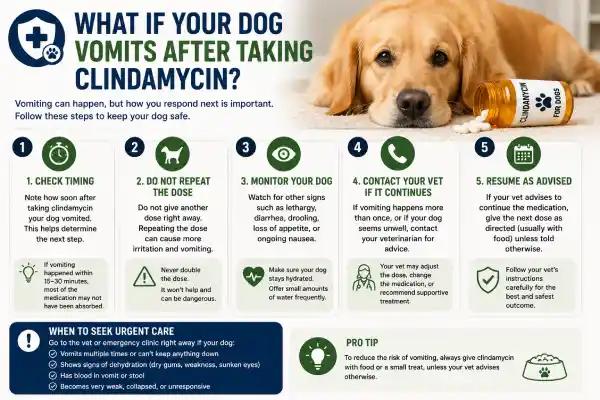
This is where correct action matters.
✔ Step-by-Step Response
- Check how soon vomiting occurred
- Do NOT immediately repeat the dose
- Monitor behavior and hydration
- Contact your vet if it continues
👉 Never assume “more medication will fix it.”
Common Owner Mistakes
1. Giving Another Dose Immediately
This increases irritation and worsens vomiting.
2. Ignoring Repeated Vomiting
Delays proper treatment and risks dehydration.
3. Stopping Antibiotics Too Early
Leads to infection returning stronger.
👉 This is explained in depth in
Miss a Dose of Antibiotics in Dogs? (Critical Vet Guide)
Can Clindamycin Be Replaced?
Yes—if vomiting is significant, veterinarians may switch antibiotics.
Alternatives depend on the infection but may include:
- Amoxicillin
- Cephalexin
- Doxycycline
👉 The choice depends on:
- infection type
- bacterial sensitivity
- dog’s tolerance
Vet Perspective: Why Clindamycin Is Still Used
Despite side effects, clindamycin remains important because:
- it targets difficult infections
- penetrates deep tissues
- works where others fail
However, veterinarians always balance:
👉 effectiveness vs tolerance
Signs the Medication Is Working (Even With Mild Side Effects)

- reduced swelling
- improved mobility
- healing wounds
- better energy
👉 Mild vomiting does not always mean failure.
Signs You Must Stop and Call Your Vet
- persistent vomiting
- blood in vomit
- refusal to eat
- worsening condition
👉 These are NOT normal side effects.
Conclusion
Clindamycin can cause vomiting in dogs, and in many cases, this is a manageable side effect rather than a serious problem. However, the key is understanding when vomiting is mild and expected versus when it signals a deeper issue.Can Clindamycin Cause Vomiting in Dogs?
Proper administration, monitoring, and early response make all the difference. With the right approach, clindamycin remains a powerful and valuable antibiotic—but only when used carefully.Can Clindamycin Cause Vomiting in Dogs?
FAQ – Can Clindamycin Cause Vomiting in Dogs?
Can clindamycin upset a dog’s stomach?
Yes, clindamycin commonly causes stomach upset, including nausea and vomiting, especially when given on an empty stomach.
Should I give clindamycin with food?
Yes, giving clindamycin with food can significantly reduce the risk of vomiting and stomach irritation.
What if my dog vomits right after taking clindamycin?
Do not repeat the dose immediately. Monitor your dog and contact your vet if vomiting continues.
Can vomiting mean the antibiotic is not working?
Not always. Mild vomiting can occur even when the medication is effective, but persistent vomiting may require a change in treatment.
Is clindamycin safe for long-term use?
It can be used long-term under veterinary supervision, but monitoring is essential due to potential side effects.
Sources & Scientific References
- Plumb’s Veterinary Drug Handbook
- Veterinary Information Network (VIN)
- VCA Animal Hospitals
- American Veterinary Medical Association (AVMA)
Images created with AI – Can Clindamycin Cause Vomiting in Dogs?