

Antibiotics for dogs are medications used to treat bacterial infections such as skin infections, ear infections, urinary tract infections, and respiratory conditions. Common antibiotics include amoxicillin, cephalexin, doxycycline, and metronidazole. They should only be used under veterinary guidance to ensure correct dosage, avoid side effects, and prevent antibiotic resistance.
What Are Antibiotics for Dogs?
Antibiotics are drugs designed to kill or stop the growth of bacteria. In veterinary medicine, they are commonly prescribed for:
- Skin infections (pyoderma)
- Ear infections (otitis)
- Urinary tract infections (UTIs)
- Dental infections
- Respiratory infections
Antibiotics for Dogs
Common Types of Antibiotics for Dogs
Different antibiotics work against different bacteria. Choosing the right one is critical.
Table 1: Common Dog Antibiotics Overview
| Antibiotic | Type | Common Uses | Notes |
|---|---|---|---|
| Amoxicillin | Penicillin | Skin, respiratory, UTIs | Widely used, generally safe |
| Cephalexin | Cephalosporin | Skin infections | Good for wounds |
| Doxycycline | Tetracycline | Tick-borne diseases | Used for Lyme disease |
| Metronidazole | Nitroimidazole | GI infections | Anti-inflammatory effect |
| Clindamycin | Lincosamide | Dental, bone infections | Strong anaerobic coverage |
Antibiotics Dosage for Dogs
Dosage depends on:
- Weight
- Infection type
- Severity
- Dog’s overall health
⚠️ Never guess dosage — incorrect use can lead to treatment failure or toxicity.
👉 For pain-related infections, see your articles on:
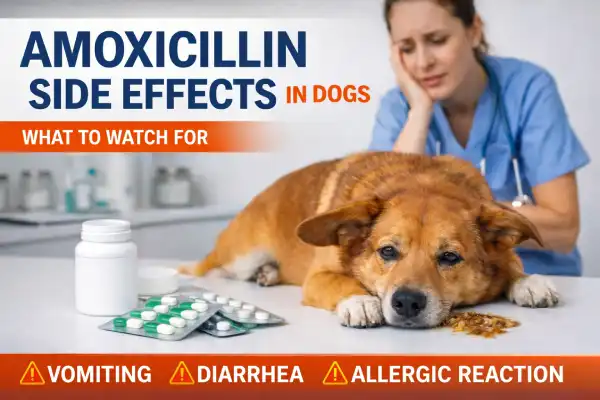
Side Effects of Antibiotics in Dogs
Most dogs tolerate antibiotics well, but side effects can occur.
Common Side Effects:
- Vomiting
- Diarrhea
- Loss of appetite
- Lethargy
Serious Side Effects:
- Allergic reactions (swelling, hives)
- Severe diarrhea (possible colitis)
- Neurological symptoms (rare)
When to Contact a Vet Immediately
Seek veterinary care if your dog has:
- Difficulty breathing
- Facial swelling
- Persistent vomiting
- Bloody diarrhea
- Sudden weakness
👉 This can indicate a serious drug reaction or overdose
What Infections Do Antibiotics Treat?

Infection → Antibiotic Examples
| Condition | Common Antibiotics |
|---|---|
| Skin infections | Cephalexin, Amoxicillin |
| Ear infections | Amoxicillin, Clindamycin |
| UTIs | Amoxicillin, Enrofloxacin |
| Dental infections | Clindamycin |
| GI infections | Metronidazole |
Can You Give Human Antibiotics to Dogs?
Short answer: Not without a vet.
Some human antibiotics are used in dogs, but:
- Doses are different
- Some drugs are toxic to pets
- Incorrect use → antibiotic resistance
Antibiotic Resistance in Dogs
Misusing antibiotics can lead to resistance, meaning:
- Future infections become harder to treat
- Stronger drugs may be required
👉 Always:
- Finish the full course
- Follow exact dosage
- Never reuse leftover meds
Are There Natural Alternatives?
Natural options may support recovery, but do NOT replace antibiotics for serious infections.
👉 See your article:
Natural Pain Relief for Dogs: What Works & What Doesn’t
FAQ – Antibiotics for Dogs
What is the safest antibiotic for dogs?
Amoxicillin and cephalexin are commonly considered safe when prescribed by a veterinarian.
How long do antibiotics take to work in dogs?
Most dogs show improvement within 24–72 hours.
Can antibiotics make dogs tired?
Yes, some dogs may experience mild lethargy.
What happens if I miss a dose?
Give it as soon as possible, but do not double dose.
Can dogs recover from infections without antibiotics?
Minor infections may resolve, but many require antibiotics to prevent complications.
Medical Disclaimer
This article is for informational purposes only and does not replace professional veterinary advice. Always consult a licensed veterinarian before giving your dog any medication, including antibiotics.
Sources & Scientific References
- American Veterinary Medical Association (AVMA)
- Merck Veterinary Manual
- FDA – Animal & Veterinary Medicine
- Plumb’s Veterinary Drug Handbook
- Journal of Veterinary Pharmacology and Therapeutics

Pingback: Amoxicillin diarrhea in dogs #1 Guide - PetMedsMadeSimple
Pingback: Antibiotic Diarrhea in Dogs #1 Guide - PetMedsMadeSimple
Pingback: Cephalexin Side Effects #1 Full Guide - PetMedsMadeSimple
Pingback: Doxycycline Side Effects #1 Full Guide - PetMedsMadeSimple
Pingback: Doxycycline and Vomiting in Dogs #1Guide PetMedsMadeSimple
Pingback: Metronidazole Side Effects in Dog #1Guide PetMedsMadeSimple
Pingback: Best Antibiotics for Dogs #1 Guide - PetMedsMadeSimple
Pingback: Metronidazole vs Amoxicillin for Dogs #1 Compare Guide PMMS
Pingback: Clindamycin vs Doxycycline for Dogs #1 Comapre Guide - PMMS
Pingback: Can Antibiotics Interact With Anxiety or Pain Medications #1
Pingback: Can Dogs Take Probiotics With Antibiotics #1 Guide - PMMS
Pingback: Can Dogs Become Resistant to Antibiotics #1 Full Guide PMMS
Pingback: Why Does My Dog Shake After Metronidazole #1 Guide - PMMS