
Clindamycin vs Doxycycline for dogs is a critical comparison because these two antibiotics treat very different types of infections, despite both being widely used in veterinary medicine.
Choosing the wrong one can:
❌ Delay healing
❌ Worsen infection
❌ Lead to antibiotic resistance
👉 These antibiotics are NOT interchangeable
Before choosing any antibiotic, understand the cause of the problem:
➡️ Why Is My Dog in Pain? Signs, Causes & When to Go to the Vet
Quick Answer
Clindamycin is best for:
✔ Dental infections
✔ Bone infections
✔ Deep wounds
✔ Skin infections (especially anaerobic bacteria)
Doxycycline is best for:
✔ Tick-borne diseases (Lyme, Ehrlichia)
✔ Respiratory infections
✔ Intracellular bacteria
👉 Clindamycin = deep tissue & dental specialist
👉 Doxycycline = systemic & tick-borne specialist
Start here:
➡️ Antibiotics for Dogs: Uses, Types, Dosage, Side Effects & Safety Guide
Clindamycin vs Doxycycline for Dogs
Clindamycin vs Doxycycline for Dogs
Quick Comparison Table
| Feature | Clindamycin | Doxycycline |
|---|---|---|
| Drug class | Lincosamide | Tetracycline |
| Best use | Dental, bone, skin infections | Tick-borne, respiratory |
| Strength | Moderate–Strong | Moderate–Strong |
| Special ability | Penetrates bone & deep tissue | Works inside cells |
| Common side effects | GI upset, diarrhea | GI upset, vomiting |
| Best role | Localized deep infections | Systemic infections |
What Is Clindamycin for Dogs?
Clindamycin for dogs is an antibiotic particularly effective against anaerobic bacteria and infections in deep tissues.
Common Uses of Clindamycin
✔ Dental infections
✔ Bone infections (osteomyelitis)
✔ Deep wounds
✔ Abscesses
✔ Skin infections
👉 It is often used when infection is:
✔ Deep
✔ Localized
✔ Hard to penetrate
➡️ Internal links:
- Clindamycin for Dogs: Uses, Dosage, Side Effects & Safety
- Clindamycin Side Effects in Dogs: What to Watch For
- Can Clindamycin Cause Diarrhea in Dogs?
- Best Antibiotics for Dogs: When to Use Each
What Is Doxycycline for Dogs?
Doxycycline for dogs is a tetracycline antibiotic that works inside bacterial cells, making it ideal for infections other antibiotics cannot reach.
Common Uses of Doxycycline
✔ Lyme disease
✔ Ehrlichiosis
✔ Anaplasmosis
✔ Respiratory infections
✔ Chronic infections
👉 It is essential for:
✔ Tick-borne diseases
✔ Intracellular bacteria
➡️ Internal links:
- Doxycycline for Dogs: Uses, Dosage, Side Effects & Safety
- Doxycycline Side Effects in Dogs: What to Watch For
- Doxycycline and Vomiting in Dogs: Causes & Treatment
- Is Enrofloxacin Safe for Puppies?
Key Differences Explained
1. Infection Type (MOST IMPORTANT)
| Infection Type | Better Option |
|---|---|
| Dental infection | Clindamycin |
| Bone infection | Clindamycin |
| Skin abscess | Clindamycin |
| Tick-borne disease | Doxycycline |
| Respiratory infection | Doxycycline |
| Chronic infection | Doxycycline |
👉 Clindamycin = deep/local infections
👉 Doxycycline = systemic infections
2. Mechanism of Action
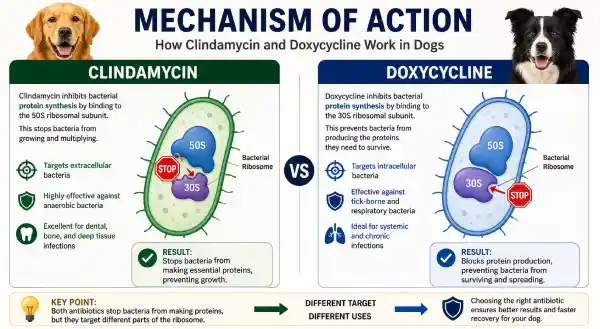
- Clindamycin → inhibits bacterial protein synthesis (extracellular focus)
- Doxycycline → inhibits protein synthesis inside cells
👉 This difference defines their use.
3. Tissue Penetration
- Clindamycin → excellent bone & tissue penetration
- Doxycycline → excellent intracellular penetration
👉 Different targets → different strengths
Safety Comparison Table
| Safety Factor | Clindamycin | Doxycycline |
|---|---|---|
| GI upset | Common | Common |
| Diarrhea | More common | Less common |
| Vomiting | Possible | More likely |
| Appetite loss | Possible | Possible |
| Esophageal irritation | Rare | Important risk |
| Long-term use | Limited | Sometimes used |
| Overall safety | High | High |
Side Effects: Clindamycin vs Doxycycline
Common Side Effects
✔ Vomiting
✔ Diarrhea
✔ Reduced appetite
✔ Lethargy
Clindamycin-Specific Risks
❌ Diarrhea (common)
❌ Antibiotic-associated colitis
➡️ Internal links:
Doxycycline-Specific Risks
❌ Esophageal irritation (IMPORTANT)
❌ Vomiting if given on empty stomach
➡️ Internal links:
How Vets Actually Choose Between These
Veterinarians base decisions on:
1. Infection location
- Mouth / bone → Clindamycin
- Blood / systemic → Doxycycline
2. Cause of infection
- Anaerobic → Clindamycin
- Tick-borne → Doxycycline
3. Severity
- Deep infection → Clindamycin
- Chronic/systemic → Doxycycline
Real Clinical Scenarios
Scenario 1: Dental abscess
👉 Clindamycin
Scenario 2: Dog bitten by tick
👉 Doxycycline
Scenario 3: Bone infection
👉 Clindamycin
Scenario 4: Chronic respiratory issue
👉 Doxycycline
When NOT to Use These Antibiotics
❌ Avoid Clindamycin when:
- Infection is systemic
- Tick-borne disease suspected
❌ Avoid Doxycycline when:
- Deep localized infection
- Dental abscess
➡️ Internal link:
When Does a Dog Need Antibiotics?
Why Antibiotics Sometimes Fail
❌ Wrong antibiotic
❌ Incorrect diagnosis
❌ Resistance
❌ Stopping early
❌ Improper dosing
👉 One of the biggest SEO + trust sections
Decision Tree
Dental / bone infection
👉 Clindamycin
Tick disease
👉 Doxycycline
Respiratory infection
👉 Doxycycline
Deep wound
👉 Clindamycin
Combination Therapy Explained

Sometimes vets combine:
✔ Clindamycin + another antibiotic
✔ Doxycycline + supportive therapy
BUT:
❌ Not common
❌ Must be vet-guided
Pro Tips for Safe Use
✔ Give doxycycline with food
✔ Always provide water after dosing
✔ Monitor stool changes
✔ Watch appetite
✔ Complete full course
Which Is Safer?
Clindamycin
✔ Safe for short-term use
✔ Effective for deep infections
✔ Higher diarrhea risk
Doxycycline
✔ Safe for long-term use
✔ Requires proper administration
✔ Slightly more sensitive
👉 Both are safe when used correctly
👉 Safety depends on correct use
FAQ
Is doxycycline stronger than clindamycin?
Not stronger — just different.
Which is better for dental infections?
Clindamycin.
Which is better for Lyme disease?
Doxycycline.
Can dogs take both?
Only under vet supervision.
Which is safer?
Both are safe when used correctly.
Conclusion
✔ Clindamycin = best for deep & dental infections
✔ Doxycycline = best for systemic & tick-borne diseases
✔ Both are powerful when used correctly
👉 The best antibiotic is the one that matches the infection.
Medical Disclaimer
This content is for informational purposes only and does not replace professional veterinary advice. Always consult your veterinarian before giving antibiotics.