Best antibiotic for dogs with skin infection is one of the most searched questions by pet owners—because skin infections are extremely common, but treatment depends on the exact cause.
👉 Using the wrong antibiotic can:
❌ Worsen infection
❌ Cause chronic skin issues
❌ Lead to antibiotic resistance
👉 There is NO single “best” antibiotic — only the right one for the infection type
Before choosing treatment, understand the cause:
➡️ Why Is My Dog in Pain? Signs, Causes & When to Go to the Vet
Quick Answer
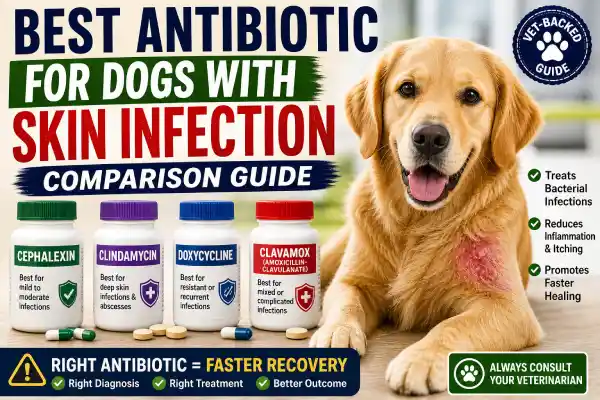
✔ Best for mild skin infections: Cephalexin
✔ Best for deep infections: Clindamycin
✔ Best for resistant infections: Doxycycline
✔ Best for mixed infections: Clavamox (amoxicillin-clavulanate)
👉 Cephalexin = first-line choice in most cases
Start here:
➡️ Antibiotics for Dogs: Uses, Types, Dosage, Side Effects & Safety Guide
What Causes Skin Infections in Dogs?
Skin infections (pyoderma) can be caused by:
✔ Bacteria (most common)
✔ Allergies
✔ Parasites (fleas, mites)
✔ Wounds or trauma
✔ Hormonal conditions
👉 Treating the infection without addressing the cause = recurrence
Best Antibiotic for Dogs with Skin Infection
Best Antibiotics for Dog Skin Infections (Compared)
Top Antibiotic Options
| Antibiotic | Best For | Strength | When to Use |
|---|---|---|---|
| Cephalexin | Mild–moderate infections | Moderate | First-line |
| Clindamycin | Deep infections | Strong | Abscesses, wounds |
| Doxycycline | Resistant infections | Moderate | Chronic/recurrent |
| Amoxicillin (Clavamox) | Mixed infections | Moderate | Broad-spectrum |
1. Cephalexin (Best First-Line Antibiotic)
Why it’s the top choice
✔ Broad-spectrum coverage
✔ Effective against common skin bacteria
✔ Well tolerated
Best for
✔ Mild skin infections
✔ Early pyoderma
✔ Superficial infections
➡️ Internal links:
- Cephalexin for Dogs: Uses, Dosage, Side Effects & Safety
- Cephalexin Side Effects in Dogs
- Cephalexin Cause Diarrhea in Dogs?
2. Clindamycin (Best for Deep Skin Infections)
Why it’s used
✔ Excellent tissue penetration
✔ Effective for abscesses
✔ Targets anaerobic bacteria
Best for
✔ Deep wounds
✔ Abscesses
✔ Bite infections
➡️ Internal links:
3. Doxycycline (Best for Resistant or Chronic Cases)
Why it’s important
✔ Works inside cells
✔ Useful for resistant infections
✔ Good for chronic skin problems
Best for
✔ Recurrent infections
✔ Resistant bacteria
✔ Tick-related skin issues
➡️ Internal links:
4. Amoxicillin-Clavulanate (Clavamox)
Why it’s useful
✔ Broad-spectrum
✔ Covers mixed infections
✔ Effective when others fail
Best for
✔ Complicated infections
✔ Mixed bacterial infections
✔ Moderate skin infections
➡️ Internal links:
Safety Comparison Table
| Antibiotic | GI Risk | Diarrhea | Long-Term Use | Safety Level |
|---|---|---|---|---|
| Cephalexin | Low | Moderate | Yes | Very High |
| Clindamycin | Moderate | High | Limited | High |
| Doxycycline | Moderate | Low | Yes | High |
| Clavamox | Moderate | Moderate | Yes | High |
Key Differences Explained
1. Depth of Infection
- Surface → Cephalexin
- Deep → Clindamycin
2. Resistance Risk
- First-time → Cephalexin
- Recurrent → Doxycycline
3. Infection Complexity
- Simple → Cephalexin
- Mixed → Clavamox
How Vets Actually Choose Antibiotics

Step 1 – Identify Infection Type
✔ Superficial
✔ Deep
✔ Chronic
Step 2 – Evaluate Severity
✔ Mild → Cephalexin
✔ Moderate → Clavamox
✔ Severe → Clindamycin
Step 3 – Consider History
✔ Previous antibiotics
✔ Recurrence
✔ Allergies
Step 4 – Culture Testing (Advanced)
👉 Used for resistant infections
Real Clinical Scenarios
Scenario 1: Mild skin infection
👉 Cephalexin
Scenario 2: Dog bite wound
👉 Clindamycin
Scenario 3: Recurring infection
👉 Doxycycline
Scenario 4: Complicated infection
👉 Clavamox
When NOT to Use Antibiotics
❌ Allergy-related skin issues
❌ Fungal infections
❌ Mild irritation
👉 Antibiotics won’t help these
➡️ Internal link:
When Does a Dog Need Antibiotics?
Why Skin Infections Keep Coming Back
❌ Underlying allergies
❌ Incomplete treatment
❌ Wrong antibiotic
❌ Poor hygiene
👉 This is one of the biggest hidden problems
Combination Therapy Explained
Sometimes vets use:
✔ Antibiotics + medicated shampoo
✔ Antibiotics + anti-inflammatory
✔ Antibiotics + probiotics
👉 This improves outcomes significantly
Pro Tips for Faster Healing

✔ Keep skin clean
✔ Use vet-approved shampoo
✔ Prevent licking
✔ Maintain hydration
✔ Complete antibiotic course
Decision Tree
Mild infection
👉 Cephalexin
Deep infection
👉 Clindamycin
Chronic infection
👉 Doxycycline
Mixed infection
👉 Clavamox
Which Is the Safest Option?
👉 Cephalexin is generally the safest first choice
✔ Well tolerated
✔ Effective
✔ Widely used
FAQ
What is the best antibiotic for dog skin infection?
Cephalexin is usually the first choice.
Can skin infections heal without antibiotics?
Sometimes, if mild and non-bacterial.
How long do antibiotics take to work?
2–3 days for improvement.
Can infections come back?
Yes, if the root cause isn’t treated.
Conclusion
✔ Cephalexin = best first-line
✔ Clindamycin = best for deep infections
✔ Doxycycline = best for resistant cases
✔ Clavamox = best for mixed infections
👉 The best antibiotic depends on the infection type.
Medical Disclaimer
This content is for informational purposes only and does not replace professional veterinary advice. Always consult your veterinarian before treatment.
Sources
American Veterinary Medical Association
Merck Veterinary Manual
VCA Animal Hospitals
Veterinary Partner (VIN)