Safest antibiotics for dogs is one of the most important questions pet owners ask—because antibiotics can heal infections, but they can also cause side effects, resistance, and long-term health issues if used incorrectly.
👉 The truth is:
❌ There is NO single “safest antibiotic”
✔ Safety depends on the dog, the infection, and how the medication is used
👉 The safest antibiotic is:
✔ Effective for the infection
✔ Well tolerated
✔ Used correctly
Before choosing any antibiotic:
➡️ When Does a Dog Need Antibiotics? (Signs, Conditions & Vet Guide)
Safest Antibiotics for Dogs
Quick Answer
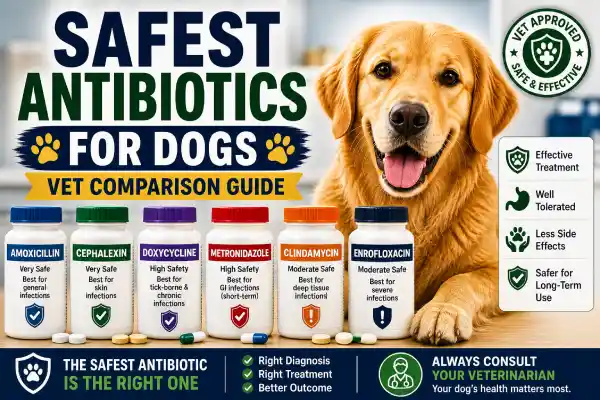
✔ Safest overall (first-line): Amoxicillin
✔ Safest for long-term use: Doxycycline
✔ Safest for mild infections: Cephalexin
✔ Safest for GI infections: Metronidazole (short-term)
✔ Higher risk antibiotics: Clindamycin (GI risk), Enrofloxacin (joint risk)
👉 Best safety = correct antibiotic + correct use
Start here:
➡️ Antibiotics for Dogs: Uses, Types, Dosage, Side Effects & Safety Guide
What Makes an Antibiotic “Safe” for Dogs?
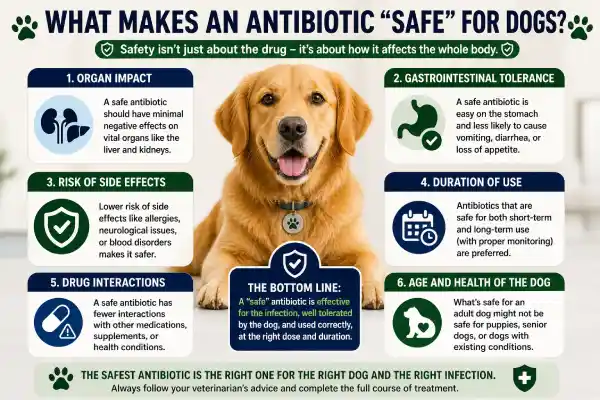
Safety is NOT just about the drug—it’s about how it affects the whole body.
Key Safety Factors
✔ Organ impact (liver, kidneys)
✔ Gastrointestinal tolerance
✔ Risk of side effects
✔ Duration of use
✔ Drug interactions
✔ Age and health of the dog
👉 A “safe” antibiotic for one dog can be risky for another.
Safest Antibiotics for Dogs (Compared)
Main Safety Comparison Table
| Antibiotic | Safety Level | Best Use | Major Risk |
|---|---|---|---|
| Amoxicillin | Very High | General infections | Mild GI upset |
| Cephalexin | Very High | Skin infections | Diarrhea |
| Doxycycline | High | Tick-borne/chronic | GI irritation |
| Metronidazole | High (short-term) | GI infections | Neurological (rare) |
| Clindamycin | Moderate | Deep infections | GI upset |
| Enrofloxacin | Moderate | Severe infections | Joint damage (young dogs) |
1. Amoxicillin (Safest First-Line Antibiotic)
Why it’s considered safest
✔ Widely studied
✔ Mild side effect profile
✔ Well tolerated
Best for
✔ UTIs
✔ Respiratory infections
✔ Mild infections
➡️ Internal links:
- Amoxicillin for Dogs: Uses, Dosage & Side Effects
- Amoxicillin Side Effects in Dogs
- Amoxicillin Diarrhea in Dogs?
2. Cephalexin (Safest for Skin Infections)
Why it’s safe
✔ Reliable
✔ Effective
✔ Commonly used
Best for
✔ Skin infections
✔ Wounds
✔ Pyoderma
➡️ Internal links:
3. Doxycycline (Safest for Long-Term Use)
Why it’s important
✔ Low resistance risk
✔ Safe for extended use
✔ Effective against intracellular bacteria
Best for
✔ Lyme disease
✔ Chronic infections
✔ Respiratory conditions
➡️ Internal links:
4. Metronidazole (Safe for GI – With Caution)
Why it’s useful
✔ Targets GI infections
✔ Treats diarrhea
Risk
❌ Neurological effects if overused
➡️ Internal links:
- Metronidazole for Dogs
- Metronidazole Side Effects in Dogs
- Can Metronidazole Cause Neurological Symptoms in Dogs?
5. Clindamycin (Effective but Higher GI Risk)
Best for
✔ Dental infections
✔ Bone infections
✔ Deep tissue infections
Risk
❌ Higher chance of diarrhea
➡️ Internal links:
6. Enrofloxacin (Strong but Higher Risk)
Best for
✔ Severe infections
✔ Resistant bacteria
Risk
❌ Joint damage in puppies
➡️ Internal links:
Key Differences Explained
Organ Impact
- Amoxicillin → minimal
- Cephalexin → low
- Doxycycline → moderate GI
- Metronidazole → CNS risk (rare)
- Enrofloxacin → joint/cartilage
Long-Term Safety
✔ Best → Doxycycline
✔ Good → Amoxicillin, Cephalexin
❌ Limited → Metronidazole
Risk vs Benefit
👉 Safest drug = the one that:
✔ Works effectively
✔ Has manageable side effects
✔ Matches infection
How Vets Actually Choose the Safest Antibiotic
Step 1 – Confirm Bacterial Infection
Not all infections need antibiotics.
Step 2 – Match to Infection Type
- GI → Metronidazole
- Skin → Cephalexin
- General → Amoxicillin
Step 3 – Consider Dog Factors
✔ Age
✔ Weight
✔ Health status
✔ History
Step 4 – Start Low Risk
👉 Vets start with safest effective option
Step 5 – Monitor Closely
✔ Appetite
✔ Stool
✔ Behavior
Real Clinical Scenarios
Mild infection
👉 Amoxicillin
Skin infection
👉 Cephalexin
Chronic infection
👉 Doxycycline
GI infection
👉 Metronidazole
When Antibiotics Are NOT Safe
❌ Viral infections
❌ Allergies
❌ Fungal infections
👉 Antibiotics won’t help and may cause harm
Why Antibiotics Cause Problems
❌ Wrong drug
❌ Overuse
❌ Incorrect dose
❌ No monitoring
👉 Safety depends on usage
Advanced Safety Strategy (VERY IMPORTANT)
Step 1 – Start with Lowest Risk Option
Use mild antibiotic first
Step 2 – Avoid Overuse
Don’t use antibiotics unnecessarily
Step 3 – Use Probiotics
➡️ Probiotics for Dogs: Do They Help with Antibiotic Side Effects?
Step 4 – Monitor Side Effects
✔ Diarrhea
✔ Vomiting
✔ Lethargy
Step 5 – Adjust Treatment
Switch if needed
Decision Tree
Mild infection
👉 Amoxicillin
Skin infection
👉 Cephalexin
Chronic infection
👉 Doxycycline
GI infection
👉 Metronidazole
Severe infection
👉 Enrofloxacin (last resort)
Common Safety Mistakes
❌ Using human antibiotics
❌ Stopping early
❌ Ignoring side effects
❌ Combining drugs incorrectly
Pro Tips for Safe Antibiotic Use
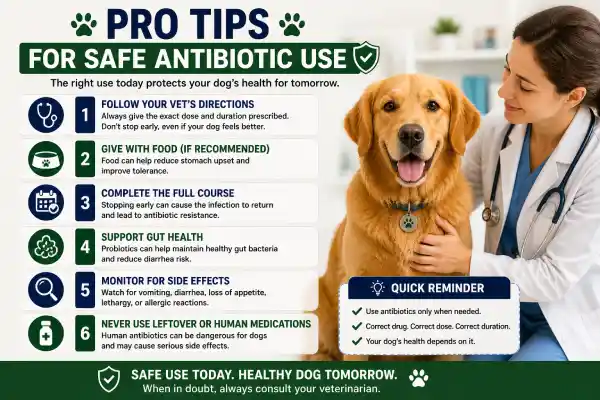
✔ Always follow vet instructions
✔ Complete full course
✔ Give with food when needed
✔ Monitor closely
✔ Avoid self-medicating
What Is the Absolute Safest Antibiotic for Dogs?
👉 There is NO universal answer.
✔ For most dogs:
👉 Amoxicillin = safest first-line
✔ For long-term:
👉 Doxycycline
👉 Safety depends on correct use
FAQ – Safest Antibiotics for Dogs
What is the safest antibiotic for dogs?
Amoxicillin is generally considered the safest.
Which antibiotic has the least side effects?
Amoxicillin and cephalexin.
Can antibiotics harm dogs?
Yes, if used incorrectly.
Are natural alternatives safer?
Sometimes, but not for bacterial infections.
Conclusion
✔ Amoxicillin = safest overall
✔ Cephalexin = safest for skin
✔ Doxycycline = safest long-term
✔ Metronidazole = safe short-term
👉 The safest antibiotic is the right one for the infection.
Medical Disclaimer
This content is for informational purposes only and does not replace professional veterinary advice. Always consult a licensed veterinarian.
Sources
American Veterinary Medical Association
Merck Veterinary Manual
VCA Animal Hospitals
Veterinary Partner (VIN)