
Quick Answer
Why does my dog shake after metronidazole? Dogs may shake after metronidazole because of nausea, weakness, discomfort, anxiety, dehydration, or neurological side effects. Mild trembling may sometimes be related to feeling sick, but shaking with loss of coordination, tremors, eye twitching, weakness, seizures, vomiting, or confusion may indicate metronidazole toxicity and requires immediate veterinary attention.
Few things scare dog owners more than suddenly seeing their dog:
- Trembling
- Shaking
- Wobbling
- Acting confused
- Walking strangely
- Looking weak after medication
And honestly?
Metronidazole is one of the antibiotics most commonly associated with neurological side effects in dogs.
Sometimes the shaking is mild and temporary.
But in other cases, it may signal:
- Neurotoxicity
- Dangerous side effects
- Overdose
- Severe illness progression
The difficult part is that owners often cannot tell:
“Is this normal nausea… or a serious neurological emergency?”
This guide explains:
- Why dogs may shake after metronidazole
- Which symptoms are considered dangerous
- What metronidazole toxicity looks like
- Which dogs are more at risk
- When owners should contact the veterinarian immediately
Related articles:
- What Does Antibiotic Toxicity Look Like in Dogs?
- Why Is My Dog Weak After Antibiotics?
- How Long Do Antibiotic Side Effects Last in Dogs?
- Why Is My Dog Breathing Fast After Antibiotics?
- Can Antibiotics Cause Hyperactivity in Dogs?
For broader guidance:
Why Does My Dog Shake After Metronidazole?
Can Metronidazole Cause Shaking in Dogs?
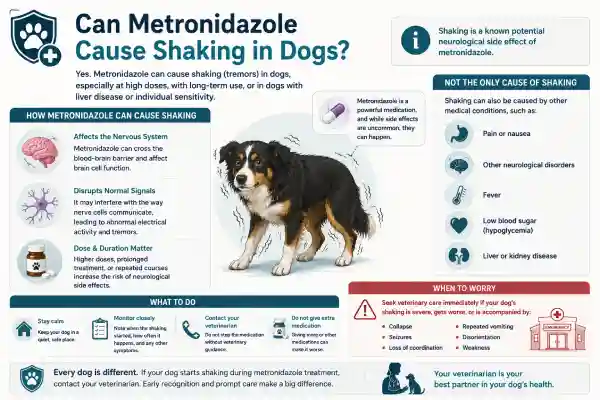
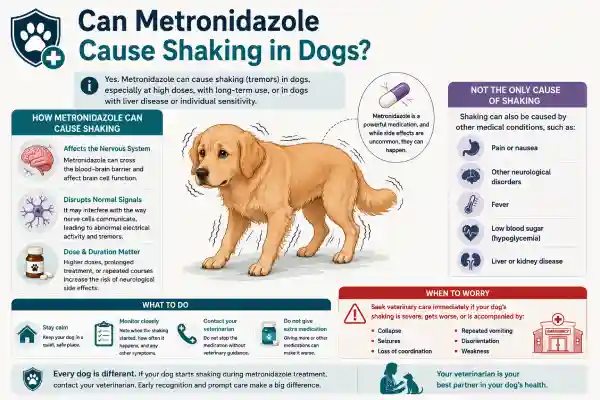
Yes — metronidazole can cause shaking, tremors, and neurological side effects in some dogs.
This antibiotic affects:
- Bacteria
- Protozoa
- GI infections
But at higher doses or in sensitive dogs, it may also affect:
- The nervous system
- Brain signaling
- Coordination
- Balance
Some dogs may develop:
- Trembling
- Wobbling
- Muscle twitching
- Head shaking
- Weakness
- Eye twitching
Is Shaking After Metronidazole Always Dangerous?
Not always.
Some dogs may shake because of:
- Nausea
- Stress
- Fever
- Weakness
- GI discomfort
- Pain
However:
persistent or worsening shaking should NEVER be ignored.
Especially if accompanied by:
- Loss of coordination
- Confusion
- Tremors
- Seizures
- Collapse
Mild vs Serious Shaking
| Type of Shaking | Possible Severity |
|---|---|
| Mild trembling with nausea | Sometimes mild |
| Intermittent shaking | Moderate concern |
| Tremors with wobbling | Serious |
| Shaking with seizures | Emergency |
| Collapse with shaking | Emergency |
What Is Metronidazole Toxicity?
Metronidazole toxicity occurs when the medication affects the nervous system strongly enough to produce neurological symptoms.
This may happen because of:
- High doses
- Long-term treatment
- Accidental overdose
- Liver disease
- Increased sensitivity
Common Signs of Metronidazole Toxicity
| Symptom | Serious? |
|---|---|
| Tremors | Serious |
| Wobbling | Serious |
| Eye twitching | Serious |
| Confusion | Serious |
| Seizures | Emergency |
| Collapse | Emergency |
Related:
Why Does Metronidazole Affect the Nervous System?
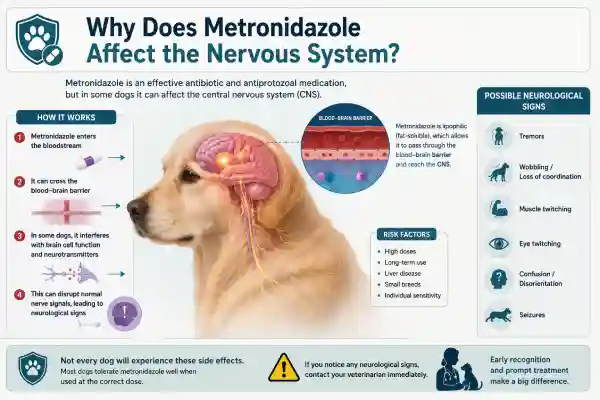
Metronidazole can cross into the central nervous system.
In some dogs, this may interfere with:
- Brain signaling
- Coordination
- Balance
- Muscle control
This is why some dogs may develop:
- Tremors
- Shaking
- Disorientation
- Weakness
- Seizure-like activity
Can Nausea Cause Shaking?
Absolutely.
Some dogs shake because they feel:
- Sick
- Weak
- Dizzy
- Anxious
- Uncomfortable
Nausea-related shaking may happen alongside:
- Lip licking
- Drooling
- Refusing food
- Swallowing repeatedly
- Grass eating
Signs of Nausea
| Symptom | Common? |
|---|---|
| Lip licking | Very common |
| Drooling | Common |
| Appetite loss | Common |
| Mild trembling | Sometimes |
| Vomiting | Possible |
Related:
Can Dehydration or Weakness Cause Trembling?
Yes.
Dogs with:
- Vomiting
- Diarrhea
- Poor appetite
- Infection
may become: - Weak
- Dehydrated
- Unsteady
This may contribute to:
- Muscle trembling
- Weakness
- Fatigue
- Instability
Related:
Which Dogs Are More at Risk?
Some dogs may have a higher risk of neurological reactions.
Higher Risk Dogs
| Dog Type | Why Risk Increases |
|---|---|
| Senior dogs | Slower drug clearance |
| Dogs with liver disease | Reduced metabolism |
| Small dogs | Higher sensitivity |
| Dogs receiving high doses | Increased toxicity risk |
| Dogs on long-term treatment | Greater accumulation |
What Neurological Signs Should Owners Watch For?
This is one of the MOST important sections.
Dangerous Neurological Warning Signs
| Symptom | Emergency? |
|---|---|
| Wobbling | Serious |
| Falling over | Serious |
| Tremors | Serious |
| Eye twitching | Serious |
| Confusion | Serious |
| Seizures | Emergency |
| Collapse | Emergency |
Related:
Can Metronidazole Cause Tremors?
Yes — tremors are one of the best-known serious side effects of metronidazole toxicity.
These tremors may appear as:
- Whole-body shaking
- Head tremors
- Muscle twitching
- Involuntary movement
- Repetitive trembling
Tremors should NEVER be ignored if they worsen or continue.
What Should Owners Do If Their Dog Starts Shaking?

Immediate Steps
| Step | Why It Helps |
|---|---|
| Stop strenuous activity | Reduce stress |
| Keep your dog calm | Improve safety |
| Monitor coordination | Detect worsening symptoms |
| Contact your veterinarian | Critical guidance |
| Watch for seizures | Detect emergencies |
Do NOT:
- Give extra medication
- Use human medications
- Ignore worsening neurological signs
- Delay emergency care
How Veterinarians Diagnose Metronidazole Toxicity
Veterinarians evaluate:
- Medication history
- Dosage
- Timing of symptoms
- Neurological examination
- Coordination
- Reflexes
- Liver health
- Hydration status
Possible testing may include:
- Bloodwork
- Neurological assessment
- Liver testing
- Medication review
How Is Shaking After Metronidazole Treated?
Treatment depends on:
- Symptom severity
- Dose exposure
- Neurological involvement
- Overall health
Possible Treatments
| Problem | Possible Treatment |
|---|---|
| Mild nausea | GI support |
| Mild shaking | Monitoring |
| Tremors | Medication adjustment |
| Toxicity | Hospitalization |
| Seizures | Emergency treatment |
| Dehydration | IV fluids |
Many dogs improve after:
- Stopping the medication
- Supportive care
- Veterinary treatment
How Long Can Shaking Last After Metronidazole?
Mild shaking related to nausea may improve within:
- Hours
- 1–2 days
More serious neurological symptoms may take:
- Several days
- Longer recovery periods
Dogs with severe toxicity may require:
- Hospitalization
- Intensive care
- Neurological monitoring
Related:
When Should Owners Go to the Emergency Vet?
Seek emergency veterinary care immediately if your dog develops:
- Seizures
- Collapse
- Severe tremors
- Trouble standing
- Severe confusion
- Trouble breathing
- Unresponsiveness
- Repeated vomiting
These symptoms may indicate:
- Severe metronidazole toxicity
- Neurological emergency
- Dangerous illness progression
FAQ – Why Does My Dog Shake After Metronidazole?
Can metronidazole cause shaking in dogs?
Yes metronidazole may cause trembling, tremors, wobbling, or neurological side effects in some dogs.
Can metronidazole cause tremors?
Absolutely. Tremors are a recognized serious neurological side effect of metronidazole toxicity.
Do antibiotics cause shaking in dogs?
Some antibiotics may contribute to shaking through nausea, weakness, dehydration, fever, or neurological effects.
What are the side effects of metronidazole in dogs?
Possible side effects include nausea, drooling, appetite loss, diarrhea, weakness, wobbling, tremors, confusion, and seizures.
Medical Disclaimer
This article is for educational purposes only and does not replace professional veterinary advice, diagnosis, or treatment. The content is written and pharmacist-reviewed to improve medication safety awareness and help dog owners better understand metronidazole side effects, neurological complications, tremors, toxicity risks, dehydration concerns, and veterinary medication safety considerations. Always contact your veterinarian immediately if your dog develops shaking, tremors, seizures, or neurological symptoms after taking metronidazole.Why Does My Dog Shake After Metronidazole?