Quick Answer
What Does Antibiotic Toxicity Look Like in Dogs? Antibiotic toxicity in dogs can cause dangerous symptoms such as severe vomiting, diarrhea, tremors, shaking, seizures, collapse, extreme lethargy, loss of coordination, behavioral changes, and even organ damage. Toxicity may happen from overdose, incorrect dosing, accidental ingestion, drug interactions, or sensitivity to certain antibiotics like metronidazole, enrofloxacin, or sulfa drugs.
Antibiotics save lives every day in veterinary medicine.
But when doses become too high, medications interact badly, or a dog reacts poorly to treatment, antibiotic toxicity can become a serious medical emergency.
Some dogs develop only mild digestive upset.
Others may suddenly experience:
- Tremors
- Severe neurological symptoms
- Collapse
- Seizures
- Liver injury
- Kidney complications
- Dangerous allergic reactions
Many owners panic because the signs can look confusing at first.
A dog may suddenly:
- Act drunk
- Stumble
- Pant excessively
- Hide
- Become depressed
- Refuse food
- Shake uncontrollably
This guide explains:
- What antibiotic toxicity looks like
- Which antibiotics are highest risk
- Early warning signs
- Neurological toxicity
- Organ damage symptoms
- Emergency situations
- What veterinarians do for treatment
You should also read:
- Can Antibiotics Cause Shaking in Dogs?
- Why Is My Dog Acting Strange After Antibiotics?
- Can Dogs Have Allergic Reactions to Antibiotics?
- Signs of Medication Overdose in Dogs
- Can Dog Medications Be Given Together?
For broader safety:
- Antibiotics for Dogs: Uses, Types, Dosage, Side Effects & Safety Guide
- Best Antibiotics for Dogs
- Safest Antibiotics for Dogs: Vet Comparison Guide
What Does Antibiotic Toxicity Look Like in Dogs?
What Is Antibiotic Toxicity in Dogs?
Antibiotic toxicity happens when a medication begins harming the body instead of helping it.
This may occur because:
- The dose is too high
- The wrong medication was used
- The dog accidentally overdosed
- The drug accumulated in the body
- The dog has liver or kidney disease
- Dangerous medication interactions occurred
Unlike mild side effects, toxicity can become life-threatening.
What Causes Antibiotic Toxicity?

Common Causes
| Cause | Example |
|---|---|
| Accidental overdose | Double dosing |
| Wrong concentration | Liquid dosing mistakes |
| Human medication errors | Giving unsafe human antibiotics |
| Drug interactions | Combining incompatible medications |
| Kidney disease | Poor drug clearance |
| Liver disease | Impaired metabolism |
| Small body size | Increased sensitivity |
| Long-term use | Medication accumulation |
Related:
- Miss a Dose of Antibiotics in Dogs?
- Can Dog Medications Be Given Together?
- How Long Should Dogs Stay on Antibiotics?
What Are the First Signs of Antibiotic Toxicity?
Early symptoms are often subtle.
Owners may first notice:
- Reduced appetite
- Vomiting
- Diarrhea
- Hiding
- Restlessness
- Excessive panting
- Weakness
- Acting unusual
Early Toxicity Symptoms
| Early Sign | Why It Happens |
|---|---|
| Nausea | GI irritation |
| Vomiting | Drug intolerance |
| Diarrhea | Gut disruption |
| Appetite loss | Systemic stress |
| Panting | Discomfort or neurological effects |
| Hiding | Feeling unwell |
| Lethargy | Toxic stress on body |
Related articles:
- Why Does My Dog Refuse Food After Antibiotics?
- Why Is My Dog Vomiting After Antibiotics?
- Why Is My Dog Panting After Antibiotics?
- Why Does My Dog Hide After Taking Antibiotics?
Which Antibiotics Are Most Commonly Associated With Toxicity?
Some antibiotics have higher toxicity risks than others.
Higher-Risk Antibiotics
| Antibiotic | Common Toxicity Concern |
|---|---|
| Metronidazole | Neurological toxicity |
| Enrofloxacin (Baytril) | Joint and neurological effects |
| Trimethoprim-Sulfa | Immune reactions, dry eye |
| Aminoglycosides | Kidney damage |
| Chloramphenicol | Bone marrow suppression |
| Sulfa drugs | Liver reactions |
Related:
- Can Metronidazole Cause Neurological Symptoms in Dogs?
- Can Enrofloxacin Cause Joint Problems in Dogs?
- Can Trimethoprim-Sulfa Cause Dry Eye in Dogs?
- Enrofloxacin Side Effects in Dogs
What Does Neurological Toxicity Look Like?
Neurological toxicity is one of the most frightening complications.
It happens when the medication affects:
- Brain tissue
- Nerves
- Balance centers
- Neurological signaling
Neurological Toxicity Symptoms
| Symptom | Appearance |
|---|---|
| Tremors | Muscle shaking |
| Ataxia | Wobbling or stumbling |
| Seizures | Loss of control |
| Head tilt | Balance problems |
| Confusion | Disorientation |
| Rapid eye movement | Nystagmus |
| Weakness | Difficulty standing |
| Collapse | Severe toxicity |
Metronidazole is especially well-known for neurological toxicity.
Related:
- Can Antibiotics Cause Shaking in Dogs?
- Can Antibiotics Cause Neurological Symptoms?
- Dog Seizure Symptoms
- What to Do During a Dog Seizure
Can Antibiotic Toxicity Cause Behavioral Changes?
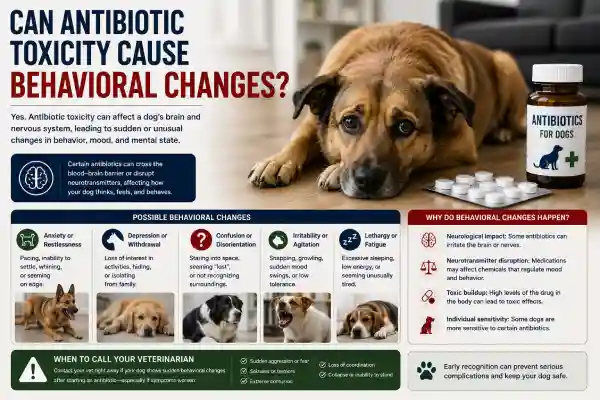
Absolutely.
Dogs with toxicity may:
- Become anxious
- Panic suddenly
- Hide
- Act depressed
- Become restless
- Seem confused
- Stare into space
- Act “not like themselves”
This often occurs because:
- The nervous system is affected
- The dog feels nauseated
- Brain chemistry changes
- Pain or discomfort increases stress
Related:
- Can Antibiotics Cause Depression in Dogs?
- Can Dog Medications Cause Behavior Changes?
- Why Is My Dog Acting Strange After Antibiotics?
Can Antibiotics Damage the Liver?
Yes.
Some antibiotics can stress liver function, especially:
- Sulfa drugs
- Long-term medications
- High doses
- Dogs with pre-existing liver disease
Signs of Liver Toxicity
| Symptom | Why It Happens |
|---|---|
| Yellow gums | Jaundice |
| Vomiting | Liver stress |
| Appetite loss | Liver dysfunction |
| Weakness | Metabolic problems |
| Lethargy | Toxin buildup |
| Behavioral changes | Hepatic encephalopathy |
Can Antibiotics Damage the Kidneys?
Yes.
Kidney toxicity is more common in:
- Senior dogs
- Dehydrated dogs
- Dogs with kidney disease
- Dogs receiving certain antibiotics
Kidney Toxicity Signs
| Symptom | Possible Meaning |
|---|---|
| Increased thirst | Kidney stress |
| Increased urination | Reduced kidney function |
| Vomiting | Uremia |
| Weakness | Electrolyte imbalance |
| Bad breath | Toxin accumulation |
| Dehydration | Kidney impairment |
What Does a Severe Antibiotic Overdose Look Like?
Severe toxicity can escalate quickly.
Emergency Signs
| Emergency Sign | Severity |
|---|---|
| Continuous seizures | Critical |
| Collapse | Emergency |
| Blue gums | Oxygen emergency |
| Severe tremors | Neurological crisis |
| Uncontrolled vomiting | Dangerous dehydration |
| Extreme lethargy | Systemic toxicity |
| Trouble breathing | Possible shock |
| Loss of consciousness | Critical emergency |
Immediate veterinary care is required.
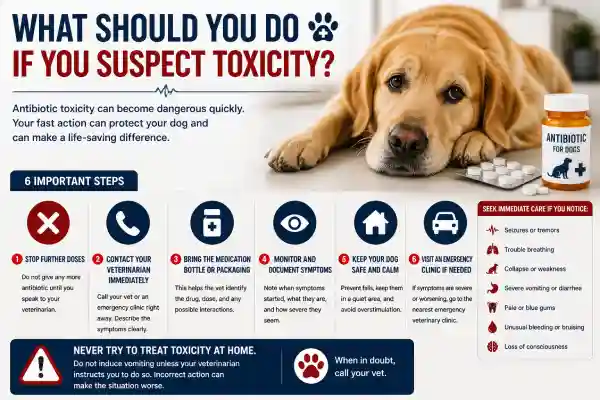
What Should You Do If You Suspect Toxicity?
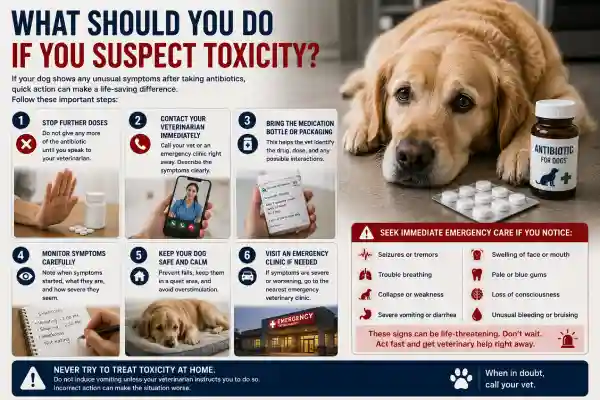
Immediate Steps
| Step | Why It Matters |
|---|---|
| Stop further doses | Prevent worsening exposure |
| Call emergency vet | Early treatment improves survival |
| Bring medication bottle | Helps identify toxin |
| Monitor symptoms | Important for triage |
| Prevent falls | Neurological dogs may collapse |
Never induce vomiting unless instructed by a veterinarian.
How Veterinarians Diagnose Antibiotic Toxicity
Veterinarians usually evaluate:
- Medication history
- Dose given
- Timing of symptoms
- Physical exam findings
- Neurological signs
- Bloodwork
- Liver/kidney values
- Hydration status
Sometimes hospitalization is needed for monitoring.
How Is Antibiotic Toxicity Treated?
Treatment depends on severity.
Common Treatments
| Treatment | Purpose |
|---|---|
| IV fluids | Flush toxins |
| Anti-seizure medication | Control neurological symptoms |
| Activated charcoal | Reduce absorption |
| Oxygen therapy | Support breathing |
| Liver protectants | Reduce organ stress |
| Anti-nausea medication | Control vomiting |
| Hospitalization | Intensive monitoring |
Most dogs recover well when treated early.
Can Dogs Recover From Antibiotic Toxicity?
Yes — many dogs recover completely with fast treatment.
Recovery depends on:
- Which antibiotic caused toxicity
- Dose involved
- How quickly treatment started
- Underlying health conditions
- Severity of organ involvement
Early intervention dramatically improves outcomes.
FAQ – What Does Antibiotic Toxicity Look Like in Dogs?
What are signs of antibiotic toxicity in dogs?
Common signs include vomiting, tremors, weakness, shaking, seizures, confusion, panting, and behavioral changes.
Can antibiotics cause seizures in dogs?
Yes. Certain antibiotics — especially metronidazole at high doses — can trigger neurological toxicity and seizures.
What should I do if my dog accidentally gets too much antibiotic?
Contact your veterinarian or emergency clinic immediately and bring the medication bottle if possible.
Can antibiotic toxicity be fatal?
Severe toxicity can become life-threatening without treatment, especially if neurological symptoms or organ failure develop.
Which antibiotic is most associated with neurological toxicity?
Metronidazole is one of the antibiotics most commonly linked to neurological toxicity in dogs.
Medical Disclaimer
This article is for educational purposes only and does not replace professional veterinary advice, diagnosis, or treatment. Contact a veterinarian immediately if your dog develops tremors, seizures, collapse, breathing difficulty, severe vomiting, or sudden neurological symptoms after taking antibiotics.What Does Antibiotic Toxicity Look Like in Dogs?