Quick Answer
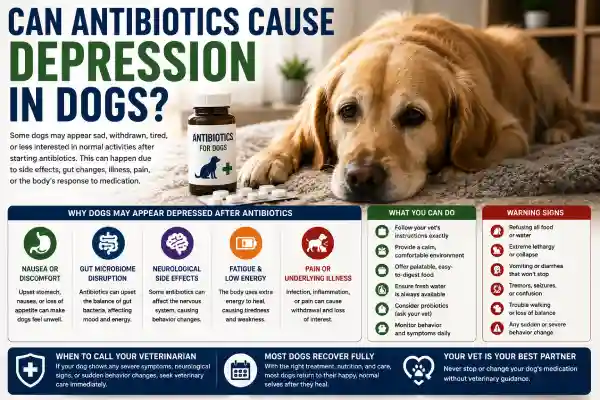
Can Antibiotics Cause Depression in Dogs? Yes — some dogs may appear depressed, withdrawn, tired, emotionally flat, or less interested in normal activities after starting antibiotics. This can happen because of nausea, gut microbiome disruption, medication side effects, pain, fatigue, neurological reactions, or the underlying illness itself. Mild mood changes may improve as the infection heals, but severe lethargy, refusal to eat, confusion, or loss of interest in everything should always be taken seriously.
Many dog owners notice behavioral changes after antibiotics, but one symptom that can feel especially alarming is when a dog suddenly seems “sad” or emotionally different.
Owners often describe it as:
- “My dog looks depressed”
- “He isn’t acting like himself”
- “She just lays there all day”
- “He stopped playing”
- “She seems emotionally flat”
- “My dog lost interest in everything”
While dogs do not experience human depression exactly the same way people do, antibiotics and illness can absolutely affect mood, energy, and behavior.
In many cases, the issue is temporary and improves quickly.
However, severe withdrawal, weakness, confusion, or neurological symptoms can signal a more serious medication reaction.
This guide explains:
- Why dogs may seem depressed after antibiotics
- Which medications are most associated with mood changes
- The gut-brain connection in dogs
- When sadness becomes dangerous
- How veterinarians evaluate behavioral changes
- What owners can do to help recovery
You should also read:
- Why Is My Dog Acting Strange After Antibiotics?
- Can Antibiotics Cause Lethargy in Dogs?
- Why Does My Dog Refuse Food After Antibiotics?
- Can Antibiotics Cause Shaking in Dogs?
- Why Is My Dog Panting After Antibiotics?
For broader antibiotic safety information:
- Antibiotics for Dogs: Uses, Types, Dosage, Side Effects & Safety Guide
- Best Antibiotics for Dogs: When to Use Each
- Safest Antibiotics for Dogs: Vet Comparison Guide
Can Antibiotics Cause Depression in Dogs?
What Does “Depression” Look Like in Dogs?
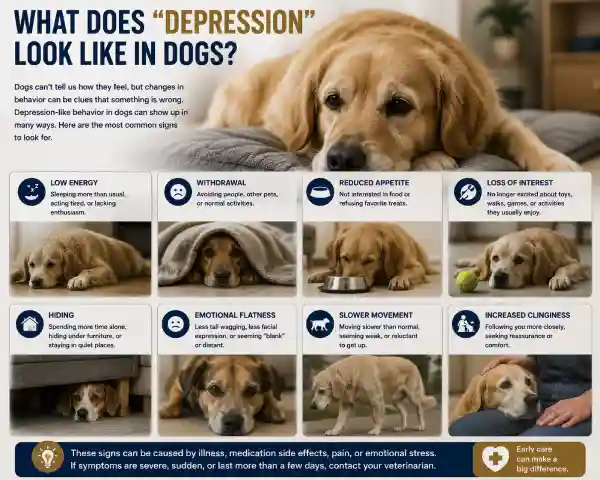
Dogs cannot verbally express sadness, so behavioral clues become important.
Common Signs Dogs May Appear Depressed
| Behavioral Sign | What Owners Often Notice |
|---|---|
| Low energy | Sleeping more than usual |
| Withdrawal | Avoiding family interaction |
| Reduced appetite | Refusing favorite foods |
| Loss of interest | Not wanting walks or toys |
| Hiding | Staying alone in quiet places |
| Emotional flatness | Less excitement or tail wagging |
| Slower movement | Acting tired or weak |
| Increased clinginess | Seeking reassurance constantly |
Some dogs show only mild fatigue, while others become dramatically withdrawn.
Can Antibiotics Really Affect Mood?
Yes — indirectly and sometimes directly.
Antibiotics may affect mood because they:
- Cause nausea or stomach discomfort
- Reduce appetite
- Disrupt gut bacteria
- Affect sleep quality
- Trigger fatigue
- Cause neurological side effects
- Interact with other medications
Dogs feeling physically unwell often appear emotionally different.
The Gut-Brain Connection in Dogs
This is one of the most fascinating parts of veterinary medicine.
A dog’s digestive system and nervous system are closely connected.
Healthy gut bacteria help regulate:
- Digestion
- Inflammation
- Immune balance
- Neurotransmitter activity
- Stress responses
Antibiotics can temporarily disrupt this balance.
Possible Gut-Related Mood Changes
| Gut Effect | Possible Behavioral Result |
|---|---|
| Nausea | Withdrawal |
| Bloating | Irritability |
| Appetite loss | Fatigue |
| Microbiome disruption | Stress-like behavior |
| Digestive discomfort | Reduced activity |
This does NOT mean antibiotics are bad — they save lives every day — but some dogs become temporarily “off” during treatment.
Related:
- Probiotics for Dogs: Do They Help with Antibiotic Side Effects?
- Antibiotic Diarrhea in Dogs
- Why Does My Dog Refuse Food After Antibiotics?
Which Antibiotics Are Most Associated With Behavioral Changes?
Some antibiotics are more likely to trigger mood or neurological symptoms.
Antibiotics Most Commonly Linked to Strange Mood Changes
| Antibiotic | Possible Effects |
|---|---|
| Metronidazole | Neurological symptoms, confusion |
| Enrofloxacin (Baytril) | Agitation or behavioral changes |
| Doxycycline | Nausea-related withdrawal |
| Clindamycin | GI discomfort and lethargy |
| Trimethoprim-Sulfa | Weakness or fatigue |
| High-dose antibiotics | Toxicity-related behavioral changes |
Dogs with kidney disease, liver disease, or advanced age may be more sensitive.
Related articles:
- Metronidazole Side Effects in Dogs
- Enrofloxacin Side Effects in Dogs
- Doxycycline Side Effects in Dogs
- Clindamycin Side Effects in Dogs
Can Illness Itself Cause Depression-Like Behavior?
Absolutely.
Sometimes owners blame the antibiotic when the real problem is the infection itself.
Dogs fighting:
- Fever
- Pain
- Inflammation
- Internal infections
- GI disease
- Respiratory infections
may naturally appear:
- Weak
- Tired
- Quiet
- Withdrawn
This is especially common in senior dogs.
Related:
Can Antibiotics Cause Neurological Symptoms?
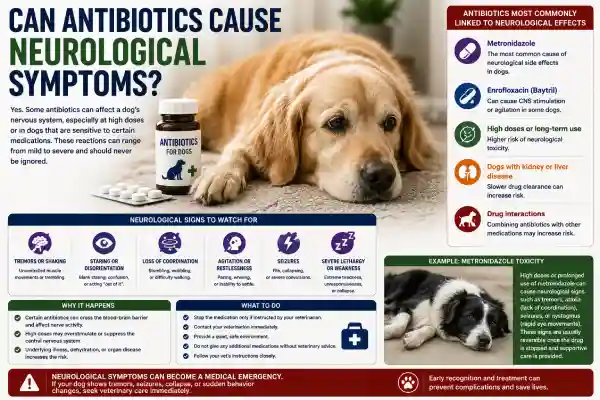
Yes — and this is extremely important.
Some antibiotics can affect the nervous system, especially at high doses or in sensitive dogs.
Neurological Warning Signs
| Warning Sign | Possible Meaning |
|---|---|
| Tremors | Toxicity |
| Staring into space | Neurological involvement |
| Loss of coordination | Brain/nervous system effects |
| Severe lethargy | Serious reaction |
| Confusion | Neurological side effects |
| Sudden aggression | Brain irritation |
| Seizures | Emergency toxicity |
Metronidazole toxicity is one of the best-known examples.
Read:
Why Is My Dog Sleeping So Much After Antibiotics?
Extra sleep may happen because:
- The body is healing
- Energy is redirected toward immune function
- Appetite is reduced
- Mild nausea causes fatigue
- The medication causes sedation-like effects
Mild tiredness is common.
However, extreme lethargy is not normal.
When Should You Worry?
Contact your veterinarian if your dog:
- Refuses all food
- Cannot stand properly
- Seems severely withdrawn
- Stops drinking water
- Shows neurological symptoms
- Has pale gums
- Develops vomiting or diarrhea
- Stops responding normally
Emergency Symptoms
| Emergency Sign | Why It Matters |
|---|---|
| Collapse | Severe weakness |
| Seizures | Neurological emergency |
| Trouble walking | Toxicity concern |
| Persistent vomiting | Dehydration risk |
| Blue or pale gums | Oxygen emergency |
| Extreme confusion | Serious neurological involvement |
Can Antibiotics Interact With Anxiety or Pain Medications?
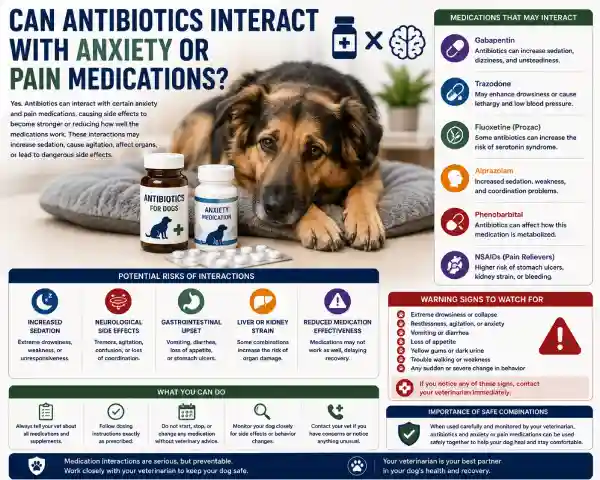
Yes.
Behavioral symptoms may worsen when antibiotics combine with:
- Gabapentin
- Trazodone
- Fluoxetine
- Alprazolam
- Phenobarbital
- NSAIDs
Interactions can increase:
- Sedation
- Weakness
- Confusion
- Tremors
- Behavioral changes
Related:
- Can Dog Medications Be Given Together?
- Signs of Medication Overdose in Dogs
- Can Dog Medications Cause Behavior Changes?
How Veterinarians Diagnose Mood or Behavioral Changes
Veterinarians usually evaluate:
- Medication history
- Current symptoms
- Appetite changes
- Hydration
- Neurological status
- Infection severity
- Bloodwork
- Liver and kidney function
This helps separate:
- Mild temporary fatigue
from - Serious medication reactions
How Is Depression-Like Behavior Treated?
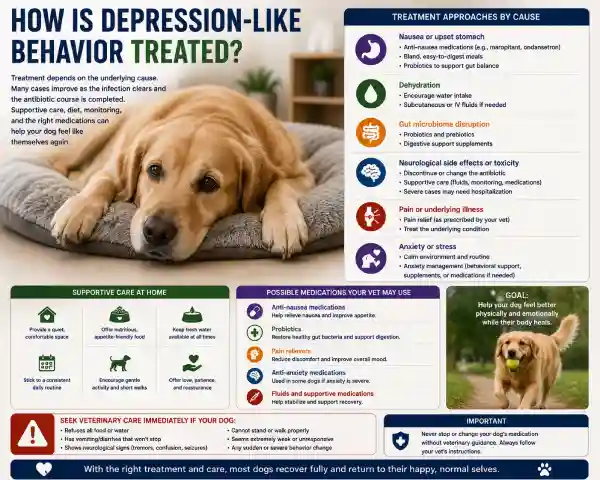
Treatment depends on the cause.
Possible Treatments
| Cause | Treatment |
|---|---|
| Nausea | Anti-nausea medication |
| Dehydration | Fluids |
| Gut imbalance | Probiotics |
| Toxicity | Stop/change medication |
| Pain | Better pain control |
| Anxiety | Environmental support |
| Severe reactions | Hospitalization |
Many dogs improve rapidly once the underlying problem is corrected.
How to Help Your Dog Feel Better
Owners can help by:
- Offering a calm environment
- Encouraging hydration
- Feeding bland meals if approved
- Monitoring symptoms daily
- Using probiotics if recommended
- Avoiding extra medications without vet approval
- Keeping routines predictable
Gentle emotional support matters too.
Dogs often recover faster when stress levels stay low.
Long-Term Outlook
Most dogs recover fully once:
- The infection improves
- The antibiotic course finishes
- Side effects resolve
- Appetite returns
- Gut balance stabilizes
True long-term behavioral problems from antibiotics are uncommon.
However, neurological toxicity should never be ignored.
FAQ – Can Antibiotics Cause Depression in Dogs?
Can antibiotics make dogs emotionally different?
Yes. Some dogs become withdrawn, tired, anxious, or less interactive during antibiotic treatment.
Why does my dog seem sad after antibiotics?
Nausea, fatigue, digestive upset, illness, and medication side effects may all contribute.
Can antibiotics affect the brain in dogs?
Certain antibiotics — especially metronidazole — can cause neurological symptoms in some dogs.
Is it normal for dogs to sleep more after antibiotics?
Mild extra sleep can happen during recovery, but extreme lethargy should be evaluated.
Should I stop antibiotics if my dog seems depressed?
Never stop antibiotics without veterinary guidance unless severe emergency symptoms occur.
Medical Disclaimer
This article is for educational purposes only and does not replace professional veterinary advice, diagnosis, or treatment. Contact your veterinarian immediately if your dog develops severe lethargy, seizures, confusion, weakness, breathing difficulty, or unusual behavior after taking antibiotics.
Sources
- American Veterinary Medical Association (AVMA)
- Merck Veterinary Manual
- VIN Veterinary Partner
- Plumb’s Veterinary Drug Handbook
- WSAVA Global Veterinary Guidelines
- FDA Animal & Veterinary Resources