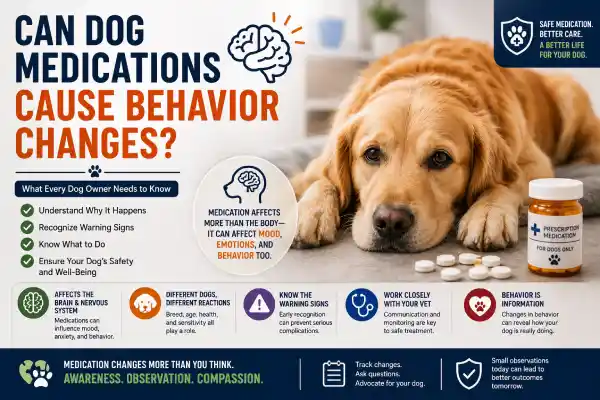
Can dog medications cause behavior changes? Yes—many medications can affect a dog’s mood, personality, energy levels, sleep patterns, and emotional reactions. Some dogs may become unusually sleepy, anxious, restless, clingy, aggressive, withdrawn, or confused depending on the medication, dosage, underlying condition, and individual sensitivity.
Behavioral changes are one of the most misunderstood medication side effects in dogs.
Many owners expect side effects to look purely physical:
- vomiting
- diarrhea
- appetite loss
- lethargy
But the nervous system is deeply connected to behavior, emotions, stress responses, and personality.
This means medications affecting the brain, pain pathways, hormones, inflammation, or even sleep quality can sometimes change how a dog behaves emotionally and socially.
In some cases, these changes are mild and temporary.
In other situations, they may signal:
- medication intolerance
- excessive sedation
- neurological effects
- pain progression
- anxiety worsening
- toxicity
Understanding the difference is extremely important.
Quick Answer
Dog medications can cause behavior changes such as sleepiness, agitation, aggression, confusion, anxiety, clinginess, pacing, or withdrawal. These changes may result from nervous system effects, sedation, pain relief changes, dosage issues, medication interactions, or underlying disease progression.
Why Behavior Changes Are Often Missed
Many owners do not immediately connect behavior with medication.
They may assume:
👉 “My dog is just getting older.”
or:
👉 “Maybe my dog is having a bad day.”
But behavioral changes are actually one of the most important clues in veterinary medicine.
This is because the brain and nervous system control:
- mood
- emotional regulation
- sleep
- fear responses
- social interaction
- pain perception
Even medications that are not considered “behavioral drugs” can still influence these systems indirectly.
Can Dog Medications Cause Behavior Changes
The Brain and Nervous System Are Extremely Sensitive
Dogs experience medications through the nervous system just like humans do.
Some medications directly affect:
- neurotransmitters
- nerve signaling
- stress hormones
- sedation pathways
Others affect behavior indirectly by changing:
- pain levels
- sleep quality
- inflammation
- breathing
- mobility
This is why behavior changes sometimes appear even with medications not traditionally considered “psychiatric.”
Common Behavior Changes Owners Notice
Behavioral side effects can look very different depending on the dog.
Common Medication-Related Behavior Changes
| Behavior Change | Possible Cause |
|---|---|
| unusual sleepiness | sedation |
| pacing | anxiety or neurological stimulation |
| clinginess | stress or confusion |
| aggression | pain, confusion, or fear |
| withdrawal | excessive sedation or discomfort |
| restlessness | nervous system stimulation |
Some changes are mild and temporary.
Others require immediate veterinary reassessment.
Why Pain Medications Can Change Behavior
Pain itself strongly affects behavior.
When pain improves, dogs may suddenly appear:
- happier
- more playful
- calmer
- socially engaged
But some pain medications can also cause:
- sedation
- confusion
- wobbling
- emotional blunting
This is especially important with medications like:
- Gabapentin
- Tramadol
- Amantadine
This naturally connects with:
- Why Is My Dog Still in Pain After Medication?
- What to Do If Dog Medication Is Not Working
- Signs Your Dog Needs Stronger Pain Medication
because pain and behavior are deeply connected.
Sedation vs Emotional Improvement
This is one of the most misunderstood concepts in veterinary medicine.
A quieter dog is not always a calmer dog.
Some dogs become:
- sleepy
- less reactive
- slower moving
while still feeling anxious or uncomfortable internally.
Sedation vs Healthy Behavioral Improvement
| Sedation | Emotional Improvement |
|---|---|
| reduced activity | relaxed body language |
| excessive sleepiness | better interaction |
| difficulty waking | improved confidence |
| disconnected behavior | more normal personality |
This distinction is especially important with anxiety medications.
Why Anxiety Medications Can Affect Personality
Medications used for anxiety may influence:
- emotional responsiveness
- confidence
- fear processing
- alertness
Some dogs initially appear:
- emotionally “flat”
- extra clingy
- unusually quiet
- temporarily disoriented
This is often part of the nervous system adjusting.
This connects naturally with:
because emotional regulation and sedation overlap significantly.
Why Some Dogs Become Aggressive After Medication
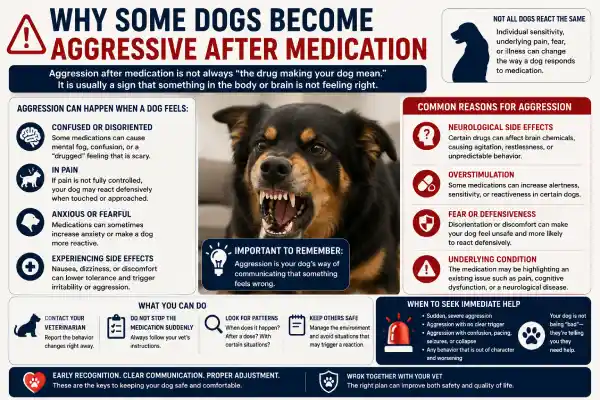
This situation can be frightening for owners.
But aggression does not always mean the medication itself directly caused aggression.
Sometimes medications may contribute indirectly through:
- confusion
- fear
- disorientation
- worsened anxiety
- pain sensitivity
Dogs experiencing neurological side effects may react defensively because they feel unsafe or disoriented.
Medications Most Commonly Associated With Behavioral Changes
Some medications are more likely to affect behavior than others.
Medications That May Affect Behavior
| Medication Type | Possible Behavioral Effects |
|---|---|
| pain medications | sedation, confusion |
| anxiety medications | emotional changes |
| seizure medications | wobbling, disorientation |
| steroids | agitation, restlessness |
| sedatives | excessive sleepiness |
Not every dog reacts the same way.
Individual sensitivity varies enormously.
Why Steroids Can Cause Dramatic Personality Changes
Steroids are especially important to discuss.
Medications like:
- Prednisone
may cause:
- restlessness
- agitation
- increased hunger
- excessive thirst
- pacing
- irritability
Some dogs appear emotionally “different” while taking steroids.
This is extremely common and often dose-related.
The Hidden Role of Sleep Deprivation
Poor sleep itself can worsen behavior dramatically.
Dogs dealing with:
- chronic pain
- anxiety
- medication side effects
may stop sleeping properly.
This can lead to:
- irritability
- pacing
- clinginess
- confusion
- emotional instability
This is one reason veterinarians increasingly assess sleep quality during long-term treatment.
Why Senior Dogs Are More Vulnerable
Older dogs are more sensitive to neurological side effects.
This happens because aging affects:
- brain function
- liver metabolism
- kidney function
- nervous system resilience
Senior dogs are also more likely to take multiple medications simultaneously.
This increases the risk of:
- medication interactions
- excessive sedation
- confusion
- behavioral instability
Medication Interactions Can Intensify Behavioral Symptoms
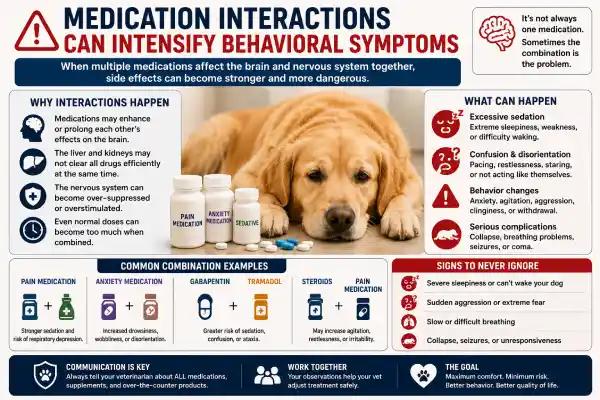
Sometimes the problem is not a single medication.
Instead:
👉 multiple medications interact together.
This is especially important when combining:
- sedatives
- anxiety medications
- seizure medications
- pain medications
These combinations may excessively suppress the nervous system.
Signs the Behavior Change May Be Serious
Some behavioral symptoms should never be ignored.
Serious Warning Signs
| Sign | Why It Matters |
|---|---|
| sudden aggression | neurological or fear response |
| collapse | severe nervous system depression |
| inability to wake | overdose concern |
| disorientation | neurological involvement |
| seizures | emergency toxicity |
These symptoms require immediate veterinary evaluation.
The Emotional Side of Behavioral Changes
Owners often feel emotionally distressed when their dog’s personality changes.
Many describe feeling:
- scared
- guilty
- confused
- heartbroken
especially when their normally affectionate dog becomes withdrawn or reactive.
But many medication-related behavior changes improve after:
- dosage adjustments
- medication changes
- nervous system adaptation
- improved pain control
Why Owners Sometimes Misinterpret Improvement
This is extremely important.
A dog becoming quieter does not always mean treatment is successful.
Sometimes owners mistake:
👉 sedation for healing
Veterinarians increasingly focus on:
- emotional engagement
- mobility
- appetite
- sleep quality
- social interaction
rather than simple “quietness.”
What Veterinarians Actually Look For

Veterinarians rarely assess only symptoms.
They evaluate:
- overall quality of life
- emotional stability
- mobility
- comfort
- sleep
- social behavior
This provides a far more complete picture of medication response.
Real-Life Example
Dog A
- mild arthritis
- starts gabapentin
- slightly sleepy initially
- later becomes more comfortable and active
Result:
✔ healthy adjustment period
Dog B
- multiple sedating medications
- becomes confused and collapses
Result:
❌ dangerous nervous system suppression
Needs:
✔ medication reassessment
✔ dosage adjustment
✔ emergency evaluation
This type of situation is far more common in senior dogs.
The Future of Veterinary Behavioral Monitoring
Modern veterinary medicine increasingly recognizes behavior as a critical medical sign.
Future care is moving toward:
- individualized medication plans
- neurological monitoring
- wearable activity tracking
- behavioral assessment tools
- precision dosing
This is helping veterinarians identify side effects earlier and improve long-term safety.
Conclusion
Dog medications can absolutely cause behavior changes, and these changes should never be dismissed automatically as “normal aging” or personality issues.
Behavioral symptoms may reflect:
- sedation
- nervous system effects
- anxiety changes
- pain progression
- medication interactions
- toxicity
The key is understanding whether the changes are mild and temporary—or signs that the treatment plan needs reassessment.
Careful observation, good communication with your veterinarian, and attention to emotional well-being are essential parts of safe long-term medication management.
FAQ – Can Dog Medications Cause Behavior Changes?
Can dog medications change personality?
Yes. Some medications may affect mood, energy, emotional responses, or behavior temporarily.
Why is my dog acting strange after medication?
This may result from sedation, nervous system effects, pain relief changes, or medication interactions.
Can gabapentin make dogs act differently?
Yes. Gabapentin may cause sleepiness, wobbling, clinginess, or temporary confusion in some dogs.
Are behavior changes after medication dangerous?
Sometimes. Severe confusion, collapse, aggression, or seizures require immediate veterinary attention.
Can steroids affect dog behavior?
Yes. Steroids like prednisone commonly cause restlessness, increased appetite, pacing, and emotional changes.
Sources & Scientific References
- Merck Veterinary Manual
- Plumb’s Veterinary Drug Handbook
- Veterinary Information Network (VIN)
- American College of Veterinary Behaviorists (ACVB)
Medical Disclaimer
This article is for educational purposes only and does not replace professional veterinary advice.Can Dog Medications Cause Behavior Changes?