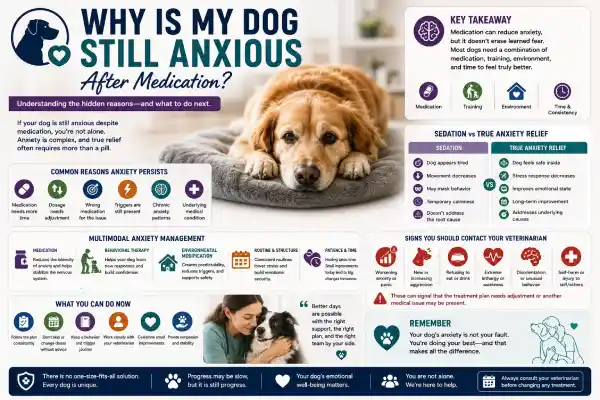
Why is my dog still anxious after medication? If your dog continues showing anxiety despite treatment, it does not always mean the medication failed. In many cases, persistent anxiety happens because the underlying trigger is still present, the medication type is inappropriate, the dosage is not yet optimized, or the anxiety has developed into a chronic behavioral pattern that requires a broader treatment strategy.
Many dog owners expect anxiety medication to work like a “switch.”
They imagine:
- one pill
- immediate calmness
- complete behavioral change
But canine anxiety is usually far more complicated.
Some dogs improve only partially. Others improve for a short period and then plateau. Some seem calmer physically but remain emotionally stressed internally.
This is especially common in dogs with:
- separation anxiety
- noise phobias
- chronic stress
- traumatic experiences
- age-related anxiety
Understanding why anxiety persists is one of the most important steps toward helping your dog feel genuinely safe and comfortable again.
Quick Answer
Dogs may remain anxious after medication because the medication needs more time, the dosage is not ideal, the wrong medication type is being used, the trigger is still present, or the anxiety requires behavioral therapy in addition to medication.
Why Anxiety Medication Does Not Always “Fix” the Problem
One of the biggest misconceptions in veterinary behavioral medicine is the belief that medication alone cures anxiety.
In reality:
👉 medication usually reduces the intensity of anxiety
👉 it does not automatically erase learned fear patterns
This distinction is extremely important.
Many anxious dogs have already developed:
- conditioned fear responses
- avoidance behaviors
- chronic hypervigilance
- stress-related behavioral patterns
The nervous system essentially learns anxiety over time.
This is why treatment often requires:
- medication
- environmental changes
- training strategies
- behavioral rehabilitation
working together.
Why Is My Dog Still Anxious After Medication?
The Hidden Difference Between Sedation and True Anxiety Relief
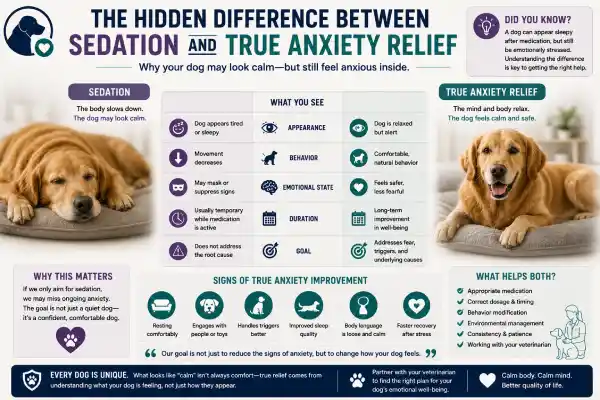
This is something many owners misunderstand.
A dog can appear:
- sleepy
- slower
- quieter
while still feeling anxious internally.
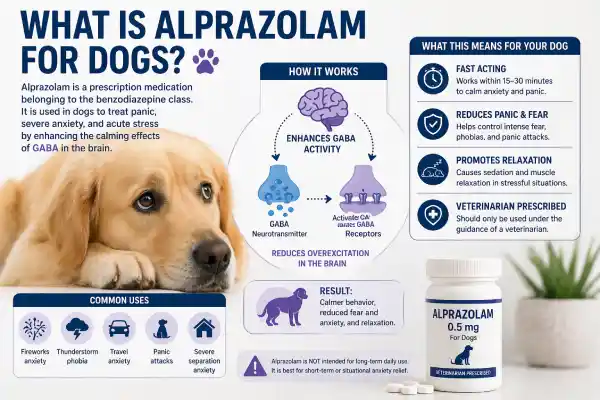
This is especially important with medications that primarily sedate rather than directly target anxiety pathways.
Sedation vs True Anxiety Improvement
| Sedation | Anxiety Relief |
|---|---|
| dog appears tired | dog feels safer emotionally |
| movement decreases | stress response decreases |
| may suppress behavior | improves emotional state |
| temporary calmness | long-term behavioral improvement |
This is why some owners say:
👉 “My dog seems sleepy but still nervous.”
That observation is often accurate.
Why Some Anxiety Medications Take Longer Than Expected
Many veterinary anxiety medications do NOT work instantly.
This is especially true for medications like:
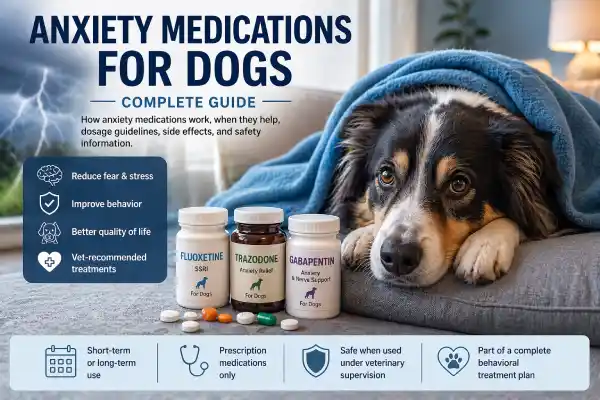
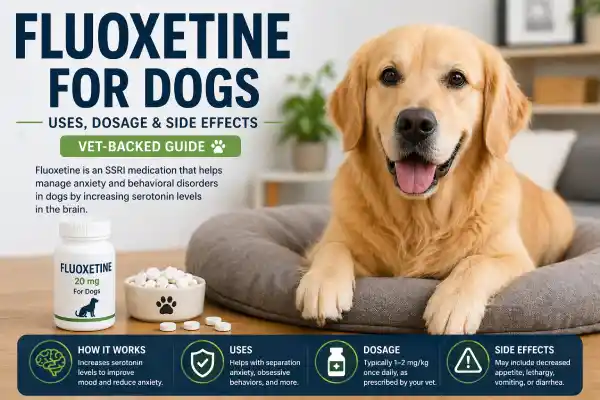
- Fluoxetine
- Sertraline
- Paroxetine
These medications often require:
- several weeks
- gradual nervous system adjustment
- dose optimization
before full improvement appears.
This naturally connects with:
which help owners understand realistic timelines.
Why Anxiety Often Becomes Chronic
One of the most overlooked aspects of canine anxiety is that anxiety changes the brain over time.
Chronic stress can alter:
- stress hormone regulation
- nervous system sensitivity
- behavioral responses
- emotional resilience
This means anxiety can become self-reinforcing.
The longer a dog remains anxious:
👉 the more deeply the behavior becomes neurologically ingrained.
The Nervous System Can Become “Stuck” in Survival Mode
This is a major reason some dogs continue struggling despite medication.
Over time, the brain becomes highly sensitive to triggers.
Examples include:
- thunder
- fireworks
- separation
- unfamiliar people
- veterinary visits
Even small triggers may create disproportionate fear responses.
This is very similar to what happens in chronic pain sensitization, where the nervous system becomes hypersensitive over time.
Why the Trigger Still Matters
Medication cannot always overcome an overwhelming environment.
For example:
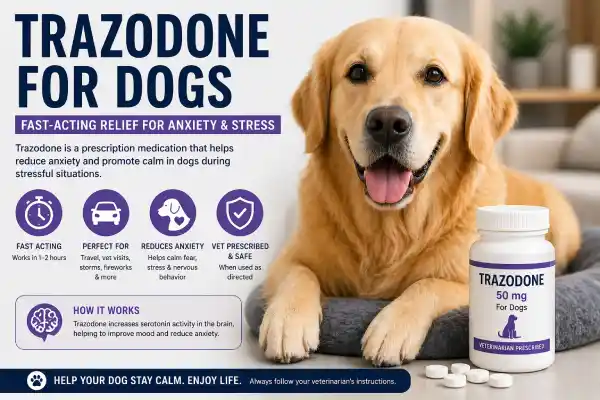
A dog with severe thunderstorm anxiety may still panic during loud storms even while medicated.
This does NOT necessarily mean the medication failed completely.
Instead:
👉 the trigger intensity exceeded the dog’s coping capacity.
Common Anxiety Triggers That Continue Reinforcing Fear
| Trigger | Common Example |
|---|---|
| separation | owner leaving home |
| loud noises | fireworks, storms |
| social fear | strangers, dogs |
| environmental stress | moving homes |
| trauma history | abuse, neglect |
If these triggers remain constant, improvement may be slower.
Why Some Dogs Need Combination Therapy for Anxiety
Modern veterinary behavioral medicine increasingly uses:
multimodal anxiety management
This means combining:
- medication
- behavioral training
- environmental modification
- predictable routines
instead of relying on medication alone.
Common Anxiety Medication Combinations
| Combination | Purpose |
|---|---|
| SSRI + trazodone | long-term + situational relief |
| SSRI + gabapentin | anxiety + calming support |
| trazodone + training | medication + behavior shaping |
This is why articles like:
fit naturally into this cluster.
Why Dosage Problems Are Extremely Common
Another major issue is dosage optimization.
Some dogs receive:
- too little medication
- inconsistent timing
- insufficient duration
This can create the impression that the medication “doesn’t work.”
Behavioral medications often require careful adjustment over time.
Missed Doses Can Dramatically Affect Anxiety Control
This is especially important with:
- SSRIs
- long-term anxiety medications
Inconsistent dosing can cause:
- emotional instability
- rebound anxiety
- fluctuating behavior
Why Anxiety May Actually Be Something Else
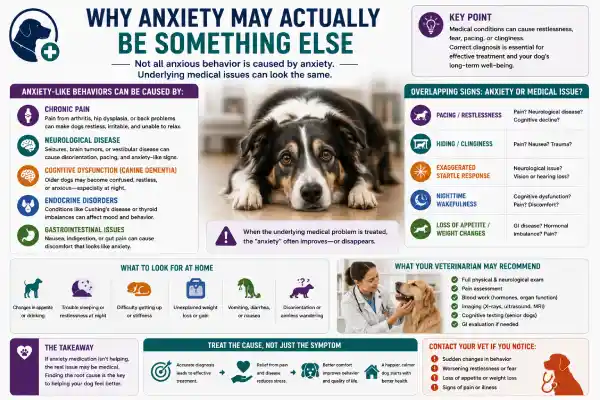
This is a very important possibility.
Not all anxious behavior is purely psychological.
Sometimes symptoms are related to:
- chronic pain
- neurological disease
- cognitive dysfunction
- endocrine disorders
For example, dogs in chronic pain often appear restless or anxious because discomfort keeps the nervous system activated.
This links naturally with:
because pain and anxiety frequently overlap.
Chronic Pain and Anxiety Often Reinforce Each Other
Pain creates stress.
Stress increases pain sensitivity.
This creates a vicious cycle.
Dogs with chronic pain may become:
- hypervigilant
- restless
- clingy
- emotionally reactive
This is one reason multimodal medicine is becoming increasingly important in veterinary care.
The Emotional Side of Persistent Anxiety
Many owners feel discouraged when medication does not create immediate transformation.
They think:
👉 “Maybe nothing can help my dog.”
But anxiety treatment is often gradual.
Small improvements matter enormously.
Examples include:
- slightly better sleep
- less pacing
- improved appetite
- reduced startle response
These are real signs of progress.
Signs Anxiety Medication MAY Be Helping
| Improvement | Why It Matters |
|---|---|
| better sleep | nervous system calming |
| less pacing | reduced hypervigilance |
| improved appetite | lower stress hormones |
| more engagement | emotional improvement |
| shorter recovery after triggers | improved coping ability |
Why Behavioral Therapy Matters So Much
Medication helps lower emotional intensity.
But training helps create:
- new behavioral patterns
- positive associations
- confidence building
This combination is often far more effective long term.
Why Some Dogs Need Lifelong Anxiety Management
This is emotionally difficult for some owners to hear.
But certain dogs may require:
- long-term medication
- ongoing environmental management
- structured routines
especially if anxiety is severe or genetically influenced.
That does NOT mean failure.
It means the dog’s nervous system requires ongoing support.
What Veterinarians Actually Look For
Veterinarians rarely expect:
👉 “perfectly fearless behavior.”
Instead they evaluate:
- quality of life
- recovery after triggers
- ability to relax
- sleep quality
- overall emotional stability
This is a much healthier long-term perspective.
Signs You Should Contact Your Veterinarian
Some situations require reassessment.
Serious Warning Signs
| Sign | Why It Matters |
|---|---|
| worsening panic | treatment inadequate |
| aggression | severe emotional distress |
| refusal to eat | excessive stress |
| severe sedation | medication intolerance |
| self-injury behaviors | emergency behavioral issue |
Real-Life Example
Dog A
- mild situational anxiety
- improves with trazodone during storms
Dog B
- severe generalized anxiety
- history of trauma
- panic even indoors
Result:
❌ simple situational medication not enough
Needs:
✔ long-term medication
✔ behavioral therapy
✔ environmental management
✔ gradual desensitization
This is extremely common in chronic anxiety patients.
The Future of Veterinary Anxiety Management
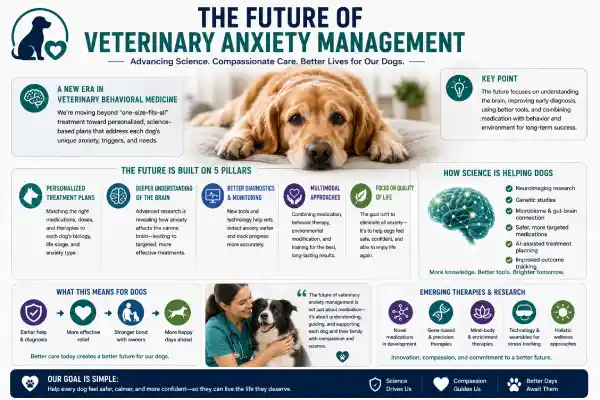
Veterinary behavioral medicine is evolving rapidly.
Modern approaches increasingly focus on:
- personalized treatment plans
- neurological understanding
- lower-stress handling
- multimodal therapy
- emotional quality of life
This is dramatically improving outcomes for anxious dogs.
Conclusion
If your dog is still anxious after medication, it does not automatically mean the treatment failed. Anxiety is often complex, chronic, and deeply connected to the nervous system, environment, and learned behaviors.
Successful treatment usually involves more than medication alone. The most effective long-term strategies combine behavioral support, environmental management, consistency, and carefully adjusted medical therapy.
Progress may be gradual—but many anxious dogs improve significantly with the right approach and patience.Why Is My Dog Still Anxious After Medication?
FAQ – Why Is My Dog Still Anxious After Medication?
Why is my dog still anxious after medication?
The medication may need more time, the dose may require adjustment, or the anxiety may need behavioral therapy in addition to medication.
Can anxiety medication make dogs sleepy but still anxious?
Yes. Sedation and true emotional relief are not always the same thing.
How long do anxiety medications take to work in dogs?
Some medications work within hours, while others may require several weeks.
Can chronic pain cause anxiety in dogs?
Yes. Pain and anxiety are closely connected in many dogs.
Should I stop anxiety medication if it doesn’t seem to work?
No. Always consult your veterinarian before changing treatment.
Sources & Scientific References
- American College of Veterinary Behaviorists (ACVB)
- Merck Veterinary Manual
- Plumb’s Veterinary Drug Handbook
- Veterinary Information Network (VIN)
Medical Disclaimer
This article is for educational purposes only and does not replace professional veterinary advice.Why Is My Dog Still Anxious After Medication?
All image are created wit AI – Why Is My Dog Still Anxious After Medication?