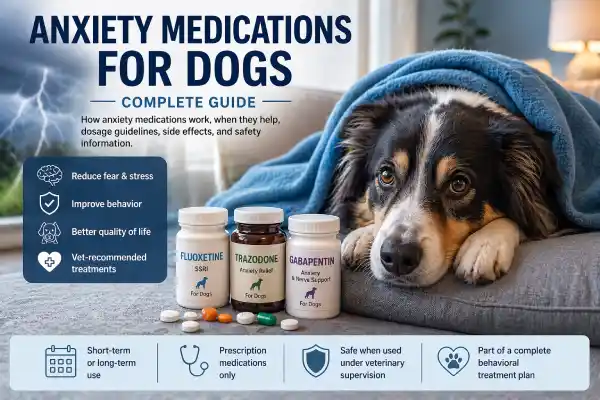
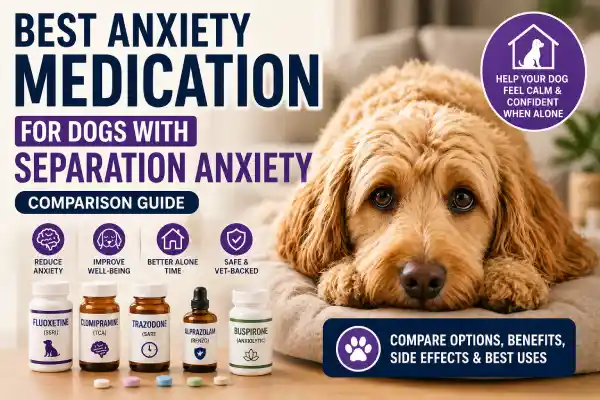
Best Anxiety Medication for Dogs – Separation anxiety is one of the most common behavioral problems in dogs — and one of the hardest to treat.
Choosing the right medication can dramatically improve your dog’s quality of life.
Quick Answer
- Best overall: Fluoxetine
- Best fast-acting: Trazodone
- Best alternative: Clomipramine
- Best for mild cases: Hydroxyzine
👉 Long-term anxiety = SSRI
👉 Immediate calming = situational meds
What Is Separation Anxiety in Dogs?
Separation anxiety happens when a dog becomes distressed when left alone.
Common signs:
- Barking / whining
- Destructive behavior
- Urinating indoors
- Pacing
- Escape attempts
👉 If untreated, it can worsen over time.
Best Anxiety Medications for Separation Anxiety
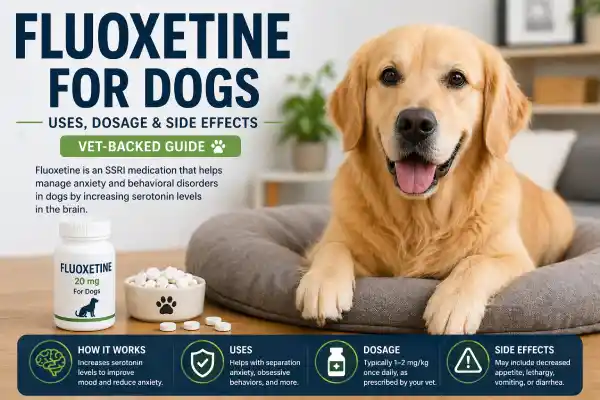
1. Fluoxetine (Best Overall)
✔ First-line treatment
✔ Long-term control
✔ Strong clinical evidence
Best for:
- Chronic separation anxiety
- Daily symptoms
- Behavioral modification programs
➡️ Read: Fluoxetine for Dogs
➡️ Dosage guide
➡️ Side effects
2. Clomipramine (Best for OCD + Severe Cases)
✔ Strong behavioral control
✔ Works for compulsive patterns
Best for:
- Severe separation anxiety
- Dogs with destructive behavior
- OCD-like symptoms
➡️ See: Clomipramine vs Fluoxetine
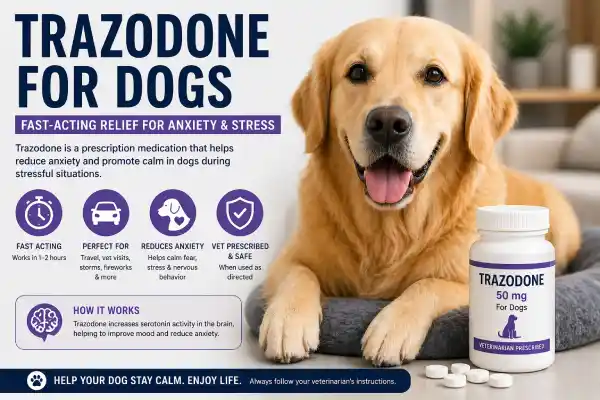
3. Trazodone (Best Fast Relief)
✔ Works in 1–2 hours
✔ Great for transitions
Best for:
- Leaving the house
- Training periods
- Acute stress
➡️ See: Trazodone vs Alprazolam
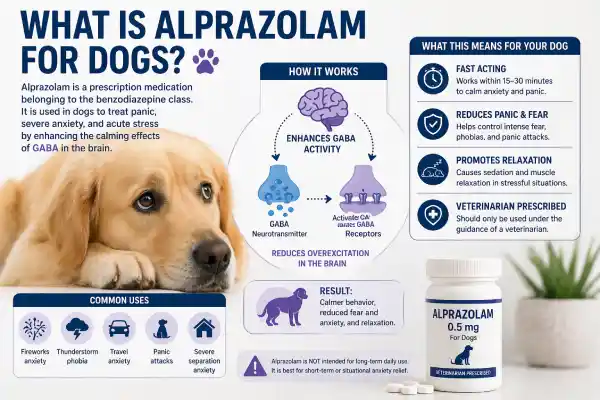
4. Alprazolam (Emergency Use)
✔ Rapid calming
✔ Strong effect
Best for:
- Panic episodes
- Severe distress
⚠️ Not for long-term use
5. Buspirone (Mild Anxiety)
✔ Non-sedating
✔ Safe
Best for:
- Mild separation anxiety
- Early stages
➡️ See: Buspirone vs Hydroxyzine
Best Anxiety Medication for Dogs
Comparison Table
| Medication | Best Use | Speed | Long-Term | Sedation |
|---|---|---|---|---|
| Fluoxetine | Chronic anxiety | Slow | Yes | Low |
| Clomipramine | Severe/OCD | Medium | Yes | Moderate |
| Trazodone | Situational | Fast | Sometimes | Moderate |
| Alprazolam | Emergency | Very fast | No | High |
| Buspirone | Mild | Slow | Yes | Minimal |
How to Choose the Right Medication
Step-by-step decision:
👉 Mild anxiety
→ Buspirone / Hydroxyzine
👉 Moderate anxiety
→ Fluoxetine
👉 Severe anxiety
→ Fluoxetine + Trazodone
👉 Panic / extreme distress
→ Alprazolam
👉 OCD behavior
→ Clomipramine
Real-Life Treatment Strategy
Most vets do NOT rely on one drug.
Typical plan:
- Daily → Fluoxetine
- Before leaving → Trazodone
- Severe cases → Add clomipramine
👉 Medication + training = BEST results
Advanced Medication Strategy for Separation Anxiety (PRO LEVEL)
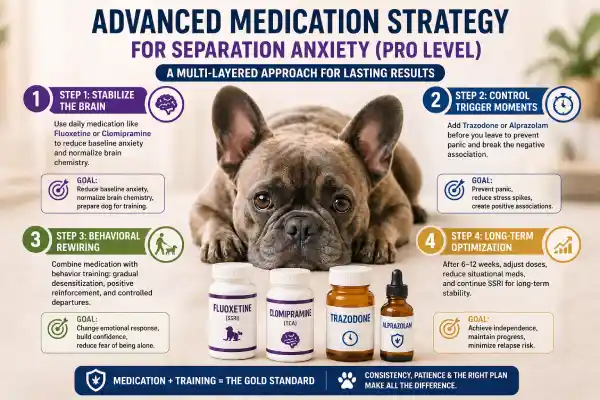
Separation anxiety treatment is rarely about a single medication.
In real clinical settings, veterinarians build multi-layered treatment plans.
Step 1: Stabilize the Brain (Foundation Therapy)
This is where Fluoxetine or
Clomipramine comes in.
👉 Goal:
- Reduce baseline anxiety
- Normalize brain chemistry
- Prepare dog for training
Step 2: Control Trigger Moments
When the owner leaves → anxiety spikes.
👉 Add:
- Trazodone
- or Alprazolam
👉 Goal:
- Prevent panic
- Break negative association
Step 3: Behavioral Rewiring
Medication alone is NOT enough.
You must include:
- Gradual desensitization
- Positive reinforcement
- Controlled departures
👉 Without this → relapse is common
Step 4: Long-Term Optimization
After 6–12 weeks:
- Adjust dose
- Reduce situational meds
- Continue SSRI
👉 Goal = independence without panic
How Long Do Medications Take to Work?
| Medication | Onset |
|---|---|
| Fluoxetine | 3–6 weeks |
| Clomipramine | 2–4 weeks |
| Trazodone | 1–2 hours |
| Alprazolam | 30–60 min |
Why Some Dogs Don’t Respond to Anxiety Medication
Not all dogs improve immediately — and this is where many owners fail.
Common reasons:
❌ Wrong medication
❌ Dose too low
❌ No behavior training
❌ Too short treatment duration
The biggest mistake:
👉 Stopping too early
Most SSRIs (like Fluoxetine) need:
- 4–6 weeks to start
- 8–12 weeks for full effect
What to do instead:
✔ Stay consistent
✔ Track behavior weekly
✔ Adjust with vet
Common Mistakes Owners Make
- Expecting instant results from SSRIs
- Using emergency meds daily
- Skipping behavior training
- Stopping medication too early
Pro Tips
✔ Always combine medication + training
✔ Use situational meds during training
✔ Be consistent
✔ Track improvements
Can Dogs Fully Recover from Separation Anxiety?
Yes — many dogs significantly improve with:
- Medication
- Behavior modification
- Routine
👉 Early treatment = better outcomes
Medication vs Natural Remedies
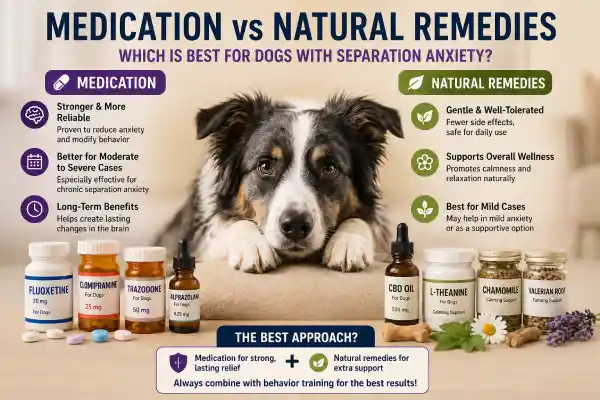
Many owners ask if they can avoid medication.
Natural options include:
- CBD oil
- L-theanine
- Herbal calming supplements
Reality check:
👉 Mild anxiety → may help
👉 Moderate/severe → NOT enough
Best approach:
✔ Combine natural + medication
✔ Use supplements as support
✔ Not replacement
FAQ
What is the strongest anxiety medication for dogs?
Clomipramine is considered one of the strongest for compulsive and severe cases, while Fluoxetine is the most commonly used long-term option.
Can separation anxiety get worse without treatment?
Yes. Without treatment, separation anxiety often becomes more severe and harder to manage over time.
What is the fastest-acting anxiety medication for dogs?
Trazodone and Alprazolam work within 30–120 minutes.
Can I leave my dog alone while on anxiety medication?
Yes, but training must be combined with medication to ensure long-term improvement.
Is medication safe for long-term use?
Yes, especially SSRIs like Fluoxetine when monitored by a veterinarian.
Can dogs become dependent on anxiety medication?
Most long-term medications (SSRIs) are not addictive, but sudden stopping can cause withdrawal-like effects.
Conclusion
The best anxiety medication for dogs with separation anxiety depends on severity:
👉 Mild → Buspirone
👉 Moderate → Fluoxetine
👉 Severe → Combination therapy
✔ The best results come from medication + training together
Medical Disclaimer
This content is provided for educational and informational purposes only and should not be considered veterinary medical advice.
While the information is based on current veterinary knowledge and clinical practices, it does not replace consultation with a licensed veterinarian. Every dog responds differently to medication, and treatment must be tailored individually.
👉 Never start, stop, or change any medication without veterinary supervision.
If your dog shows worsening anxiety, severe distress, or side effects, seek veterinary care immediately.
Use of this information is at your own risk.