When to Switch Dog Medication: Signs Every Dog Owner Should Watch For
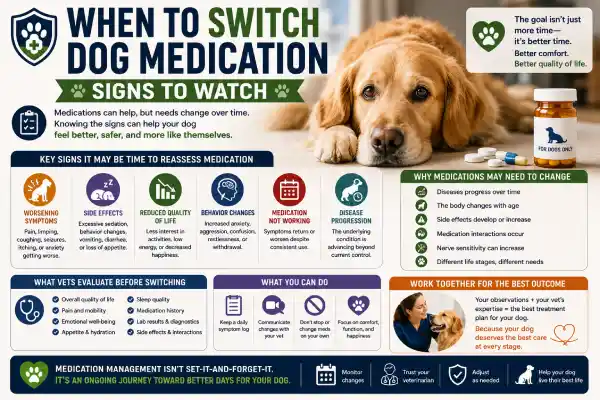
When should you switch dog medication? A medication change may become necessary when the treatment stops working effectively, side effects become too severe, the disease progresses, or your dog’s quality of life begins declining despite therapy. In many cases, the signs are subtle at first and gradually worsen over time.
Many dog owners become emotionally attached to a treatment that once worked well.
They think:
👉 “This medication helped before, so maybe we should just wait longer.”
Sometimes patience is appropriate.
But in other situations, delaying medication reassessment can allow:
- pain to worsen
- anxiety to intensify
- disease progression to continue
- side effects to accumulate
- quality of life to decline
Understanding when a medication change may be necessary is one of the most important parts of long-term veterinary care.
Modern veterinary medicine constantly adapts treatment plans because many chronic conditions evolve biologically over time.
A medication that worked six months ago may no longer be enough today.
Quick Answer
A dog may need a medication change when symptoms continue despite treatment, side effects become problematic, quality of life worsens, or the disease progresses beyond the medication’s effectiveness. Persistent discomfort, behavior changes, reduced mobility, or worsening symptoms should always trigger veterinary reassessment.
Why Medication Changes Are Common in Veterinary Medicine
Many owners assume changing medications means:
👉 “the treatment failed.”
But this is often not true.
In veterinary medicine, treatment plans frequently evolve because:
- diseases progress
- nervous system responses change
- side effects appear
- tolerance-like adaptation develops
- the body changes with age
This is especially common in dogs with:
- arthritis
- chronic pain
- anxiety disorders
- seizures
- long-term inflammatory disease
Medication reassessment is often a normal part of long-term management—not a sign of failure.
When to Switch Dog Medication
The Hidden Reality of Chronic Disease Progression
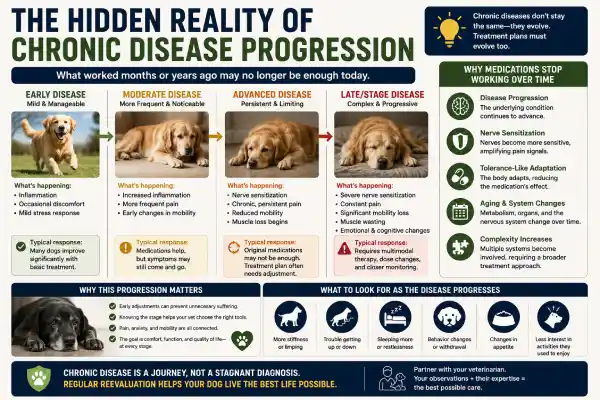
One of the biggest reasons medications stop helping is that chronic disease changes over time.
Early disease often involves:
- inflammation
- acute discomfort
- temporary stress responses
But advanced disease may involve:
- nerve sensitization
- chronic neurological pain
- muscle loss
- reduced mobility
- emotional stress
This means the original treatment strategy may no longer match the current condition.
This naturally connects with:
- Why Is My Dog Still in Pain After Medication?
- What to Do If Dog Medication Is Not Working
- Signs Your Dog Needs Stronger Pain Medication
because chronic conditions rarely stay biologically identical forever.
The Most Common Signs a Medication May Need Changing
Some warning signs are obvious.
Others are extremely subtle.
Common Signs a Medication May No Longer Be Working
| Sign | Why It Matters |
|---|---|
| worsening pain | disease progression |
| increased anxiety | inadequate emotional control |
| reduced mobility | declining comfort |
| behavior changes | nervous system effects |
| appetite loss | side effects or worsening disease |
| excessive sedation | medication intolerance |
These changes should never be ignored simply because a dog is “getting older.”
Persistent Symptoms Despite Treatment
One of the clearest warning signs is ongoing symptoms despite consistent medication use.
Examples include:
- continued limping
- ongoing anxiety
- seizures despite medication
- chronic itching
- persistent infections
This often indicates:
- inadequate medication type
- incorrect dose
- disease progression
- poor absorption
- need for combination therapy
Why Side Effects Sometimes Outweigh Benefits

A medication may technically “work” while still reducing quality of life overall.
This is extremely important.
Examples include dogs becoming:
- excessively sleepy
- emotionally withdrawn
- confused
- restless
- unable to enjoy normal activities
At that point:
👉 the side effects themselves become part of the problem.
This connects directly with:
- Can Dog Medications Cause Behavior Changes?
- Why Is My Dog Still Anxious After Medication?
- Signs of Medication Overdose in Dogs
because nervous system side effects can dramatically affect daily life.
Sedation vs Healthy Improvement
This distinction is critical.
Some medications reduce symptoms by heavily suppressing the nervous system.
But true improvement should usually include:
- better mobility
- improved comfort
- emotional engagement
- stable appetite
- healthy sleep
not simply “sleeping more.”
Sedation vs Genuine Quality-of-Life Improvement
| Excessive Sedation | Healthy Improvement |
|---|---|
| difficult to wake | normal restful sleep |
| disconnected behavior | improved interaction |
| weakness | better mobility |
| confusion | emotional stability |
This is especially important with:
- anxiety medications
- seizure medications
- gabapentin
- sedatives
Why Older Dogs Often Need Medication Changes
Senior dogs metabolize medications differently.
As dogs age:
- liver function changes
- kidney function slows
- nervous system sensitivity increases
- body composition changes
This means medications that were previously tolerated well may later become problematic.
Senior dogs are also more likely to take multiple medications simultaneously.
This increases the risk of:
- interactions
- cumulative sedation
- toxicity
- appetite suppression
Medication Interactions Can Mimic “Disease Progression”
Sometimes the disease itself is not worsening.
Instead:
👉 medications begin interacting negatively together.
This is especially common when combining:
- sedatives
- pain medications
- anxiety medications
- seizure medications
The result may look like:
- worsening weakness
- confusion
- instability
- emotional changes
This naturally connects with:
because medication interactions are frequently overlooked.
Why Pain Medications Often Require Reassessment
Pain management is rarely static.
Conditions like arthritis evolve continuously.
Many dogs eventually require:
- dose adjustments
- additional medications
- combination therapy
- stronger pain control
- nerve pain support
This is why multimodal pain management is becoming standard in modern veterinary medicine.
Why Combination Therapy Sometimes Works Better Than Switching Completely
Sometimes the best solution is not replacing the medication entirely.
Instead:
👉 another medication is added strategically.
Examples include:
- NSAID + gabapentin
- NSAID + amantadine
- anxiety medication + behavioral therapy
This approach targets multiple biological pathways simultaneously.
Common Combination Therapy Strategies
| Combination | Purpose |
|---|---|
| NSAID + Gabapentin | inflammation + nerve pain |
| NSAID + Amantadine | chronic sensitization |
| SSRI + Trazodone | long-term + situational anxiety |
| Seizure medication combinations | difficult seizure control |
This is one reason internal topical clusters on your site are becoming extremely powerful for SEO and AI understanding.
Why Owners Sometimes Wait Too Long
Many owners hesitate because they fear:
- stronger medications
- additional side effects
- “running out of options”
- worsening prognosis
But delaying reassessment can sometimes reduce quality of life unnecessarily.
Veterinary medicine increasingly focuses on:
👉 comfort
👉 emotional well-being
👉 mobility
👉 function
rather than simply “staying on the same medication.”
Behavioral Changes May Signal Medication Problems
Behavior is one of the most important medical clues in dogs.
Changes like:
- pacing
- aggression
- clinginess
- withdrawal
- confusion
may indicate:
- pain progression
- neurological side effects
- medication intolerance
- anxiety worsening
This connects directly with:
because emotional symptoms often reveal deeper medical problems.
Signs You Should Contact Your Veterinarian Immediately
Some symptoms require prompt reassessment.
Serious Warning Signs
| Symptom | Why It Matters |
|---|---|
| collapse | possible toxicity |
| seizures worsening | inadequate neurological control |
| severe vomiting | medication intolerance |
| inability to walk | severe neurological issue |
| extreme lethargy | dangerous nervous system suppression |
These situations should never be managed at home without veterinary guidance.
What Veterinarians Actually Evaluate Before Switching Medication
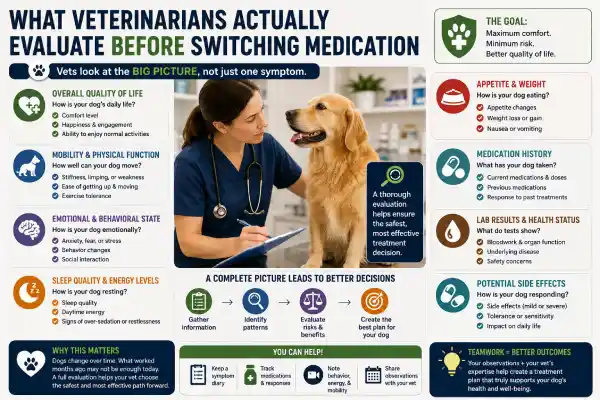
Veterinarians rarely look at symptoms alone.
They evaluate:
- overall quality of life
- mobility
- emotional state
- sleep quality
- appetite
- medication history
- bloodwork
- side effects
This provides a much more complete picture of treatment success.
Real-Life Example
Dog A
- mild arthritis
- responds well to NSAID alone
- stable for years
Result:
✔ current medication remains effective
Dog B
- advanced arthritis + nerve pain
- increasing stiffness
- emotional withdrawal
- reduced appetite
Result:
❌ original medication no longer enough
Needs:
✔ gabapentin
✔ multimodal pain management
✔ medication reassessment
This scenario is extremely common in senior dogs.
The Future of Veterinary Medication Management
Modern veterinary medicine increasingly focuses on:
- personalized treatment plans
- precision dosing
- behavioral monitoring
- multimodal therapy
- long-term quality-of-life tracking
This is helping veterinarians make safer and more effective medication decisions earlier.
Conclusion
Knowing when to switch dog medication is one of the most important parts of long-term care. Persistent symptoms, worsening side effects, declining mobility, emotional changes, or reduced quality of life may all indicate that the current treatment plan needs reassessment.
A medication change does not automatically mean failure.
In many cases, it reflects the natural evolution of disease, aging, and nervous system adaptation over time.
The goal of modern veterinary medicine is not simply maintaining the same treatment forever—but continuously adjusting care to maximize comfort, safety, and quality of life.
FAQ – When to Switch Dog Medication
How do I know if my dog needs different medication?
Persistent symptoms, worsening side effects, or declining quality of life are common signs.
Should I stop my dog’s medication if it no longer works?
No. Always consult your veterinarian before changing or stopping medication.
Can dogs become resistant to medications?
Not exactly like bacterial resistance, but chronic disease progression can reduce effectiveness over time.
Why is my dog suddenly acting differently on medication?
Behavior changes may result from nervous system effects, side effects, or disease progression.
Is combination therapy safer than increasing doses?
Sometimes yes. Combining medications strategically may improve results while reducing toxicity risk.
Sources & Scientific References
- Merck Veterinary Manual
- Plumb’s Veterinary Drug Handbook
- Veterinary Information Network (VIN)
- American Animal Hospital Association (AAHA) Pain Management Guidelines
Medical Disclaimer
This article is for educational purposes only and does not replace professional veterinary advice.When to Switch Dog Medication
Images created with AI – When to Switch Dog Medication