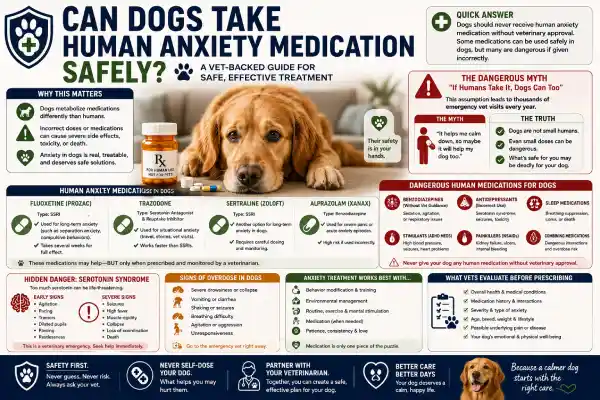
Can Dogs Take Human Anxiety Medication Safely? – Some human anxiety medications are occasionally prescribed by veterinarians for dogs, but many are dangerous if given incorrectly. Dogs process medications differently than humans, and the wrong medication, dose, or combination can lead to severe side effects, toxicity, seizures, or even life-threatening emergencies.
This is one of the most searched and misunderstood questions in veterinary medicine.
Many owners notice their dog struggling with:
- separation anxiety
- panic during storms
- fireworks fear
- pacing
- trembling
- destructive behavior
- nighttime anxiety
Then they look at their own medications and wonder:
👉 “Can I give my dog something I already take?”
This is where dangerous mistakes often begin.
Some human anxiety medications are used safely in veterinary medicine under professional supervision.
Others can become extremely toxic—even in relatively small amounts.
Understanding the difference is critical for protecting your dog’s safety.
Quick Answer
Dogs should never receive human anxiety medication without veterinary approval. Some medications like fluoxetine or trazodone may be prescribed safely by veterinarians, but others can cause dangerous toxicity, neurological reactions, or life-threatening overdose.
Why This Topic Is So Important
Anxiety in dogs is becoming increasingly common.
Modern dogs experience many stressors, including:
- loud urban environments
- long periods alone
- reduced exercise
- traumatic experiences
- aging-related confusion
- overstimulation
As awareness of canine mental health grows, more owners begin searching for fast solutions.
Unfortunately:
👉 human medications are NOT automatically safe for dogs.
Even when the medication itself can technically be used in dogs, the dosage is often dramatically different.
This is because dogs metabolize drugs differently due to:
- liver function differences
- body weight differences
- nervous system sensitivity
- breed-specific metabolism
- kidney clearance variation
This naturally connects with:
- Why Is My Dog Still Anxious After Medication?
- Can Dog Medications Cause Behavior Changes?
- Signs of Medication Overdose in Dogs
because anxiety treatment safety depends heavily on proper medical supervision.
The Dangerous Myth: “If Humans Take It, Dogs Can Too”
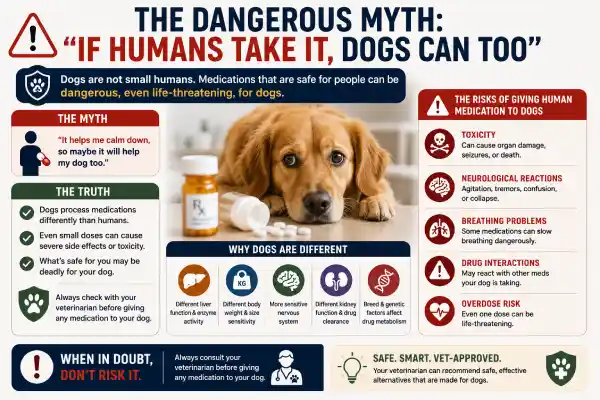
This assumption causes countless emergency veterinary visits every year.
Owners sometimes believe:
👉 “It helps me calm down, so maybe it will help my dog too.”
But dogs are not small humans.
Some medications that are relatively safe for people may cause:
- severe sedation
- agitation
- seizures
- breathing problems
- liver damage
- serotonin syndrome
in dogs.
This is why self-medicating dogs with human prescriptions is extremely risky.
Human Anxiety Medications Sometimes Used in Dogs
Some medications originally developed for humans are now commonly used in veterinary behavioral medicine.
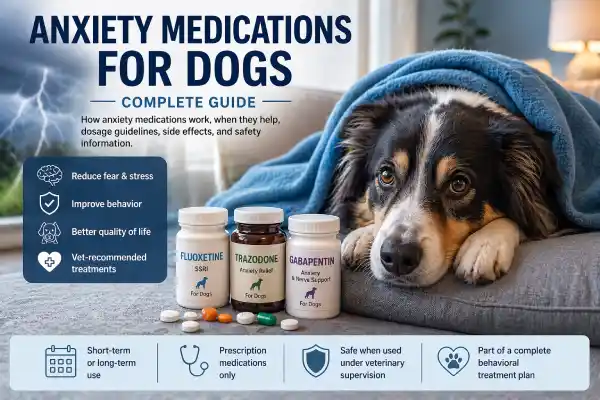
Examples include:
- Fluoxetine
- Trazodone
- Sertraline
- Alprazolam
However:
👉 veterinary dosing and monitoring are completely different from human use.
The fact that a medication exists in both human and veterinary medicine does NOT mean owners should administer it independently.
Why Veterinary Dosing Is So Different
Veterinarians calculate medications carefully based on:
- body weight
- breed
- age
- liver function
- kidney health
- other medications
- anxiety severity
A small dosage mistake may completely change the outcome.
This is especially dangerous in:
- toy breeds
- senior dogs
- dogs with liver disease
- dogs taking multiple medications
Common Human Anxiety Medications Used by Veterinarians
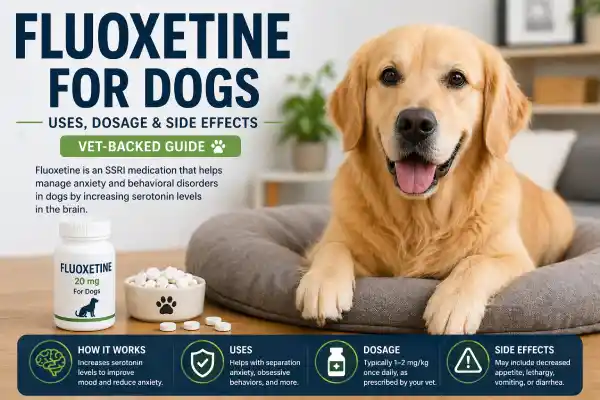
Fluoxetine (Prozac)
How Veterinarians Use It
Fluoxetine is one of the most commonly prescribed long-term anxiety medications for dogs.
It may help with:
- separation anxiety
- compulsive behaviors
- chronic generalized anxiety
Important Reality
Fluoxetine usually requires:
- several weeks for full effect
- gradual dose adjustment
- close monitoring
It is NOT an instant calming medication.
This connects naturally with:
because long-term emotional regulation differs from sedation.
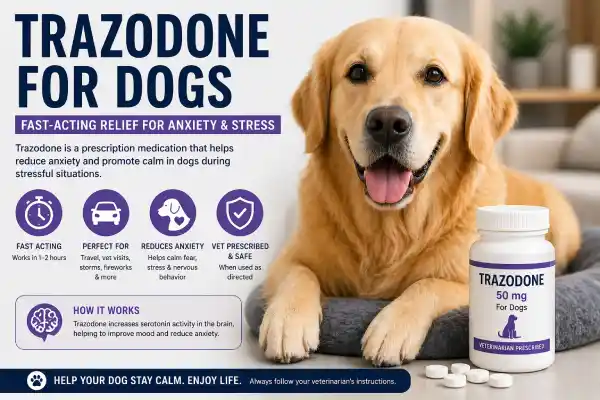
Trazodone
Why Veterinarians Use It
Trazodone is commonly used for:
- situational anxiety
- post-surgical calming
- veterinary visits
- travel stress
It often works faster than SSRIs.
Potential Side Effects
Some dogs may experience:
- wobbling
- excessive sedation
- disorientation
- agitation
This is why proper dosing matters enormously.
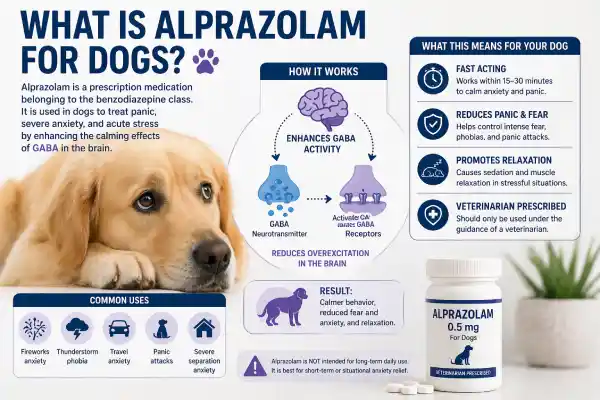
Alprazolam (Xanax)
Situational Use
Alprazolam may sometimes be used for:
- severe panic episodes
- thunderstorm anxiety
- fireworks phobia
Important Warning
Incorrect use can cause:
- excessive sedation
- paradoxical excitement
- aggression
- dangerous interactions
This is one reason behavioral medications should never be adjusted casually.
Dangerous Human Medications Dogs Should NEVER Receive Without Veterinary Guidance
Some medications create especially high risk.
High-Risk Human Medications for Dogs
| Medication Type | Why It Can Be Dangerous |
|---|---|
| benzodiazepines | sedation or paradoxical agitation |
| sleep medications | breathing suppression |
| antidepressants | serotonin toxicity |
| stimulants | neurological emergencies |
| multiple combined medications | dangerous interactions |
Many overdose emergencies happen because owners combine medications unknowingly.
Can Dogs Take Human Anxiety Medication Safely?
The Hidden Danger: Serotonin Syndrome
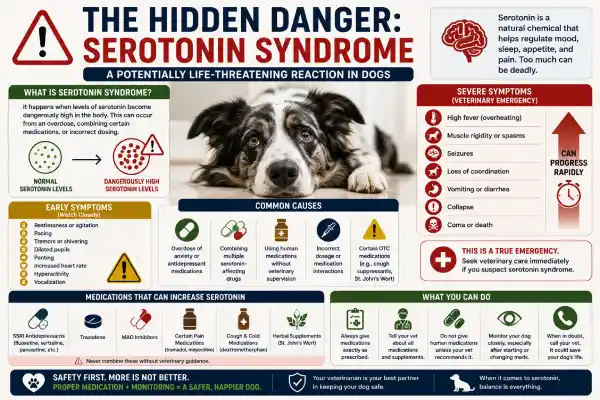
This is one of the most serious anxiety-medication emergencies.
Serotonin syndrome occurs when serotonin levels become dangerously excessive.
It may happen from:
- overdose
- combining medications
- incorrect dosing
Signs of Serotonin Syndrome in Dogs
Early Symptoms
- agitation
- pacing
- tremors
- dilated pupils
- panting
Severe Symptoms
- seizures
- overheating
- collapse
- muscle rigidity
- life-threatening neurological instability
This is a true veterinary emergency.
Why Small Dogs Face Higher Risk
Smaller dogs are especially vulnerable because:
- toxic doses are reached more easily
- metabolism differs
- nervous system sensitivity is higher
A dose that barely affects a large dog could become life-threatening for a Chihuahua or Yorkie.
Can Dogs Take Benadryl for Anxiety?
This is another extremely common question.
Diphenhydramine (Benadryl) may cause mild sedation in some dogs.
However:
👉 sedation is NOT the same as anxiety treatment.
Many dogs remain emotionally stressed while simply appearing sleepy.
This naturally connects with:
because emotional relief and nervous system suppression are not identical.
Can Dogs Take Human Anxiety Medication Safely?
Why Some Dogs React Oppositely to Anxiety Medication
One of the most confusing realities in veterinary medicine is paradoxical reactions.
Instead of calming down, some dogs become:
- hyperactive
- agitated
- aggressive
- restless
This happens because nervous systems respond differently between individuals.
Breed, genetics, age, and underlying neurological sensitivity all play a role.
Medication Interactions Are a Massive Risk
Many dogs already take medications for:
- arthritis
- seizures
- allergies
- pain management
Adding anxiety medications can increase the risk of:
- excessive sedation
- breathing suppression
- confusion
- serotonin syndrome
This connects directly with:
- Medication Interactions Can Intensify Behavioral Symptoms
- When to Switch Dog Medication (Signs to Watch)
because medication combinations require careful professional management.
Why Anxiety Medication Alone Is Often Not Enough
Many owners expect:
👉 “one pill = cured anxiety.”
But chronic anxiety often requires:
- behavioral therapy
- environmental changes
- routine stability
- trigger management
- exercise
- mental stimulation
Medication works best when combined with broader emotional support strategies.Can Dogs Take Human Anxiety Medication Safely?
What Veterinarians Actually Evaluate Before Prescribing Anxiety Medication
Veterinarians assess far more than just anxious behavior.
They evaluate:
- overall health
- neurological function
- pain levels
- sleep quality
- medication history
- liver and kidney health
- behavior triggers
- severity of anxiety episodes
This helps determine:
- whether medication is appropriate
- which medication is safest
- whether combination therapy is needed
Anxiety Can Sometimes Be a Symptom of Another Medical Problem
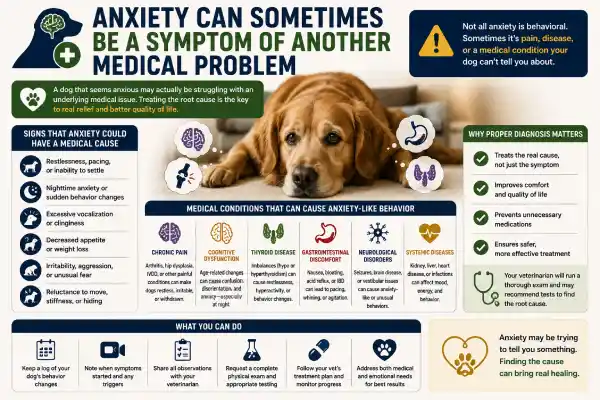
This is one of the most overlooked realities in veterinary medicine.
Some dogs appearing “anxious” may actually have:
- chronic pain
- cognitive dysfunction
- neurological disease
- thyroid disease
- sensory decline
This is why proper diagnosis matters enormously.
A dog in chronic pain may appear restless or clingy because discomfort keeps the nervous system activated continuously.
Can Dogs Take Human Anxiety Medication Safely?
Signs You Should Contact Your Veterinarian Immediately
Some symptoms require immediate evaluation.
Serious Warning Signs
| Symptom | Why It Matters |
|---|---|
| seizures | neurological emergency |
| collapse | dangerous nervous system suppression |
| breathing difficulty | possible overdose |
| severe agitation | serotonin syndrome risk |
| inability to wake | excessive sedation |
These symptoms should NEVER be monitored at home without veterinary guidance.
Real-Life Example
Dog A
- mild separation anxiety
- receives veterinarian-prescribed trazodone
- monitored carefully
- improves safely
Result:
✔ calmer behavior
✔ improved recovery after triggers
Dog B
- owner gives unapproved human medication
- incorrect dosage
- severe tremors and collapse develop
Result:
❌ emergency hospitalization required
This scenario is extremely common in emergency veterinary clinics.
The Future of Veterinary Behavioral Medicine
Modern veterinary medicine increasingly focuses on:
- individualized behavioral treatment
- safer medication protocols
- neurological monitoring
- multimodal therapy
- emotional quality of life
Veterinary behavioral medicine is advancing rapidly, and outcomes for anxious dogs continue improving significantly.
Conclusion
Some human anxiety medications can be used safely in dogs—but only under veterinary supervision. Dogs metabolize medications differently than humans, and incorrect dosing or medication combinations can quickly become dangerous.Can Dogs Take Human Anxiety Medication Safely?
Anxiety treatment is far more complex than simply “giving something calming.” Successful treatment requires careful diagnosis, individualized medication planning, behavioral support, and long-term monitoring.
The safest approach is always working directly with your veterinarian rather than experimenting with human medications at home.Can Dogs Take Human Anxiety Medication Safely?
FAQ – Can Dogs Take Human Anxiety Medication Safely?
Can dogs safely take human anxiety medication?
Sometimes, but only with veterinary guidance and proper dosing.
What human anxiety medication is most commonly used in dogs?
Fluoxetine and trazodone are among the most commonly prescribed.
Can I give my dog my Xanax?
No. Never give alprazolam or any anxiety medication without veterinary approval.
What are signs of anxiety medication overdose in dogs?
Tremors, agitation, collapse, seizures, breathing changes, and severe sedation.
Can anxiety medication change a dog’s personality?
Some medications may temporarily affect behavior, emotional responsiveness, or energy levels.
Sources & Scientific References
- Merck Veterinary Manual
- Veterinary Information Network (VIN)
- Plumb’s Veterinary Drug Handbook
- American College of Veterinary Behaviorists (ACVB)
- Pet Poison Helpline
Medical Disclaimer
This article is for educational purposes only and does not replace professional veterinary advice.Can Dogs Take Human Anxiety Medication Safely?
Images created with AI – Can Dogs Take Human Anxiety Medication Safely?