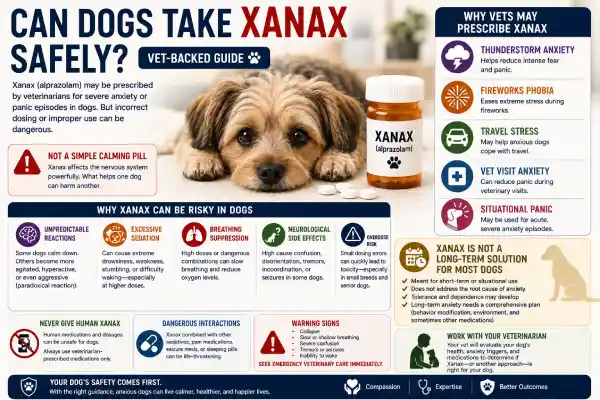
Can Dogs Take Xanax Safely? Sometimes—but only under veterinary supervision. Xanax (alprazolam) is occasionally prescribed by veterinarians for severe anxiety, panic episodes, thunderstorm phobia, fireworks fear, or situational stress in dogs. However, incorrect dosing or improper use can cause dangerous sedation, agitation, breathing problems, or serious neurological side effects.
This is one of the most searched anxiety medication questions among dog owners.
Many owners notice their dog experiencing:
- panic during storms
- fireworks fear
- shaking and pacing
- severe separation anxiety
- nighttime panic
- travel stress
Then they wonder:
👉 “Can I give my dog Xanax?”
The answer is more complicated than most people expect.
While Xanax can sometimes help certain dogs, it is also one of the medications most commonly associated with:
- accidental overdose
- dangerous interactions
- paradoxical reactions
- emergency veterinary visits
This is why veterinary guidance is critical.
Quick Answer
Dogs may sometimes receive Xanax (alprazolam) safely when prescribed and monitored by a veterinarian. However, Xanax should never be given without professional guidance because incorrect dosing or medication interactions can cause dangerous sedation, agitation, breathing suppression, or overdose.
What Is Xanax?
Understanding Alprazolam
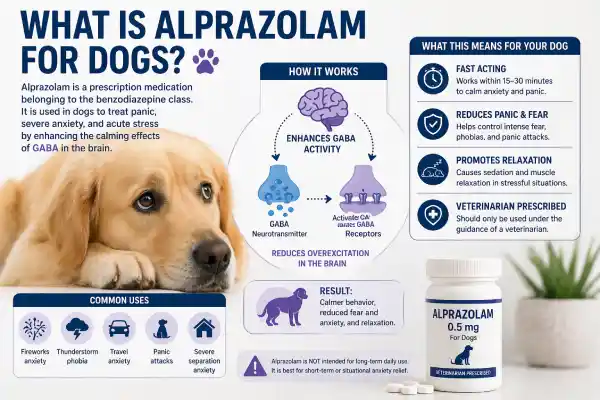
Alprazolam, commonly known by the brand name Xanax, belongs to a class of medications called:
Benzodiazepines
These medications affect the nervous system by enhancing calming brain signals.
In dogs, Xanax may temporarily reduce:
- panic
- fear responses
- acute anxiety
- extreme stress reactions
Unlike long-term anxiety medications that require weeks to work, Xanax often works relatively quickly.
Can Dogs Take Xanax Safely?
Why Veterinarians Sometimes Prescribe Xanax
Veterinarians may prescribe Xanax for:
- thunderstorm anxiety
- fireworks phobia
- severe situational panic
- veterinary visit anxiety
- travel-related panic
This naturally connects with:
because anxiety treatment is far more complex than simply “making a dog sleepy.”
Why Xanax Can Be Risky in Dogs
This is extremely important.
Many owners assume:
👉 “If Xanax calms humans, it must calm dogs safely too.”
But dogs process medications differently.
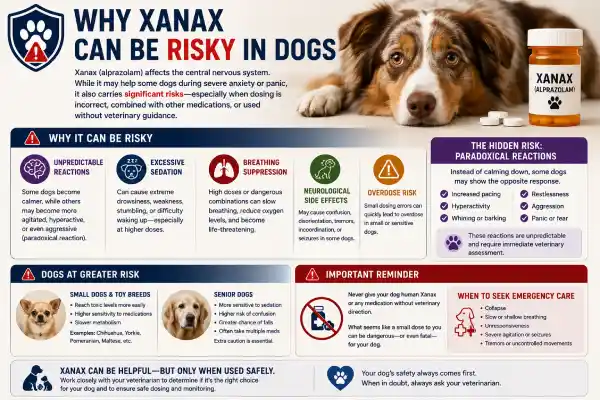
Xanax may sometimes cause:
- excessive sedation
- confusion
- stumbling
- breathing suppression
- paradoxical agitation
- aggression
Some dogs become calmer.
Others react in the exact opposite way.
The Hidden Reality: Some Dogs Become MORE Agitated
This is called:
A paradoxical reaction
Instead of calming down, some dogs may become:
- hyperactive
- restless
- vocal
- aggressive
- panicked
This surprises many owners because the medication is expected to “calm” the dog.
Paradoxical reactions are unpredictable and can happen even at lower doses.
Signs of a Possible Paradoxical Reaction
Warning Signs
- increased pacing
- hyperactivity
- whining
- aggression
- frantic behavior
- inability to settle
These symptoms require veterinary reassessment immediately.
Why Small Dogs Face Greater Risk
Toy breeds and small dogs are especially vulnerable.
This happens because:
- toxic doses are reached more easily
- nervous system sensitivity is higher
- metabolism varies significantly
A dosage mistake that mildly sedates a large dog could become dangerous for a Chihuahua or Yorkie.
Why Senior Dogs Require Extra Caution
Older dogs are more sensitive to:
- sedation
- confusion
- weakness
- balance problems
- medication interactions
Senior dogs also commonly take multiple medications simultaneously, which increases the risk of:
- excessive nervous system suppression
- dangerous interactions
- falls and injuries
This connects naturally with:
because long-term medication safety becomes increasingly important with age.
Xanax Is NOT a Long-Term Solution for Most Dogs
This is one of the biggest misunderstandings owners have.
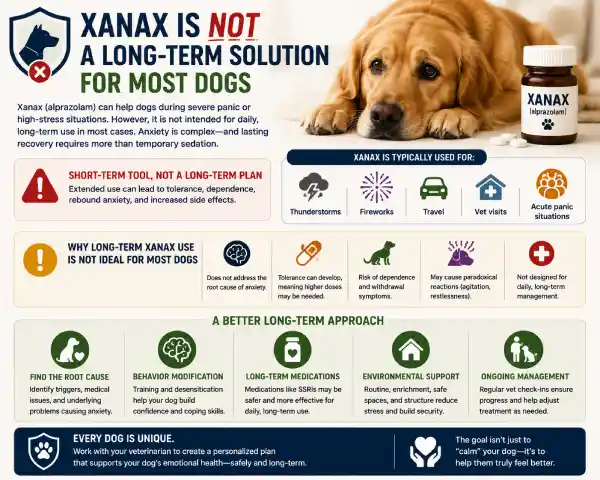
Xanax is typically used for:
✔ acute panic
✔ short-term situations
✔ temporary anxiety episodes
It is usually NOT the best long-term treatment for chronic anxiety disorders.
Long-term anxiety management often involves:
- behavioral therapy
- environmental management
- routine stability
- long-term medications like SSRIs
Sedation Is Not the Same as Emotional Relief
This distinction is critical.
A sedated dog may appear calmer while still experiencing emotional stress internally.
This is why veterinarians increasingly focus on:
- emotional regulation
- recovery after triggers
- long-term behavior improvement
rather than simple “quietness.”
Sedation vs Healthy Anxiety Relief
| Sedation | Healthy Anxiety Improvement |
|---|---|
| excessive sleepiness | emotional stability |
| difficult to wake | calmer recovery |
| disconnected behavior | improved confidence |
| weakness | relaxed body language |
This connects directly with:
because emotional health and sedation are not identical.
Dangerous Medication Interactions With Xanax
Xanax becomes much riskier when combined with other medications that affect the nervous system.
Examples include:
- pain medications
- seizure medications
- sedatives
- sleep medications
- certain anxiety medications
This can create:
- severe sedation
- breathing suppression
- collapse
- dangerous neurological effects
Medication Combinations That Increase Risk
| Combination Type | Possible Risk |
|---|---|
| Xanax + sedatives | excessive sedation |
| Xanax + opioids | breathing suppression |
| Xanax + seizure medications | coordination problems |
| Xanax + multiple calming products | overdose risk |
Owners should NEVER create medication combinations independently.
Why Human Xanax Should Never Be Given Casually
Many emergency veterinary visits happen because owners:
- estimate doses incorrectly
- split tablets improperly
- combine medications unknowingly
- give repeated doses too quickly
Human formulations may also contain ingredients inappropriate for dogs.
This is why self-dosing is extremely risky.
Signs Xanax May Be Becoming Dangerous
Some symptoms require immediate veterinary care.
Serious Warning Signs
| Symptom | Why It Matters |
|---|---|
| collapse | dangerous nervous system suppression |
| slow breathing | emergency sedation risk |
| inability to wake | overdose concern |
| severe confusion | neurological involvement |
| tremors or seizures | toxic reaction |
These symptoms should never be monitored at home.
Why Anxiety Sometimes Has Another Cause
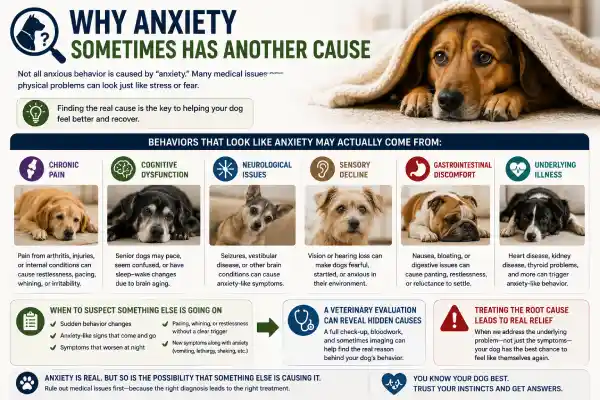
This is another major hidden issue.
Dogs appearing anxious may actually suffer from:
- chronic pain
- cognitive dysfunction
- neurological disease
- sensory decline
- underlying illness
This is why veterinarians evaluate the entire dog—not just the anxiety symptoms.
This naturally connects with:
because discomfort itself may drive panic-like behavior.
What Veterinarians Actually Evaluate Before Prescribing Xanax
Veterinarians assess:
- overall health
- medication history
- anxiety severity
- body weight
- liver function
- kidney function
- current medications
- behavior triggers
This helps reduce the risk of dangerous complications.
Real-Life Example
Dog A
- severe thunderstorm panic
- veterinarian-prescribed Xanax
- carefully monitored dosing
Result:
✔ reduced panic
✔ safer recovery during storms
Dog B
- owner gives human Xanax independently
- dog already taking pain medication
Result:
❌ collapse and severe sedation
❌ emergency veterinary hospitalization
This scenario is extremely common in emergency clinics.
The Future of Veterinary Anxiety Treatment
Modern veterinary medicine increasingly focuses on:
- individualized behavioral treatment
- safer medication combinations
- emotional quality-of-life monitoring
- behavioral therapy integration
- long-term anxiety management
This is dramatically improving outcomes for anxious dogs.
Conclusion
Dogs can sometimes take Xanax safely—but only under veterinary supervision. Xanax affects the nervous system powerfully, and incorrect dosing or medication combinations can quickly become dangerous.
While Xanax may help certain dogs during severe panic episodes, it is not appropriate for every dog or every type of anxiety.
The safest approach is always working directly with your veterinarian to determine whether Xanax—or another treatment strategy—is truly appropriate for your dog’s emotional and medical needs.
FAQ – Can Dogs Take Xanax Safely?
Can I give my dog human Xanax?
Never without veterinary approval.
Is Xanax dangerous for dogs?
It can be if improperly dosed or combined with other medications.
What is Xanax used for in dogs?
Veterinarians may prescribe it for severe situational anxiety or panic episodes.
Can Xanax make dogs aggressive?
Yes. Some dogs develop paradoxical agitation or behavioral changes.
What are signs of Xanax overdose in dogs?
Extreme sedation, collapse, slow breathing, tremors, and inability to wake.
Sources & Scientific References
- Merck Veterinary Manual
- Veterinary Information Network (VIN)
- Plumb’s Veterinary Drug Handbook
- American College of Veterinary Behaviorists (ACVB)
- Pet Poison Helpline
Medical Disclaimer
This article is for educational purposes only and does not replace professional veterinary advice. Never give Xanax or any human medication to your dog without veterinary supervision.