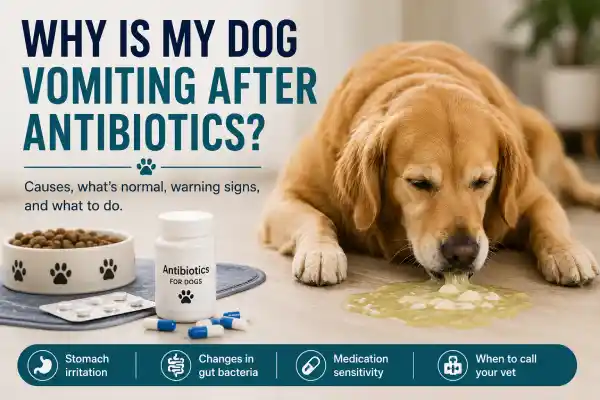
Why Is My Dog Vomiting After Antibiotics – Many dog owners become worried when their dog starts vomiting after taking antibiotics, especially medications like amoxicillin, doxycycline, metronidazole, or clindamycin. In some cases, mild stomach upset is expected, but repeated vomiting can also signal irritation, incorrect dosing, or a more serious reaction.
Quick Answer
Dogs may vomit after antibiotics because some medications irritate the stomach lining, alter gut bacteria, or cause nausea. Mild vomiting can happen occasionally, especially if the medication is given on an empty stomach. However, repeated vomiting, lethargy, blood in vomit, refusal to eat, or severe diarrhea should be evaluated by a veterinarian immediately.
Why Do Antibiotics Make Dogs Vomit?
Antibiotics are designed to kill bacteria, but they can also affect the digestive system. Some dogs are especially sensitive to gastrointestinal side effects.
Common reasons include:
- Stomach irritation
- Taking medication without food
- Changes in gut bacteria
- Medication taste causing gagging
- Overdose or dosing mistakes
- Sensitivity to a specific antibiotic
- Underlying illness worsening
Some antibiotics are much more likely to cause nausea than others.
Why Is My Dog Vomiting After Antibiotics
Common Antibiotics That May Cause Vomiting in Dogs
| Antibiotic | Vomiting Risk | Notes |
|---|---|---|
| Amoxicillin | Mild | Usually easier on the stomach |
| Doxycycline | Moderate | Can irritate stomach and esophagus |
| Metronidazole | High | Bitter taste often causes nausea |
| Clindamycin | Moderate to High | GI upset fairly common |
| Enrofloxacin (Baytril) | Moderate | Can cause digestive irritation |
| Cephalexin | Mild to Moderate | Often improves when given with food |
You can also read our related guides:
- Amoxicillin for Dogs
- Metronidazole for Dogs
- Clindamycin for Dogs
- Cephalexin for Dogs
- Enrofloxacin for Dogs
Is Vomiting After Antibiotics Normal?
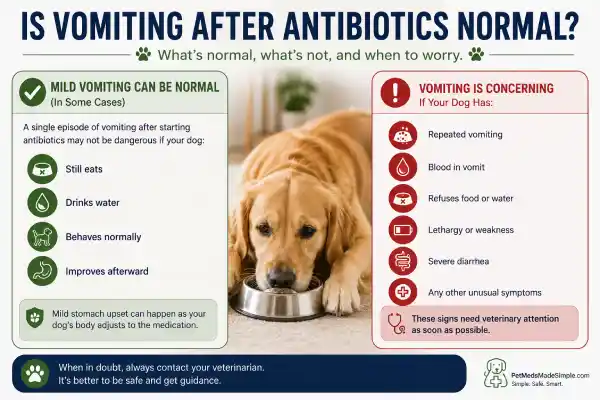
Sometimes yes — but only mildly.
A single episode of vomiting shortly after starting antibiotics may not be dangerous if:
- your dog still eats,
- drinks water,
- behaves normally,
- and improves afterward.
However, vomiting becomes concerning when:
- it happens repeatedly,
- your dog cannot keep water down,
- blood appears,
- severe diarrhea develops,
- or your dog becomes weak and lethargic.
Antibiotics Most Commonly Associated With Nausea
Metronidazole
Metronidazole has a very bitter taste and commonly causes:
- drooling,
- gagging,
- lip smacking,
- nausea,
- vomiting.
Some dogs vomit simply because they taste the crushed tablet.
Doxycycline
Doxycycline can irritate the:
- stomach,
- throat,
- esophagus.
This is especially common if:
- pills become stuck,
- medication is given dry,
- or given without food.
Clindamycin
Clindamycin frequently causes:
- vomiting,
- diarrhea,
- reduced appetite.
This antibiotic can be effective, but some dogs tolerate it poorly.
Signs Your Dog May Simply Have Mild Stomach Upset
Mild antibiotic-related nausea may include:
- lip licking
- swallowing repeatedly
- mild drooling
- eating grass
- one episode of vomiting
- decreased appetite for several hours
These signs often improve within 1–3 days.
Warning Signs That Need Veterinary Attention
Contact your veterinarian immediately if your dog has:
| Emergency Sign | Why It Matters |
|---|---|
| Repeated vomiting | Risk of dehydration |
| Blood in vomit | Possible GI injury |
| Severe diarrhea | Dangerous fluid loss |
| Collapse or weakness | Serious reaction possible |
| Refusing water | High dehydration risk |
| Tremors or seizures | Potential toxicity |
| Bloated abdomen | Emergency condition |
Should You Give Antibiotics With Food?
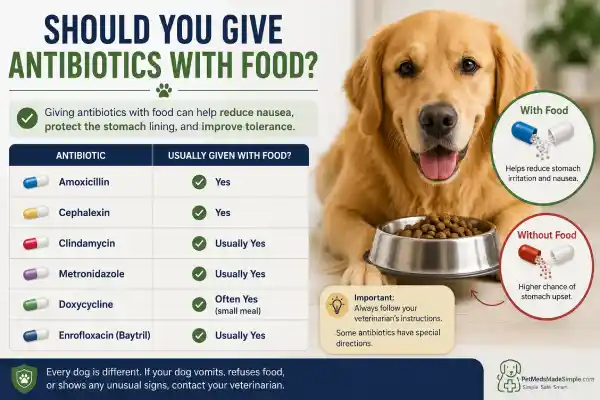
Often yes — but not always.
Giving antibiotics with food can reduce nausea and stomach irritation.
However, some medications have special instructions.
| Antibiotic | Usually Given With Food? |
|---|---|
| Amoxicillin | Yes |
| Cephalexin | Yes |
| Clindamycin | Usually yes |
| Metronidazole | Usually yes |
| Doxycycline | Often yes (small meal) |
Always follow your veterinarian’s directions.
What To Do If Your Dog Vomits After Antibiotics
1. Do NOT immediately repeat the dose
If the medication was vomited up, contact your vet before redosing.
Giving extra medication can accidentally cause overdose.
2. Monitor timing
Important questions:
- Did vomiting happen immediately?
- Several hours later?
- After every dose?
This helps determine whether the medication is the likely cause.
3. Offer small amounts of water
Frequent vomiting can quickly cause dehydration.
Offer:
- small sips,
- ice cubes,
- or tiny amounts of water every 15–20 minutes.
4. Ask your vet about alternatives
Sometimes a different antibiotic works much better for sensitive dogs.
Examples:
- switching formulations,
- liquid instead of tablets,
- flavored compounds,
- injectable antibiotics,
- anti-nausea medication.
Can Antibiotics Cause Serious Reactions in Dogs?
Yes — though uncommon.
Rare but serious reactions may include:
- allergic reactions,
- severe diarrhea,
- neurological symptoms,
- liver problems,
- severe gut inflammation.
Signs of emergency reactions:
- facial swelling,
- breathing difficulty,
- hives,
- collapse,
- severe weakness.
How Long Does Antibiotic Nausea Last?
Many dogs improve after:
- 24–72 hours,
- taking medication with food,
- or switching antibiotics.
Persistent vomiting should never be ignored.
How Veterinarians Reduce Antibiotic Stomach Side Effects
Vets may recommend:
- probiotics
- anti-nausea medications
- smaller meals
- medication timing adjustments
- switching antibiotics
- compounded flavored medication
Antibiotic Side Effects vs Allergic Reaction
| Side Effect | Allergic Reaction |
|---|---|
| Mild vomiting | Facial swelling |
| Temporary nausea | Hives |
| Mild diarrhea | Breathing problems |
| Reduced appetite | Collapse |
| Mild lethargy | Severe weakness |
Can Probiotics Help?

Sometimes yes.
Antibiotics can disrupt normal gut bacteria. Certain veterinary probiotics may help:
- reduce diarrhea,
- improve appetite,
- support digestion.
Ask your veterinarian before combining supplements with prescription medications.
Read more:
Probiotics for Dogs: Do They Help with Antibiotic Side Effects? (Vet-Backed Guide)
Frequently Asked Questions
Should I stop antibiotics if my dog vomits?
Do not stop prescription antibiotics without veterinary guidance. Stopping early may worsen infection or contribute to antibiotic resistance.
Can antibiotics cause diarrhea and vomiting together?
Yes. Many antibiotics affect the digestive tract and gut bacteria simultaneously.
Is vomiting after doxycycline common in dogs?
Yes. Doxycycline commonly causes nausea or stomach irritation, especially when given without food.
Should I give the next dose if my dog vomited?
Contact your veterinarian first. The answer depends on how long after dosing the vomiting occurred.
Can dogs take anti-nausea medication with antibiotics?
Sometimes yes. Veterinarians commonly prescribe medications like maropitant (Cerenia) for nausea management.
Medical Disclaimer
This article is for educational purposes only and does not replace veterinary medical advice. Always consult a licensed veterinarian before starting, stopping, or changing any medication for your dog.