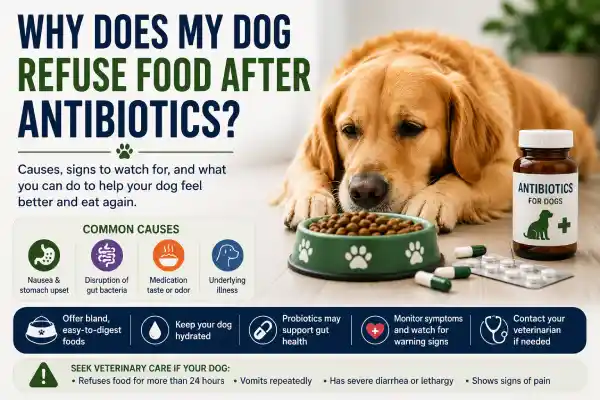
Why Does My Dog Refuse Food After Antibiotics? – Many dog owners become worried when their dog suddenly stops eating after starting antibiotics. Some dogs lose interest in food because of nausea, stomach irritation, medication taste, or digestive upset, while others may refuse meals because the underlying infection itself is making them feel sick.
If your dog refuses food after antibiotics, it is important to determine whether the loss of appetite is mild and temporary or a warning sign that requires veterinary attention.
Quick Answer
Dogs may refuse food after antibiotics because certain medications can cause nausea, stomach irritation, altered gut bacteria, diarrhea, or bad taste reactions. Mild appetite loss for 1–2 days can sometimes happen during antibiotic treatment, but persistent refusal to eat, vomiting, severe lethargy, dehydration, or worsening symptoms should be evaluated by a veterinarian immediately.
Why Do Antibiotics Make Some Dogs Stop Eating?
Antibiotics do more than fight infection. They can also affect:
- the stomach,
- intestinal lining,
- gut bacteria,
- taste sensation,
- and overall digestive comfort.
Some dogs are highly sensitive to these changes.
Common reasons include:
- nausea
- upset stomach
- abdominal discomfort
- medication bitterness
- stress from illness
- diarrhea
- acid reflux
- gut microbiome disruption
Dogs experiencing nausea often avoid food because eating may worsen discomfort.
You can also read:
- “Why Is My Dog Vomiting After Antibiotics?”
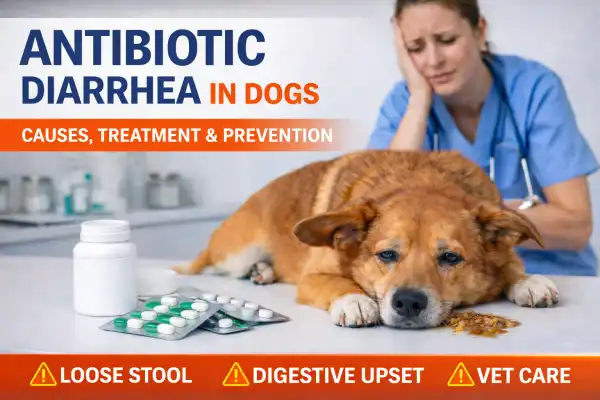
- “Antibiotic Diarrhea in Dogs: Causes, Treatment & Prevention”
- “Can Antibiotics Cause Lethargy in Dogs?”
- “Can Clindamycin Cause Vomiting in Dogs?”
- “Doxycycline and Vomiting in Dogs”
Why Does My Dog Refuse Food After Antibiotics?
Which Antibiotics Most Commonly Cause Appetite Loss?
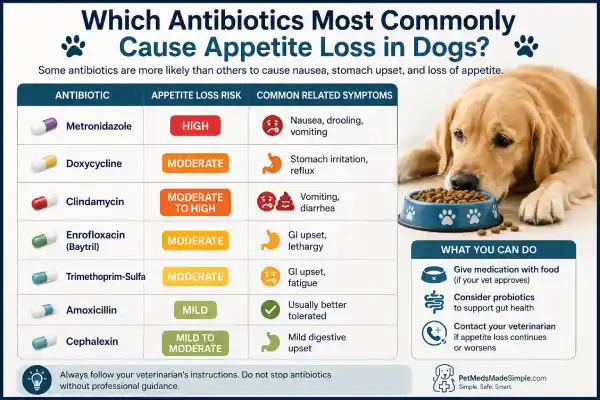
Some antibiotics are much more likely to trigger digestive side effects.
| Antibiotic | Appetite Loss Risk | Common Related Symptoms |
|---|---|---|
| Metronidazole | High | Nausea, drooling, vomiting |
| Doxycycline | Moderate | Stomach irritation, reflux |
| Clindamycin | Moderate to High | Vomiting, diarrhea |
| Enrofloxacin (Baytril) | Moderate | GI upset, lethargy |
| Trimethoprim-Sulfa | Moderate | GI upset, fatigue |
| Amoxicillin | Mild | Usually better tolerated |
| Cephalexin | Mild to Moderate | Mild digestive upset |
Related articles:
- “Metronidazole Side Effects in Dogs”
- “Doxycycline Side Effects in Dogs”
- “Clindamycin Side Effects in Dogs”
- “Enrofloxacin Side Effects in Dogs”
- “Amoxicillin Side Effects in Dogs”
- “Cephalexin Side Effects in Dogs”
Is Loss of Appetite After Antibiotics Normal?
Sometimes mild appetite reduction is temporary and not dangerous.
A dog may:
- eat less,
- skip one meal,
- become picky,
- or eat slowly for 24–48 hours.
This can happen while the digestive system adjusts to medication.
However, appetite loss becomes more concerning if your dog:
- completely refuses food,
- stops drinking,
- vomits repeatedly,
- becomes weak,
- develops severe diarrhea,
- or worsens instead of improving.
Signs Your Dog Is Nauseous After Antibiotics
Dogs often show nausea differently than humans.
Common signs include:
- lip licking
- drooling
- swallowing repeatedly
- eating grass
- sniffing food but walking away
- gagging
- burping
- hiding
- low energy
- refusing treats
These symptoms commonly appear with:
- metronidazole,
- doxycycline,
- clindamycin,
- and some fluoroquinolones like enrofloxacin.
Why Metronidazole Often Causes Appetite Loss
Metronidazole is one of the most common antibiotics associated with appetite problems.
The medication has:
- a strong bitter taste,
- nausea potential,
- and possible neurological side effects at higher doses.
Some dogs begin avoiding food simply because they associate eating with feeling nauseous afterward.
You can also read:
- “Metronidazole for Dogs: Uses, Dosage, Side Effects & Safety”
- “Can Metronidazole Cause Neurological Symptoms in Dogs?”
- “Metronidazole vs Amoxicillin for Dogs”
Can Antibiotics Disrupt Gut Bacteria?
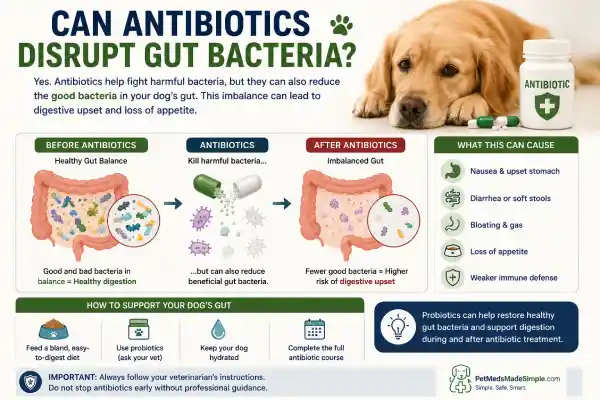
Yes — and this is extremely important.
Antibiotics kill harmful bacteria, but they may also disrupt healthy gut bacteria that support:
- digestion,
- nutrient absorption,
- stool quality,
- immune function,
- and appetite.
This imbalance can lead to:
- bloating,
- nausea,
- diarrhea,
- stomach discomfort,
- reduced appetite.
This is one reason probiotics may sometimes help.
Related guide:
Should You Force Your Dog to Eat?
Usually no.
Force-feeding may:
- increase stress,
- worsen nausea,
- create food aversion,
- or trigger vomiting.
Instead:
- encourage hydration,
- offer bland foods,
- and contact your veterinarian if appetite loss persists.
Best Foods to Offer Dogs Refusing Food After Antibiotics
Some dogs tolerate bland, easy-to-digest foods better during treatment.
| Food Option | Why It May Help |
|---|---|
| Boiled chicken | Gentle protein source |
| Plain white rice | Easy digestion |
| Prescription GI diet | Designed for stomach upset |
| Warm wet food | Stronger smell improves interest |
| Small frequent meals | Less stomach stress |
| Bone broth (vet-approved) | Encourages hydration |
Avoid:
- greasy foods,
- spicy foods,
- table scraps,
- rich treats,
- or sudden diet changes.
Can Giving Antibiotics With Food Help?
Often yes.
Giving antibiotics with food may:
- reduce nausea,
- protect the stomach lining,
- improve tolerance.
However, some medications have special instructions.
Related guides:
- “How Long Should Dogs Stay on Antibiotics?”
- “Miss a Dose of Antibiotics in Dogs?”
- “Can You Stop Antibiotics Early in Dogs?”
When Is Refusing Food an Emergency?
Seek veterinary care immediately if your dog:
| Emergency Sign | Why It Matters |
|---|---|
| Refuses water | Risk of dehydration |
| Vomits repeatedly | Fluid loss danger |
| Has bloody diarrhea | Possible severe GI injury |
| Becomes weak or collapses | Serious illness possible |
| Has tremors or seizures | Possible toxicity |
| Stops eating for over 24 hours | Nutritional and medical concern |
| Has pale gums | Emergency circulation issue |
Puppies and Senior Dogs Are Higher Risk
Young puppies and senior dogs can decline much faster from reduced eating.
Higher-risk dogs include:
- small breeds,
- dogs with liver disease,
- dogs with kidney disease,
- diabetic dogs,
- dogs on multiple medications.
Related articles:
- “Is Cephalexin Safe for Puppies?”
- “Is Enrofloxacin Safe for Puppies?”
- “Gabapentin and Kidney Disease in Dogs”
- “Is Fluoxetine Safe for Senior Dogs?”
Could the Infection Itself Be Causing Appetite Loss?
Absolutely.
Sometimes the antibiotic is not the main issue.
Underlying infections may themselves cause:
- fever,
- nausea,
- pain,
- fatigue,
- dehydration,
- inflammation.
If your dog’s appetite continues worsening despite treatment, the infection may:
- not be responding,
- require a different antibiotic,
- or need additional diagnostics.
Related guides:
- “What to Do If Dog Medication Is Not Working”
- “When to Switch Dog Medication”
- “Best Antibiotics for Dogs: When to Use Each”
How Veterinarians Diagnose the Cause
Veterinarians may evaluate:
- hydration status,
- abdominal pain,
- medication timing,
- bloodwork,
- liver function,
- kidney function,
- stool quality,
- and infection response.
Sometimes:
- medication adjustment,
- anti-nausea treatment,
- probiotics,
- or switching antibiotics is necessary.
Can Antibiotics Cause Acid Reflux in Dogs?
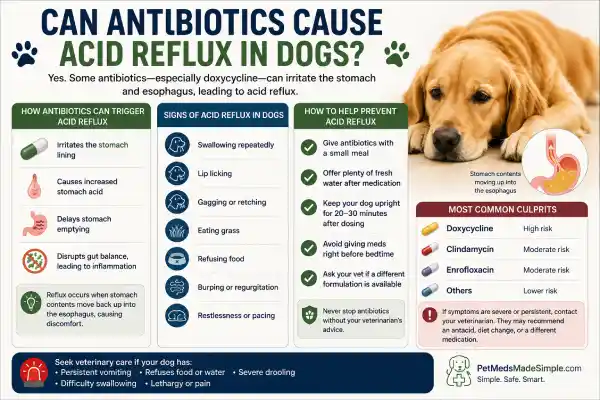
Sometimes yes.
Doxycycline especially may irritate:
- the throat,
- esophagus,
- and stomach.
Signs may include:
- swallowing repeatedly,
- licking lips,
- refusing dry food,
- gagging,
- burping,
- or eating grass.
Giving medication with a small meal and water may help reduce irritation.
How Long Does Appetite Loss Last?
Mild appetite reduction often improves within:
- 24–72 hours.
However, worsening appetite loss is never normal.
Persistent refusal to eat should always be evaluated.
| Symptom | Typical Duration |
|---|---|
| Mild nausea | 1–3 days |
| Mild appetite loss | 24–48 hours |
| Diarrhea | 2–5 days |
| Severe refusal to eat | Needs veterinary evaluation |
What Veterinarians May Recommend
Treatment depends on severity.
Possible approaches include:
- changing antibiotics,
- reducing stomach irritation,
- probiotics,
- anti-nausea medications,
- appetite stimulants,
- fluid therapy,
- prescription GI diets.
Frequently Asked Questions – Why Does My Dog Refuse Food After Antibiotics
Should I stop antibiotics if my dog refuses food?
Do not stop prescription antibiotics without veterinary guidance unless instructed to do so.
Can probiotics improve appetite in dogs on antibiotics?
Sometimes yes. Probiotics may help restore healthier gut bacteria and reduce digestive upset.
Is it dangerous if my dog skips one meal?
Usually one skipped meal is not an emergency in otherwise healthy adult dogs, but prolonged refusal to eat is concerning.
Why does my dog sniff food but not eat?
This commonly happens with nausea. The dog may feel hungry but uncomfortable eating.
Which antibiotic causes appetite loss most often?
Metronidazole and doxycycline are among the most common causes of nausea-related appetite loss in dogs.
Medical Disclaimer
This article is for educational purposes only and does not replace veterinary medical advice. Always consult a licensed veterinarian before starting, stopping, or changing any medication for your dog.