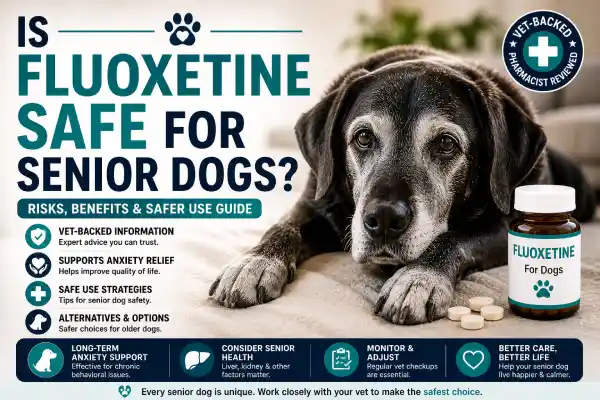
Is fluoxetine safe for senior dogs?
Yes, fluoxetine can be safe for senior dogs when used at the correct dose and with proper veterinary monitoring. However, older dogs are more sensitive to side effects, drug interactions, and organ stress, which means treatment must be carefully individualized.
Fluoxetine (commonly known as Prozac) is one of the most widely used medications for canine anxiety. It is especially helpful for long-term behavioral issues—but in senior dogs, safety becomes a more complex question.
As a pharmacist, I can tell you this clearly:
👉 The same medication can be safe in one senior dog and risky in another, depending on liver function, kidney health, and concurrent medications.
➡️ Learn full usage:
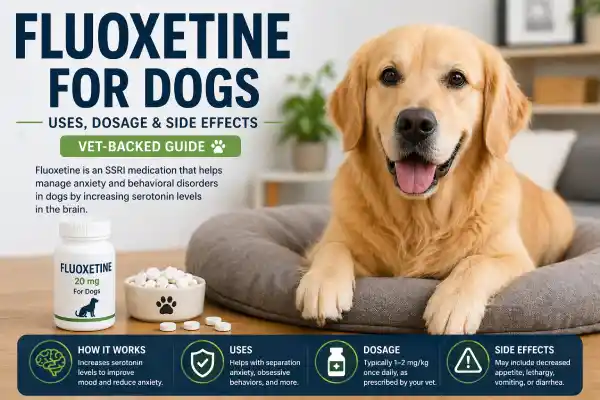
Fluoxetine for Dogs: Uses, Dosage & Side Effects (Vet-Backed Guide)
What Is Fluoxetine and How Does It Work in Dogs?
Fluoxetine is a selective serotonin reuptake inhibitor (SSRI). It works by increasing serotonin levels in the brain, which helps regulate mood, reduce anxiety, and stabilize behavior.
Unlike fast-acting drugs like benzodiazepines, fluoxetine works gradually over time. It is designed for long-term anxiety control, not immediate calming.
Common Uses in Dogs
- Separation anxiety
- Generalized anxiety
- Aggression linked to fear
- Compulsive behaviors
➡️ Internal links:
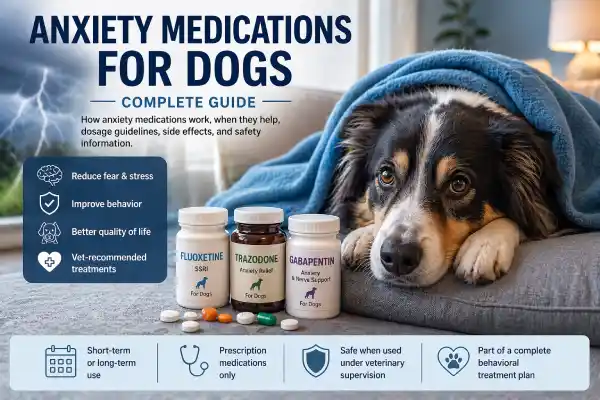
- Anxiety Medications for Dogs: Complete Guide (Uses, Dosage, Side Effects & Safety)
- Best Anxiety Medication for Dogs with Separation Anxiety (Comparison Guide – Vet-Backed)
Is Fluoxetine Safe for Senior Dogs?
Why Senior Dogs Require Special Consideration
Senior dogs are not just “older adults”—they have different pharmacological responses.
As dogs age, their bodies change in ways that directly affect medication safety:
- Slower metabolism
- Reduced liver function
- Altered kidney clearance
- Increased sensitivity to CNS drugs
👉 This means fluoxetine can stay in the body longer and act more strongly
How Fluoxetine Affects Senior Dogs Differently
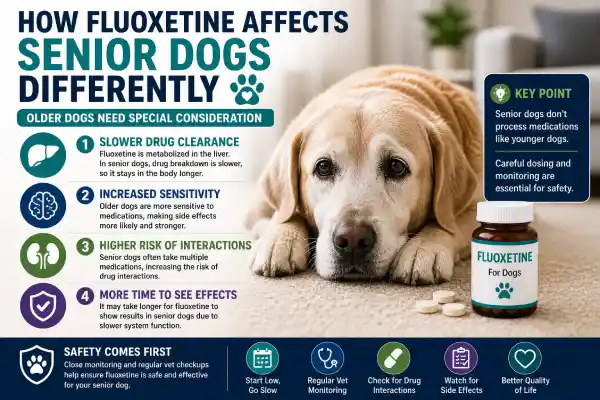
1. Slower Drug Clearance
Fluoxetine is metabolized in the liver. In senior dogs:
- Drug breakdown is slower
- Active metabolites remain longer
- Risk of accumulation increases
👉 This can lead to stronger or prolonged effects.
2. Increased Sensitivity to Side Effects
Older dogs are more prone to:
- Lethargy
- Appetite loss
- Gastrointestinal upset
- Behavioral changes
➡️ Internal link:
Fluoxetine Side Effects in Dogs: What to Watch For (Vet-Backed Guide)
3. Higher Risk of Drug Interactions
Senior dogs often take multiple medications, such as:
- Pain medications (Gabapentin, NSAIDs)
- Seizure medications
- Heart medications
👉 Fluoxetine can interact with many of these.
➡️ Internal links:
- Trazodone vs Gabapentin for Dogs: Anxiety or Pain Relief?
- Can Gabapentin Be Given With Other Dog Medications? Safety Guide for Pet Owners
Safety Profile of Fluoxetine in Senior Dogs
Table: Fluoxetine Safety in Senior Dogs
| Factor | Risk Level | Notes |
|---|---|---|
| Liver impact | Moderate | Requires monitoring |
| Kidney impact | Low | Generally safe |
| CNS effects | Moderate | Sedation or agitation possible |
| Drug interactions | High | Must review all meds |
| Long-term use | Generally safe | With supervision |
Common Side Effects in Older Dogs
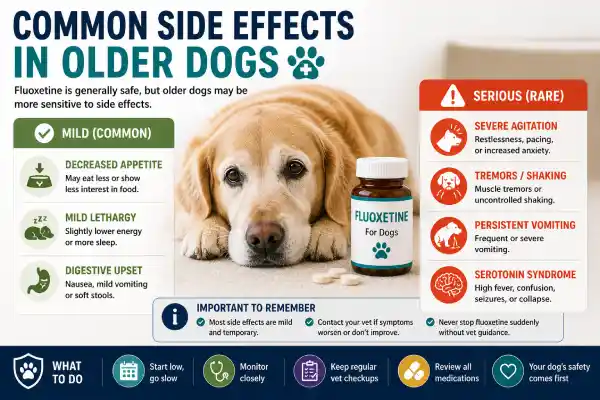
Mild (Common)
- Decreased appetite
- Mild lethargy
- Sleep changes
Moderate
- Vomiting
- Diarrhea
- Behavioral shifts
Serious (Rare)
- Severe agitation
- Tremors
- Serotonin syndrome
Table: Normal vs Concerning Reactions
| Symptom | Normal | Concerning |
|---|---|---|
| Mild sedation | ✔ | ❌ |
| Reduced appetite (short-term) | ✔ | ❌ |
| Calm behavior | ✔ | ❌ |
| Agitation | ❌ | ✔ |
| Tremors | ❌ | ✔ |
When Fluoxetine Is a Good Choice for Senior Dogs
Fluoxetine works best when:
✔ Anxiety is chronic
✔ Behavior issues are severe
✔ Long-term management is needed
✔ Dog tolerates medication well
When Fluoxetine May NOT Be Ideal
Fluoxetine may not be the best choice if:
❌ Liver disease is present
❌ Multiple medications increase interaction risk
❌ Fast-acting relief is needed
➡️ Internal link:
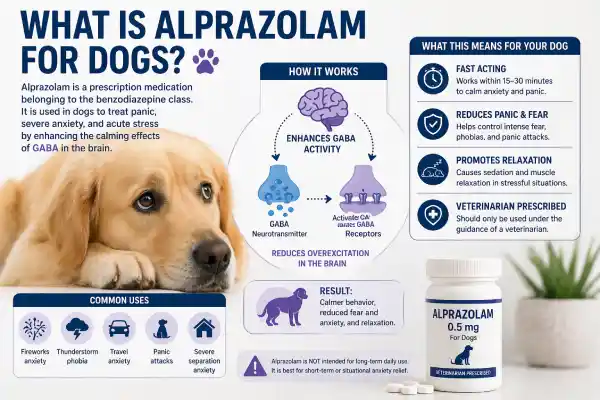
Trazodone vs Alprazolam for Dogs: Which Works Faster? (Vet-Backed Comparison)
Safer Alternatives for Senior Dogs
Hydroxyzine
- Mild anxiety
- Low side effect profile
➡️ Hydroxyzine for Dogs: Uses, Dosage & Safety
Trazodone
- Situational anxiety
- Faster effect
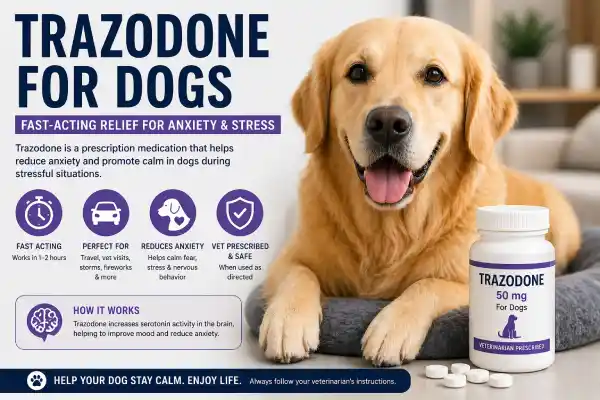
➡️ Trazodone for Dogs: Uses, Dosage & Safety (Vet-Backed Guide)
Buspirone
- Mild, chronic anxiety
- Minimal sedation
➡️ Buspirone for Dogs: Anxiety Treatment Explained (Vet-Backed Guide)
Combination Therapy (Best Approach in Seniors)
Veterinarians often combine:
- Fluoxetine → long-term control
- Trazodone → short-term relief
👉 This reduces dose requirements and improves safety.
How to Use Fluoxetine Safely in Senior Dogs
Step 1: Start Low
Always begin with the lowest effective dose.
Step 2: Monitor Closely
Watch for:
- Appetite changes
- Behavior changes
- Energy levels
Step 3: Regular Vet Checkups
- Blood work
- Liver function tests
- Medication review
Step 4: Avoid Abrupt Changes
Stopping fluoxetine suddenly can cause:
- Withdrawal symptoms
- Anxiety rebound
Common Mistakes
- Starting at full dose
- Ignoring subtle side effects
- Combining medications without vet guidance
- Expecting fast results
Pro Tips for Senior Dog Safety
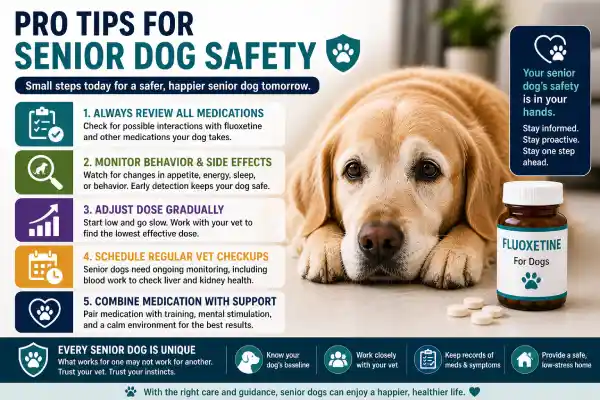
✔ Always review all medications
✔ Monitor behavior weekly
✔ Adjust dose gradually
✔ Combine with training
FAQ
Is fluoxetine safe for older dogs?
Yes, with proper monitoring and correct dosing.
What is the safest anxiety medication for senior dogs?
Depends on condition—fluoxetine for long-term, hydroxyzine for mild anxiety.
Can fluoxetine cause problems in senior dogs?
Yes, especially if liver function is compromised.
How long can a senior dog take fluoxetine?
Long-term use is possible with vet supervision.
What are signs of overdose or intolerance?
Tremors, agitation, severe lethargy.
Conclusion
Fluoxetine can be safe and highly effective for senior dogs—but only when used correctly.
✔ Best for long-term anxiety
✔ Requires monitoring
✔ Works best in combination therapy
👉 The key is personalized treatment and careful observation
Medical Disclaimer
This content is for informational purposes only and does not replace professional veterinary advice. Always consult a licensed veterinarian before starting or changing any treatment.
Sources
American Veterinary Medical Association
Merck Veterinary Manual
VCA Animal Hospitals
Veterinary Information Network (VIN)