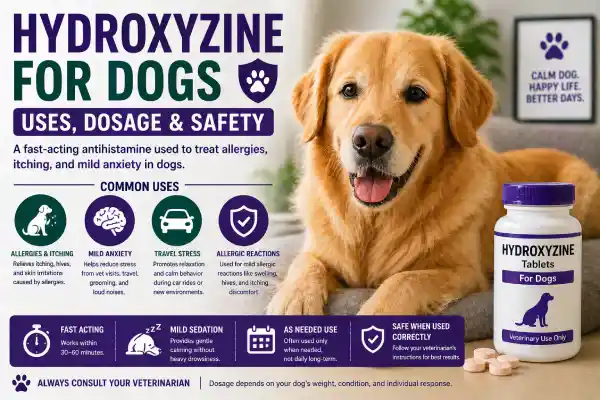
Hydroxyzine for dogs is an antihistamine medication used to treat anxiety, allergic reactions, and itching. It provides mild calming effects and is often used for short-term or situational anxiety.
Quick Answer
Hydroxyzine for dogs is commonly used for allergies and mild anxiety. It works quickly, usually within 30–60 minutes, and is often given as needed rather than daily long-term.
Hydroxyzine for Dogs (Quick Overview)
Hydroxyzine is:
- An antihistamine
- Used for allergies + mild anxiety
- Fast-acting (within 1 hour)
- Mildly sedating
Introduction
Not all anxiety medications for dogs are heavy psychiatric drugs.
Some, like hydroxyzine, offer gentler, fast-acting relief.
Unlike SSRIs such as:
👉 Sertraline for Dogs: Uses, Dosage & Safety
👉 Fluoxetine for Dogs: Uses, Dosage & Side Effects
hydroxyzine works quickly and is often used as needed.
👉 Start here:
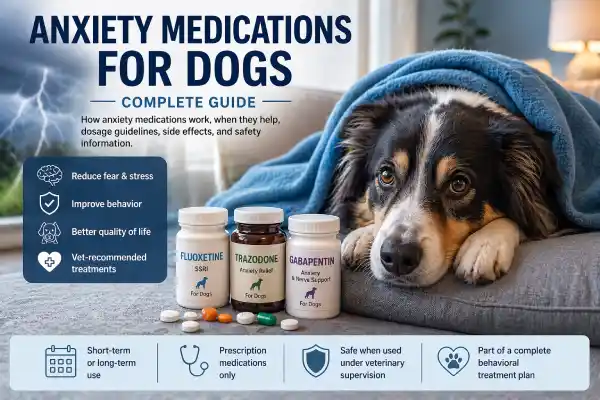
➡️ Anxiety Medications for Dogs: Complete Guide (Uses, Dosage, Side Effects & Safety)
👉 Compare calming meds:
➡️ Trazodone for Dogs: Uses, Dosage & Safety
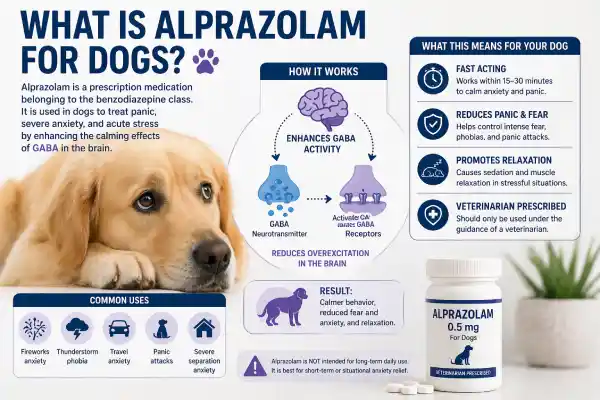
➡️ Alprazolam for Dogs: Uses, Dosage & Safety
👉 For long-term options:
➡️ Paroxetine for Dogs: Uses & Anxiety Treatment
Hydroxyzine for Dogs
What Is Hydroxyzine for Dogs?
Hydroxyzine is an antihistamine that:
- Blocks histamine receptors
- Reduces allergic reactions
- Provides mild calming effects
👉 It is commonly used in veterinary medicine for both skin and behavioral issues.
Uses of Hydroxyzine in Dogs
Allergies & Itching
- Skin allergies
- Environmental allergies
- Itching and inflammation
Mild Anxiety
- Vet visits
- Travel stress
- Grooming anxiety
Allergic Reactions
- Hives
- Swelling
- Mild reactions
How Hydroxyzine Works
Hydroxyzine blocks histamine in the body and has a mild sedative effect.
👉 Result:
- Reduced itching
- Calmer behavior
- Less reactivity
Effectiveness of Hydroxyzine
| Feature | Rating |
|---|---|
| Speed | Fast |
| Sedation | Mild |
| Best Use | Allergies + mild anxiety |
| Panic control | Low |
Hydroxyzine Dosage for Dogs
Hydroxyzine dosage for dogs typically ranges:
👉 1–2 mg/kg every 8–12 hours
- Given 2–3 times daily
- Adjusted based on response
Hydroxyzine Dosage Chart for Dogs
| Dog Weight | Low Dose | Typical Dose | Max Dose |
|---|---|---|---|
| 5 kg | 5 mg | 5–10 mg | 10 mg |
| 10 kg | 10 mg | 10–20 mg | 20 mg |
| 20 kg | 20 mg | 20–40 mg | 40 mg |
| 30 kg | 30 mg | 30–60 mg | 60 mg |
| 40 kg | 40 mg | 40–80 mg | 80 mg |
⚠️ Always follow veterinary guidance.
How Fast Does Hydroxyzine Work?
Timeline
- 30–60 minutes → noticeable effect
- 1–2 hours → peak effect
👉 Much faster than SSRIs:
- Sertraline
- Fluoxetine
- Paroxetine
Hydroxyzine vs Other Anxiety Medications
| Medication | Speed | Sedation | Best Use |
|---|---|---|---|
| Hydroxyzine | Fast | Mild | Allergies + mild anxiety |
| Trazodone | Fast | Moderate | Situational anxiety |
| Alprazolam | Very fast | High | Panic |
| Sertraline | Slow | Low | Chronic anxiety |
Side Effects of Hydroxyzine in Dogs
Common:
- Mild sedation
- Dry mouth
- Slight lethargy
Less common:
- GI upset
- Behavioral changes
Serious (rare):
- Excessive sedation
- Weakness
When to Contact Your Veterinarian
- Excessive sedation
- No improvement
- Allergic reaction worsens
- Behavioral changes
Common Mistakes Owners Make
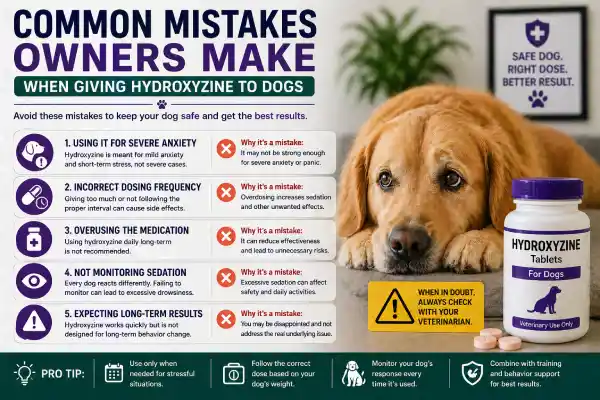
- Using for severe anxiety
- Incorrect dosing frequency
- Overusing medication
- Not monitoring sedation
- Expecting long-term results
Pro Tips
- Use before stressful events
- Monitor response carefully
- Combine with training
- Use for mild anxiety only
- Follow vet guidance
Related Guides
- Anxiety Medications for Dogs: Complete Guide
- Trazodone for Dogs
- Alprazolam for Dogs
- Sertraline for Dogs
- Paroxetine for Dogs
FAQ
Is hydroxyzine safe for dogs?
Yes, when used properly.
Can hydroxyzine calm dogs?
Yes, but only mildly.
How fast does it work?
Usually within 30–60 minutes.
Can it treat anxiety long-term?
No, it is better for short-term use.
Can it help with itching?
Yes, it is commonly used for allergies.
Conclusion
Hydroxyzine is a versatile medication used for both allergies and mild anxiety in dogs, making it a great option for short-term or situational use.
👉 The key:
✔ Fast relief
✔ Mild sedation
✔ Dual purpose (allergy + anxiety)
Medical Disclaimer
This article is for informational purposes only and does not replace professional veterinary advice.