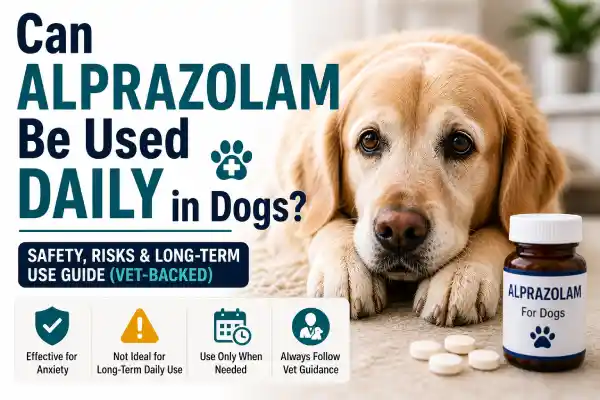
Can alprazolam be used daily in dogs?
Alprazolam can be used daily in dogs in some cases, but it is not ideal for long-term, everyday use due to risks of tolerance, dependence, and reduced effectiveness over time. It is typically best used for short-term or situational anxiety, not as a primary daily medication.
Alprazolam (commonly known as Xanax) is a fast-acting anti-anxiety medication widely used in veterinary medicine. It can be extremely effective—but only when used correctly.
As a pharmacist, I can tell you this clearly:
👉 Alprazolam is powerful, but it is not designed for long-term daily control like SSRIs.
➡️ Learn full safety:
Alprazolam for Dogs: Is It Safe? (Vet-Backed Guide)
What Is Alprazolam and How Does It Work in Dogs?
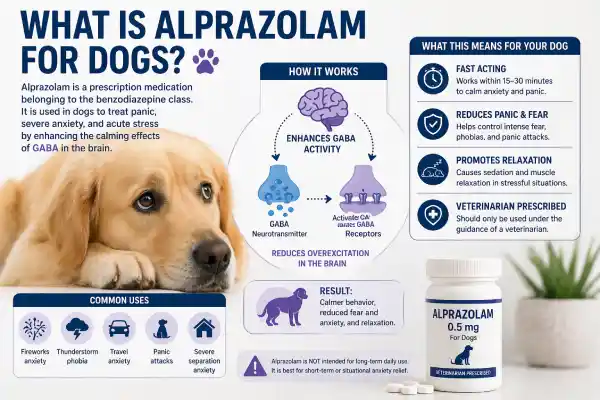
Alprazolam is a benzodiazepine, a class of medications that act on the central nervous system by enhancing the effect of GABA—a neurotransmitter that calms brain activity.
This leads to:
- Rapid anxiety relief
- Muscle relaxation
- Sedation (in some cases)
Why It Works So Fast
Unlike SSRIs, alprazolam:
- Works within 30–60 minutes
- Peaks quickly
- Has a short duration
👉 This makes it ideal for:
- Panic attacks
- Storm anxiety
- Fireworks
- Vet visits
➡️ Internal links:
- Trazodone vs Alprazolam for Dogs: Which Works Faster? (Vet-Backed Comparison)
- Alprazolam vs Diazepam for Dogs: Which Is Safer? (Vet-Backed)
Can Alprazolam Be Used Daily in Dogs?
Can Alprazolam Be Used Every Day?
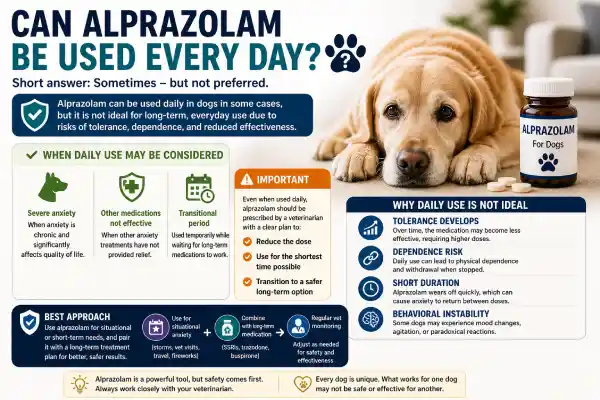
Short Answer: Sometimes—but not preferred
Daily use may be considered when:
✔ Anxiety is severe
✔ Other medications are not effective
✔ Used under strict veterinary supervision
However, long-term daily use carries risks.
Why Daily Use Is Not Ideal
1. Tolerance Development
Over time, the body adapts to alprazolam.
👉 Result:
- Reduced effectiveness
- Need for higher doses
2. Physical Dependence
With daily use, dogs can become dependent.
👉 Stopping suddenly may cause:
- Rebound anxiety
- Tremors
- Withdrawal symptoms
3. Short Duration Problem
Alprazolam wears off relatively quickly.
👉 This creates:
- Fluctuating anxiety levels
- Need for multiple daily doses
4. Behavioral Instability
Some dogs may experience:
- Mood swings
- Increased sensitivity
- Paradoxical reactions
➡️ Internal link:
Alprazolam Side Effects in Dogs: What to Watch For (Vet-Backed Guide)
Table: Daily Use vs Situational Use
| Use Type | Recommendation | Safety |
|---|---|---|
| Occasional (storms, vet) | ✔ Best use | Very safe |
| Short-term daily | ✔ Possible | Moderate |
| Long-term daily | ❌ Not ideal | Higher risk |
When Daily Alprazolam May Be Used
Veterinarians may prescribe daily use in specific cases:
- Severe panic disorder
- Transitional period (waiting for SSRIs to work)
- Combination therapy
👉 But always with a plan to:
- Reduce dose
- Transition to safer long-term meds
In clinical practice, daily alprazolam is usually considered a temporary strategy rather than a permanent solution. For example, in dogs with severe, uncontrolled anxiety or panic attacks, immediate stabilization is sometimes necessary to prevent self-harm, destructive behavior, or extreme stress responses. In these situations, alprazolam may be used daily for a short period to quickly reduce anxiety intensity while a longer-term medication is introduced.
One of the most common scenarios is the “bridging phase”, where alprazolam is used alongside SSRIs such as fluoxetine or sertraline. Since SSRIs can take 2–6 weeks to reach full effect, alprazolam helps control symptoms during this adjustment period. Once the long-term medication becomes effective, the benzodiazepine is gradually reduced.
In some complex cases, veterinarians may include alprazolam as part of a carefully controlled combination therapy plan, particularly in dogs with multiple anxiety triggers. However, this requires close monitoring to avoid tolerance, dependence, and dose escalation.
👉 The key principle is simple:
Daily use is acceptable only when there is a clear exit strategy and ongoing veterinary supervision.
Better Long-Term Alternatives
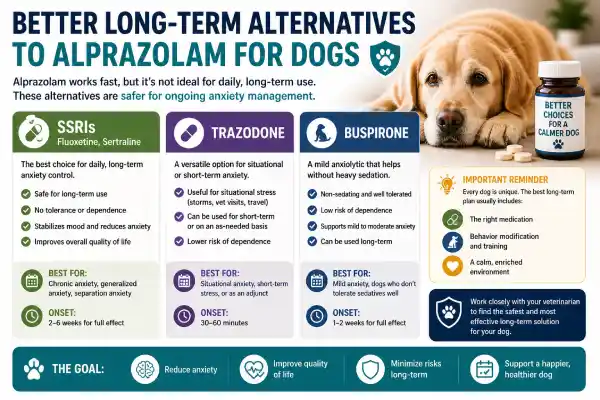
SSRIs (Best for Daily Use)
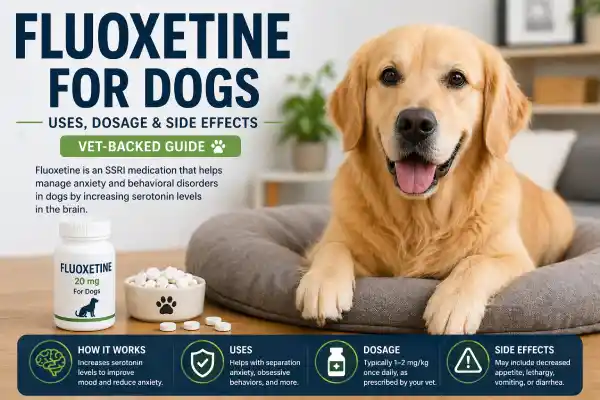
- Fluoxetine
- Sertraline
✔ Stable long-term control
✔ No tolerance buildup
➡️ Internal links:
- Fluoxetine for Dogs: Uses, Dosage & Side Effects (Vet-Backed Guide)
- Sertraline for Dogs: Uses, Dosage & Safety (Vet-Backed Guide)
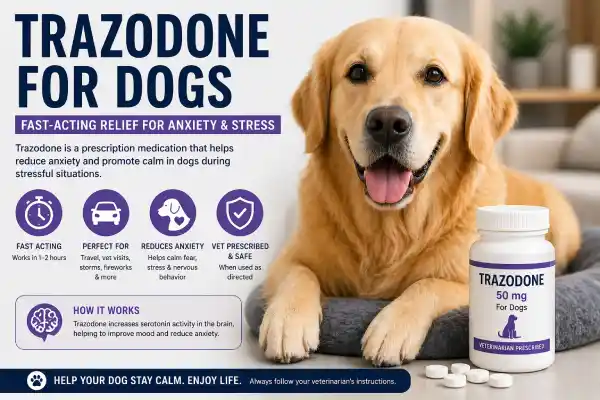
Trazodone
✔ Can be used more flexibly
✔ Good for situational + short-term
➡️ Trazodone for Dogs: Uses, Dosage & Safety (Vet-Backed Guide)
Buspirone
✔ Mild anxiety
✔ Non-sedating
➡️ Buspirone for Dogs: Anxiety Treatment Explained (Vet-Backed Guide)
Combination Therapy (Best Strategy)
Veterinarians often use:
- SSRI → long-term control
- Alprazolam → emergency relief
👉 This provides:
✔ Stable baseline
✔ Fast intervention when needed
Table: Medication Comparison
| Medication | Speed | Long-Term Use | Dependence Risk |
|---|---|---|---|
| Alprazolam | Fast | ❌ Not ideal | High |
| Fluoxetine | Slow | ✔ Yes | Low |
| Sertraline | Slow | ✔ Yes | Low |
| Trazodone | Moderate | Limited | Low |
Signs Alprazolam Is Not Suitable for Daily Use
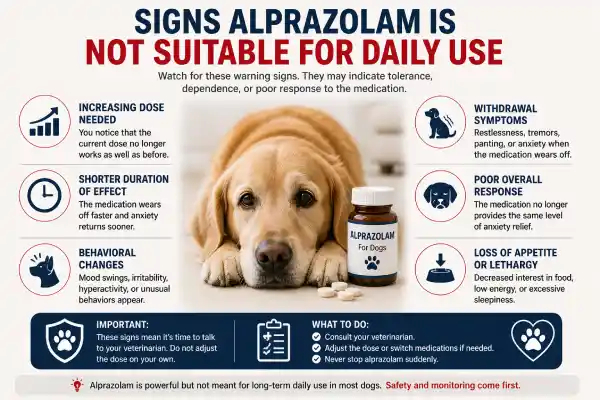
- Increasing dose needed
- Shorter duration of effect
- Behavioral changes
- Withdrawal symptoms between doses
How to Use Alprazolam Safely
Step 1: Use Only When Needed
Avoid automatic daily use unless prescribed.
Step 2: Start Low
Always begin with the lowest effective dose.
Step 3: Monitor Behavior
Watch for:
- Sedation
- Agitation
- Changes in appetite
Step 4: Avoid Sudden Stop
Taper gradually under vet guidance.
Common Mistakes
❌ Using alprazolam as a daily primary treatment
❌ Increasing dose without guidance
❌ Ignoring tolerance signs
❌ Stopping abruptly
These mistakes are more common than most owners realize and can significantly reduce the effectiveness of treatment—or even create new problems. Using alprazolam as a primary daily medication often leads to tolerance, meaning the same dose stops working over time. Increasing the dose without veterinary guidance can quickly increase the risk of sedation, dependence, and adverse effects.
Ignoring early warning signs such as reduced effectiveness, shorter duration, or behavioral changes can allow problems to escalate. One of the most dangerous mistakes is stopping alprazolam suddenly, which may trigger withdrawal symptoms, rebound anxiety, or even neurological reactions.
👉 The safest approach is always: controlled use, gradual adjustments, and professional supervision.Can Alprazolam Be Used Daily in Dogs?
Pro Tips for Best Results
✔ Use for predictable anxiety triggers
✔ Combine with long-term medication
✔ Monitor closely
✔ Adjust gradually
To get the best results from alprazolam, it’s important to use it strategically rather than routinely. This medication performs best when given before known stress events such as thunderstorms, fireworks, travel, or veterinary visits. Timing is critical—alprazolam should usually be administered 30–60 minutes before the trigger, allowing it to reach peak effectiveness when the dog actually needs it.
Another key factor is combination therapy. Alprazolam should rarely be the only solution, especially in dogs with chronic anxiety. Pairing it with long-term medications like SSRIs (such as fluoxetine or sertraline) helps create a stable emotional baseline, while alprazolam acts as a fast-acting support tool. This approach reduces the need for higher doses and minimizes the risk of tolerance and dependence.
Close monitoring is essential. Pay attention to subtle changes such as:
- Increased sedation
- Reduced response to the same dose
- Changes in appetite or behavior
- Signs of agitation instead of calming
These can indicate that the medication needs adjustment. Keeping a simple behavior log can help track patterns and improve communication with your veterinarian.
Gradual adjustments are also critical for safety. Never increase or decrease the dose suddenly. Small, controlled changes allow the body to adapt and reduce the risk of side effects or withdrawal symptoms.
Finally, don’t underestimate the importance of non-medication support. Environmental enrichment, consistent routines, and behavioral training significantly improve outcomes and reduce reliance on medication over time.
👉 The goal is not just short-term relief—but a balanced, sustainable anxiety management plan that keeps your dog calm, stable, and safe long-term.
FAQ – Can Alprazolam Be Used Daily in Dogs?
Can dogs take alprazolam every day?
Yes, but it’s not recommended for long-term daily use.
Is alprazolam safe long-term?
Not ideal due to tolerance and dependence risks.
What is better than alprazolam for daily anxiety?
SSRIs like fluoxetine or sertraline.
Can alprazolam cause dependence in dogs?
Yes, especially with long-term use.
How often can I give alprazolam?
As prescribed by your veterinarian.
Conclusion
Alprazolam is powerful—but not designed for everyday long-term use.
✔ Best for situational anxiety
✔ Useful as part of combination therapy
✔ Requires careful monitoring
👉 The safest strategy is short-term use + long-term planning
However, the real success in managing anxiety in dogs comes from building a complete treatment plan, not relying on a single medication. Alprazolam works best as a support tool—used during high-stress situations—while long-term medications like SSRIs help stabilize behavior over time. Consistency, correct dosing, and regular veterinary follow-up are essential to avoid tolerance and dependence.
As a pharmacist, I strongly emphasize this:
👉 The goal is not just fast relief—but safe, sustainable anxiety control that improves your dog’s quality of life without increasing long-term risks.Can Alprazolam Be Used Daily in Dogs?
Medical Disclaimer
This content is for informational purposes only and does not replace professional veterinary advice.
Sources
American Veterinary Medical Association
Merck Veterinary Manual
VCA Animal Hospitals
Veterinary Information Network (VIN)