What happens if you stop paroxetine suddenly in dogs?
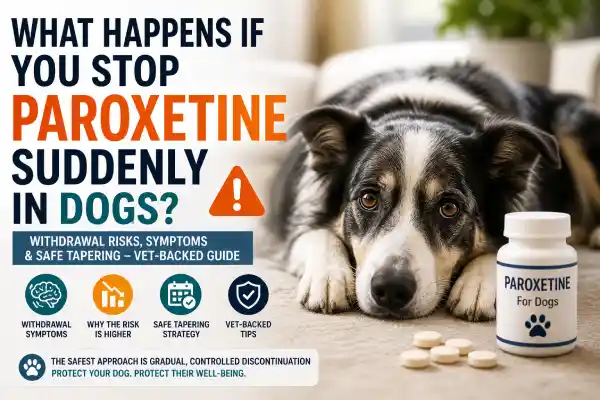
Stopping paroxetine suddenly in dogs can lead to withdrawal symptoms, including increased anxiety, agitation, tremors, and behavioral changes. This is known as SSRI discontinuation syndrome and can occur when the medication is stopped abruptly instead of being gradually reduced.
Paroxetine is a commonly prescribed SSRI used for long-term anxiety management in dogs. While it is effective, it also alters brain chemistry over time—meaning the body becomes adapted to its presence.
As a pharmacist, I want to emphasize this clearly:
👉 The risk is not the medication itself—but how it is stopped
➡️ Learn full usage:
Paroxetine for Dogs: Uses & Anxiety Treatment (Vet-Backed Guide)
What Is Paroxetine and Why Stopping It Suddenly Is Risky
Paroxetine is a selective serotonin reuptake inhibitor (SSRI) that increases serotonin levels in the brain. Over time, the dog’s nervous system adapts to this increased serotonin availability, adjusting receptor sensitivity and neurotransmitter balance.
When the medication is stopped abruptly, this balance is suddenly disrupted. The brain is left without the expected serotonin regulation, which can trigger a range of neurological and behavioral symptoms.
This effect is not unique to paroxetine—it occurs with most SSRIs—but paroxetine is particularly known for causing stronger withdrawal effects due to its shorter half-life compared to other SSRIs like fluoxetine.
➡️ Internal links:
- Paroxetine vs Sertraline for Dogs: Key Differences Explained (Vet-Backed)
- Sertraline for Dogs: Uses, Dosage & Safety (Vet-Backed Guide)
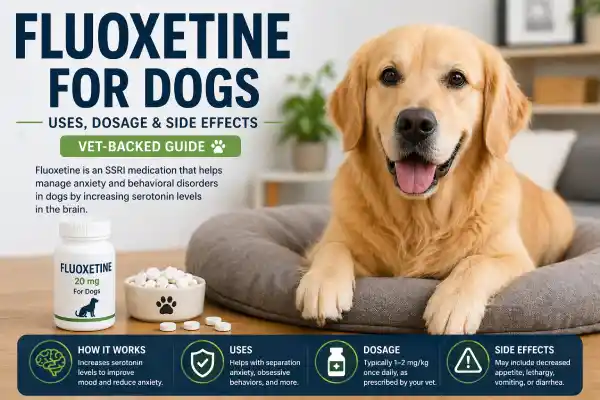
- Fluoxetine for Dogs: Uses, Dosage & Side Effects (Vet-Backed Guide)
What Happens If You Stop Paroxetine Suddenly in Dogs?
What Is SSRI Discontinuation Syndrome in Dogs?
SSRI discontinuation syndrome is a condition that occurs when serotonin levels drop suddenly after stopping medication. In dogs, this can manifest as both physical and psychological symptoms.
This is not the same as addiction—it is a physiological adjustment response. The brain needs time to re-regulate serotonin levels naturally.
In veterinary medicine, this condition is often under-recognized because symptoms can be mistaken for:
- Return of anxiety
- Behavioral relapse
- New medical issues
👉 Understanding the difference is critical for proper treatment.
Common Withdrawal Symptoms in Dogs
When paroxetine is stopped suddenly, symptoms may appear within 24–72 hours. These can vary in intensity depending on the dose, duration of use, and the individual dog.
Behavioral Symptoms
- Sudden increase in anxiety
- Restlessness or pacing
- Vocalization (barking, whining)
- Irritability or aggression
- Reappearance of compulsive behaviors
These symptoms often resemble the original condition but are usually more intense and sudden in onset.
Physical Symptoms
- Tremors or shaking
- Panting
- Gastrointestinal upset (vomiting, diarrhea)
- Sleep disturbances
- Reduced appetite
In some cases, dogs may appear confused or disoriented, which can be alarming for owners.
Severe (Rare) Symptoms
- Neurological instability
- Extreme agitation
- Loss of coordination
👉 These require immediate veterinary attention.
➡️ Internal link:
Paroxetine Side Effects in Dogs: What to Watch For (Vet-Backed Guide)
Table: Withdrawal vs Anxiety Relapse
| Feature | Withdrawal | Anxiety Relapse |
|---|---|---|
| Onset | Rapid (1–3 days) | Gradual |
| Severity | Often intense | Variable |
| Physical symptoms | Common | Rare |
| Duration | Temporary | Persistent |
Why Paroxetine Has Higher Withdrawal Risk
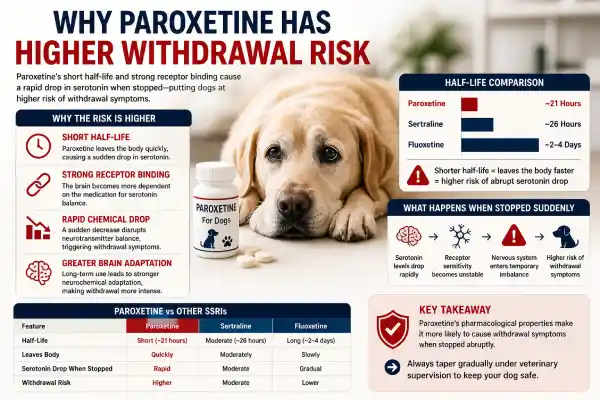
Paroxetine has a relatively short half-life, meaning it leaves the body more quickly than some other SSRIs. This rapid elimination causes a sudden drop in serotonin activity, increasing the likelihood of withdrawal symptoms.
In contrast, medications like fluoxetine have longer half-lives and taper naturally over time, reducing the risk of abrupt chemical changes.
Additionally, paroxetine has strong receptor binding effects. This means the brain becomes more dependent on its presence for maintaining serotonin balance.
👉 When the drug is removed suddenly:
- Neurotransmitter levels drop quickly
- Receptor sensitivity becomes unstable
- The nervous system enters a temporary imbalance
This explains why withdrawal symptoms can feel more severe than the original anxiety.
➡️ Internal links:
- Sertraline vs Fluoxetine for Dogs: Which Is Better Long-Term? (Vet-Backed Comparison)
- Fluoxetine Dosage for Dogs: Weight Chart & Safety Guide (Vet-Backed)
How to Stop Paroxetine Safely
The safest way to stop paroxetine is through gradual tapering, not abrupt discontinuation.
Step-by-Step Tapering Strategy
- Reduce dose slowly over weeks
- Monitor behavior closely
- Adjust taper speed if symptoms appear
- Maintain consistency in dosing schedule
Tapering allows the brain to gradually adapt to lower serotonin levels without triggering severe symptoms.
Typical Tapering Timeline
- Mild cases → 2–3 weeks
- Long-term use → 4–8+ weeks
👉 Each dog is different—there is no one-size-fits-all approach.
Monitoring During Taper
Owners should watch for:
- Return of anxiety
- Physical symptoms
- Behavioral instability
If symptoms occur, the veterinarian may:
- Slow the taper
- Temporarily increase dose
- Switch to a longer-acting SSRI
➡️ Internal link:
Sertraline Dosage for Dogs: Weight Chart & Safety Guide (Vet-Backed)
Common Mistakes Owners Make
Many withdrawal problems occur because of preventable mistakes.
❌ Stopping medication suddenly
❌ Skipping doses
❌ Reducing too quickly
❌ Ignoring early warning signs
Skipping doses is particularly problematic because it creates mini-withdrawal cycles, causing fluctuations in serotonin levels.
Another common issue is misinterpreting withdrawal symptoms as the dog “needing more medication,” which can lead to incorrect dosing decisions.
👉 The key mistake is lack of consistency.
Pro Tips for Safe Discontinuation
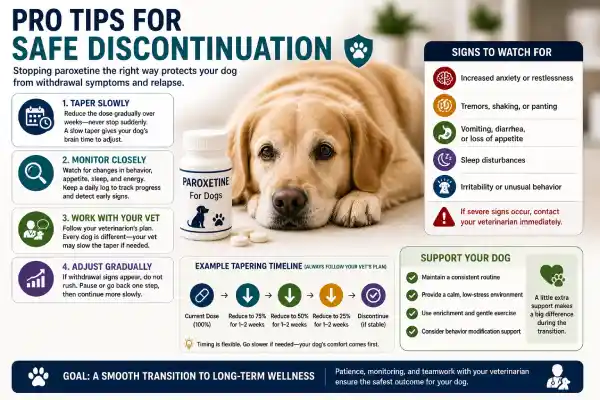
✔ Always taper slowly
✔ Keep dosing schedule consistent
✔ Monitor both behavior and physical symptoms
✔ Communicate with your veterinarian
A helpful strategy is maintaining a behavior journal. This allows you to track subtle changes and detect patterns early.
It’s also important to combine tapering with:
- Environmental stability
- Routine
- Behavioral support
These factors reduce stress and improve outcomes during medication changes.
FAQ
Can I stop paroxetine suddenly in dogs?
No, it can cause withdrawal symptoms.
How long do withdrawal symptoms last?
Usually a few days to weeks, depending on tapering.
What are the signs of withdrawal?
Anxiety, tremors, agitation, and behavioral changes.
Is paroxetine addictive for dogs?
Not addictive, but can cause dependence-like withdrawal.
What is the safest way to stop?
Gradual tapering under veterinary guidance.
Conclusion
Stopping paroxetine suddenly can cause significant withdrawal symptoms—but these are preventable.
✔ Always taper slowly
✔ Monitor closely
✔ Work with a veterinarian
👉 The safest approach is gradual, controlled discontinuation
Medical Disclaimer
This content is for informational purposes only and does not replace professional veterinary advice.
Sources
American Veterinary Medical Association
Merck Veterinary Manual
Veterinary Information Network (VIN)
VCA Animal Hospitals